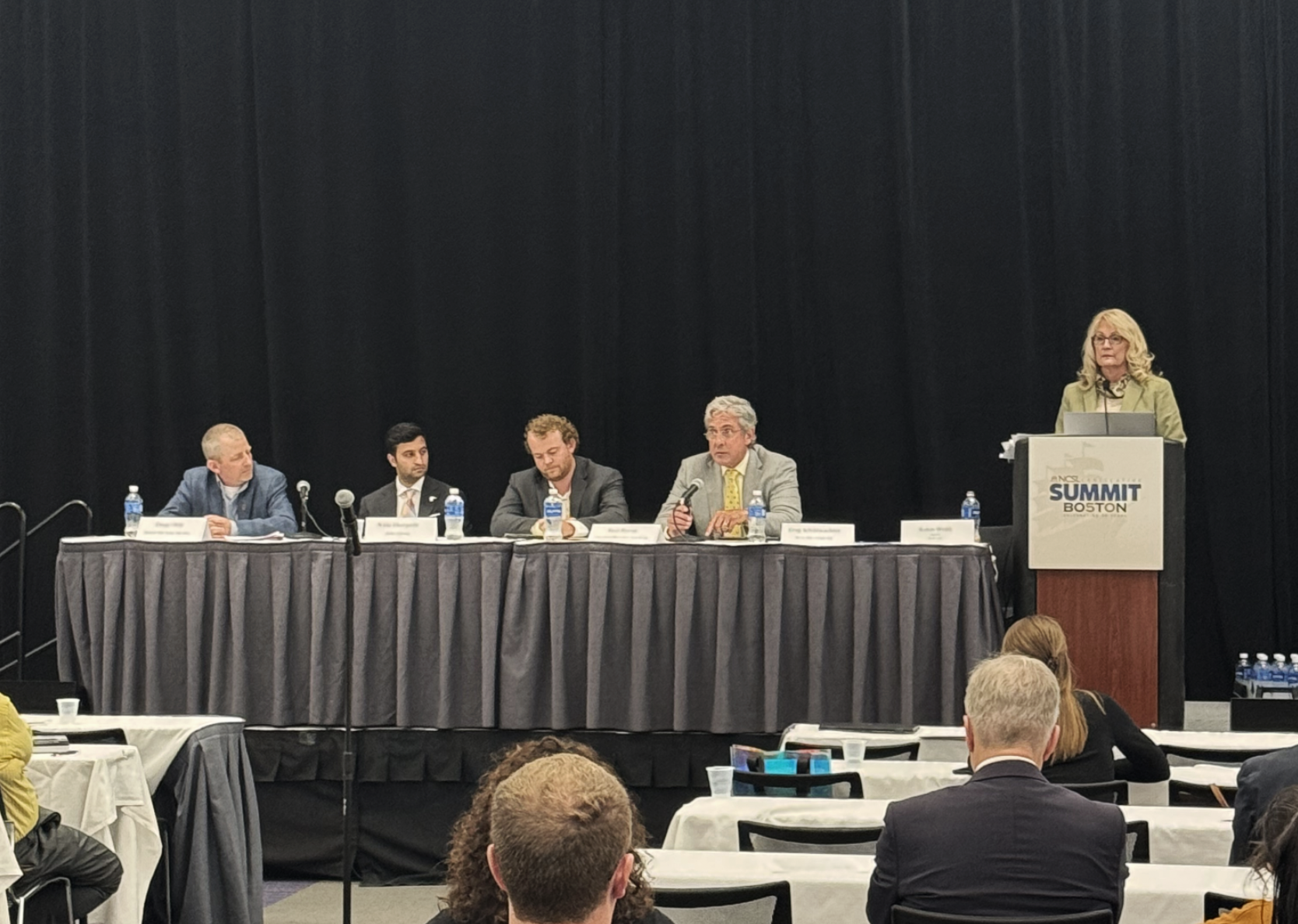
A Conversation for Conservation at the NCSL
EDGEFIELD, S.C. — The National Conference of State Legislatures recently hosted its annual summit in Boston, Massachusetts, featuring a panel discussion on the North American Model of Wildlife Conservation (NAMWC). Doug Little, NWTF’s director of conservation operations for the East, sat on the panel as a subject matter expert and was joined by representatives from the Congressional Sportsmen’s Foundation, Ducks Unlimited and the Boone and Crockett Club.
The NAMWC is a set of principles that, when collectively applied, leads to the form, function and success of wildlife conservation and management in the United States and Canada. The American System of Conservation Funding provides the financial mechanism that supports wildlife agencies in their efforts to use the NAMWC as guiding principles.
At the end of the 19th century, as species like the passenger pigeon were exploited to the point of no return while others like the wild turkey were pushed to the brink of extinction, wildlife funding mechanisms were developed through excise taxes and license fees on sportsmen and women. Important conservation laws were put in place to prevent further loss, like the Migratory Bird Treaty Act of 1918, the Federal Aid in Wildlife Restoration Act of 1937 (now called the Pittman-Robertson Act) and the Federal Aid in Sport Fish Restoration Act of 1950 (now the Dingell-Johnson Act), among others.
Today, hunters, recreational shooters and anglers have generated approximately $25.5 billion for wildlife and habitat conservation since 1937, according to the U.S. Fish and Wildlife Service.
Moderated by Kentucky State Senator Robin Webb, this year’s panel explored the history and continued importance of the NAMWC, which was built on principles of sustainable use, public benefit and science-based management.
Panelists at the NCSL discussed how those principles are now being used to guide modern policymaking to balance wildlife conservation, sustainable use and public benefit. They offered clear facts, compelling stories and insightful perspectives, making complex topics accessible and meaningful.
“We were each asked to reflect on which of the seven pillars of the North American Model of Wildlife Conservation is the most important to us,” Little said. “Of course, all of the pillars are important, so it was a matter of choosing one and describing how it fits with what we do as an organization. I chose to highlight the pillar regarding science being the proper tool to discharge wildlife policy because we challenge each other to base our policy positions on the science. Whether it is a regulatory issue to adjust a spring gobbler season bag limit, or a legislative bill to expand the agency's authority to allow Sunday hunting opportunities, we use the science to guide our positions.”
During the panel discussion, Webb asked panelists what they thought state legislators could do to assist state wildlife agencies. Little noted that state wildlife agencies already have regulatory authority. He advised legislators to avoid bills that force the agency to make changes they could have made on their own, as well as allow agencies to use the authority they have for adaptive management through regulatory process, rather than requiring future legislation for adjustments.
This year’s summit was the largest event to date with more than 9,000 registrants, making it the largest gathering of state legislators and legislative staff in U.S. history. The NWTF’s presence ensured the organization's mission and priorities were part of these historic conversations.
“It was a great opportunity to have our name and logo on the agenda,” Little said. “NWTF’s approach to state and federal policy issues is well-respected. Legislators and their staff are interested in the input we provide, so we can help them understand the nuances of the conservation and hunting heritage related issues that are important to us. Our NWTF voice carries a lot of weight.”