Bringing Back the Oak Savanna at Muskrat Slough
At Muskrat Slough Wildlife Management Area in southern Jones County, Iowa, the land has always been shaped by a mix of water, grass and timber.
This 740-acre public hunting area is primarily a wetland and grassland complex, with a smaller woodland component scattered throughout. It supports a variety of wildlife and provides consistent public hunting opportunity, including wild turkeys, which are found on the area every year.
Within that larger landscape sits a 14-acre tract known as the Zimmerman property. Acquired in 2025 with partial funding from the National Wild Turkey Federation, this small piece of ground quickly stood out to biologists as an area with strong restoration potential.
At the time of acquisition, the tract was fully forested. While it functioned as closed-canopy timber, site characteristics and tree structure suggested a very different past. Large, open-grown oak trees were present, along with a younger generation of oaks in the midstory. These features indicate the site was once an oak savanna, a habitat type that has become increasingly rare in Iowa.
Over time, however, a lack of active management allowed understory and midstory growth to increase. As that vegetation filled in, sunlight was reduced at the ground level. The result was a shift from an open woodland structure to a closed-canopy forest, limiting the site’s value for wildlife that depend on more open conditions.
To reverse that trend, the Iowa Department of Natural Resources developed a restoration plan focused on returning the site to oak-savanna conditions.
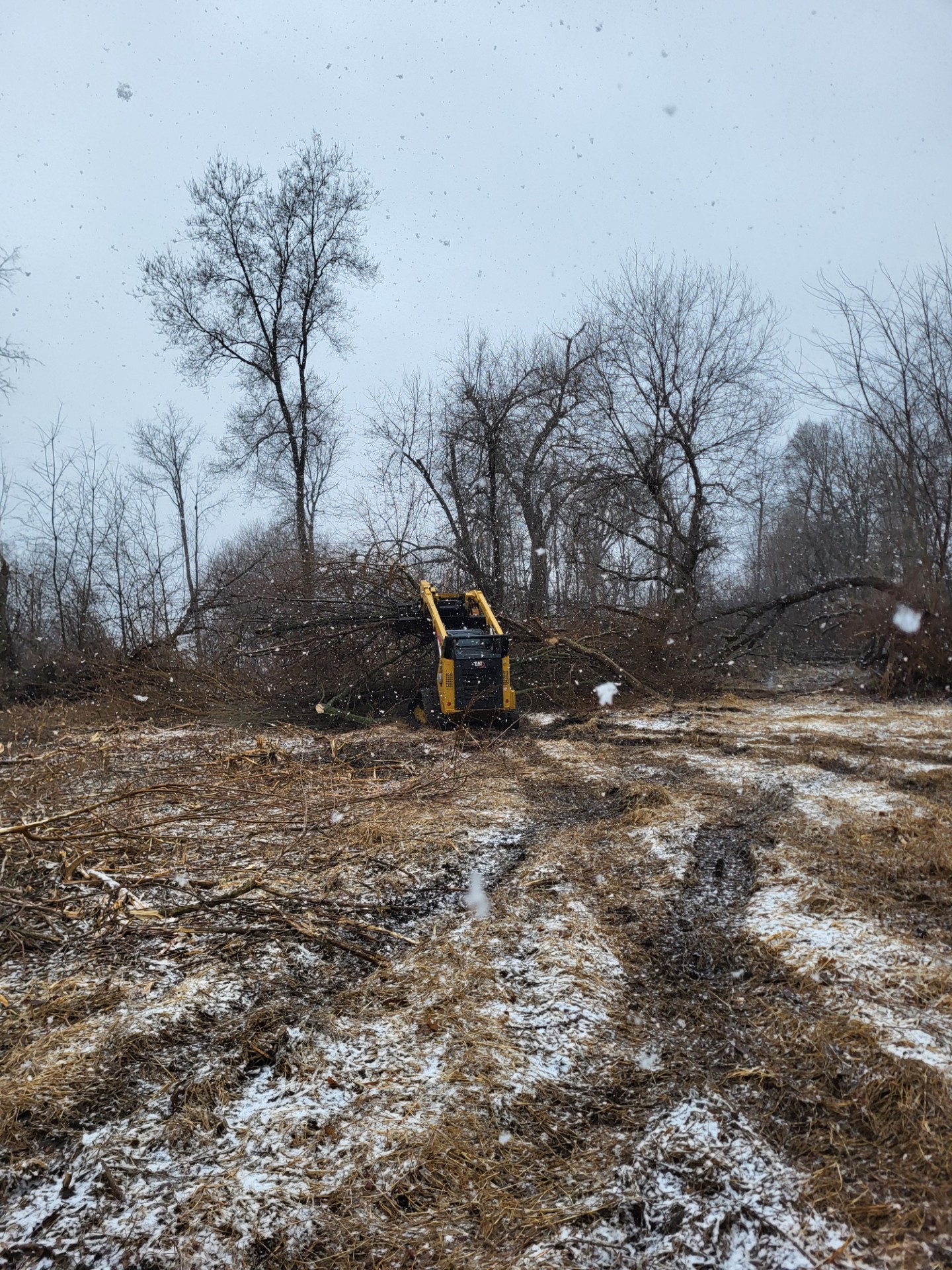
The first step was identifying and protecting desirable understory oak trees that could contribute to long-term stand structure. Once those trees were marked, a contractor was brought in to mechanically remove the remaining understory across the entire 14-acre tract. This grinding work was used to reduce dense woody growth and open the site back up.
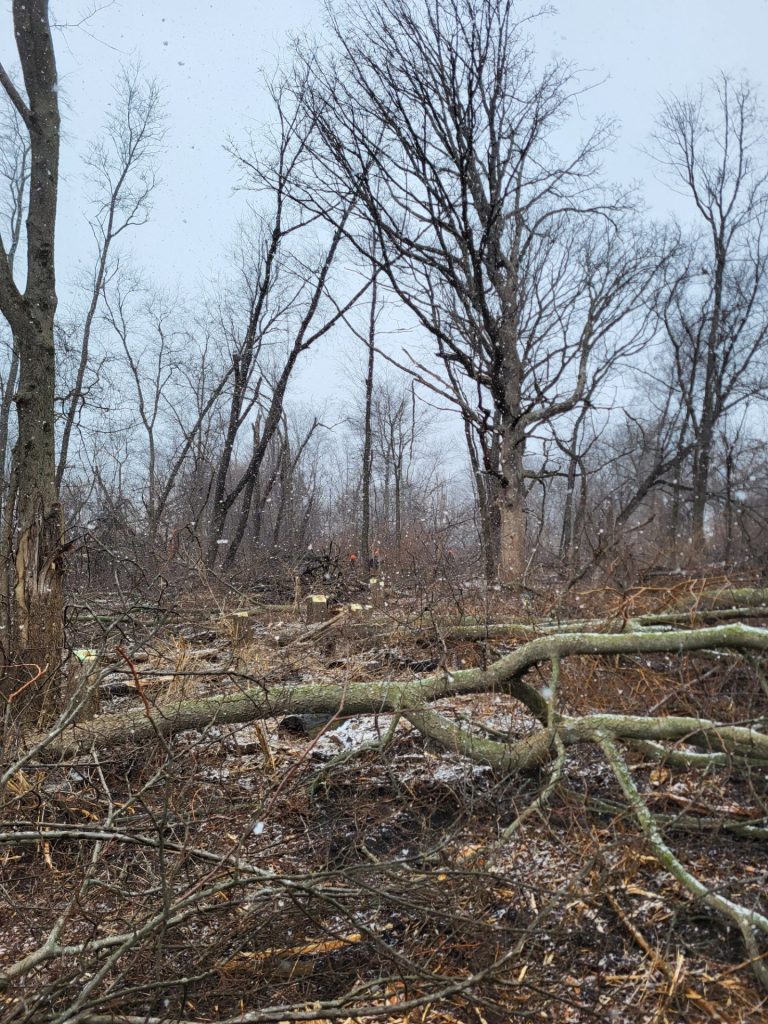
Following mechanical treatment, DNR staff returned to the site to conduct timber stand improvement work. Any remaining undesirable understory and midstory trees were cut and treated to prevent regrowth and further competition with the oaks.
With much of the competing vegetation removed, sunlight was able to reach the forest floor again. That change created the conditions needed for the next phase of restoration work.
Prescribed fire was reintroduced to the site as part of the management strategy. Fire is an important tool in maintaining oak-savanna systems, and in this case, it will help manage regrowth and support native vegetation response over time. Following treatment and fire, staff will continue monitoring the site to evaluate native grass and forb response under the remaining open-grown oaks.
The intended outcome of this work is the restoration of a functioning oak savanna. Objectives for the project include reducing invasive and undesirable species, improving habitat conditions and creating quality brood-rearing habitat for wild turkeys and other wildlife that use the area.
In addition to turkey habitat benefits, restoring open oak woodland conditions is expected to improve roosting and foraging opportunities and increase overall habitat diversity on the landscape. The presence of mature oaks also supports long-term mast production potential, which benefits a wide range of wildlife.
Because Muskrat Slough is a public hunting area, the project also provides direct benefit to hunters who recreate there. Improved habitat conditions enhance the overall experience and support long-term wildlife population sustainability on public land.
The DNR will continue managing the Zimmerman tract into the future. Prescribed fire and periodic maintenance will be used to maintain the open structure and prevent the site from returning to closed-canopy conditions.
“Iowa NWTF members, led by their volunteer board, have always prioritized public lands because, compared to every other state in the nation, they have a lot less of it,” said John Burk, NWTF district biologist. “They demonstrate this annually by putting their dollars to work assisting with acquisitions like Muskrat Slough. Once acquired, they also are eager to put their dollars to work improving these properties, and open woodland and savanna restoration projects rank high because these habitats provide ideal turkey nesting and brood-rearing habitat when properly managed.”
At Muskrat Slough, this project represents more than just habitat work on a small tract of ground. It reflects a long-term commitment to restoring historical habitat conditions, improving wildlife resources and ensuring public land continues to provide value for both wildlife and the people who use it.
The Zimmerman tract is now on a path back toward what it once was: an open oak savanna shaped by light, fire and disturbance.