Calling Fall Toms
A buddy and I had been in the blind for two hours. We hadn’t heard a tom all morning. Then, on the timbered hillside above us, a fight broke out. Frantic purrs, loud cuts, even gobbles echoed through the timber. That’s when I nearly splintered the box call with aggressive cackles.
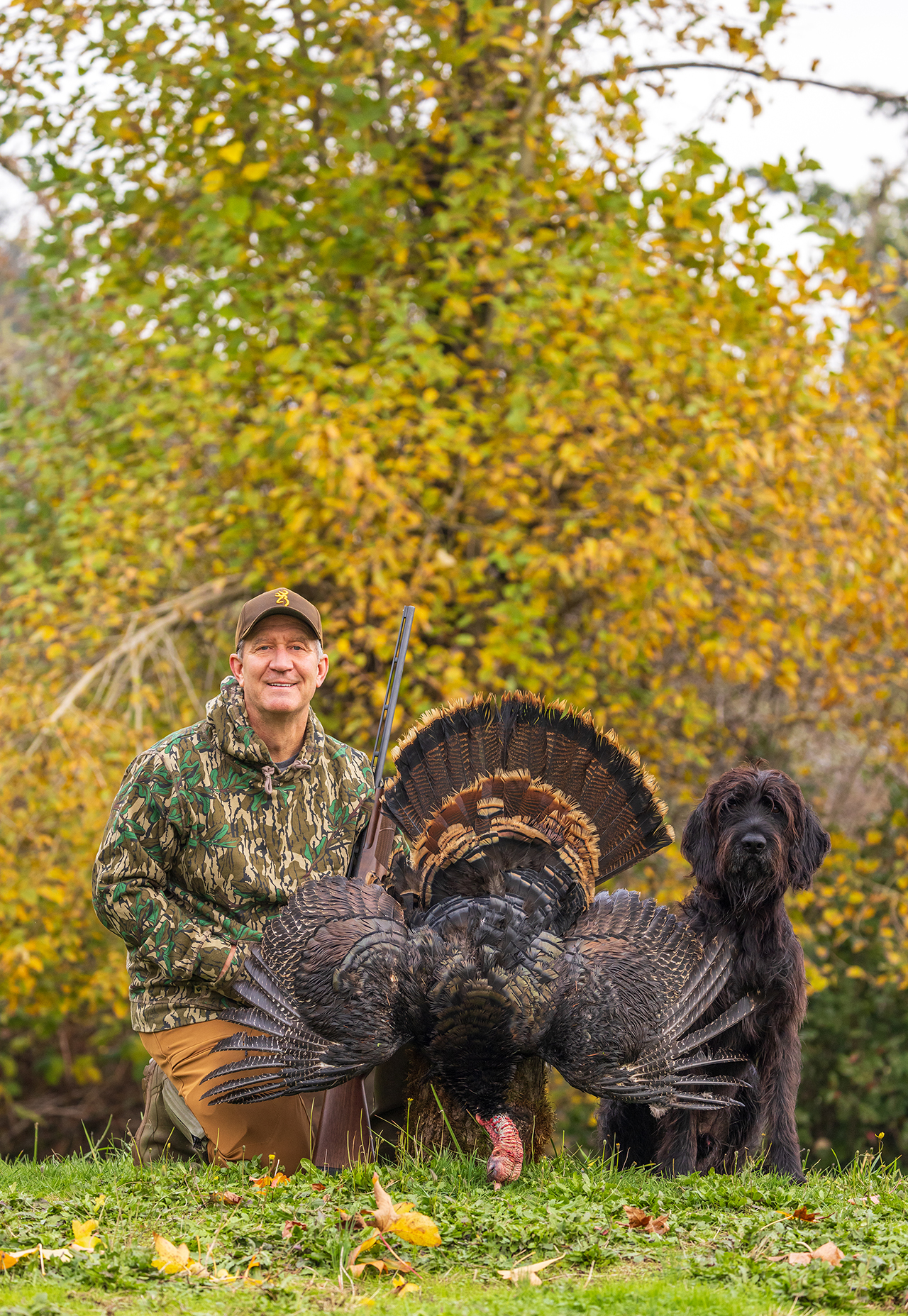
Two hundred yards to the right, another flock erupted. Within 10 minutes both flocks merged, 30 yards in front of the blind. They fought, neck wrestled, spurred one another and gobbled like I’d never heard before.
I slipped in a high-pitched diaphragm call and cut loose with pleading yelps. Three toms broke into a strut and came at us. We each arrowed big toms. Thanksgiving was only two days away.
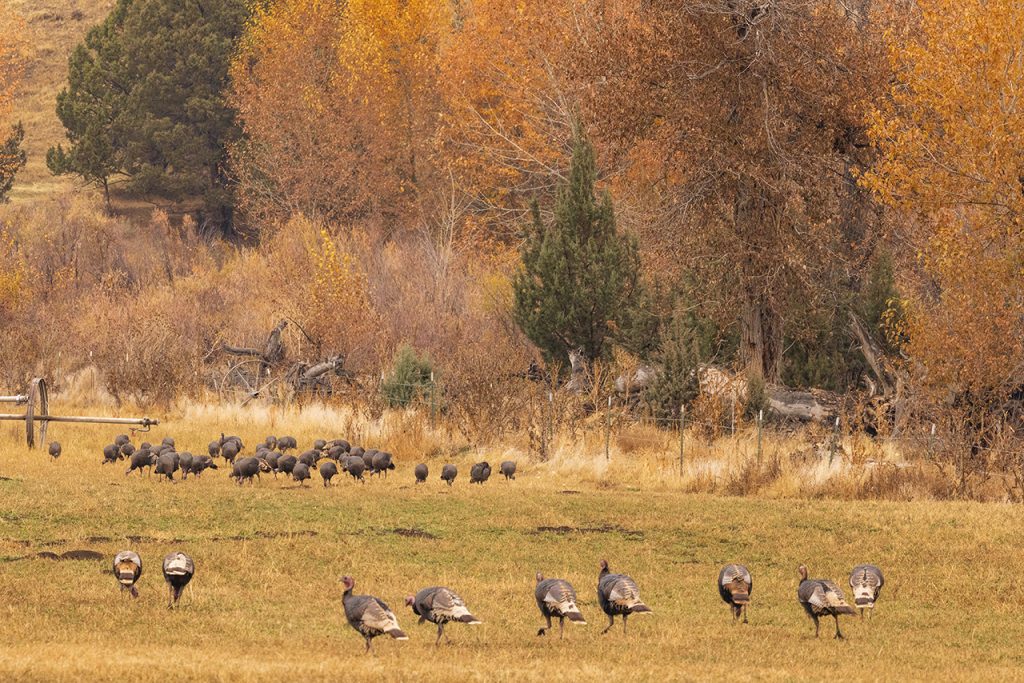
Over 40 toms were in those two winter flocks. We were in the right place at the right time.
Since that hunt over 25 years ago I’ve learned a bit about calling fall toms. In brief, success has come down to capitalizing on situational opportunities relating to weather conditions and turkey behavior.
From September through January, I’ve called in, shot and photographed toms in multiple Western states. The number one factor that’s determined success is the weather. The better the weather, the easier it is to get toms firedup. A dry, sunny day – no matter how cold it is – is hard to beat. On days of heavy moisture, I stay home. Best is a day of dry, sunny weather that’s been preceded by a few days of rain.
One morning in a South Dakota river bottom it was -13 degrees. The toms stayed in the roost longer than usual but when they hit the ground they were strutting and gobbling to every sound I made. More than 20 toms came in on that frosty morning as the sun snuck through a high fog. No decoy was used.
If bachelor flock numbers are high, call a lot. Go loud and aggressive with as many sounds as you can throw out. The goal is to find what excites toms, gets them gobbling, even fighting. Once you induce their desire to fight, the competition to reach the hen overtakes their winter psyche.
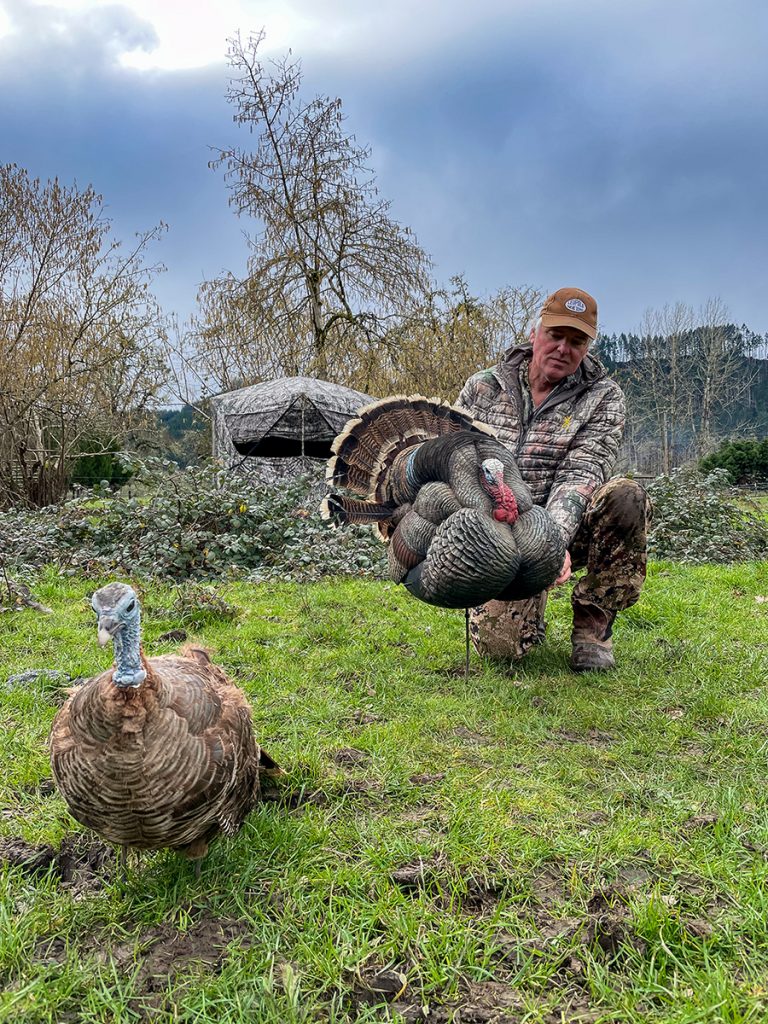
If bachelor flock numbers are low, a hen decoy can help close the deal. One fall I patterned a lone tom on trail camera. After four days of using the same trail in the morning, I set a hen decoy in the tom’s path. When the tom popped into view, I called. The light yelps and purrs turned the tom’s head slightly blue. It came in quiet, never strutted. I figured that tom had been ousted from an older bachelor flock so I called sparingly.
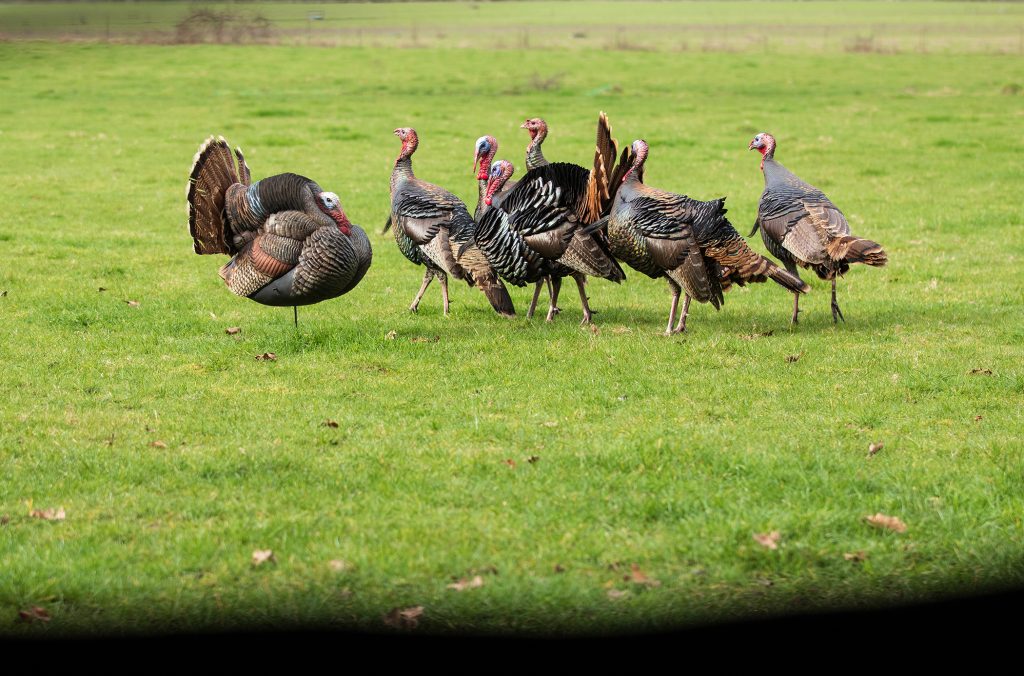
Twice I’ve broken up fall flocks with the intent of calling them back in where each flock included a mix of jakes, jennies, hens and one tom. Once my dog busted up the flock. Both times the lone tom came in after the other birds had come and gone. Again, I guessed those toms to be outcasts of older toms, but even they couldn’t resist the urge to at least look.
Where winter flocks of hens overlap with flocks of jakes and various age classes of toms, a strutter decoy can be the ticket. This is especially the case in January when the urge to breed escalates, especially on sunny days.
Late one January I set a strutter decoy facing an upright hen decoy. I put a ground blind in the trees then hid the ATV. Figuring I had two hours until the toms made their rounds, I was wrong.
Before I reached the blind a flock of jakes sprinted at the decoys. When a flock of toms saw that, they couldn’t close fast enough. Even a mixed flock of jakes, jennies and hens moved in. There was fighting, lots of noise, gobbling and strutting. When I reached the blind, both decoys were laying on the ground, their steel stakes bent. I reset them and called in a group of 11/2-year-old toms 45 minutes later.
Jakes can be very responsive all fall. When with hens, jakes often come in first, their overinflated egos getting the best of them. Large flocks of jakes will pummel a decoy. More aggressive, still, are 11/2-year-old toms as they transition to adulthood. Both are excellent eating and fun to call in the fall. It’s not always about shooting the biggest bird.
Spend time in the fall turkey woods and you might be surprised with the level of communication taking place; the diversity of vocalization greatly exceeds spring. Not only is this a great time to learn turkey vocabulary, but to observe flock dynamics and time your efforts with situational opportunities to put some great eating meat on the holiday table.
For signed copies of Scott Haugen’s popular book, Western Turkey Hunting: Strategies For All Levels visit scotthaugen.com. Follow Scott on Instagram & Facebook.