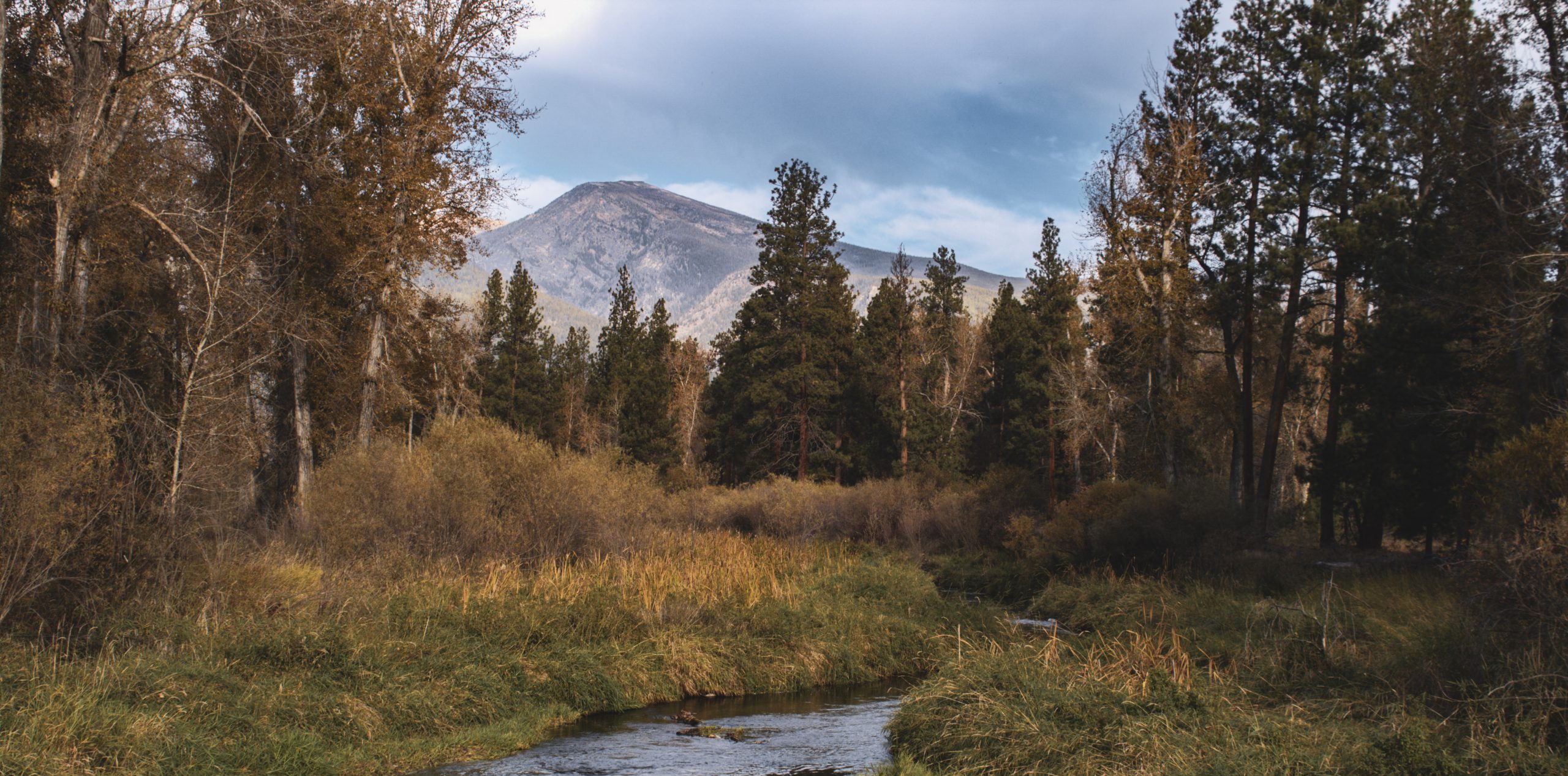
Conservation in Montana’s Bitterroot Valley
Across Montana’s Bitterroot Valley, conservation takes many forms. In this region of Western Montana, the NWTF conservation team is especially plugged into landscape-level conservation projects on both state and federally managed lands. And to fully understand the impact of these projects in the valley, you need to look at the picture as a whole. Though the projects we toured were unique in their own way, they revealed how seemingly different projects are connected by something larger: creating healthier land, healthier wildlife and more resilient communities.
The Bitterroot River was only feet away from the trail when we stopped beside the water. It was our first stop of the trip, and National Wild Turkey Federation biologist Dave Nikonow had brought me to Lee Metcalf National Wildlife Refuge to see a project that, despite the turkey in our organization's name, had as much to do with native trout, water and riparian habitat as it did wild turkeys.
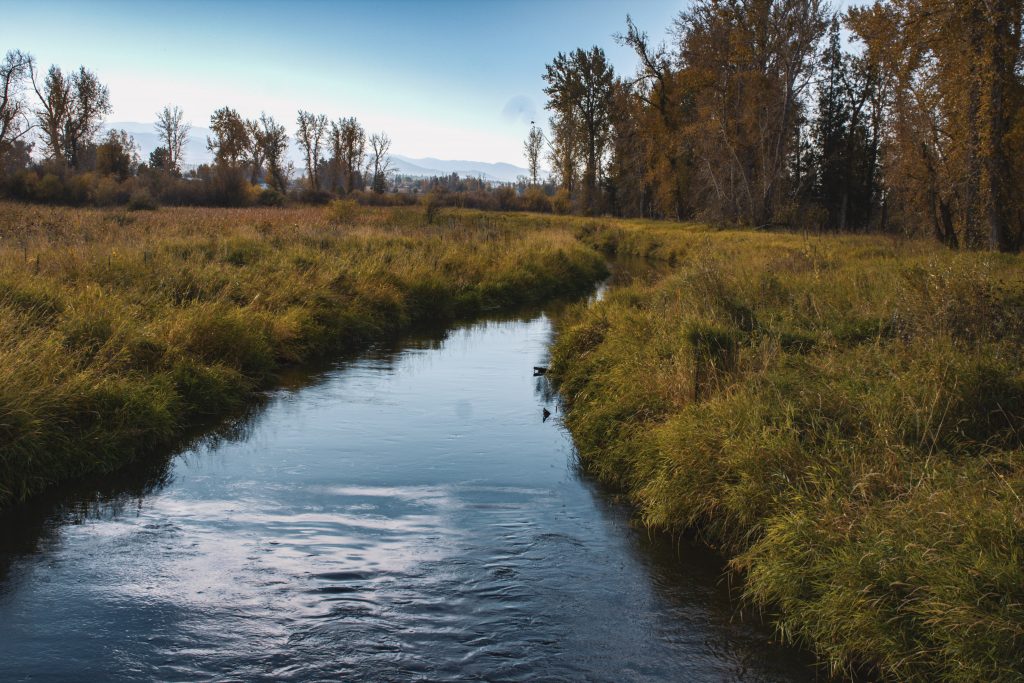
Cold water moved through North Burnt Fork Creek toward the Bitterroot River. Around us, the refuge shifted between forest and open meadow, broken by pockets of water that seemed to be made just for waterfowl.
We hadn't been there long before the wildlife distracted us. Driving around the refuge, Nikonow and I pulled out our binoculars and started picking through the ducks packed onto one of the ponds, trying to identify as many species as we could. It was an easy place to get sidetracked.
At the refuge there are many ways to recreate. People come here to hike, watch birds, and hunt deer and waterfowl. Wild turkeys use the landscape too, Nikonow explained, though spring hunting is not permitted on the refuge. All of those experiences depend, in one way or another, on the health of the land beneath them, and Nikonow showed me what this work actually looks like.
North Burnt Fork Creek is one of the largest tributaries to the Bitterroot River, and the riparian corridor surrounding it has experienced significant habitat loss from encroaching invasive species. Through the NWTF's Waterways for Wildlife Initiative and in partnership with Trout Unlimited; the U.S. Fish and Wildlife Service; and Montana Fish, Wildlife and Parks, restoration work here has focused on stabilizing the stream and restoring native vegetation along its banks.
But standing there, the project didn't look like a list of treatments or acres on a report. It looked like snowberry, willow and wild rose. Nikonow pointed out the native plants that had been established following the removal of invasive reed canary grass. The reed canary grass, he explained, will likely never disappear completely. In places, it is already returning. But removing it created an opportunity for native vegetation to become established again along the creek.
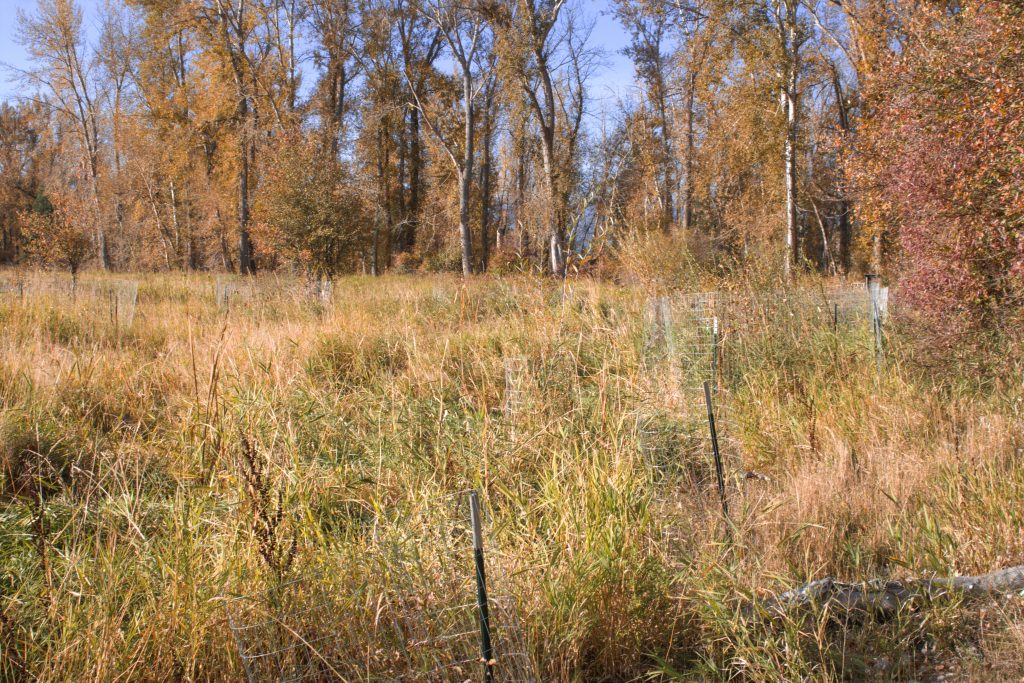
That matters for everything using this narrow strip of habitat. Above the water, native vegetation provides cover and habitat for birds, mammals and wild turkeys moving through the refuge. Along the banks, roots help hold soil in place. Below the surface, stream restoration and stabilization benefit native westslope cutthroat trout.
And while Nikonow and I walked along a trail through the refuge, talking about the work, anglers floated by on the river. It struck me as a particularly good representation of what conservation looks like when it is working. There wasn't one obvious beneficiary.
It would be easy to call this a turkey conservation project because NWTF helped make it happen, but that would undersell what was happening here. Healthy habitat rarely belongs to a single species.
Soon, we left Lee Metcalf and headed toward the mountains. As we climbed into the Bitterroot National Forest, the open valley, dotted with native rabbitbrush, grasses and agricultural fields, gradually gave way to stands of ponderosa pine. Our next stop was Stevensville West Central, another NWTF-supported conservation project.
The project couldn't have been more different from the place we'd just left. At Lee Metcalf, we had been talking about invasive grasses, native plants, streambanks and trout. Here, we were talking about forest health and fire.
As we drove toward the project area, Nikonow pointed out houses situated along the edge of the forest. They were an important part of the story. People live against these public lands. They hunt and hike in them, but they also watch wildfire seasons arrive from their backyards. Forest health in a place like this isn't an abstract conservation issue happening somewhere deep in the mountains. The condition of the forest has consequences for the wildlife living within it and the communities living alongside it.
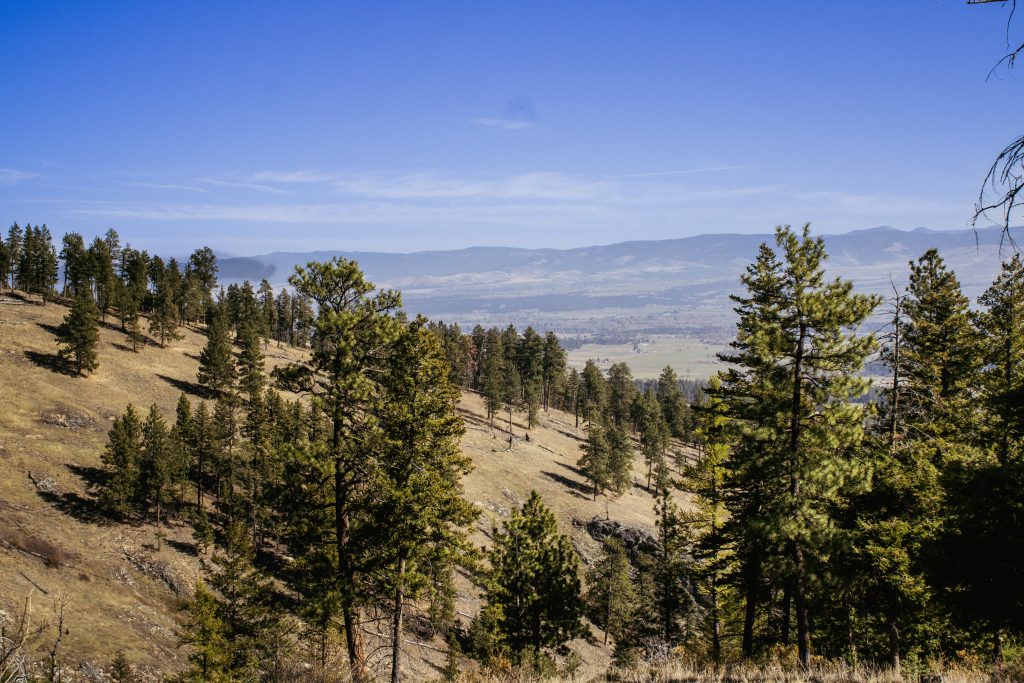
That connection became even clearer at our first stop. Across the forest floor were piles of small trees and woody material that had been cut and gathered together. They will eventually be burned by the USDA Forest Service once they have dried enough and conditions are appropriate.
The trees selected for removal were generally less than 10 inches in diameter. Individually, they didn't look particularly threatening. But Nikonow and USDA Forest Service Assistant Fire Management Officer Tyler Rowe showed me how those smaller trees and vegetation can create a pathway from the forest floor into the canopy of larger trees. That pathway is the ladder.
When fire remains near the ground, large ponderosa pines are remarkably well equipped to survive it. Their thick bark acts almost like armor, protecting the living tree beneath from heat. But give fire enough smaller vegetation to climb, and flames can move upward into the crowns. Once fire reaches the canopy, the conversation changes. Standing there, I could absolutely see it.
Nearby ponderosa pines carried black scars from fire on their trunks. At first glance, the charring looked severe. But Nikonow explained that much of what I was seeing was cosmetic. The trees were still alive. The fire had moved through underneath them and had not climbed into their crowns.
Farther into the project area, we stepped into a place that had been the site of a prescribed burn roughly 16 months earlier. Grasses had already returned beneath widely spaced ponderosa pines, with sunlight reaching the forest floor. Instead of an impenetrable wall of small trees and undergrowth, the landscape felt open.
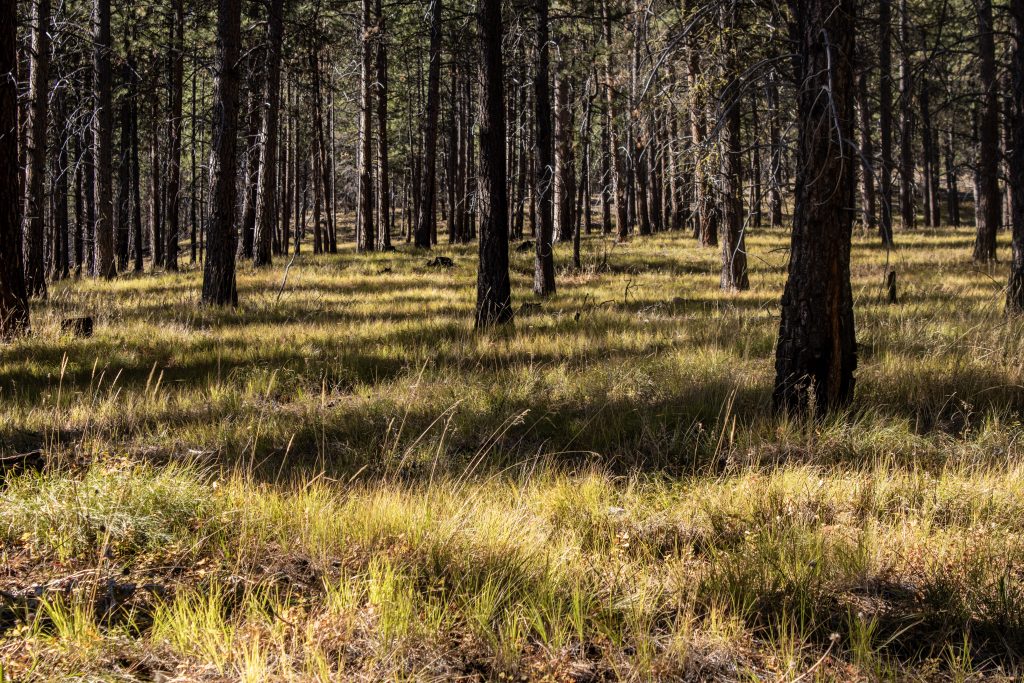
Evidence of fire was still there; some trunks remained charred, but the green crowns overhead told another part of the story. Because ladder fuels had been removed before the burn, the fire had stayed largely where managers wanted it — closer to the ground, and you could see the line. That detail stuck with me.
In the right forest, under the right conditions, fire is an important and necessary part of creating the landscape we were trying to restore. The Stevensville West Central project is intended to improve forest health and wildlife habitat, including habitat for wild turkeys and upland birds. Opening the understory allows grasses and other vegetation to respond, creating food and usable space for wildlife.
But once again, wildlife is only part of the story. Look downhill and there are homes. People whose relationship with this forest isn't limited to the days they choose to recreate in it. Reducing ladder fuels and restoring a more open forest structure can make the landscape more resilient when wildfire eventually returns. It does not eliminate fire, nothing can. Instead, the work can influence what that fire looks like when it arrives. And that makes healthy forests a community issue as much as a wildlife issue.
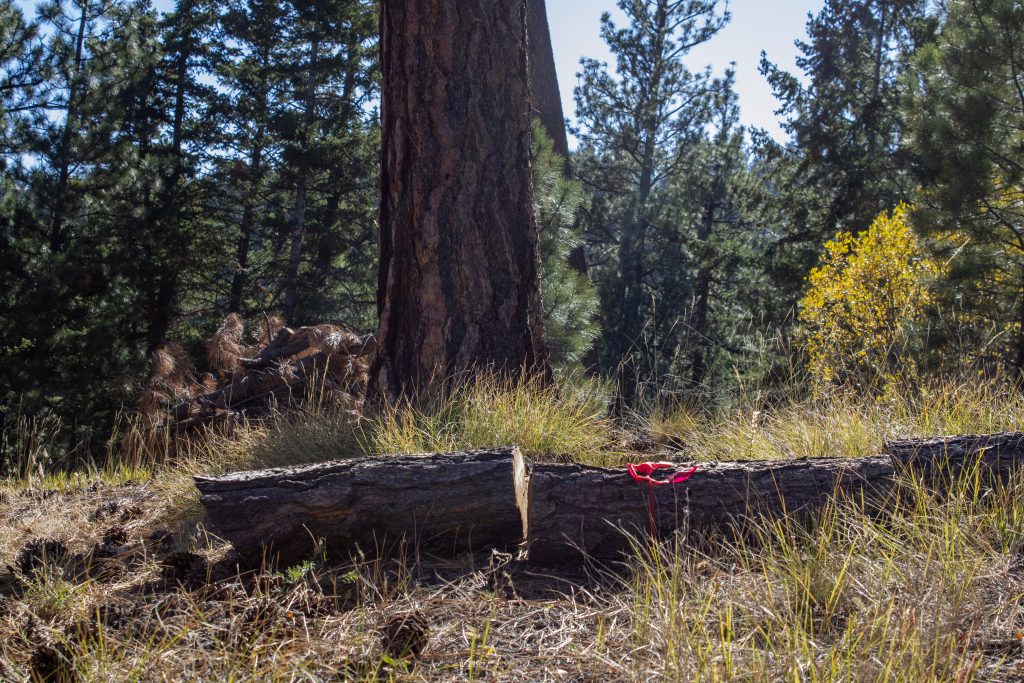
Throughout the field tour, one thing became increasingly clear: conservation is a collaborative effort. People representing different organizations, each bringing their own expertise and perspectives, often find themselves standing beneath the same ponderosa pines, working to answer a shared question: What does this landscape need? The answer may change depending on where you stand, but the commitment to finding it remains the same.
As Nikonow and I continued through the valley, I started thinking about all the boundaries we had crossed along the way. A wildlife refuge, national forest, recreation areas, communities — all places managed by different agencies and stakeholders for different purposes.
Those boundaries matter to us, but not so much to everything else. A wild turkey can move from one ownership to another without knowing it crossed a line. Elk spend part of the year on one piece of ground and winter somewhere entirely different. Water leaving a mountain drainage eventually makes its way downstream. Smoke from a wildfire doesn't stop at the edge of public land.
And the people of the Bitterroot don't experience these places in isolation, either. The angler floating past us at Lee Metcalf and the homeowner living beneath the national forest may have completely different reasons for caring about this landscape. But ultimately, they are depending on the health of the same place.