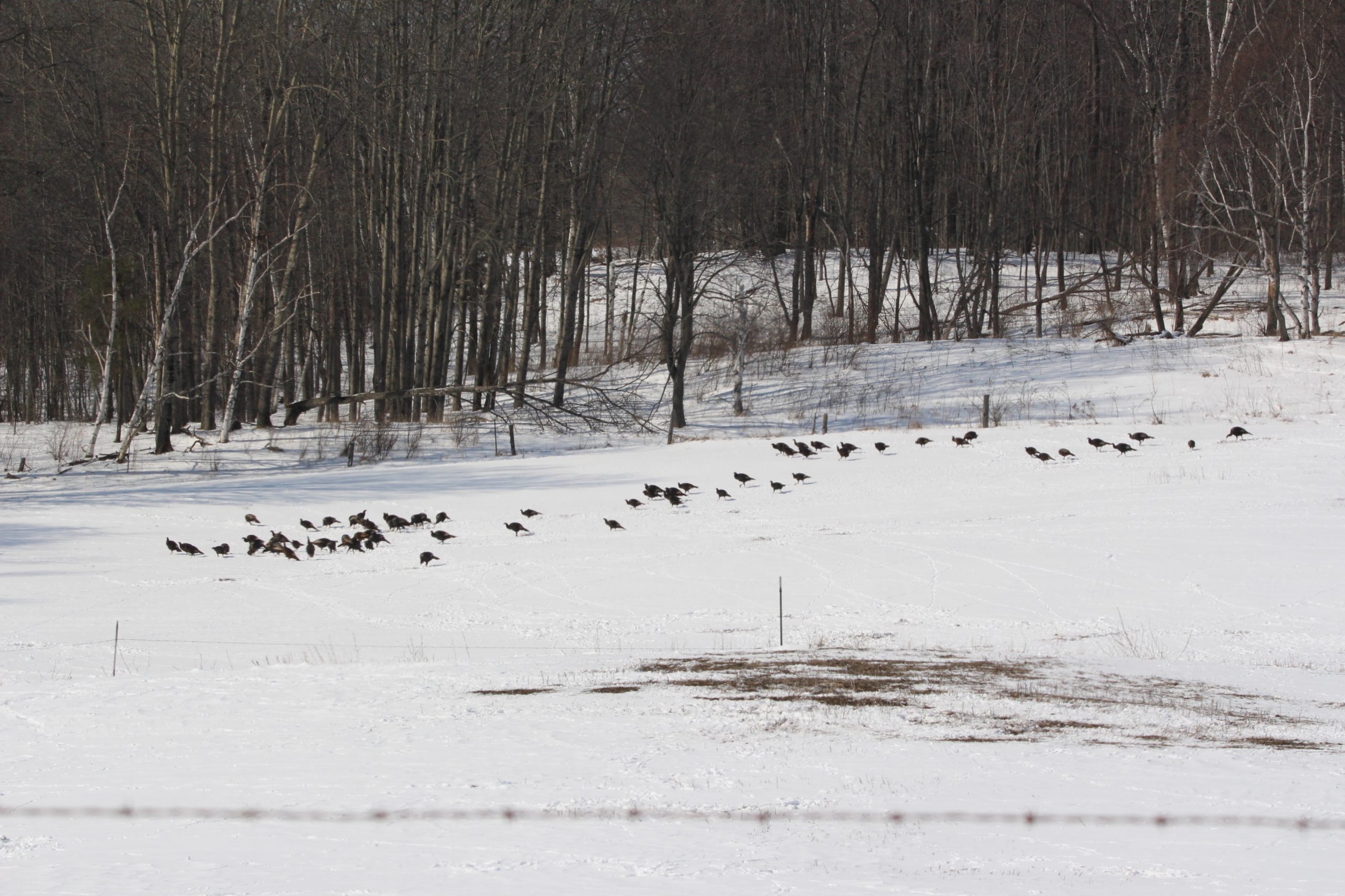
Drought, Wild Turkeys and Winter Flocks
If you live in the arid West, you may have noticed more wildlife showing up in places you might not expect — including wild turkeys.
During dry summer months, natural water sources can become scarce, particularly in areas experiencing prolonged drought. A sprinkler, irrigation ditch, stock tank or other reliable water source can become an important resource for wildlife navigating an increasingly dry landscape. What may look like an unusual gathering in a neighborhood can simply be animals responding to one of the most basic needs of survival: water.
As summer gives way to fall, another seasonal change is on the horizon. Wild turkeys will begin forming winter flocks, often migrating from higher elevations into lower country where food and cover are more readily available. In some areas, that means turkeys may become a more familiar sight around agricultural fields, rural communities and even urban neighborhoods.
For those who enjoy seeing wildlife in their yards, a flock of turkeys can be a welcome sight. For others, flocks of birds moving through a property can be considerably less appealing. Turkeys can disturb landscaping, forage in gardens and leave behind a mess. Those frustrations are real, and acknowledging them is an important part of finding ways for people and wildlife to coexist.
But there is another way to look at the phenomenon.
These birds aren't intentionally invading neighborhoods or causing problems. They are following instincts that have helped wild turkeys survive for generations, moving toward water when conditions are dry and toward food, cover and more favorable habitat when winter arrives.
The landscape around them, however, has changed.
As communities expand into wildlife habitat, the places where people and wildlife live increasingly overlap. A flock of turkeys gathering in a neighborhood may be inconvenient, but it can also offer a reminder of how closely connected our communities remain to the natural world around us.
Understanding that connection doesn't mean every homeowner has to welcome a flock of turkeys into the garden. It means recognizing that there is a biological reason behind what we are seeing and considering the broader landscape that brought those birds there in the first place.
That perspective matters because healthy winter flocks are part of the larger cycle of wild turkey conservation. Birds that successfully navigate drought, winter weather and changing habitat conditions are the birds that can contribute to future populations and, ultimately, future hunting opportunities.
At the same time, conservation doesn't mean ignoring the challenges that abundant turkey populations can create in communities. The National Wild Turkey Federation and its chapters across the West work alongside state wildlife agencies to find practical solutions where turkey numbers and human communities overlap.
In Wyoming, for example, the NWTF has partnered with the Wyoming Game and Fish Department on efforts to trap and relocate abundant wild turkeys from urban areas to more suitable rural habitats. These efforts can help reduce conflicts in communities while placing birds in areas where their presence can benefit wildlife habitat and hunting opportunities.
And Wyoming is just one example of how these challenges can require different approaches in different places. The NWTF works with partners across the country to address each state’s unique challenges and develop solutions that fit its specific landscape, turkey populations and communities. In North Dakota, NWTF-supported research is helping the North Dakota Game and Fish Department better understand survival and productivity of hens involved in its turkey translocation program. The research is designed to inform future management decisions, demonstrating how partnerships can help states develop strategies tailored to their unique needs.
It is a reminder that conservation is rarely about choosing between people and wildlife. More often, it is about finding ways for both to thrive.