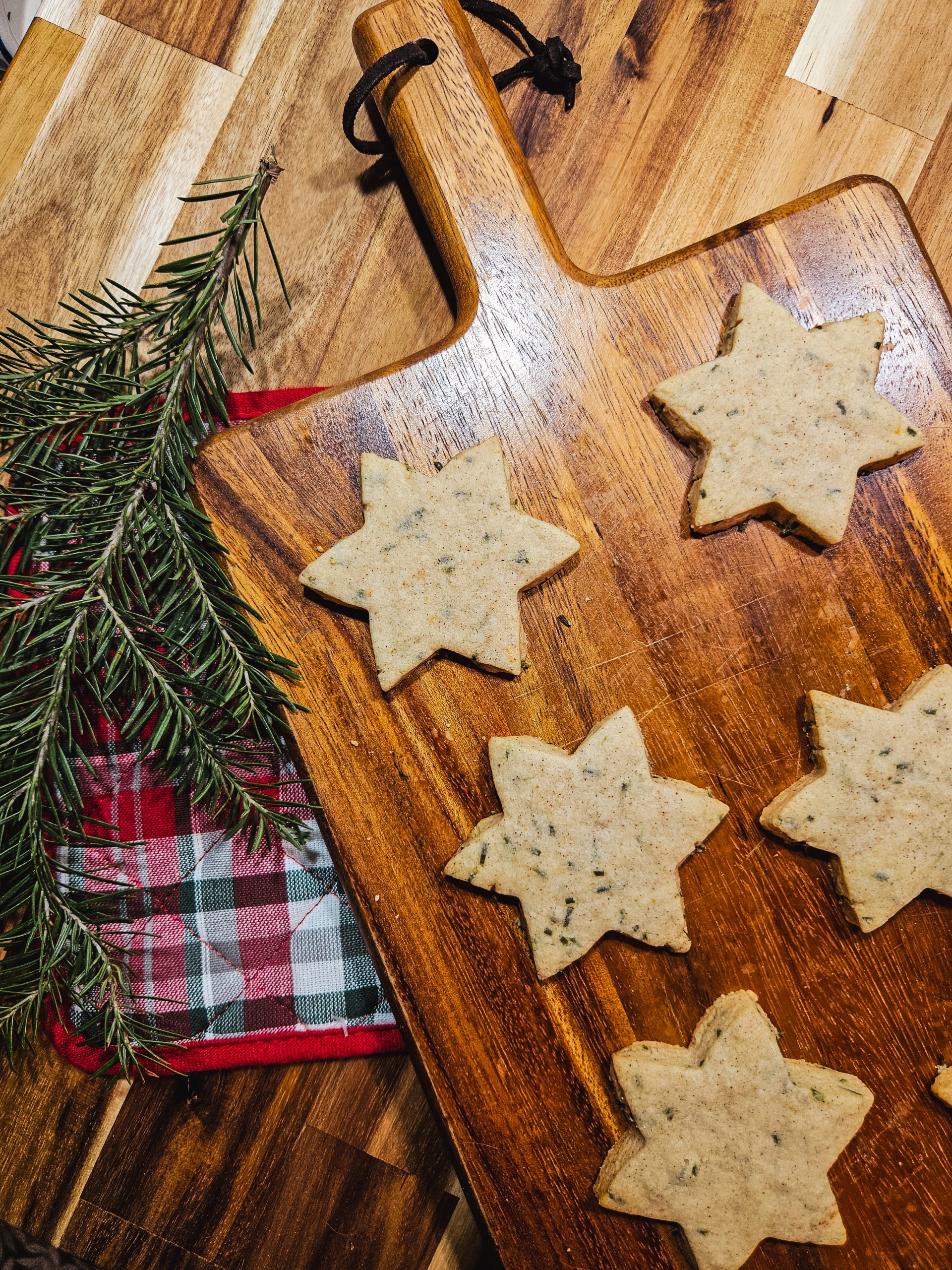
Evergreen Shortbread Cookies
For many, few things say home like the smell of a winter forest. The sharp, fresh aroma of conifers is woven into our memories, eliciting remembrance of early morning hunts, crisp December air and time spent in wild places with the people who matter. This holiday season, you can bring that scent straight into your kitchen with a unique foraged treat with these Evergreen Shortbread Cookies.
These festive cookies pack all the buttery richness of traditional shortbread but add an unexpected twist from the citrusy, forest-bright flavor of edible conifer needles. Douglas fir needles are the star of this recipe, but several other conifers can lend similar notes. Spruce, certain pines and firs (as well as rosemary in a pinch) can all be used, so long as they are truly edible. And as any responsible forager knows: ID first, eat second.
What makes this recipe especially meaningful for hunters and conservation-minded cooks is the connection it reinforces with our landscape. Just as enjoying wild game links us to our heritage, using native plants in the kitchen carries forward generations of knowledge. Long before store-bought spices, the Douglas fir, native to North America, was used by Indigenous peoples and early settlers for teas, medicines and flavoring. Today, we can honor those traditions while celebrating the outdoors we work to conserve.
Whether you’re baking for a holiday gathering, a wild-game dinner or simply to enjoy with a mug of hot coffee after a frosty morning hunt, these cookies are sure to spruce up the conversation.
Before you start this recipe, here are a few tips to help you get started.
- Use clean, untreated, unsprayed trees.
- Gather the tips or new growth, which offer the most tender texture and brightest flavor.
- Correctly identify your tree species, no guessing and no maybes. If you can’t confirm it’s edible, it doesn’t go in the mixing bowl.
- When in doubt, consult a trustworthy foraging guide or extension resource.
- Make sure to check your local forest regulations for any foraging guidelines.
Ingredients
Shortbread Cookies
- 14 tablespoons unsalted butter, softened
- ¾ cup sugar
- 1 egg yolk
- 2 tablespoons orange juice
- 1 tablespoon orange zest
- 1 ½ cups all-purpose flour
- ½ cup cornstarch or arrowroot powder
- ¼ cup edible conifer needles, Douglas fir was used in this recipe
- 1 teaspoon ground cinnamon
- ½ teaspoon ground ginger
- Pinch of salt
Orange Glaze (optional)
- 1 cup powdered confectioners’ sugar
- 2 teaspoons orange zest
- 2-4 tablespoons orange juice
Instructions
- Begin by putting the sugar and fir needles into a food processor and pulse until needles are finely ground and infused into the sugar.
- Cream butter and sugar together until blended and fluffy, then add in the egg yolk, orange juice and zest and stir to combine.
- Whisk together the flour, cornstarch and spices until blended, then add to the butter mixture and beat until the dough comes together.
- Turn dough onto a lightly floured surface and bring it together into a ball with your hands.
- Press into a flat disk, wrap in plastic and refrigerate for at least an hour, but up to overnight if preparing the day before.
- When ready to bake, take out dough to thaw enough to be able to roll out flat and preheat oven to 300 degrees.
- Roll out dough to about ¼ inch thick and cut out cookies with your choice of cookie cutter shape. Alternatively, you can roll the dough into a log before refrigerating and then slice the dough into rounds.
- Place your cut cookie dough on a cooking sheet lined with parchment paper or a silicone mat about an inch or so apart.
- Bake for 20 minutes or until they are just beginning to turn golden brown. You may need to adjust the time depending on the size of your cookies, these were about 2-inch cookies.
- Once finished, remove from oven and allow them to cool for a bit on the sheet before moving them to a cooling rack.
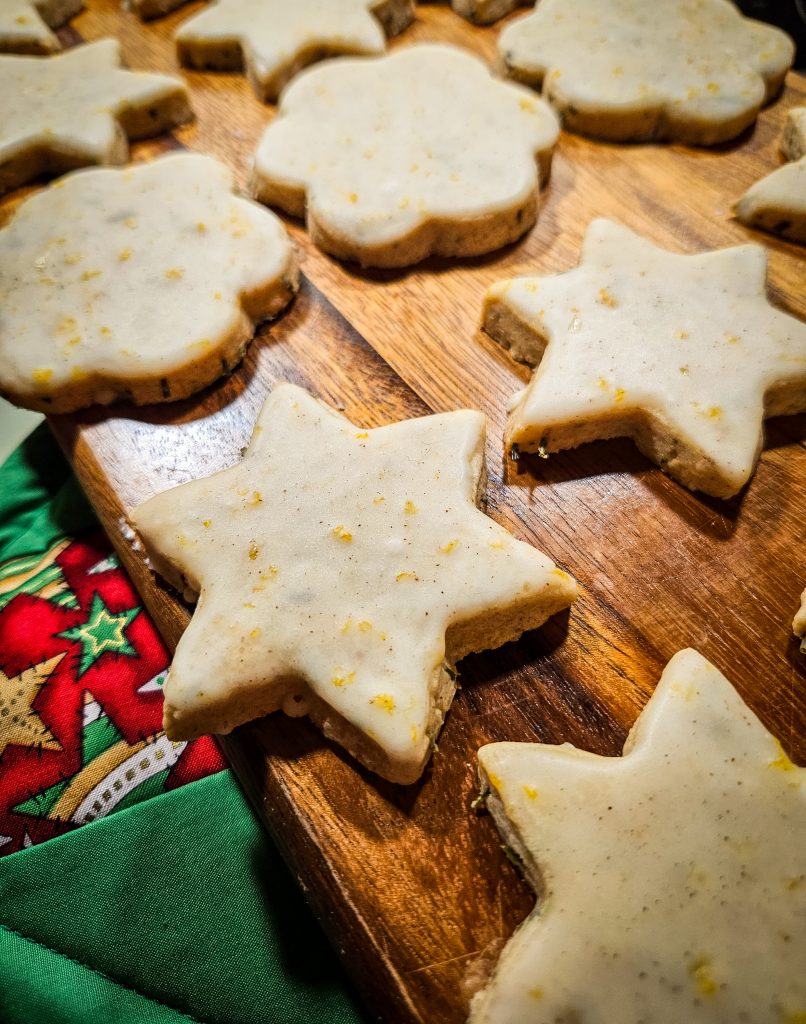
- Whisk all glaze ingredients together, adding more orange juice to thin out your glaze or more confectioners’ sugar to thicken until you get it to a consistency you like.
- Drizzle over your cookies, then you are ready to serve!