Firebreaks and Fly Downs — March 28, 2024
Check out updates from the Southeast, West, Northeast and Midwest for this week's episode of Firebreaks and Fly Downs.
Firebreaks and Fly Downs is a new weekly update where NWTF biologists cover the duality of the NWTF mission — conservation and hunting. We will discuss current conservation efforts on a regional basis and what the birds are doing to help keep you informed this spring. New "episodes" of Firebreaks and Fly Downs will be available every Thursday at 7 p.m. EDT on the NWTF's YouTube channel.
Southeast
Cully McCurdy - NWTF District Biologist (VA, WV, NC)
- Conservation: Burn windows for prescribed fire applications have been scarcer this year due to high winds and low humidity. However, the winds have dried soils in many project areas allowing large equipment work earlier in the spring.
- Hunting: Through personal observations and reports from numerous hunters, birds are missing from fields where they normally are seen by this time in the early spring. However, early gobbling in these same areas prove the birds are still there. So as of right now, we will expect the unexpected.
Midwest
John Burk - NWTF District Biologist (MO, IA, IL)
- Conservation: Management season is in full swing. Prescribed fire is being applied daily and efforts to control invasive species are kicking off strong. Most of the burning that is occurring on the Shawnee National Forest is ignited aerially. All of the ignition spheres used to ignite these fires are called "dragoon eggs" and the NWTF paid for all of the dragon eggs currently being used by the Shawnee to do their dormant season burns.
- Hunting: Turkey Season in Illinois are not yet open. Temps have gotten the birds out and about. Although spring seems to have sprung a little early here in the Midwest, the primary driver of the onset of breeding season is day length and that does not change from year to year. The secondary driver is dietary threshold. Since egg development requires a high protein diet, when winter hastens to release it's grip, soil temperatures stay low delaying spring green-up and invertebrates stay dormant. Unless and until the hens can achieve a minimum protein threshold, egg development does not occur. Therefore, "spring" can be later but it cannot really be earlier. Active breeding is occurring as evidenced by trail camera photos from a Kingdom of Callaway Limbhangers committee member taken last weekend in central Missouri but we are on track for a normal season in the central portion of the Midwest which usually means most hens will be sitting by the end of April like they should be.
Northeast
Matt Dibona - NWTF District Biologist (NY, ME, MA, NH, VT, CT, RI)
- Conservation: Current projects involving the NWTF include a few volunteer work days and workshops on apple tree management. These typically take place during the month of March.
- Hunting: Birds are mostly still in winter flocks. Lots of people are reporting not seeing as many winter flocks this past winter, but it is likely more due to a mild winter (until a recent snow storm dumped as much as two feet of snow through parts of New Hampshire, Maine and Vermont), lower snow depths and plenty of mast forage (food) in the woods. NWTF is hosting turkey hunting seminars in Massachusetts and Vermont this month.
Doug Little - NWTF Director of Conservation Operations (East)
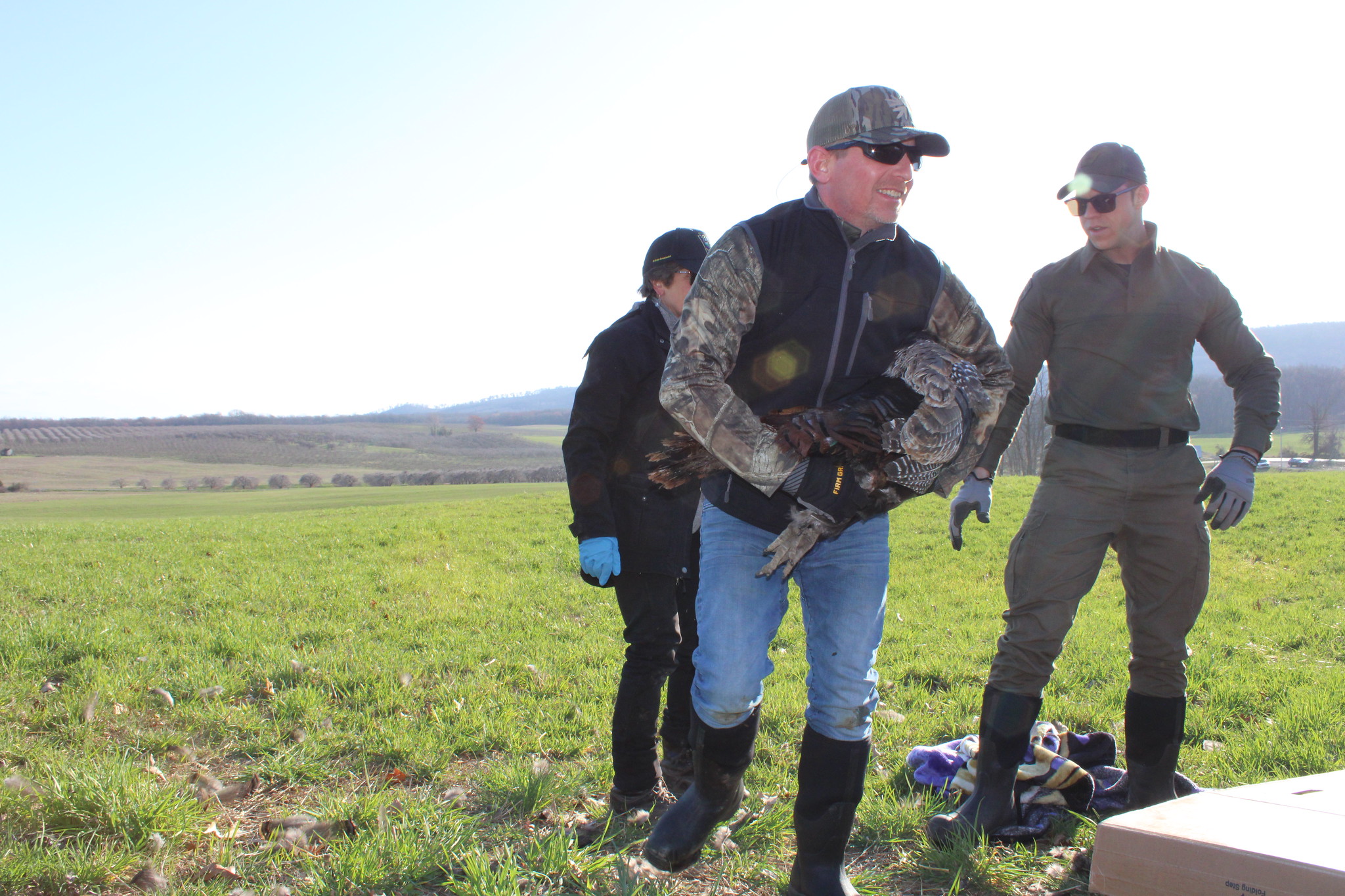
- Conservation: NWTF staffers are assisting with turkey trapping gobblers and jakes for a Pennsylvania banding and harvest rate study. The NWTF also attended a quail release on a site where the NWTF has does extensive conservation work.
- Hunting: Two weeks ago in eastern New York we had a teaser of spring and birds temporarily dispersed from winter flocks and gobbled on the limb and the ground for a good bit. Fast forward to this weekend, and they are back in winter flock mode as we were hit with a few inches of sleet and snow over the weekend. Last week in southern Pennsylvania (sandwiched between the 2 weeks I am speaking of in NY), we had a great morning trapping turkeys. We caught six jakes and one longbeard that were gobbling really well before they flew down off the limb.
West
Chuck Carpenter - NWTF District Biologist (UT, NM, AZ, ID)
- Conservation: Tree planting operations have commenced across multiple Wildlife Management Areas.
- Hunting: Winter flocks are still present on the landscape and the pecking order among jakes and toms is being sorted out. There will be heightened gobbling activity and increased strutting as temperatures rise. Late spring storms are keeping birds at lower elevations.
To listen to full interviews from all NWTF conservation staffers, please check out the Firebreaks and Fly Downs March 28 edition.