Freestyle Sounds
Die-hard hunters dearly love hen boxes for their versatility and freestyle sound. This type of turkey call is so unique that it falls into a category of its own.
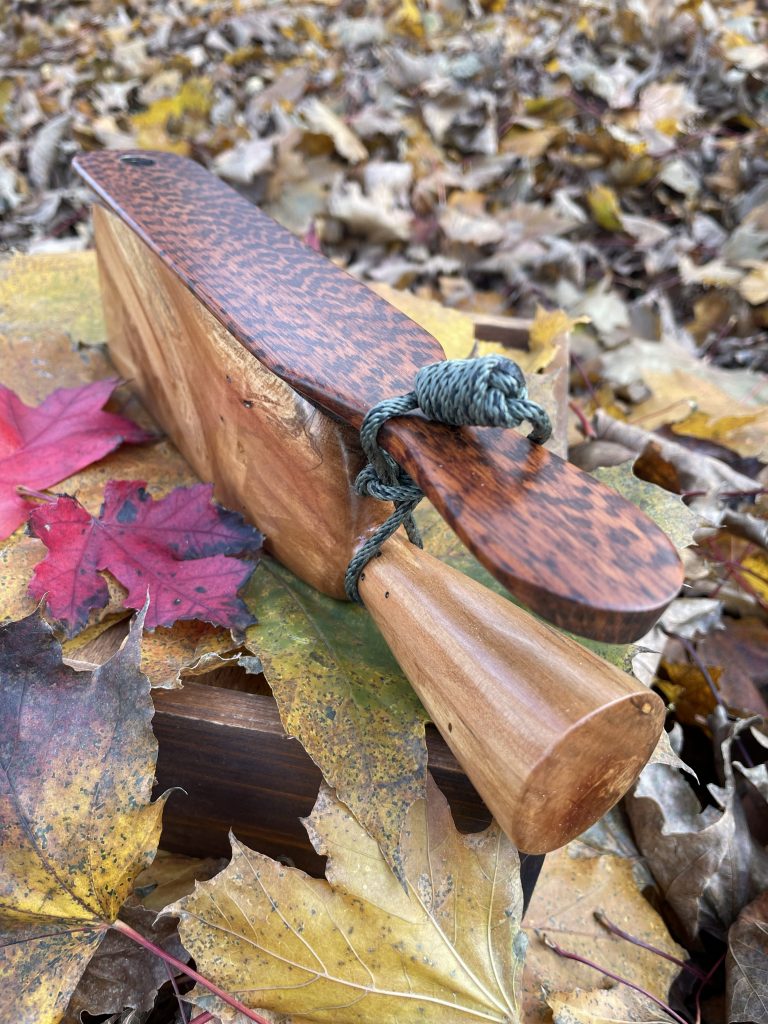
The Grand National Callmaking Competition has several categories of box calls, including two for Tom Turpin-style hen boxes. Hunting Division 2, Category 4 is for the Tom Turpin hen box handled design, and Category 5 is for the non-handled version.
The rulebook defines a hen box as a traditional, solid, one-piece box design with straight outside walls (at right angles to the bottom) and no spring under the paddle. The call length is not to exceed 11 inches, including the handle. Non-handled hen boxes are not to exceed 8 inches.
In comparison, short-box dimensions are typically 10 inches or less. Long boxes are 11 inches or longer. In addition to that size difference, hen boxes typically have significantly taller sound chambers — such as 2¾ inches tall — compared to standard short or long boxes, which might have chambers that are 2 inches tall. That helps hen boxes achieve their distinct sound and stand out from the crowd.
As the names of categories 4 and 5 imply, legendary call maker Tom Turpin of Memphis, Tennessee (1872 to 1956), is credited with first developing and building this type of box call. Through the decades that followed, this call style has been crafted by many custom call makers and remains a traditional option today.
Modern expert hen-box call makers include Matt Fulkerson (Fulkerson Turkey Calls) of Central, Indiana, and Richard Hudson (Hudson Hen Box) from Saint Charles, Arkansas. They’re good friends who met through custom call making. Fulkerson credits Hudson for influencing him and helping him get started building calls.
These craftsmen have been competing in the callmaking competition for many years, and each has won their fair share of ribbons, medals and top honors.
Both call makers agree that hunters should be interested in a hen box for its unmatched realism and versatility in producing a wide range of turkey sounds, mainly because it has no spring under the lid, which allows for freer, more varied sound capabilities.
“On a hunt, hen boxes deliver crisp, pure and authentic turkey tone,” Fulkerson said. “Volume and tone control tend to come more naturally, as the straight walls and lid freedom let you dial in subtle or aggressive calls without mechanical limits.”
“A hen box is a valuable tool that should be in any turkey hunter’s vest, as it provides a totally different sound,” Hudson said. “With some practice, hen boxes are pure death for turkeys. Their versatility is unparalleled, from the soft tree clucks to excited yelps and cutting.”
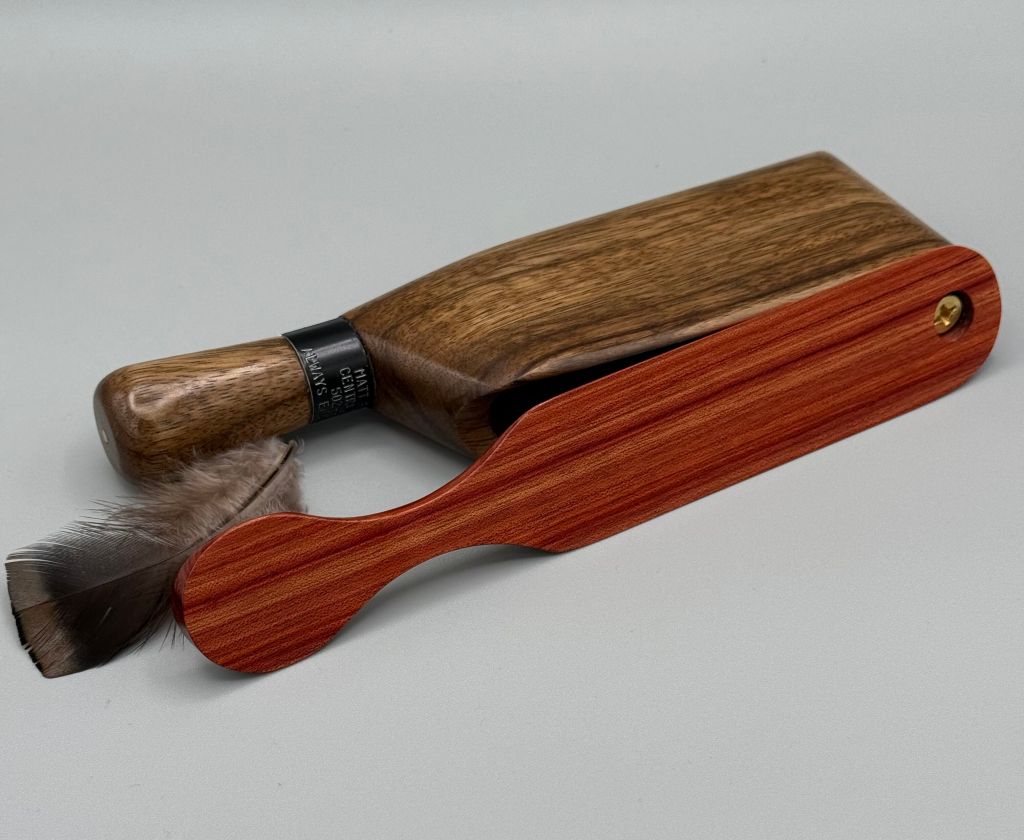
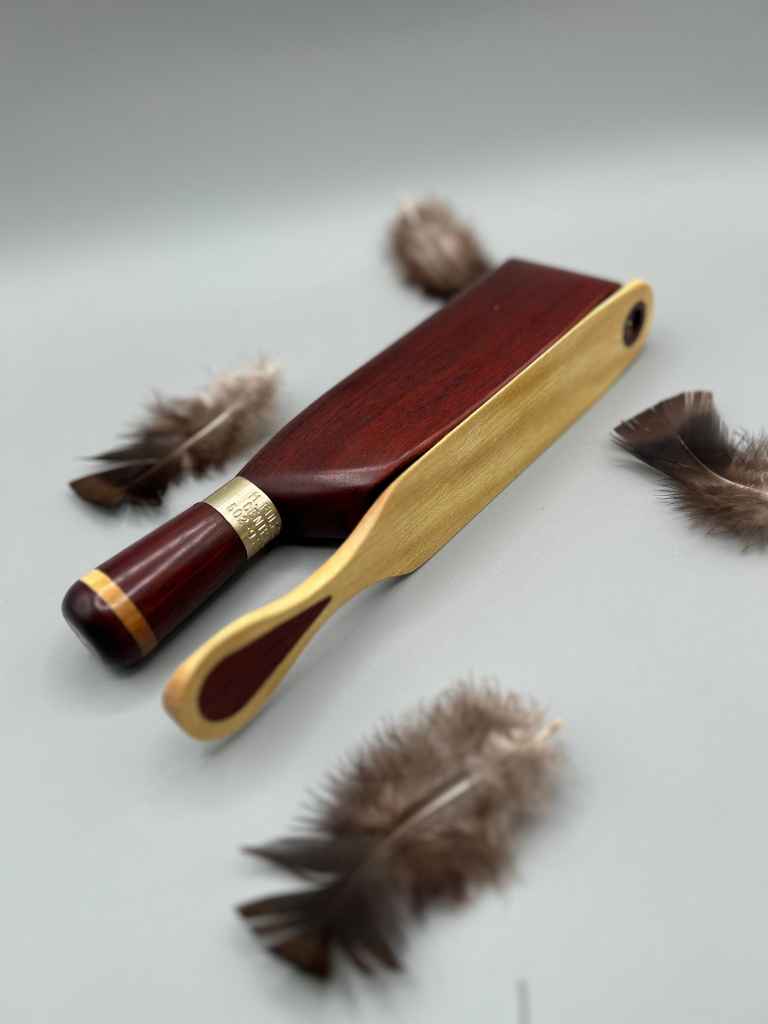
They also agree that the handled version is their go-to preference.
“The handle allows for an ergonomic grip,” Fulkerson said. “It lets me grab both call and lid simultaneously and silently, ready to run without noise or fumbling in the moment.”
“The handle on the box allows the call to be played without putting any pressure on the sound chamber when running it,” Hudson said.
Because of this call’s size, overall design and the uniqueness of its handle, playing a hen box is more challenging to master. However, the added versatility of sound, enabled by the ability to run them more freely, is their greatest asset.