Cutting the Distance
Research shows that arrangement of habitat is crucial to turkey poults’ survival.
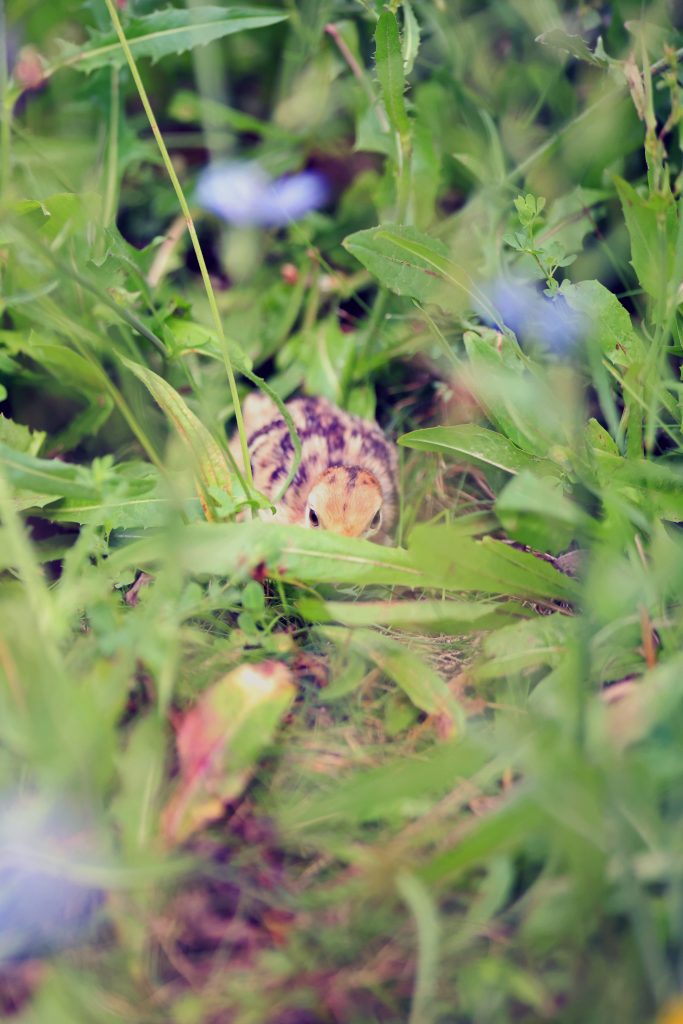
Many factors are at play when we look at wild turkey populations, including nest success, female survival and others. From a habitat management standpoint, though, a key piece of the puzzle is brood rearing. Research shows nest success often averages around 25%. Poult survival to 28 days can average near 30%. Brood rearing is one of the most demanding and risky periods in a hen’s year. The importance of brood rearing is magnified by declining poult per hen ratios, which state agencies commonly use as an index of recruitment. While many factors influence whether poults live or die, habitat is one we can directly control.
Research consistently shows that poults rely on early successional habitat, which generally includes a diverse mixture of grasses, forbs, and bare ground. For broods, this is typically knee-high vegetation that provides overhead cover while remaining open enough at ground level for poults to move. Vegetation cannot be so dense and tall that hens lose visibility and mobility, as their developing instincts to detect predators and flee is crucial. Thick vegetation, such as dense non-native, warm-season bunch grasses, limits movement by broods. Research out of the University of Georgia and Tennessee Tech has shown that poults avoid areas with dense woody understory, instead selecting areas with greater grass and forb coverage and insect abundance, which are closely linked.
In the Southeast, research demonstrates that brood habitat near hardwood cover is important. This shaded cover can offer cooler temperatures during the summer, helping poults regulate their body temperature. Distance to hardwoods also becomes more important as poults age. Poults begin roosting in trees around 12 to 14 days after hatching. Hens often shift brooding sites toward areas that include nearby hardwoods for roosting. Multiple studies have shown that hens use early successional habitat in a variety of cover types, commonly open areas like old fields, road edges and food plots, as well as thinned or frequently disturbed pine stands and hardwood systems.
One of the most important insights from recent research is that early successional habitat needs to be spread across the landscape. For example, a property may have a good percentage of early successional habitat, but hens may have to travel long distances to reach it if it is all concentrated in one area. Research shows that broods forced to travel long distances have lower survival rates, especially during the first few days after hatch.
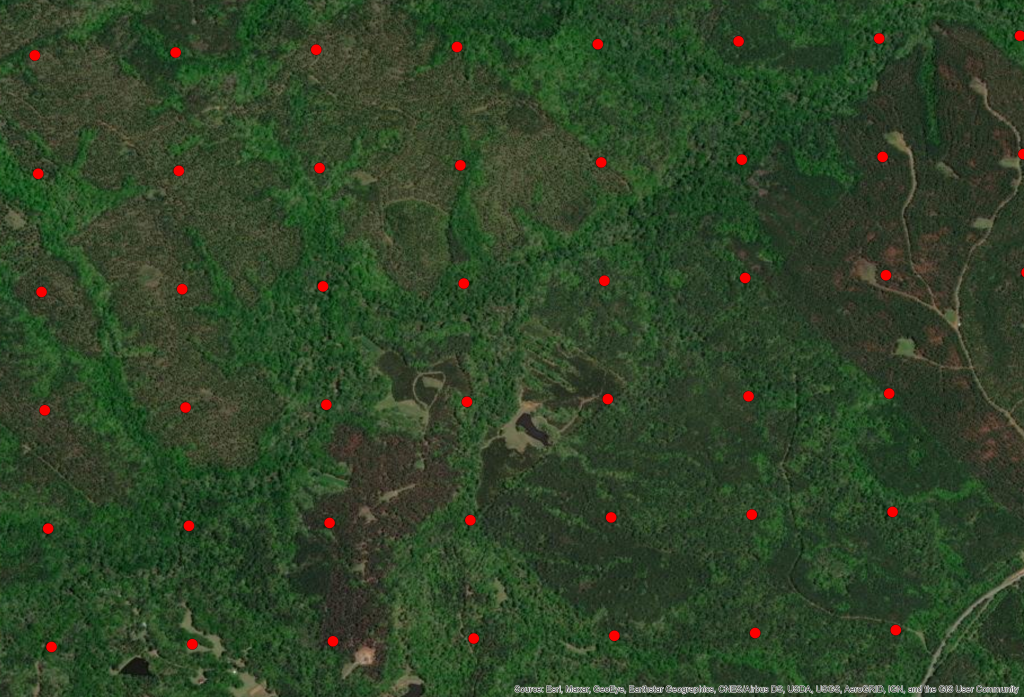
For that reason, I encourage people to think about spacing rather than just acreage. One practical approach is to overlay a grid across a property with points roughly 500 yards apart and treat each point as a potential nest site (as shown below). Then, ask a simple question. Would a hen need to travel more than 500 yards in any direction to reach usable early successional habitat? Any “Yes” answers reveal opportunities to improve both the amount and distribution of brood habitat.
Management tools that increase sunlight and maintain “disturbance” are key to creating these conditions. Disturbances such as prescribed fire, disking, timber stand improvement, roller chopping and similar practices can all be effective.
The NWTF continues to invest in research to better understand the relationships between wild turkeys and their habitat. Work in Kansas and Florida is improving our understanding of poult diet and survival in quality brooding habitat to help inform early successional management. At the same time, new technologies are providing additional insight. Studies using accelerometers, like activity sensors in devices like a Fitbit or Apple Watch, integrated with GPS units show that a large proportion of brood mortality, often exceeding 80%, occurs at night. These tools afford an opportunity for future research to better understand precisely where and when mortality occurs and what habitat conditions are associated with those events.
Looking ahead, several important questions remain for research. We need a better understanding of how different types of early successional habitat influence poult survival and recruitment and how those benefits scale across larger landscapes. We also require more information on juvenile survival between 28 days post-hatch and the following spring. This is a time period that remains poorly understood. We will also benefit from research that demonstrates to landowners and managers what kind of return they can expect, outlining how increasing brood habitat translates into measurable gains in recruitment.
The practical takeaway is that brood habitat is not just about acreage; it is about how it is arranged and how accessible it is. The more we can reduce the distance between nesting areas and usable brood habitat and ensure access to key features like hardwood cover when needed, the better chance we give poults to survive.