How Research Is Shaping the Future of Western Wild Turkeys
For decades, biologists studying wild turkeys in the West have asked a deceptively simple question: What does a turkey need to thrive here? The answer has never been as simple as it might seem.
The West is not one landscape, and its wild turkeys are not one story. Merriam’s wild turkeys occupy mountainous forests and ponderosa pine landscapes. Gould’s wild turkeys live in isolated mountain ranges known as Sky Islands along the Arizona-New Mexico border and into Mexico. Rio Grande turkeys have been translocated into portions of the West, creating new populations far from their historic range.
Understanding how each population responds to its surroundings has required decades of research, and the questions biologists ask today look remarkably different from those asked by researchers generations ago.
That evolution is important because research does more than add another data point to a scientific paper. It helps determine where habitat work happens, how turkeys are moved across the landscape, how hunting seasons are structured and where conservation dollars can have the greatest impact. For NWTF members, it is research with a direct connection to the birds and landscapes they care about.
Building a Foundation
Western turkey research has deep roots. In 1946, J. Stokley Ligon published History and Management of Merriam’s Wild Turkey, one of the first major ecological treatments of the subspecies in the Southwest. Researchers including Harley Shaw and Richard W. Hoffman continued building knowledge about Merriam’s habitat use, movements, roosting behavior and home ranges.
Hoffman and colleagues eventually helped produce the 1993 Management Guidelines for Merriam’s Wild Turkeys, a synthesis that brought decades of western research together for managers.
Much of that early work focused on establishing a baseline: Where do turkeys go? Where do they nest? What makes suitable roosting habitat? Can birds survive when moved into new areas?
Those questions were especially important in the West, where turkey populations have often been shaped by restoration and translocation efforts.
In Oregon, for example, researchers studied Rio Grande turkeys that had been translocated outside their historic range, examining renesting, brood habitat, reproduction and survival. In Arizona, decades of research helped demonstrate that restoring the correct subspecies to the correct habitat was critical to success. And nowhere is that lesson more evident than in the recovery of Gould’s wild turkey.
Learning From What Didn't Work
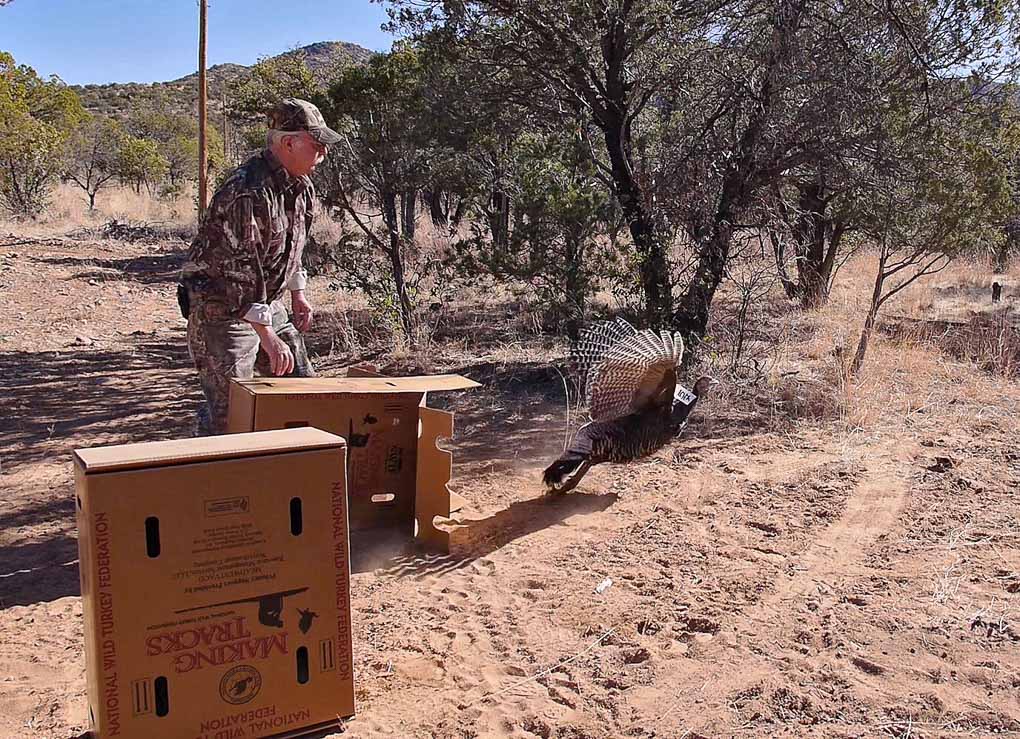
Gould’s wild turkey occupies a naturally limited and fragmented range in the Southwest. From 1938 to 1980, restoration attempts repeatedly struggled in part because the wrong subspecies was being used. The eventual solution was not simply to release more birds. It was to better understand the birds themselves.
Arizona Game and Fish Department biologists, including Brian Wakeling and his colleagues, developed and validated habitat-suitability models to identify areas capable of supporting Gould’s wild turkeys. Modern quarantine facilities and improved transport methods further strengthened restoration efforts.
The result was one of the West’s clearest examples of research directly changing conservation outcomes. Populations expanded across five mountain ranges, eventually supporting Arizona’s first modern Gould’s wild turkey hunting season in 2003.
The lesson was bigger than Gould’s. Successful conservation depends on understanding the biology of the animal and matching management decisions to the landscape, and that principle continues to guide western turkey research today.
Advancing Technology
The tools have also changed dramatically. Beginning in the 1970s, biologists increasingly used very-high-frequency, or VHF, radio telemetry to study turkey movements, survival and habitat use. Researchers could learn where a bird was spending time, but gathering that information often meant physically locating the bird in the field, sometimes resulting in only a handful of locations each week. Those studies laid the foundation for much of what managers know about western turkeys today.
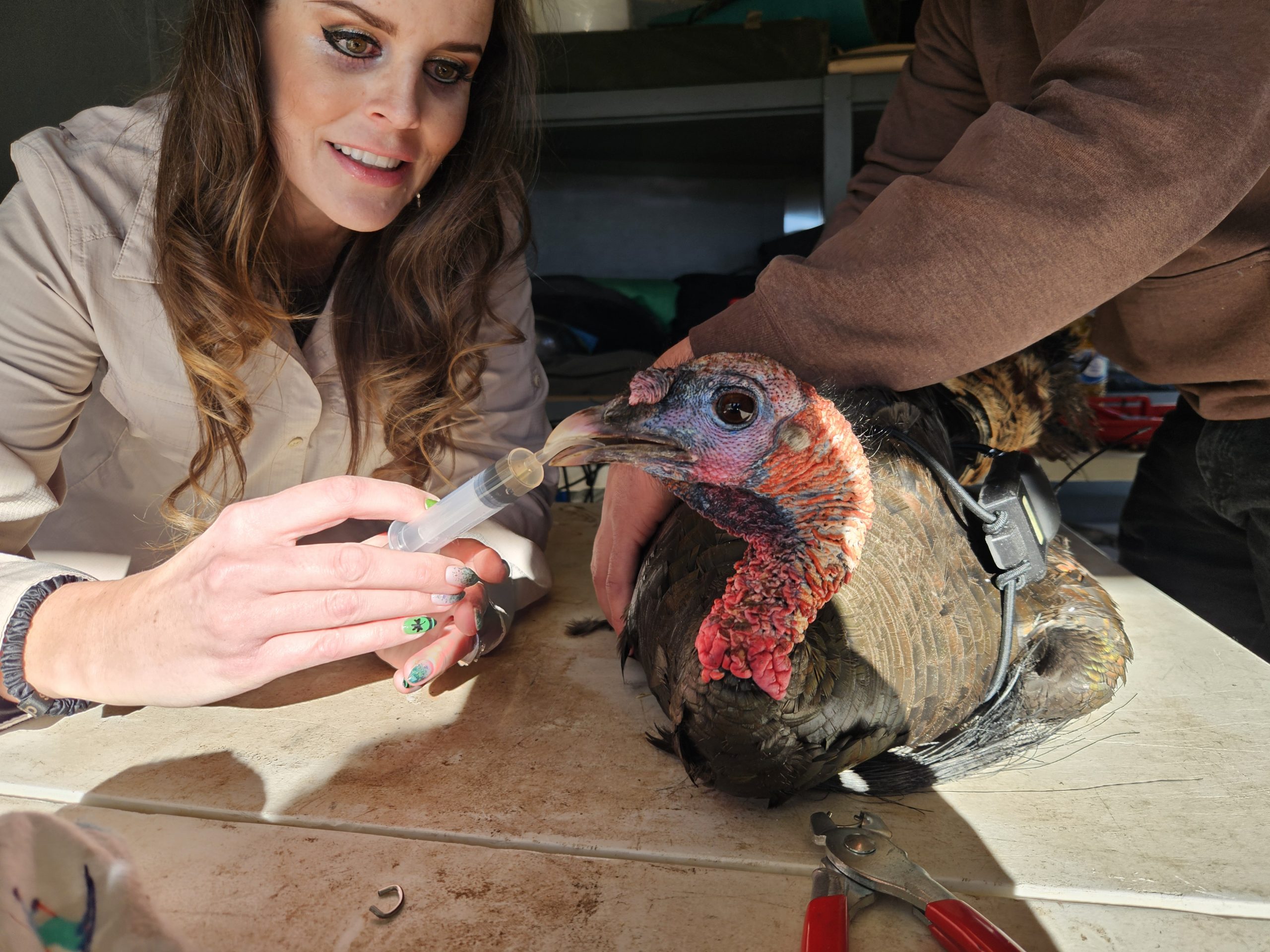
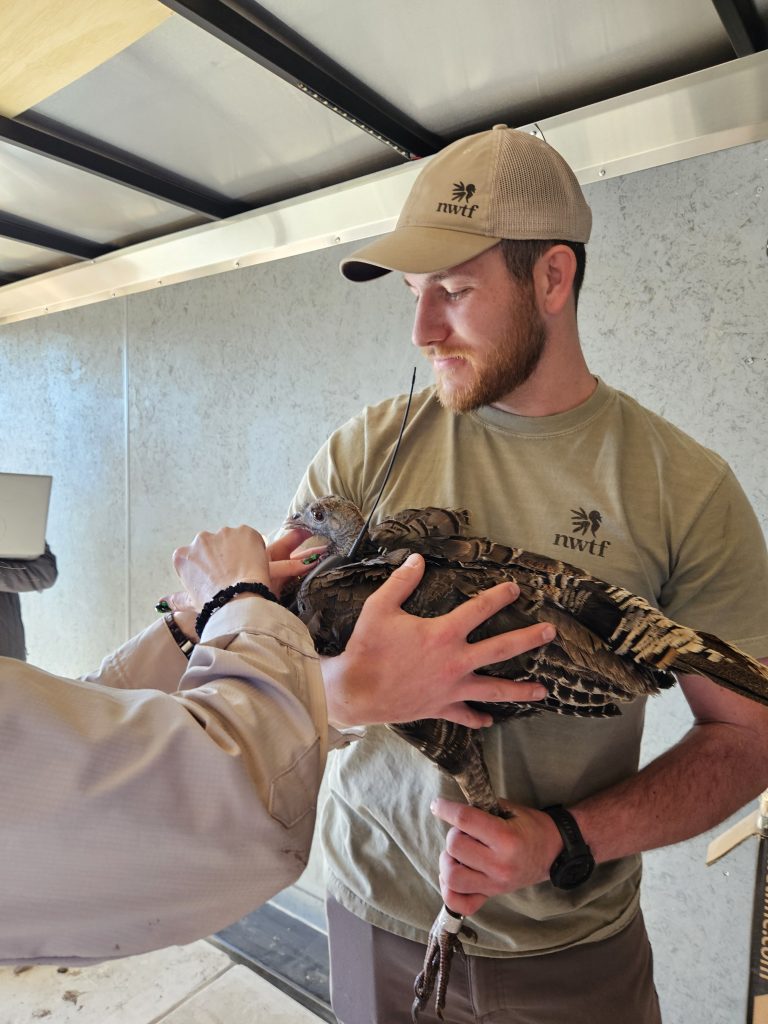
Around 2010, GPS technology began changing what was possible. Instead of collecting a few locations a week, researchers could gather hundreds or even thousands of data points from a single bird over the course of a year. That increased precision has opened the door to a new generation of questions.
Rather than simply asking where turkeys live, biologists can examine when they move, why they move and what habitat features they depend on at different points in their lives.
For example, in Wyoming, GPS transmitters are being used to identify seasonal migration corridors, roosting areas, nesting sites and brood-rearing habitat, while in Utah, researchers are comparing translocated Rio Grande turkeys with resident birds to understand survival, movement and habitat use — including whether soft-release strategies can improve translocation success.
Connected Through Research
One of the most important changes in western turkey research is the ability to see connections across an entire landscape. A turkey does not recognize a state boundary, a property line or the boundary of a management unit. A hen may nest in one habitat type, lead poults through another, roost somewhere else and make seasonal movements between them. Understanding that complete life cycle gives managers a much clearer picture of where conservation work can make a difference.
That is why today's research increasingly combines GPS data with geographic information systems, vegetation data, banding and other monitoring techniques. For Utah's translocation research, for example, researchers can pair movement data with landscape-scale habitat information to identify locations that may be best suited for future releases.
In Arizona, decades of research are being shared through NWTF symposiums and Wild Turkey Technical Committee meetings, allowing biologists from different jurisdictions to compare nest success, hen nesting rates and poult production — helping distinguish a local problem from a broader regional trend.
That collaboration matters because the West's turkey populations face different challenges, but the solutions often depend on shared knowledge.
Why It Matters to NWTF Members
For members, research can sometimes feel removed from the boots-on-the-ground conservation work that defines NWTF, but the two are inseparable.
Research tells managers where habitat is most important. It can reveal which areas need protection, restoration or improved forest management.
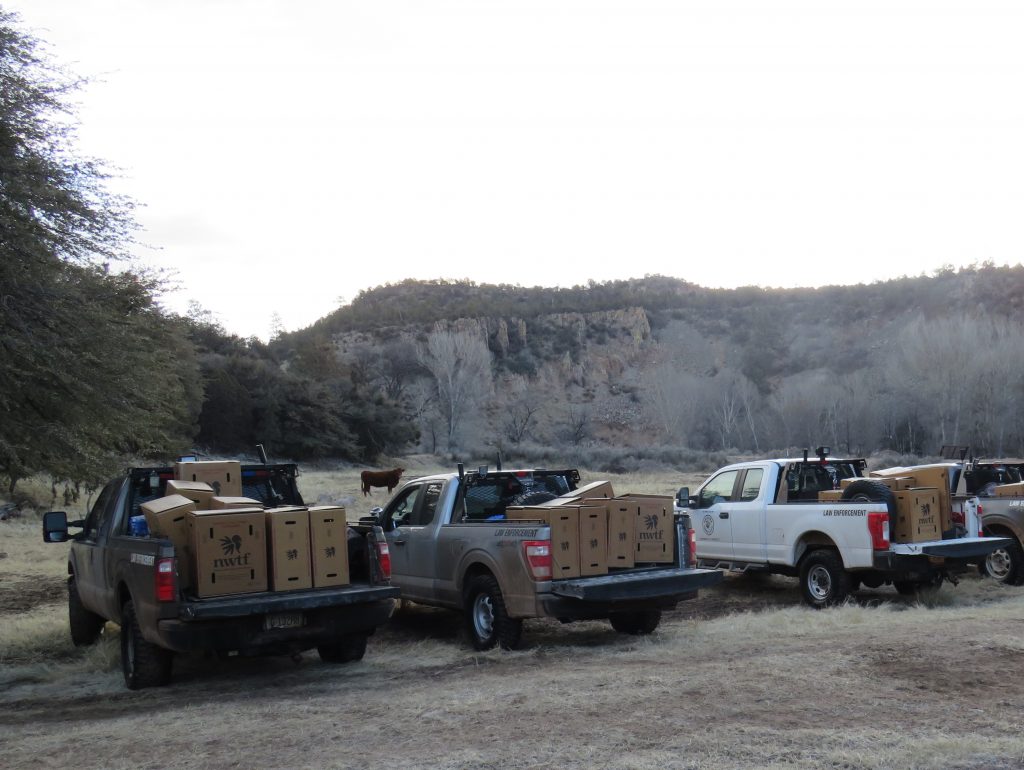
Research tells managers how turkeys respond to translocations. That can help agencies avoid repeating unsuccessful strategies and put birds in places where they have a better chance of establishing sustainable populations. Research also helps inform hunting regulations. Understanding nesting timing, survival and population dynamics allows managers to balance hunting opportunity with the long-term health of turkey populations.
And research helps answer perhaps the most important question of all: Are our conservation efforts working?
The Next Chapter
Western turkey research has moved from simply describing turkey habitat to understanding the fine details of how birds interact with an increasingly dynamic landscape, but there is still much to learn.
Forest health is changing western landscapes. Translocated populations continue to raise questions about survival, reproduction, genetics and connectivity. Gould’s wild turkeys remain a conservation priority in their naturally restricted range. And technologies such as GPS transmitters and automated recording units are creating opportunities to gather information at scales that would have been unimaginable to the researchers who first tracked western turkeys with field observations and radio telemetry.
The next 10 to 20 years will require refining habitat-suitability models, understanding how changing forest conditions affect turkey habitat, continuing genetic monitoring of translocated populations and using new technologies to fill gaps in our understanding.
Just as importantly, researchers and managers will need to continue sharing what they learn. Because the future of western turkeys will not be determined by one study, one agency or one state. It will be shaped by generations of research building on what came before.
The tools may have changed from leg bands to radio transmitters to satellites, but the purpose remains the same: understand the bird well enough to make better decisions for its future. Every GPS location, every nest monitored and every bird tracked adds another piece to that picture.
And when those pieces are put together, they help NWTF and its partners turn science into action, improving habitat, strengthening populations and protecting the future of wild turkey hunting across the West.