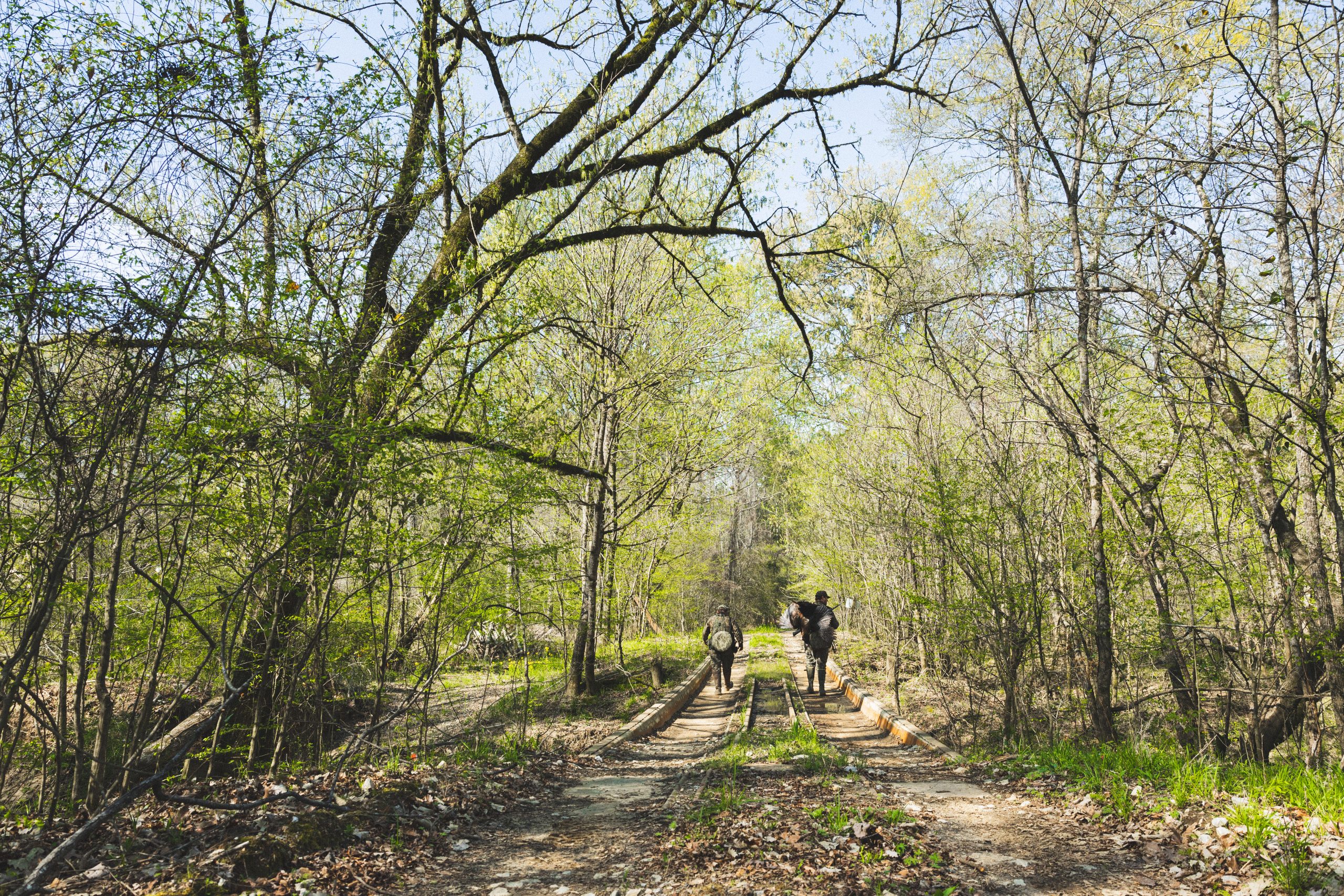
Hunting Through a Forester’s Eyes
Big woods might seem mysterious, but healthy forests provide many elements that attract and hold turkeys. Advice from experts can help you piece together that puzzle and find forest gobblers.
Healthy forests create lots of happy turkeys — and happy turkey hunters.
Still, veteran gobbler nuts agree that hunting forests differs somewhat from pursuing birds in patchwork farm country or wide-open habitat. In fact, it often requires detailed knowledge and a specialized approach. When seeking to crack that code, it helps to consult folks who know all about forests and the turkeys that live there — NWTF foresters. Here are some of their top tips for finding and hunting turkeys in the big woods.
Elements for Success
First, let’s define the critical features forests must have for turkeys to thrive.
“The first and most obvious one for most people is that forests are required for roosting purposes,” said Chase Seals, NWTF forester for Illinois. “Types of roost trees will vary with the habitat. For example, here in the Midwest, turkeys roost in a lot in nice oaks, but in southern Texas, they roost a lot on shrubby trees and powerline poles due to the lack of large timber.”
Well-maintained forests also produce a variety of forage for turkeys, including mast, seeds, insects, herbaceous vegetation and even lizards, Seals said. And they’re important as loafing areas — spots that provide shade during the hot summer months and protection from predators.
“Fourth, well-managed and maintained forest stands often have a broken canopy and, therefore, a wide range of native forbs and legumes in the understory,” Seals said. “When abundant woodland understory early successional species are present, these woodlands are often high-quality nesting and brood-rearing areas.”
Jim Bagley, NWTF and Natural Resources Conservation Service forester in New York, said turkeys in his region have three critical forest habitat needs that can sometimes be in short supply: good nesting habitat, good broodrearing habitat and good winter food sources.
“If those three needs are met, interspersed with mature woodland, you have greatly increased the probability of having wild turkeys in the area,” he said. “The only other component you might want to add is a late summer/fall food source on your property. The primary benefit of this would be to hold the birds for your enjoyment, especially if you are hunting fall birds.”
When discussing forests, many folks envision large blocks of timber maintained by state or federal agencies. Those properties are certainly important for turkeys, but Bagley pointed out that some of the best turkey habitat in his area is provided by small family-owned farms.
“The woodlots, field edges and hedgerows associated with small farms provide ample nesting habitat,” he said. “The hay fields and pastures of dairy farms provide high-quality brood habitat. Waste grain from silage, corn and small-grain production provides late summer and fall food. Finally, manure spread on the fields provides a constant winter food source. One of the best things that you can do for the wild turkey is to actively support the small dairy industry in your community and state. They are the key to your local turkey population and other wildlife.”
Even after you understand the forest elements that attract turkeys, however, there’s another challenge: Using that knowledge when trying to fill a tag.
Getting After Them
When hunting, Seals seeks specific forest habitat. In the Midwest, that’s oak and hickory stands. In the South, it might be oak stands but more managed pine plantations. Ideally, he looks for scenarios where well-managed forest stands are interspersed with fields that are a mix of forage stands (clover or ag crops) and native warm-season grasses. And he especially looks for forest stands that have been improved through good management practices.
“In general, these will be high quality and often hold birds better than unmanaged forests,” he said. “It has a lot to do with it. If a forest is full of invasive species, it’s almost guaranteed to be a bust. As most everyone knows, turkeys love fresh burns. If a forest stand has been burnt, that’s a big plus. Let’s say the area is not managed well. Then I am going to look for the most open forest stand I can find. An open, mixed hardwood forest will still hold birds and provide forage.”
Bagley scouts for specific forest features before hunting.
“The best spots for turkey hunting are often where different types of lands meet — like a field next to a forest,” he said. “Turkeys move through these edge zones as they go from roosting to feeding areas. Recognizing these travel routes helps a hunter decide where to set up.”
He also looks for water, roost trees, strutting areas, nesting cover, brood habitat and areas where birds have been feeding.
“Are they scratching for seeds and insects in the woods or in open areas such as pastures?” he said. “Is the scratching fresh? In spring, turkeys eat protein-rich insects like grasshoppers and slugs, along with plant buds, seeds and early fruits.”
After scouting, Bagley assesses what he’s learned and forges a hunting strategy.
“Look at all the ingredients,” he said. “Look where the different requirements turkeys need on the property you can hunt [are]. See how they fit into the area and the landscape (habitat) you can hunt, be it terrain, time of day or the season, and make your plans accordingly.”
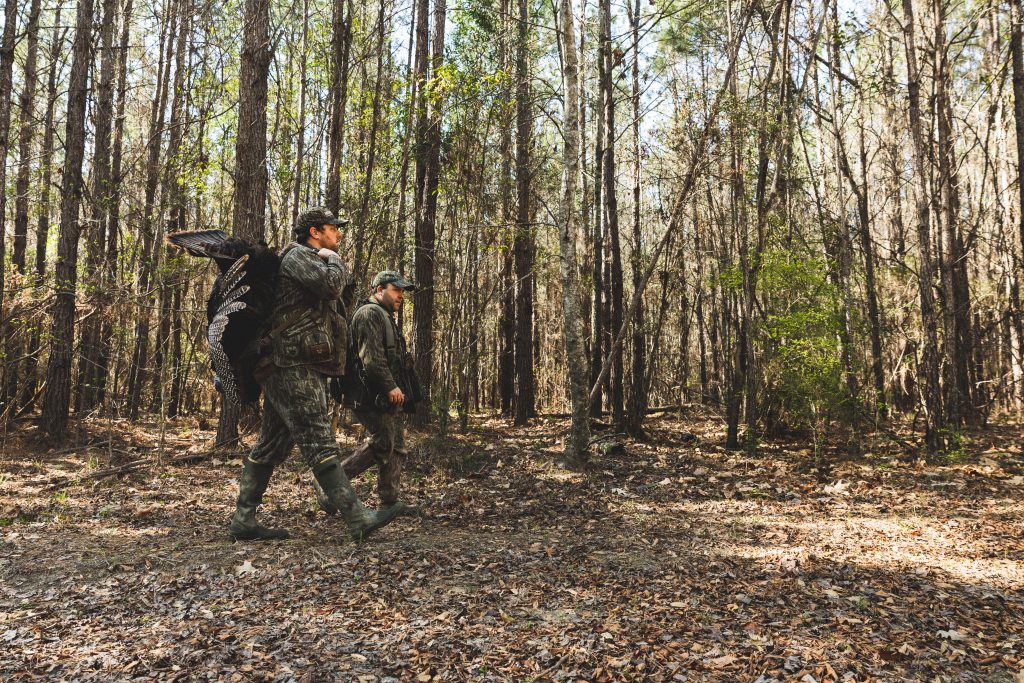
And then there’s the matter of actually hunting. In the woods, Seals’ strategy differs somewhat from his approach in other habitats.
“If the forest is open, I look for topographic features and use these to try and guess where birds should be and make moves on birds when they are gobbling,” he said. “In forests, I often do not like to use a decoy. I will use topography or a downed tree (natural obstacle) to force the birds to come around it to see where I am calling from. If I do my job right, they often appear within shooting range.”
Conclusion
You’ve likely deduced that hunting forest habitat is a process, from sound management practices to scouting and, ultimately, trying to track down a gobbler. And that, Bagley said, is part of the appeal of hunting healthy forests.
“Turkey hunting has many chapters,” he said. “All may happen in different orders, however. The last chapter is filling a tag.”