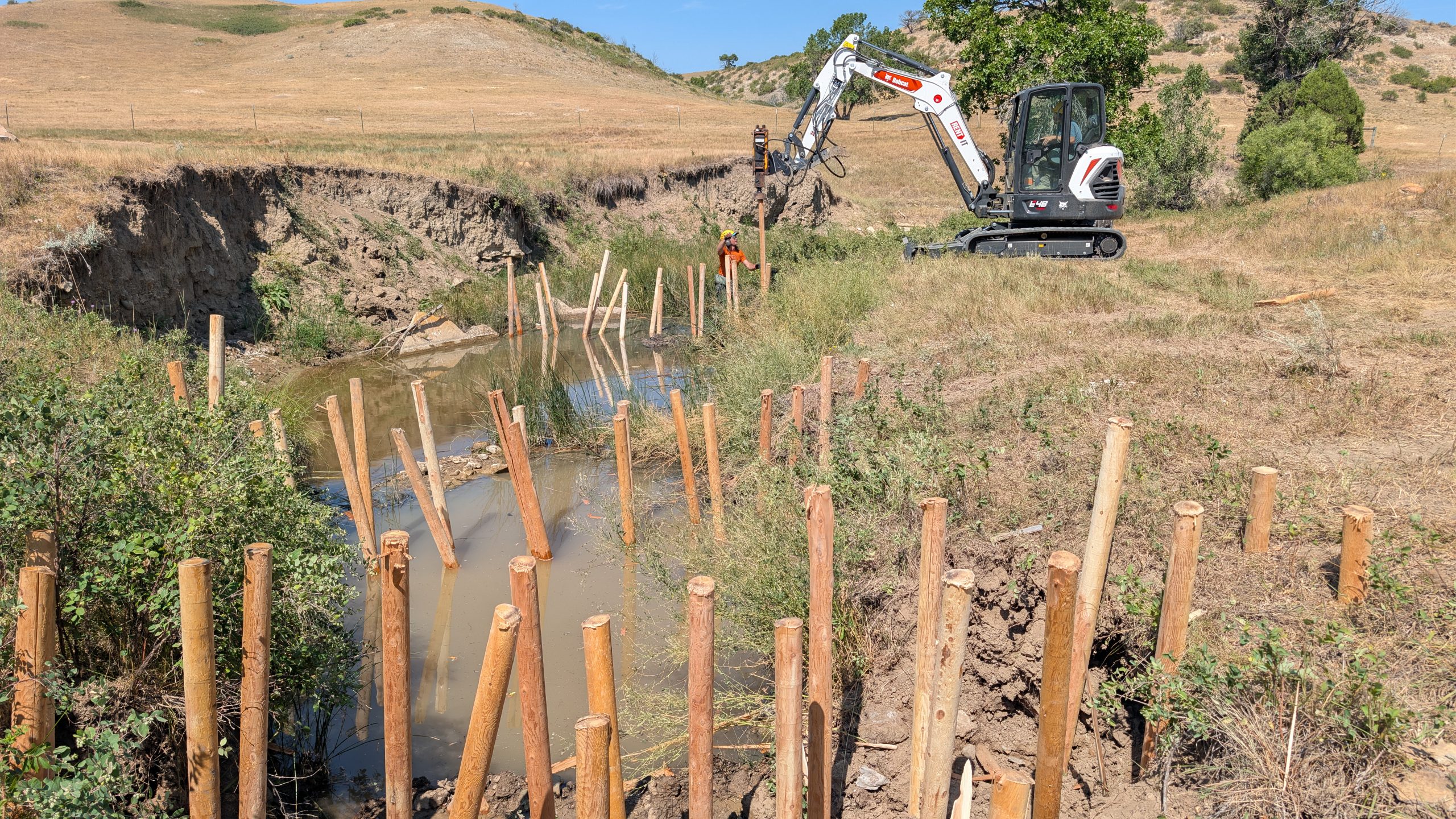
Improving Habitat for Wild Turkeys and Wildlife in Wyoming’s South Dry Creek
On the dry rangelands of northeastern Wyoming, a healthy stream can mean far more than flowing water. Along South Dry Creek near Sheridan, Wyoming, the riparian corridor provides food, cover and roosting habitat for wild turkeys and a host of other wildlife species in an otherwise arid landscape. But years of erosion and stream degradation put that habitat at risk.
Through its Waterways for Wildlife Initiative, the National Wild Turkey Federation supported the Sheridan Community Land Trust (SCLT) in restoring a portion of South Dry Creek on the Buyok Ranch, a property protected by a conservation easement. Working alongside the Wyoming Game and Fish Department and landowners John and Vanessa Buyok, SCLT completed the first phase of restoration in August 2026.
The completed project treated 3,280 linear feet of South Dry Creek, or about 0.62 miles, with 42 in-stream and bank treatments, exceeding the project's original goal of 2,211 linear feet.
South Dry Creek runs through a Wyoming Game and Fish Department-designated priority plains cottonwood corridor. The reach is especially valuable because wild turkeys use the Buyok Ranch as year-round habitat, while the riparian area also supports nesting birds and other native wildlife.
Over time, the creek carved itself deeper into the landscape, leaving the stream at the bottom of a channel that was increasingly separated from the land around it. Water that once spread across the floodplain during high flows could no longer reach it as easily. The deeper channel also pulled groundwater farther below the surface, gradually drying out the surrounding vegetation. What had once been a wet, green ribbon of riparian habitat began to lose the moisture it needed to thrive.
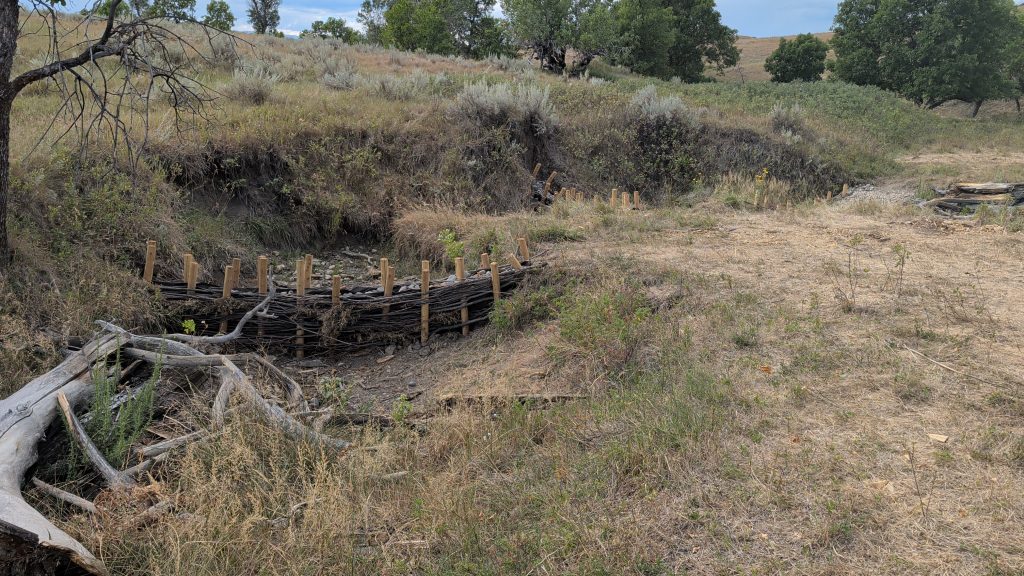
That drying trend threatened some of the most important components of the habitat, especially for wild turkeys, including mature cottonwoods, young trees, native shrubs and the moist understory that supports insects and other food resources.
For wild turkey poults in particular, that last piece is critical. The moist plant and insect communities found in healthy riparian areas provide important food resources during the early brood-rearing period. Rather than simply treating the symptoms of erosion, the restoration was designed to help the creek begin functioning more naturally again.
Crews installed 32 small structures across the creek to slow the flow of water and help stabilize the streambed. These included simple rock and woven-branch structures designed to spread water out, reduce erosion and allow sediment to build up naturally. Crews also placed woody debris in two areas where smaller side channels were contributing to erosion and built eight reinforced livestock crossings to keep farm and ranch traffic from damaging the streambanks.
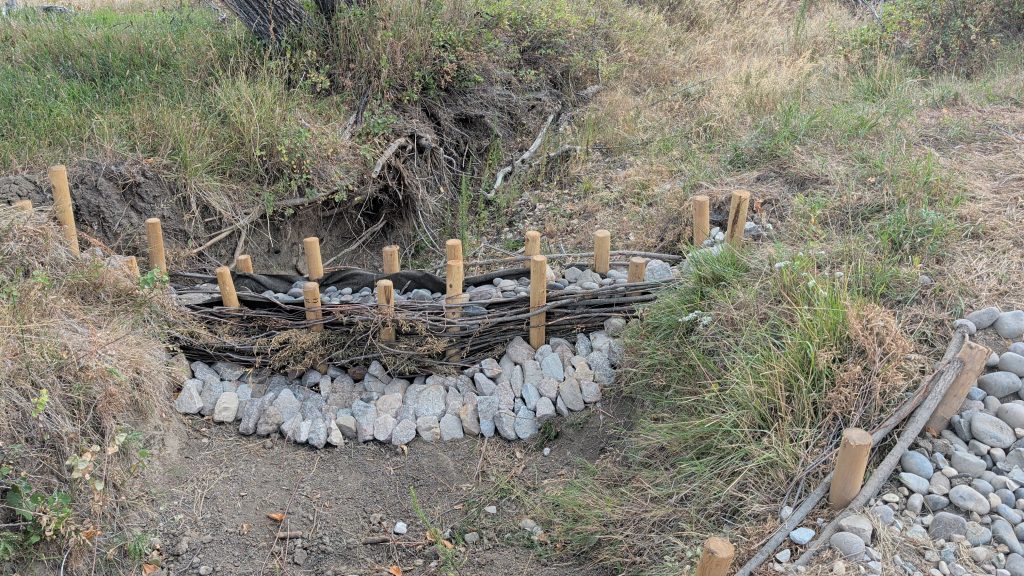
The approach is intentionally low-tech. Instead of relying on large engineered structures, the treatments work with the creek's natural processes to slow water, capture sediment and gradually rebuild the streambed.
As sediment accumulates behind the grade-control structures, the incised channel can begin moving back toward its historical elevation. That helps reconnect the stream with its surrounding floodplain and raises the shallow alluvial water table. The result is a riparian "sponge" that can retain moisture and keep the surrounding habitat productive later into the summer and fall.
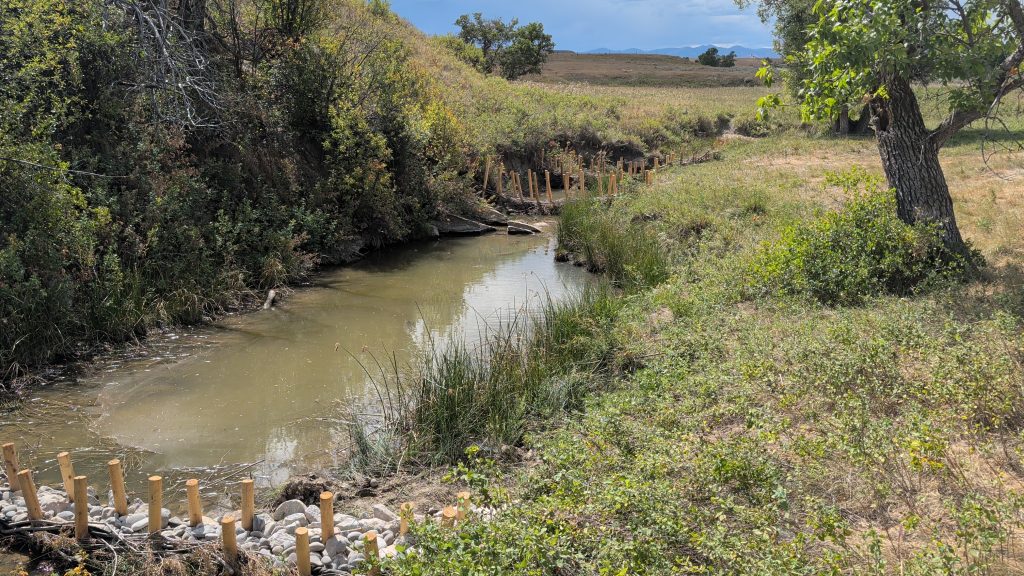
For wild turkeys, healthier hydrology translates directly into better habitat. Increased soil moisture can support more lush native forbs, sedges and rushes, creating conditions that support greater insect production. Those insects provide high-protein food for growing poults. At the same time, improved groundwater conditions help protect mature cottonwoods, encourage natural cottonwood and willow recruitment and maintain the dense vegetation that provides cover for nesting hens.
One of the strengths of the South Dry Creek project is that conservation is happening on a working landscape. The Buyok Ranch is privately owned and protected by a conservation easement held by SCLT. It is also a Wyoming Game and Fish walk-in access site and, because of its proximity to the city of Sheridan, receives substantial public use.
The restoration was designed to improve habitat without compromising the agricultural operation. Hardened crossings provide durable routes for livestock and agricultural traffic while reducing hoof shear, bank sloughing and sediment entering the stream. At the same time, the crossings maintain open travel corridors through the riparian bottom for wild turkeys and big game.
That balance is important. Wildlife habitat does not exist separately from the people and communities that share these landscapes. By improving the health and resilience of the creek while supporting continued agricultural use, the project demonstrates how conservation can benefit wildlife, landowners and the broader community at the same time.
The benefits extend beyond wild turkeys. The project is expected to improve habitat for sharp-tailed grouse, greater sage-grouse, doves, partridge, rabbits, pronghorn, mule deer and elk. Restored wet meadows will also improve water quality by filtering water through wetland vegetation and soils, while improved shallow groundwater storage will increase water retention within the riparian system.
For NWTF, that broader impact is exactly what the Waterways for Wildlife Initiative is intended to accomplish. Healthy waterways create healthy landscapes, and healthy landscapes create better habitat for wild turkeys and the many species that share their range.
Although construction is complete, restoration is not a one-and-done effort. The structures installed along South Dry Creek are intended to initiate natural restoration processes. As they capture sediment and vegetation becomes established, additional treatments may eventually be needed to continue raising the water table and expanding riparian and wet meadow habitat.
SCLT will continue annual photo monitoring, vegetation assessments and maintenance for five years following runoff events, while the Buyok family will maintain the hardened crossings as part of their rotational grazing management.
That long-term commitment is important because the ultimate measure of success will not simply be the structures installed in 2026. It will be seeing South Dry Creek become a healthier, more resilient system over time, one that can hold more water, support stronger riparian vegetation and continue providing food, cover and roosting habitat for wild turkeys.
The South Dry Creek project is a reminder that meaningful conservation does not always require transforming an entire landscape at once. With support from NWTF members and partners, that investment is helping South Dry Creek become a better place for wild turkeys and for the people and wildlife that depend on this Wyoming landscape.