Inside and Out: D’Agostino’s Art of the Call
National champion call maker and artist Jeff D’Agostino brings over three decades of award-winning craftsmanship to each of his handmade turkey calls, creating heirloom-quality pieces that are proven in the field and treasured for life. D’Agostino has been around turkey hunting and call making for most of his adult life, later creating his callmaking business, The Art of the Call.
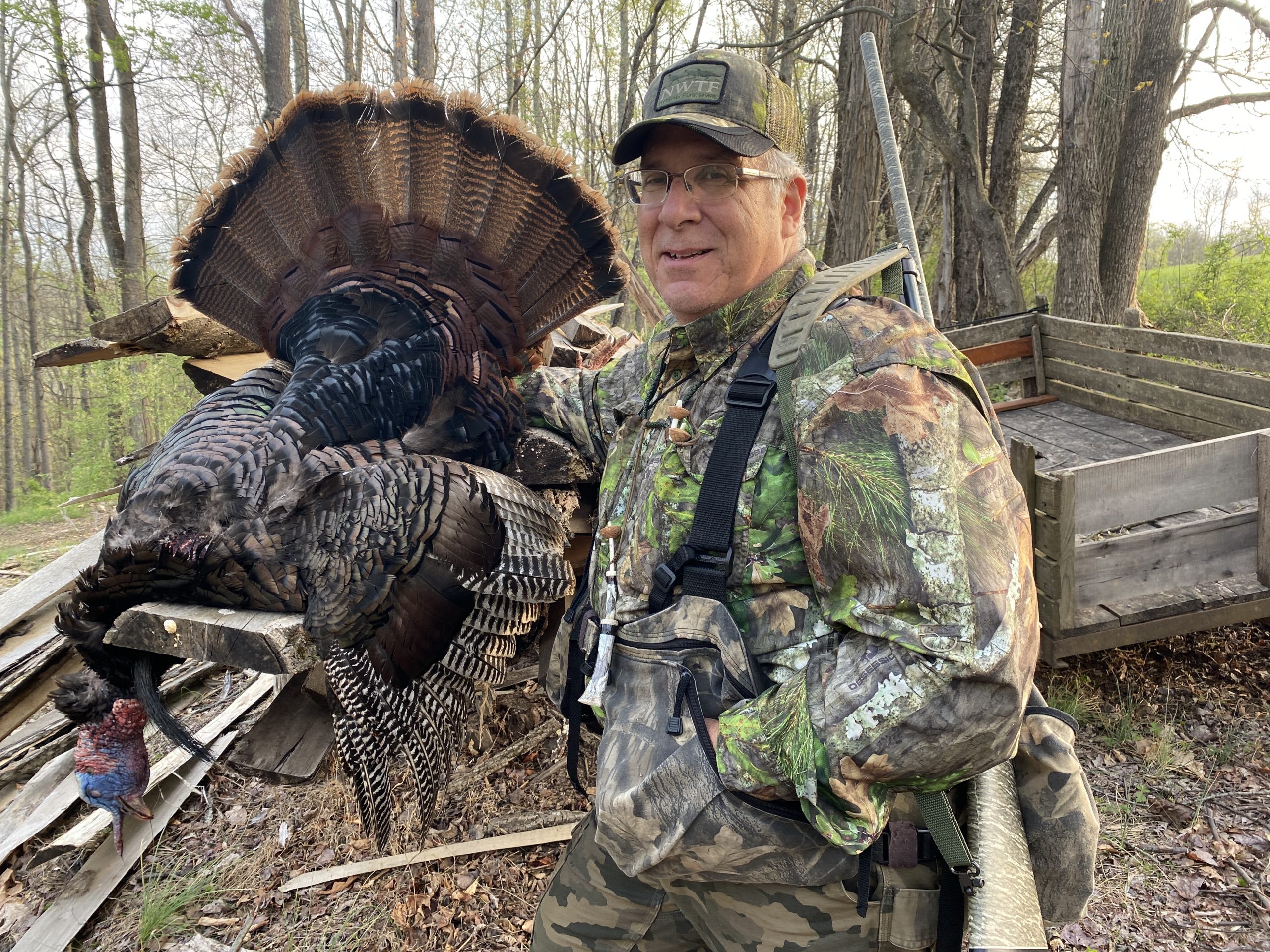
“The Art of The Call was born from a simple belief; the tools of a turkey hunter should be as true and timeless as the tradition itself,” he said. “Every call is a marriage of art and function — with intricate, hand-drawn wildlife scenes and yielding realistic sounds proven to bring turkeys within range. Special locations and moments in time drive my artistic inspiration, and my tuning phase is laser focused on producing the best turkey voices.”
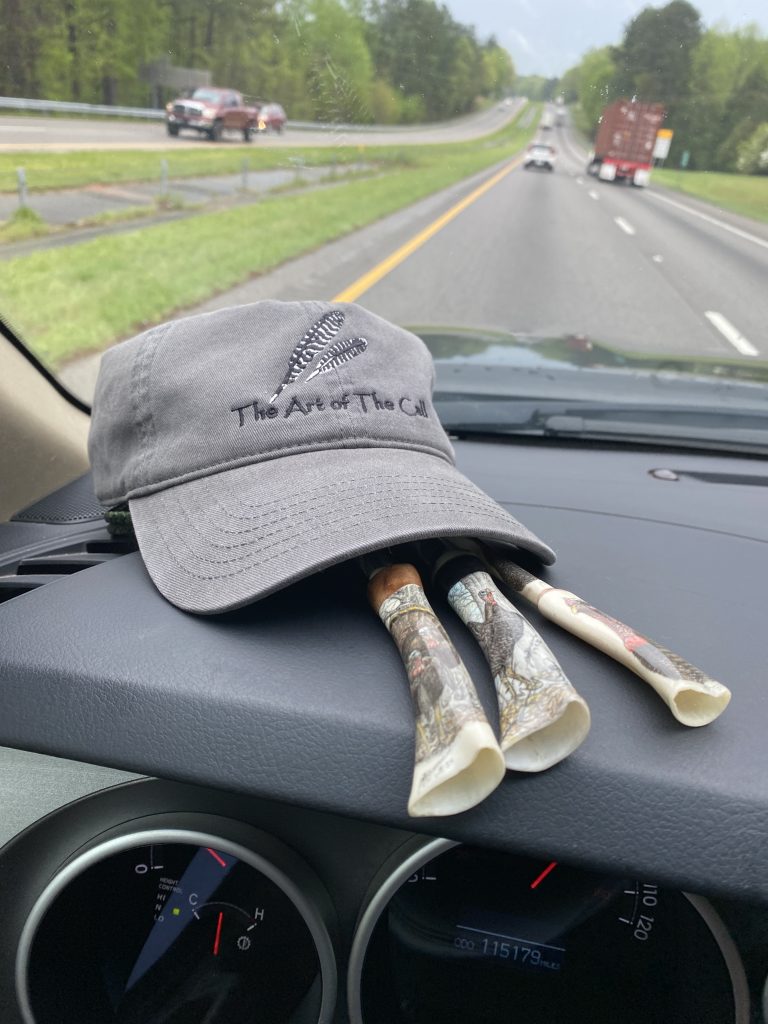
He added, “My call making begins with a pure appreciation of the animal and a desire to honor it in some humble manner. My process begins with the inside of the call. I spend a lot of time tuning each call by measuring and adjusting each bone to find the exact voice I’m looking for. I love to find different voices: young hens, jakes, or mature hens and gobblers. While I’m not a musician, I do appreciate and work to understand the musicality of each of my calls.”
Once the sound is dialed in, his artwork takes shape on the outside of the call. He began adding artwork to his calls in the 1980s with simple, single-line scrimshaw. Over time, using different art media, his art has evolved to highly detailed and intricate works that oftentimes include full color.
“Adding realism through lifelike detail is my love, so I kept refining my techniques to get more and more detail, more realism, more life,” he said. “That’s what you have in this (NWTF Legacy Callmaker Collection) call. Transforming natural raw elements (bone or cane) into works of art possessing realistic turkey voices is a great joy for me. It’s inspiring. There’s nothing like seeing the call come to life, seeing the joy on an individual’s face when they receive the call and when they inform me of their success afield.”
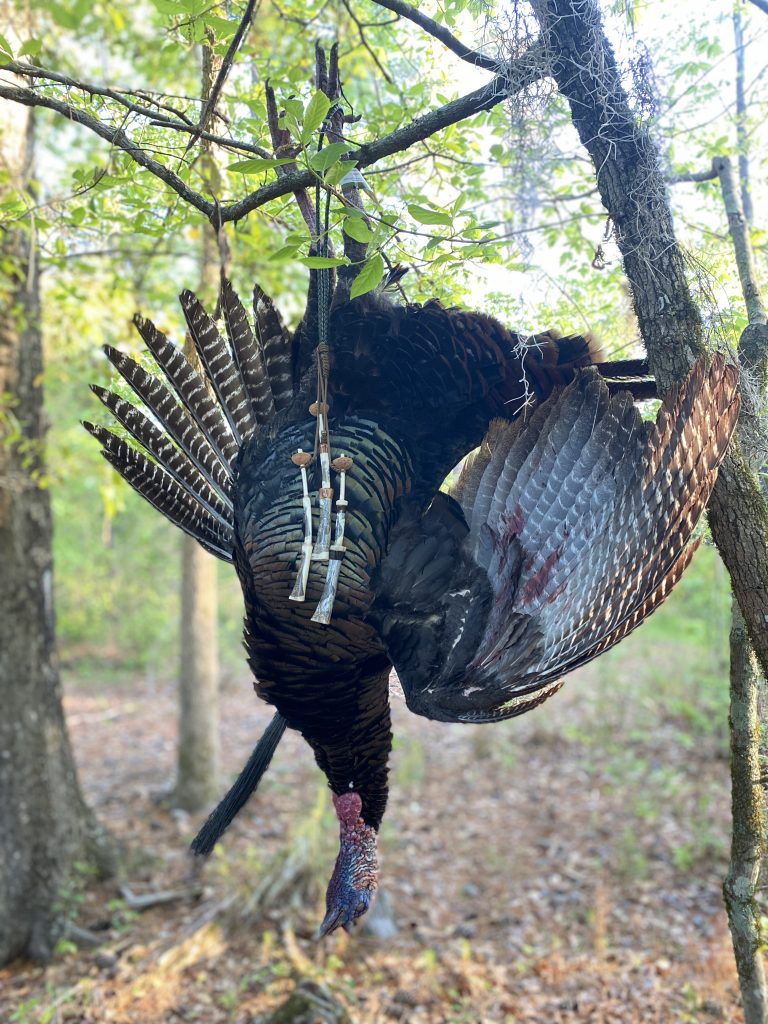
Rewind back to Monongalia County, West Virginia, in the spring of 1983 – that’s when D’Agostino’s passion for the wild turkey ignited. After an event-filled morning full of wild turkeys calling in the timber, the mid-morning lull set in only to be interrupted with the spitting and drumming of a nearby gobbler. In quick order, D’Agostino locked eyes with what he described as “a red, white and blue hood ornament attached to a black Volkswagen.” He harvested that gobbler, but sadly the taxidermist wouldn’t let him keep the wing bones. Undeterred, through his friends and hunting buddies, he later found wing bones he could use and began building.
D’Agostino is a grassroots NWTF member and became West Virginia State Chapter president in the early 1990s where he helped grow the state’s membership and made it a point to ensure NWTF members knew that state-generated funds were being used to support the wild turkey in his state. His core value persists: conserving wildlife habitat is the key to the wild turkey’s prospective sustainability.
D’Agostino’s craft is recognized as among the best in national callmaking competitions, earning him multiple NWTF Grand National Custom Callmaking Competition titles, first in 1997 in decorative wingbone, then top honors and Best in Class in the matched set category in 2024. In 2025 he followed up with another first place and Best in Class, Decorative Division – Wingbone.
“For me, call making is a passion,” he said. “It has opened a lot of doors. Some of my closest friends are because of the wild turkey, through the industry, call making and travelling to hunt. Those relationships are critical to me, and without call making and wildlife art, and being able to pursue my passions, I wouldn’t have those relationships.”
What will the winner of this call get? In Jeff D’Agostino’s own words: “An heirloom they can pass down from generation to generation in their family. I would love to think it can become a family heirloom. These calls may be “pretty” and they are proven to work in the field. I make them to hunt. Whoever wins it, I hope they are proud of what is on the inside and outside, and they will appreciate the heart and soul I put into it.”
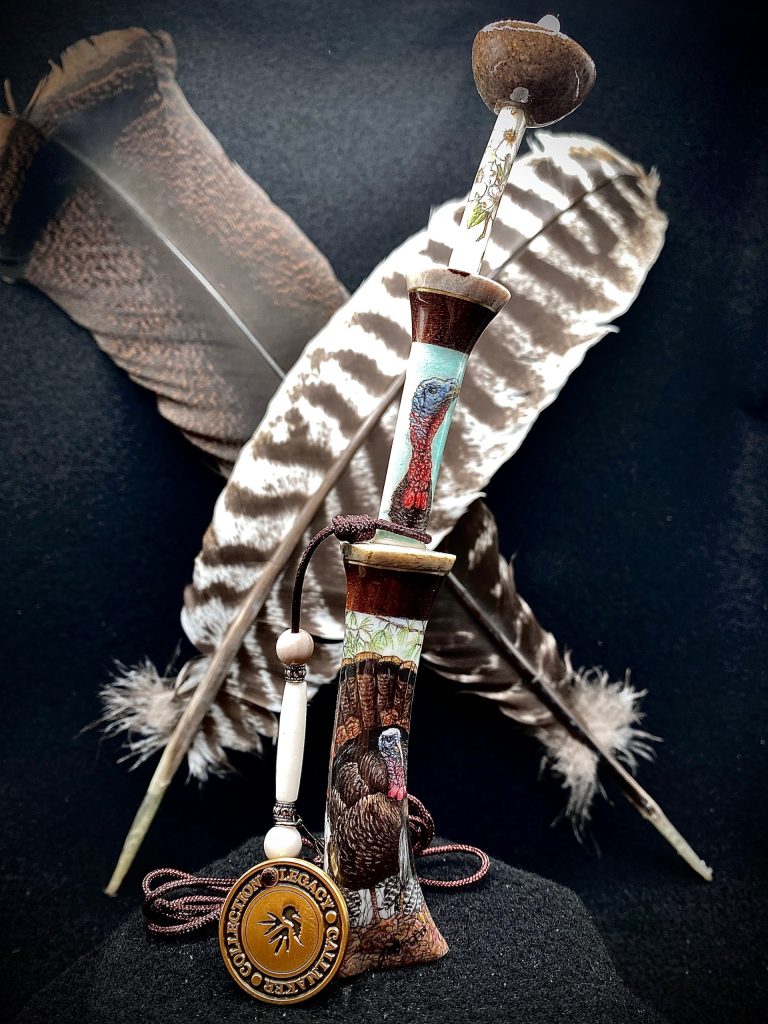
The winning bid for D'Agostino's call on the silent auction was $575.