Leading on Public Lands
Hunters have maintained our position of leadership on conservation by consistently giving more than we take.
If you’re reading this as a member of the National Wild Turkey Federation in good standing, then you are living this ethos and are likely giving more to the conservation of the wildlife resources of our country than most other Americans. However, we must give more than time and treasures if we are to continue to lead. We must offer innovative ideas, as well. No policy issue is in greater need of novel ideas and hard work than the debate over the future of our public lands.
As you’re reading this, it’s been nearly a full year since our community committed ourselves to repelling attempts to create a new federal government program to dispose of public lands. Unfortunately, I cannot rule out the possibility of another push between editorial and print deadlines. However, at least at this moment, the issue has largely disappeared from daily coverage in newspapers and in influencer’s Instagram reels; however, heated debates on the issue have continued in the halls of power in Washington, DC.
Before we label today’s land policy debates as novel, it’s worth remembering that Americans have been arguing over land for a long time. From the earliest days of European settlement, land has been treated as a commodity: surveyed, claimed, transferred, and taken from those who occupied it (and, in many cases still do occupy it). Over time, the lands that make up this country have moved through many hands as the nation grew. The ways our public lands, or those lands that were once public, have been transacted reflects changing priorities about development, conservation and public purpose.
For much of our history, the federal government actively transferred large swaths of land to private interests or state control to support certain national goals. Public acreage helped finance infrastructure, encourage settlement, and seed institutions meant to serve the common good. Those decisions were rooted in a belief that progress depended on converting open land into productive use. While that philosophy shaped much of the American landscape, it also set the stage for later conversations about stewardship, access and the long-term value of keeping some lands in public hands.
The rules governing our public lands changed substantially in the latter half of the 20th century. In 1976, Congress formally ended the era when selling federal land was considered standard practice. Since then, the default assumption has been retention rather than disposal. While sales and exchanges can still occur, they are no longer expected or mandated outcomes. Generally speaking, that’s the way most hunters want to keep it, though there are exceptions that may be justified.
Today, adjusting the boundaries of federal lands generally follows one of two paths. Agencies can work through administrative channels, or Congress can intervene directly through site-specific legislation. Neither route is intended to be quick or simple. Administrative actions require agencies to meet strict criteria, justify public benefit and comply with environmental and cultural reviews. These safeguards matter and protect the public’s interests. In some cases, however, they can make even small, common-sense adjustments impractical to complete in a reasonable timeframe relative to other real estate transactions. Transactions can take several years to complete.
On Capitol Hill, “lands bills” often move slowly, if at all. Individual bills tend to accumulate until congressional leaders bundle them together into larger packages that balance competing interests: protection (often in the form of “Wilderness”) in one place, flexibility or transactions in another. With dozens of proposals introduced during each Congress, it’s hardly surprising that only a fraction ever reach the finish line. The last real “lands package” was composed more than five years ago and some of today’s congressional leaders have made it clear they aren’t interested in putting another one together.
As new proposals are added to the literal stacks of paper in the front offices of congressional committees and at the headquarters of our land management agencies, pressure continues to build. Communities, often including local sporting organizations, industry and other stakeholders clamor for boundary adjustments, Wilderness designations or releases, and the regulatory certainty necessary to recreate and conduct the essential business of the nation.
For hunters and conservationists, one principle remains non-negotiable: public lands are not merely an asset to be liquidated. They are a resource to be stewarded and cared for. These landscapes provide wildlife habitat, clean water, hunting access and a living connection to our collective natural heritage. When policy proposals are framed around the idea that America has “too much” public land, sportsmen cannot offer our support. It is not worth our time debating solutions to a problem that we do not believe is worth solving.
However, there are clearly problems that do need solving. If we are to immunize ourselves against proposals to liquidate vast sections of our federal estate, two things might help. The first is helping to streamline the process by which the boundaries of our public lands are adjusted. The second is to improve the management of our public lands to ensure these places continue to generate real value, monetary or otherwise, for the American people.
Transactions must include robust public input, and they should, as a rule, take longer than the average private sale, but they should be made feasible both via administrative action and in Congress. The current processes take too long to be considered reasonable by the average person and, perhaps worst of all, a large portion of the process to sell a parcel of public land takes place after the decision to sell has been made. Anybody who has ever purchased property can empathize with the headaches and heartaches of dealing with inspectors, appraisers, insurance salespeople, title companies and realtors. When you add government to the mix, as a rule, things get more complicated and slower. Again, much of this is for good reason, as the government has a duty to return real, fair value to all constituents. However, the processes can be improved and wait times can be shortened.
Further, we must ensure that multiple-use public lands continue to produce and hold value for the American people through responsible, science-based management. The managers of the National Forest System and Bureau of Land Management lands have a statutory duty to contribute to the food, fuel and fiber necessary to run our modern economy. These agencies also have a duty to manage these lands for recreation, watershed management and wildlife habitat, but sometimes they need our help.
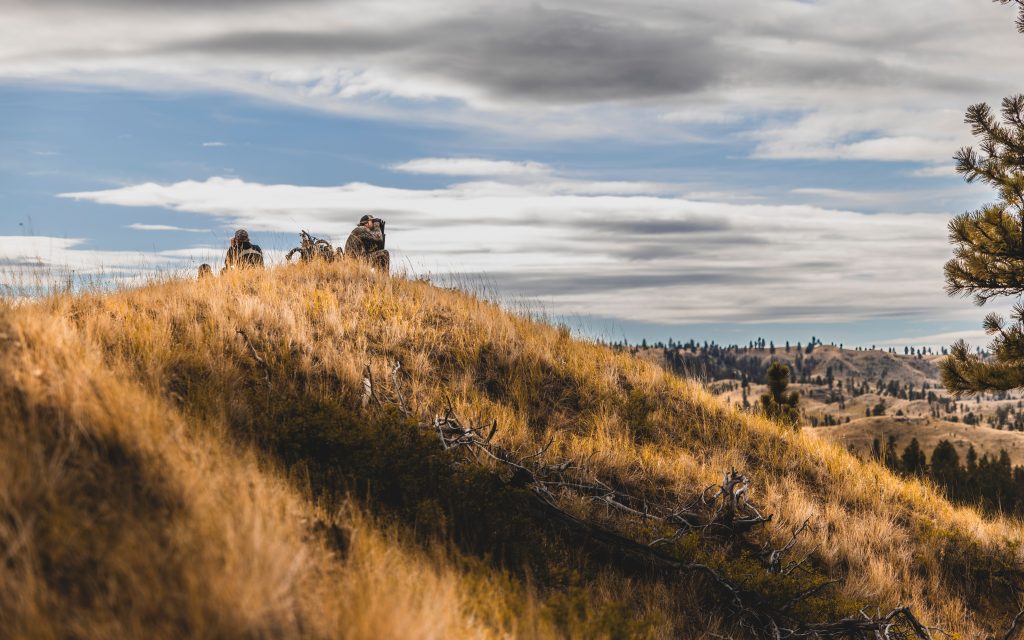
As the NWTF begins work on its Western Initiative, where most federal lands exist in the U.S., and other conservation non-governmental organizations advance their own portfolios of stewardship work, we are demonstrating to the rest of the country that we are, as always, willing to put our money where our mouths are. Often, we are the ones rolling up our sleeves and doing the physical work necessary to manage land, just as hunters have always done. Invasive species need to be treated, wetlands need to be restored, trails need to be cut, timber and rangelands must be managed, all of which is necessary to show the world the value of our public land estate and the tangible and intangible resources that it holds.
For generations before us, hunters have led out of necessity. It is still necessary for us to lead on this issue and many others. The places we care for depend on our ability to solve the problems facing us today just as our community has for more than a century.
Charlie Booher is a Consultant at Watershed Results who specializes in natural resource conflict resolution. He has the privilege of representing some of this country’s oldest, largest, and most generous conservation organizations in Helena, Montana, and in Washington, DC. Charlie is an associate wildlife biologist and a professional member of the Boone and Crockett Club.