Legacy Callmaker Collection — Seth Hamon
Seth Hamon is a call maker, musical instrument craftsman and mentor whose journey from turkey hunting in Texas to award-winning call making has been defined by innovation, quality and a commitment to helping the next generation.
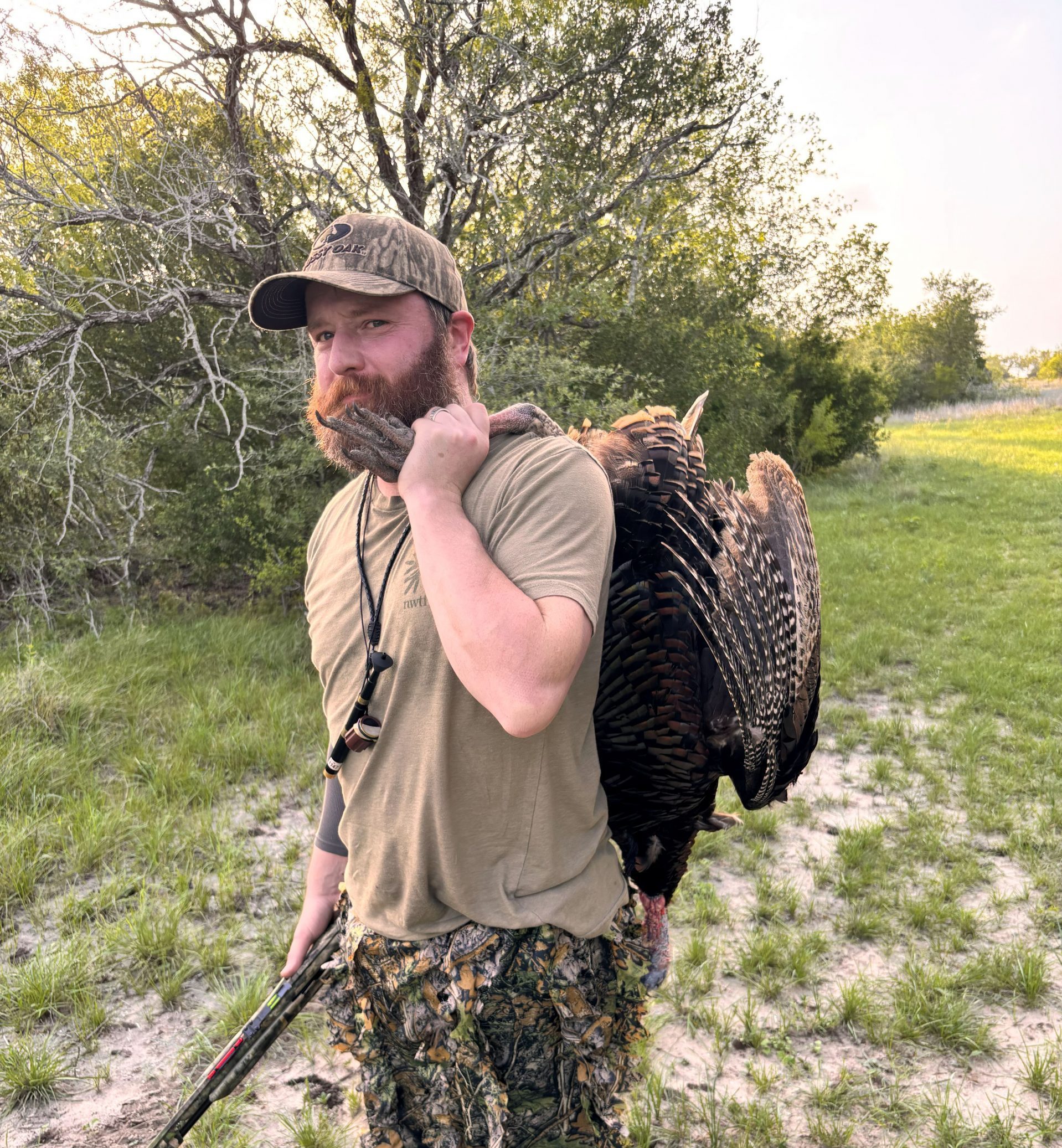
For Hamon, call making is about much more than building something that sounds like a turkey. It is about understanding sound and quality craftsmanship. And, perhaps most importantly, it is about the people who have helped him along the way.
Hamon's journey began with turkey hunting long before he ever built a call. Growing up in a family of hunters, he spent much of his childhood outdoors. In the early 1990s, he began hunting turkeys with his best friend Bo and Bo's father on a cattle lease near Rio Vista, Texas.
"We grew up bird hunting," Hamon said. "Every chance we got, we were out in the woods as far back as I can remember."
Those early hunts planted the seeds for a passion that would eventually lead Hamon toward a very different kind of turkey hunting pursuit: building the instruments used to call the birds.
But Hamon's path to call making was anything but traditional.
For roughly two decades, Hamon built musical instruments, including bagpipes and concertinas. That experience would eventually give him a unique perspective on turkey call design, particularly trumpet calls. He first began experimenting with call making by modifying an old Penn’s Woods trumpet call, trying to improve the way it played. In the process, he began to recognize similarities between trumpet calls and the instruments he had spent years building.
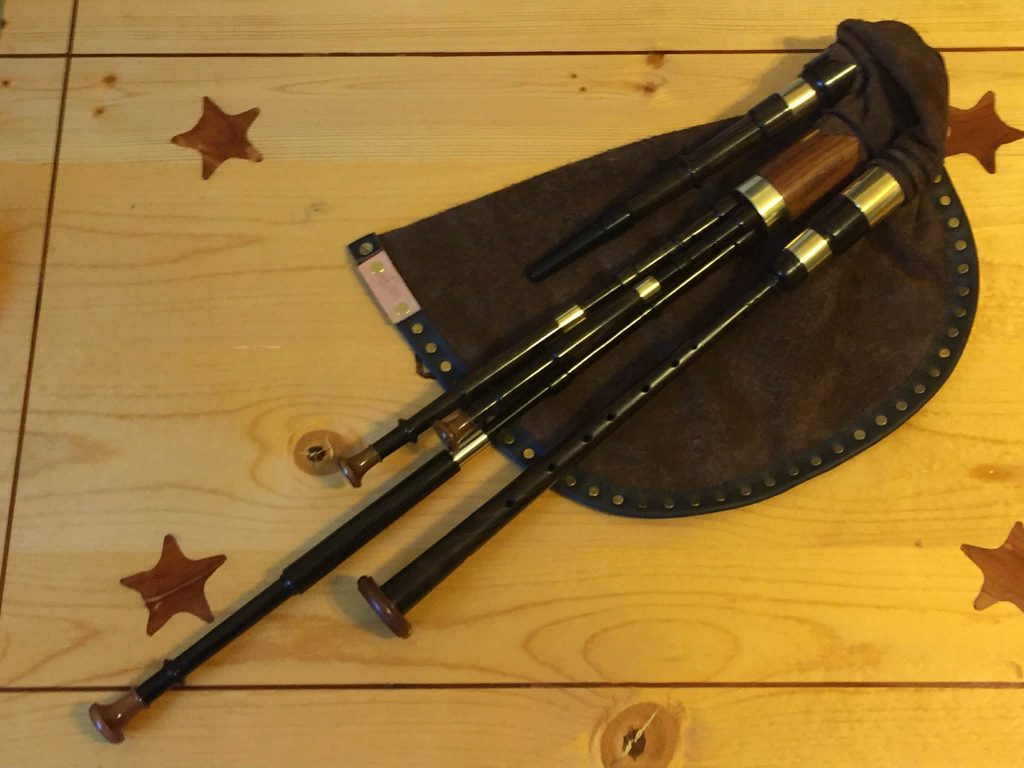
The bore and internal structure of a trumpet call, Hamon explained, share characteristics with woodwind instruments such as bagpipes. His experience had taught him how seemingly small changes to an instrument’s construction could dramatically influence its sound. He began to wonder if the same principles could be applied to turkey calls and started experimenting with ways to put that knowledge to work.
The first serious turkey call Hamon ever built was a trumpet call, and it didn’t take long for his work to make an impression. He entered the call in the amateur category at the NWTF’s Grand National Custom Callmaking Competition. He took first place.
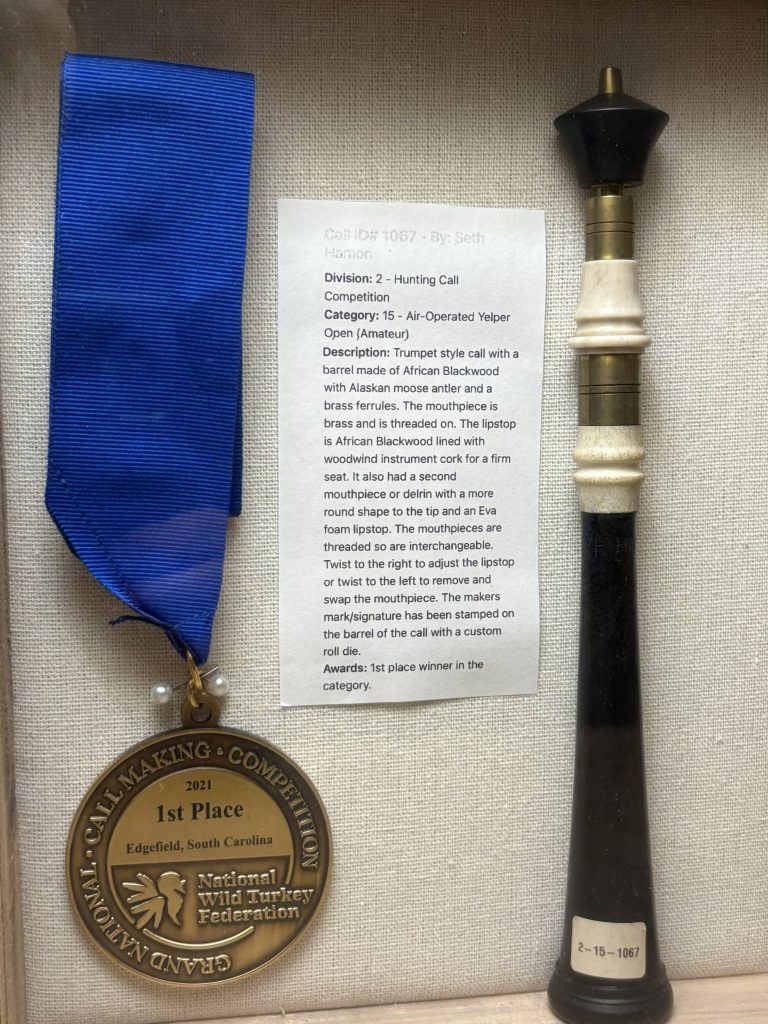
The unexpected win sparked what would become a lifelong pursuit of call making and competition, eventually leading Hamon to turn his craft into a full-time business.
Hamon went on to win the Tom Turpin Award three years later, followed by the Charles Jordan Award the following year. After skipping a year, he won the Turpin Award again in 2026, giving him national titles in three consecutive years of competition.
Yet competition is only one part of what makes Hamon's calls distinctive.
His background as a musical instrument maker has influenced the aesthetic of his decorative calls. He credits Ralph Permar, Charlie Trotter and Billy Buice as important influences in the callmaking world, while also carrying lessons from his years building musical instruments into his own work.
"Artistically, I do use bagpipe musical instrument aesthetics that I carry over," Hamon said, particularly in the external design of his decorative calls.
That influence is especially apparent in the way Hamon approaches the construction of his calls. Rather than viewing a turkey call simply as a hunting accessory, he approaches it like a finely crafted musical instrument.
"I build my calls like building a fine musical instrument," he said. "To me, it is a musical instrument."
That philosophy drives his relentless attention to quality.
Hamon uses materials such as cocus wood, African blackwood, mammoth ivory and fossilized walrus ivory — materials that, unlike elephant ivory, are subject to different federal regulations. Cocus wood, a rare tonewood once used extensively by instrument makers, has become increasingly difficult to find.
But materials are only part of the equation. Hamon is meticulous about ferrules, connections, adhesives and finishes, striving to build calls that will stand the test of time.
"I would hope in 100 years people are still playing my calls and picking them up and saying, 'Damn, this thing was made well,'" he said.
His trumpet calls are also immediately recognizable. Hamon uses a two-part mouthpiece and two functioning metal ferrules, a design feature he says sets his calls apart from other trumpet calls.
For Hamon, however, the greatest reward isn't necessarily a trophy or an award. It is hearing from hunters who are actually using his calls in the field. He enjoys receiving photographs of successful hunts and hearing from customers about how their calls performed.
"I'm hearing back from customers who've had successful hunts with the calls," Hamon said. "Knowing that people are using them and they're working and not stacking them on a shelf somewhere and forgetting about them."
That same emphasis on quality and usefulness extends to his view of the NWTF's role in the callmaking community. Hamon noted that the competitive environment created by the NWTF pushes call makers to continually improve their skills and evolve their designs.
"I think the competitive nature of competition, and NWTF putting on that format, helps makers and pushes them to get better, hone their skills," Hamon said.
The platform also gives call makers an opportunity to put their work in front of a much larger audience.
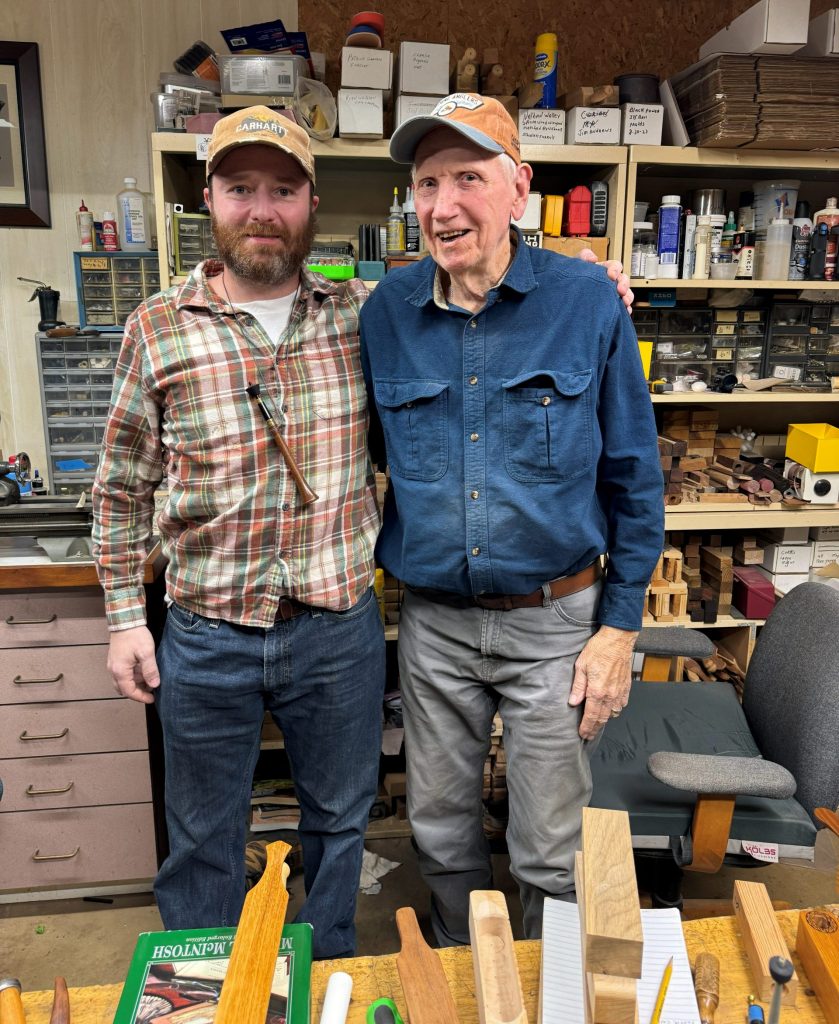
For Hamon, that community has provided both competition and camaraderie throughout his callmaking journey. His willingness to share what he has learned has also made him a mentor to newer call makers. Hamon has mentored numerous people beginning their own callmaking journeys, drawing on his experience in musical instrument construction and design to help others understand the craft.
He believes that kind of mentorship is important because many aspects of call design are difficult to learn without someone willing to share their knowledge.
"I think it is good to help," Hamon said. "I had people mentor me. I have mentored new call makers. I think it's important to help newer call makers, to help them get a start."
While Hamon's skills and experience have played an obvious role in his success, he is quick to recognize that his journey has never been his alone. Behind the workbench, the competitions and the countless hours spent shaping wood and metal has been his wife, Kathy Hamon, whose own career as a network engineer has helped make room for his pursuit of call making. Her support has allowed him to turn a passion into a craft that has become a significant part of his life.
"I couldn't do any of this without her support," Seth said.
That support is an important part of Hamon's story because call making, like any craft pursued at a high level, requires time, patience and dedication. Kathy has been there through the hours in the shop, the competitions and the evolution of his work as Hamon has continued to pursue his craft.
And even after decades of making musical instruments and calls, Hamon continues to find ways to keep the work interesting. One piece of advice he has heard repeatedly from older craftsmen is not to let the craft become a job. Although call making and musical instrument construction have become his full-time work, Hamon has found his own way to follow that advice: he changes things up.
He may spend time making trumpet calls before moving on to tube calls or scratch boxes. Other times, he returns to musical instruments, building a concertina, bagpipe or Irish flute.
For Hamon, the variety keeps the creative process alive.
In the end, his legacy may not be defined by a single award or competition title. Instead, it can be seen in the calls that continue to make their way into the turkey woods, the hunters who send him photographs of successful hunts, the younger call makers he has helped along the way and the craftsmanship he hopes will endure long after the call leaves his shop.
His goal is simple: build something well enough that it lasts.
And for a craftsman who sees every call as a musical instrument, that may be the greatest legacy of all.
Bid on Hamon's Legacy Callmaker Collection Auction Entry
Hamon’s striking trumpet call is crafted from African blackwood and bone-colored PPSU, a high-performance medical-grade plastic known for its exceptional toughness. The ferrule is stamped “01 NWTF LEGACY 2026,” and Hamon noted the design is the same trumpet style that has won the Tom Turpin Award twice.