Lessons Learned
A Virginia hunter tags a tom and narrowly escapes disaster.
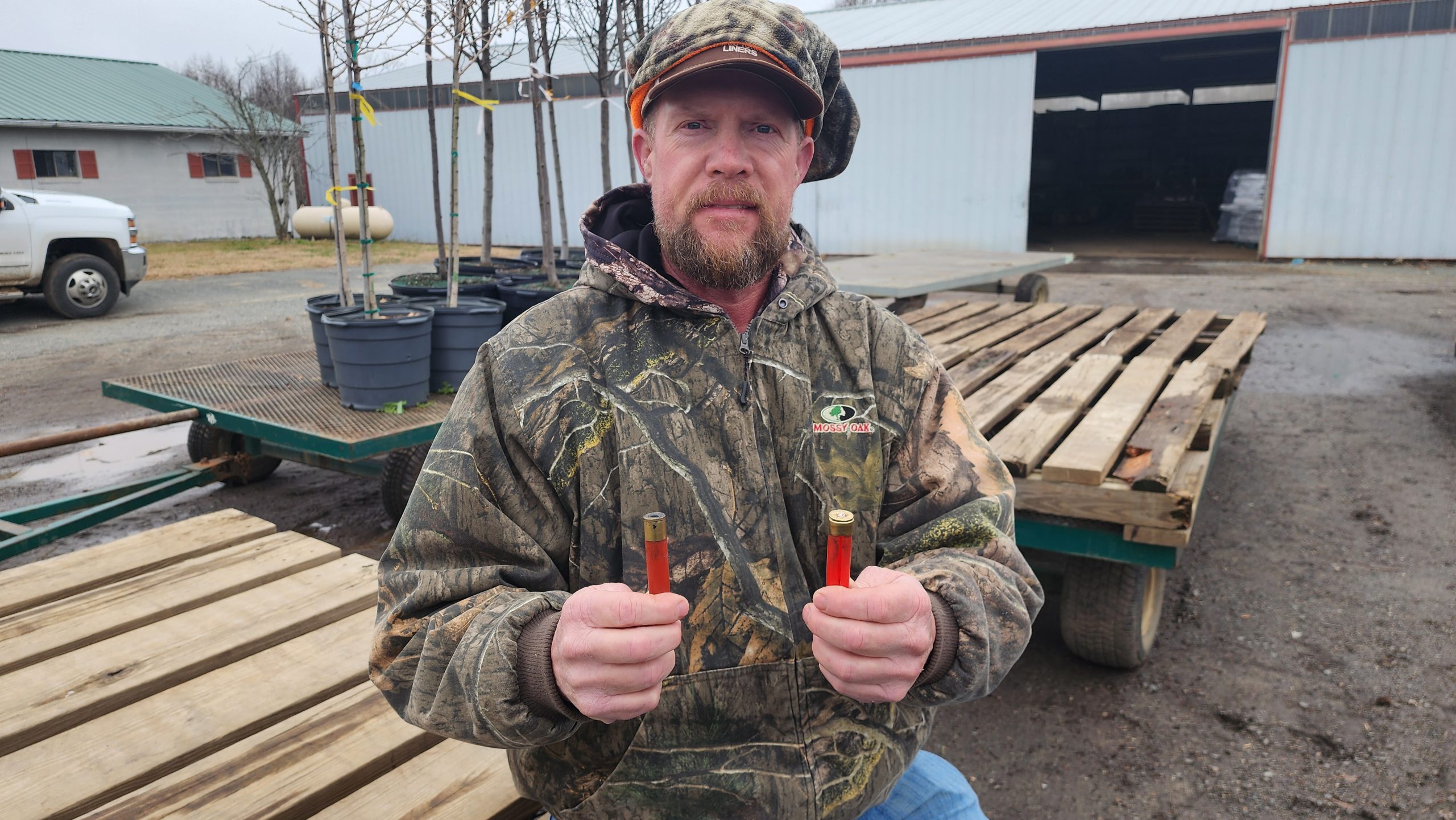
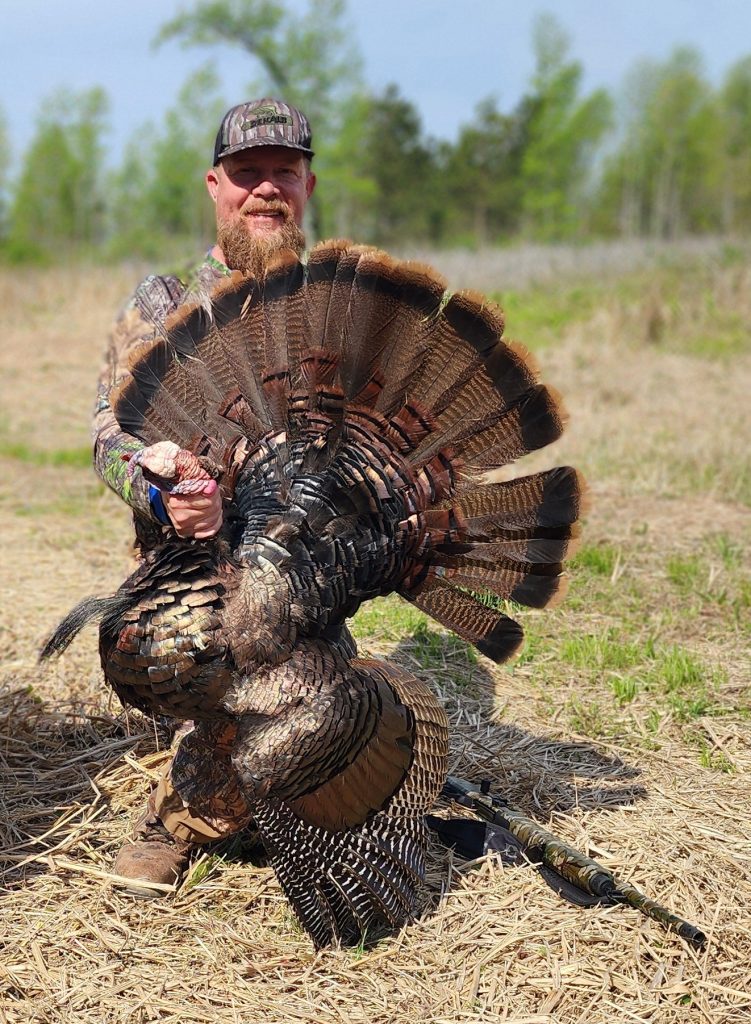
With more than 40 years of turkey hunting experience on some of eastern Virginia’s most productive lands, Louis Chandler has seen a lot of gobblers flopping after he pulled the trigger. Each bird brings a sense of accomplishment, but as he strode into a field to collect an early April 2025 tom, his thoughts were on his shotgun. Something wasn’t right. Little did he know that he had just dodged disaster.
Chandler believes the story is worth sharing, noting that even the most seasoned hunters can misfire.
Virginia’s Northern Neck is a region known for quality turkey hunting. The Chandler family’s primary business there is a large, wholesale tree nursery operation. Like many southern landowners who recall the glory days of quail hunting, Chandler has undertaken an aggressive, ambitious quail restoration program, launched about five years ago.
His timber thinning, invasive species control and prescribed fire work is showing progress, but the work is challenging, with weather, predators, and other variables in play. He says he’s got one quail covey on one intensively managed 30-acre tract, but he wishes it were three or four coveys.
“The wild blackberries are killing me in the pine savannas I’m creating, but there is a lot of cover for quail and hen turkeys,” he said. “Deer and a host of small game and nongame species also like the habitat improvements.”
Chandler, 53, has hunted turkeys since he was 10.
“I’ve had great experiences. I love turkey hunting. I end up wearing myself out every spring. It cuts into my sleep,” he said with a wide grin.
Working in the Dark
Virginia was in the second full week of its spring gobbler season when Chandler woke before dawn on a Monday morning and decided to stage a quick hunt close to his country home.
“Monday mornings tend to be busy for me, but I had about 45 minutes available to go turkey hunting,” Chandler said. “I knew where a bird might be. It was dark. I parked my truck and grabbed my gun.”
Now, Chandler and his son hunted together a week earlier. Their semiautomatic shotguns were in the back of his truck, laying side-by-side. Both guns are completely black, with similar profiles and feel, especially around the grip. Instead of grabbing his 28-gauge Benelli Black Eagle, he mistakenly picked up his son’s 20-gauge Franchi Affinity 3.
“I walked in the dark across a field, pulled some shells from my pocket and loaded the gun, including the magazine tube,” Chandler said. “I set up in thick cover, tucked in some cedars at the edge of the woods.”
His wait was short. At the first hint of light, the turkey started gobbling, pitching down to the field soon after.
“It was still kind of dark,” he remembered. “I called a few times, and he came right across the field to my decoy. He presented a good shot at about 30 yards. When I squeezed the trigger, the firing pin just clicked. ‘Man, it’s a misfire,’ I said. But the bird was still unaware of my presence and out there strutting by the decoy.”
Chandler eased the gun down, then quietly pulled back the bolt to assess the situation. When he didn’t see a shotshell, he figured he had forgotten to chamber a round. However, in the early morning confusion, he had stuffed his son’s 20 gauge with three-inch, 28-gauge shells.
“I shucked another shell from the magazine, but the bolt didn’t seem to want to close all the way … got a little tight about halfway closed. I just pushed it closed. There was a lot going on; had a nice turkey out there I wanted to shoot. Low light, early morning – Monday morning,” he shrugged.
Chandler raised the gun and got back on the turkey. When the gobbler finally stretched its neck, he fired.
“It was doubly loud,” he explained. “The sound was not right. I didn’t really notice any more recoil.”
Chandler is a lefty, but his guns are configured for righthanders, meaning the ejection port on a semiautomatic shotgun pitched empty shells across his face, albeit usually with ample clearance.
“As soon as I pulled the trigger, I felt the gas blow by my face,” he said. “It almost knocked my hat off. It kind of stunned me. The turkey was flopping in the field. I put my gun down, got up and walked out and retrieved the bird.
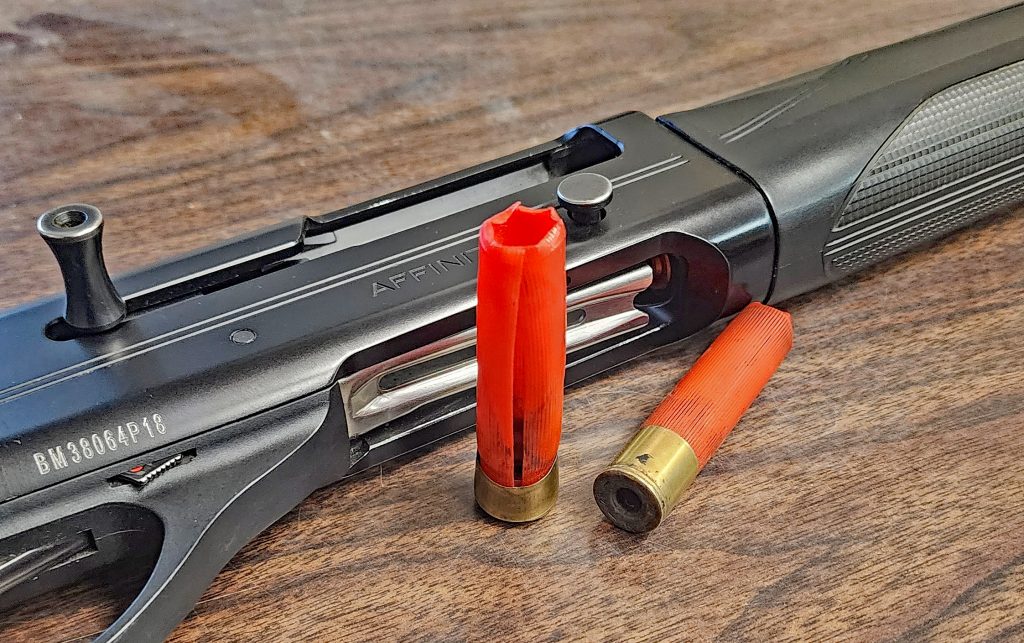
“I’ve got to check this gun out,” he muttered as he returned to the cedars. “When I picked it up, I could hear shot rattling in the chamber. When I opened the bolt, a whole load of TSS shot came spilling out. The empty shell, though, had ejected, and the hull was split.
“Back at the shop, I looked down the barrel and couldn’t see daylight. I got a dowel and began tamping until the first shell, which was now stuck halfway up the barrel, popped out. The primer was blown out and the brass was black.”
His first reaction was self-judgmental.
“I should’ve known better. It was my mistake,” he said. “It should’ve dawned on me that the gun was double loaded.”
Could Have Been Worse
Chris Mierzwa, one of Green Top Sporting Goods’ experienced gunsmiths in Ashland, Virginia, says, the smaller diameter 28-gauge shotshell Chandler first loaded likely slid up to the forcing cone, the spot where the wider shotshell chamber meets the barrel. This forcing cone in the first few inches of the barrel itself, has a gradual taper that helps compress the shot column, usually resulting in better patterns.
“The shell had probably reached the forcing cone. And then got pushed in a little further,” Mierzwa said. “I would have thought there would have been enough pressure to make the barrel blow up. I think he was extremely lucky.”
Chandler is grateful and wonders why something worse didn’t happen. Stories abound of shotguns blowing up in hunters’ hands when shells are double or improperly loaded. A phenomenon called a “12/20 burst” happens when a 20-gauge shell is loaded into a 12-gauge gun and then a 12-gauge shotshell loaded and fired behind it. Chandler surmises the barrel didn’t blow because the 28-gauge shells have lighter powder charges and the pressures simply weren’t enough. Some pressure likely vented through the blown-out primer hole of the first shell and the rest blasted out the ejection port. He also wonders if the TSS loads he was using helped, noting those shells aren’t loaded especially “hot,” mainly because the density of the shot.
“Any obstruction in a barrel can cause a barrel to blow,” he said. “I think that the shells were snugged back-to-back may have helped. If there had been any air space in there, I think it would have blown up for sure.”
He also pondered potentially disturbing situations that could have happened had he not added another shell and had his mishap. The most disconcerting involves his son picking up the shotgun and not knowing the barrel was obstructed, loading it with a 20-gauge shell and shooting. “What if I hadn’t shot that turkey, and had that 28-gauge shell stuck in there, and my son came home and loaded a 20-gauge shell? It could have blown the gun up. I’m glad I didn’t have to live with that.”
Hoping Others Learn
His personal takeaways from the incident include the recognition that even experienced hunters can have missteps.
“If you have guns with different gauges and you’re in the field where things can get exciting, it’s easy to mix shells up,” Chandler said. “People turkey hunt with a variety of shotgun sizes. I’m going to make sure all of the shells are kept separate – not in a pocket. The same with the guns to avoid this from ever happening again.”
Chandler initially considered keeping this story anonymous but decided it is worth sharing if it can prompt others to avoid similar situations.
“I’m not ashamed of it,” he said. “I’ve told just about everyone I know this story. I’m going to keep hunting. I’m a little embarrassed, a little taken aback, but I’ve kept these shells on my desk as a reminder.”