Local NWTF Chapter Hosts Habitat Management Field Day
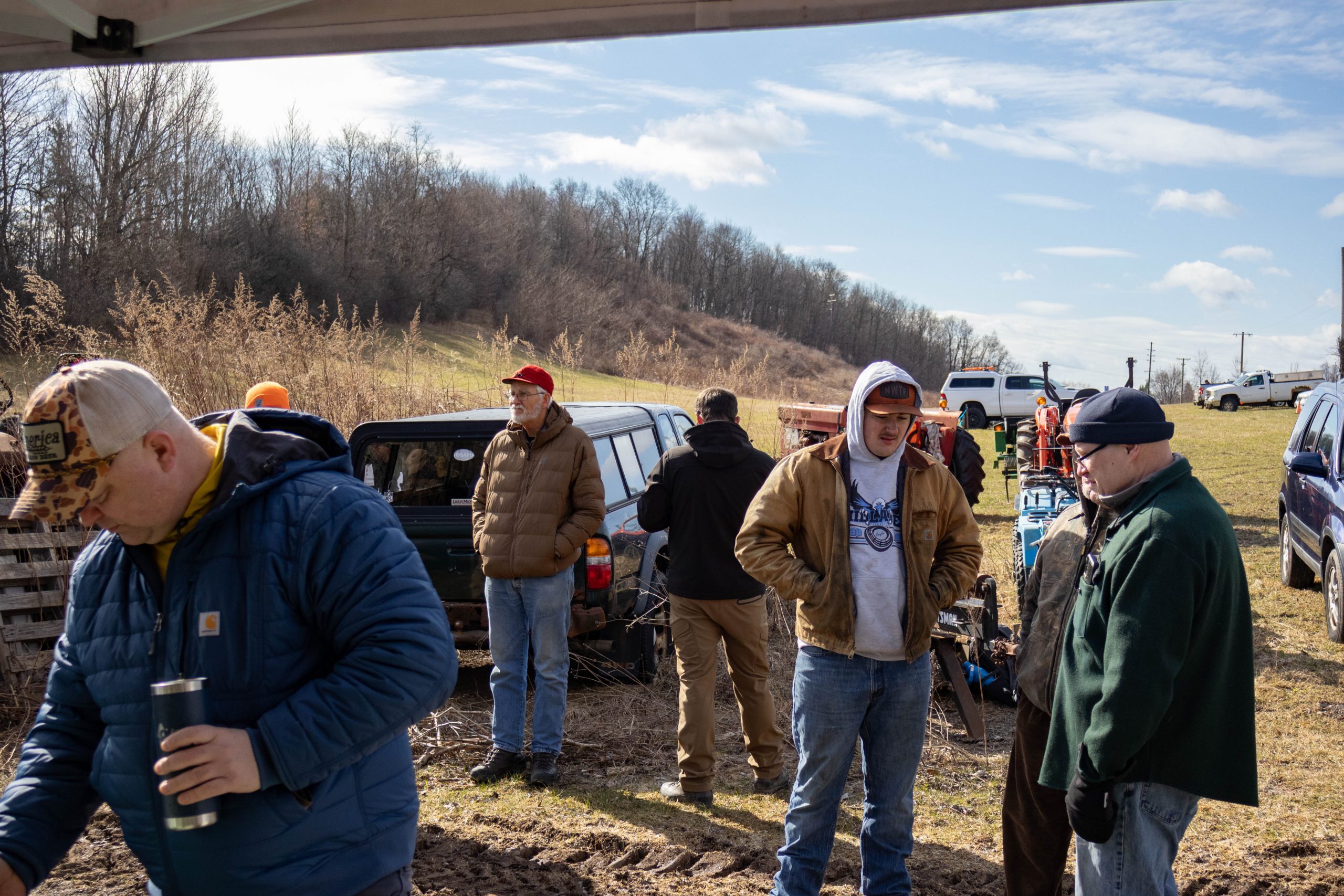
EDGEFIELD, S.C. — Ben Williams of the local NWTF Hardwood Strutters Chapter, based in Lyons, New York, invited 20 local landowners to tour his property for habitat demonstrations as part of the local chapter’s Habitat Field Day event.
The event was sponsored by local businesses, including Seedway, a local seed distributor that donated trees for each attendee to plant on their property using what they learned during the event.
Before the tour began, Williams introduced Norm Ridley, NWTF Hardwood Strutters Chapter president. It was through Ridley’s JAKES Day event three decades ago that Williams was inspired to love and steward the outdoors.
One of the first stops was an area that Williams called “top field.” There, he demonstrated how to use a seclusion cage, a small fenced-off section of the field designed to keep deer out. Williams explained that after seeding the field, he selects a small area at random and encloses it with thin wire fencing to prevent deer browsing. By comparing the protected vegetation inside the cage to the surrounding field, Williams can see how heavily deer are utilizing the food plots.
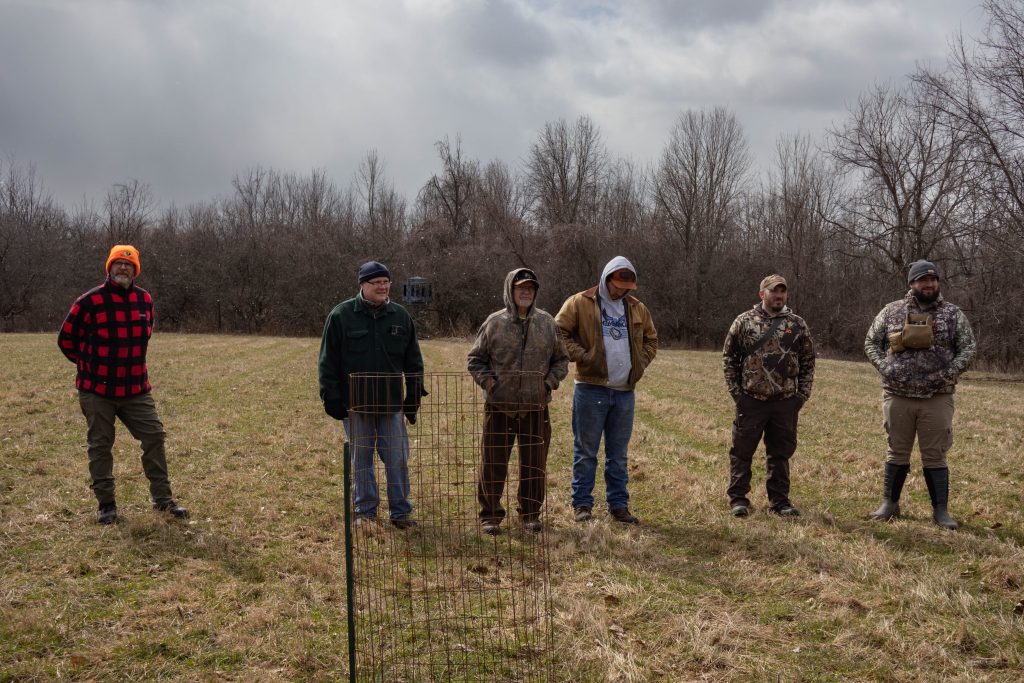
Directly adjacent to top field was a row of apple trees Williams received from the NWTF 12 years ago.
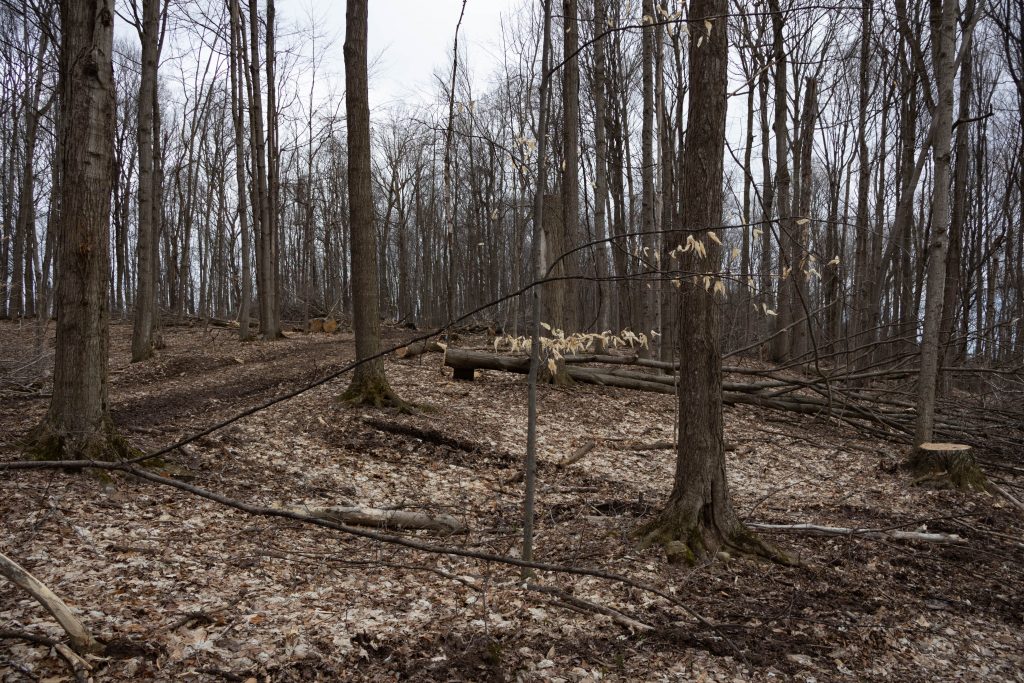
The next stop on the tour was an area that recently underwent a timber stand improvement and a commercial timber harvest that cleared out hardwood trees, such as ash, hickory and American beech. Like many forests in the Northeast, the property was struggling with invasive beech bark disease, beech leaf disease and emerald ash borer, which can impact the health of the overall ecosystem.
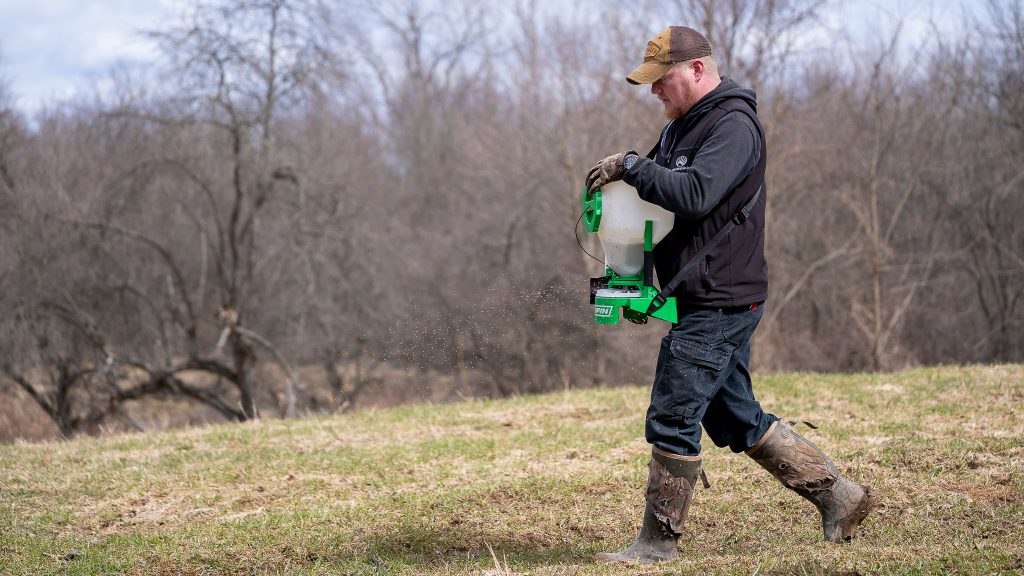
After a few more stops, the tour wrapped up with a frost seeding demonstration on a perennial field, a site where Williams killed his first turkey as a youth.
“It's pretty cool seeing the before and after of these projects,” Williams said. “It is awesome to see how the forest has changed over the last 15 years, and how our improvements are already paying dividends. At the timber harvest spot, we spotted 12 wild turkeys on the tour.”
Williams was happy to invite local landowners to his property because, although there is a lot of information online about how to manage a property for wildlife, taking a tour of quality habitat in person allows for open conversation.
Williams shared his personal management tips for each plot and allowed attendees to ask questions, share their experiences, trade mistakes and talk through course corrections. He wants independent landowners to know that habitat management is not linear.
“We’ve learned a lot from our mistakes,” Williams said. “At these types of habitat days, we have open dialogue about what works, what doesn’t, what others think, what they’ve tried and talk through it. It’s important to give this information to the people with boots on the ground.”
All the work that Williams and his father have done on the property has been targeted habitat enhancement projects to bolster wild turkey numbers.
“This is the type of work we’re excited to promote with the Forest and Flocks Initiative,” said Jesse Warner, NWTF R3 coordinator for the Northeast. “Through events like this one, we are seeing landowner collaboration, private lands partnership, education and a whole lot of wild turkey habitat being created.”
About the National Wild Turkey Federation
Since 1973, the National Wild Turkey Federation has invested over half a billion dollars into wildlife conservation and has positively impacted over 25 million acres of critical wildlife habitat. Since 2022, the NWTF has also invested over $2.3 million in critical wild turkey research that, when leveraged with partner contributions, has resulted in more than $22 million to guide the management of the wild turkey and to ensure sustainable populations. The organization continues to deliver its mission by working across boundaries on a landscape scale to deliver healthy forests and wildlife habitats, clean and abundant water, resilient communities and robust recreational opportunities. With the help of its dedicated members, partners and staff, the NWTF continues to unite a nation through the life-changing power of the outdoors.