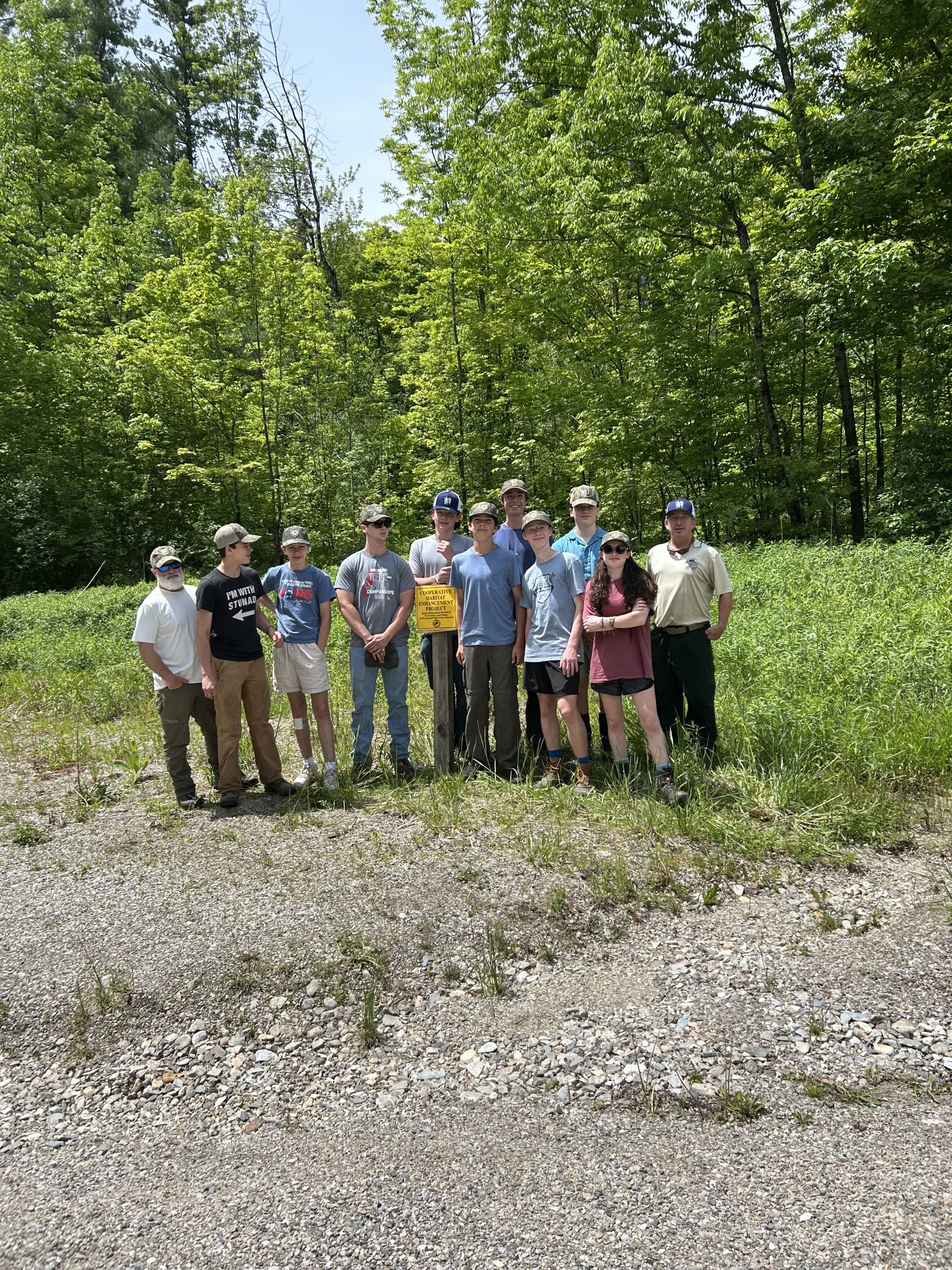
Local NWTF Chapter Partners with Teens to Keep Habitat Clean
EDGEFIELD, S.C. — Vermont’s NWTF Lake Champlain Longbeards Chapter recently partnered with Champlain Valley Union High School, the Vermont Fish and Wildlife Department and the Vermont Forests, Parks and Recreation to host the three-day Habitat Field Day at the Lewis Creek Wildlife Management Area.
The 10 students were enrolled in the school’s RISE Program, or Reflective Interest-Based Student Experiences, which is a school-wide program that ran from May 19 through June 11, offering students the opportunity to focus on experiences that are not otherwise available during the year.
The students spent three days at the Lewis Creek WMA conducting mast tree releases, a forest management practice that removes lower-quality or invasive vegetation to release preferred, mast-producing trees. This promotes a healthy forest and more food sources for wildlife. Student volunteers released apple, hawthorn, oak and various other nut- or fruit-producing trees.
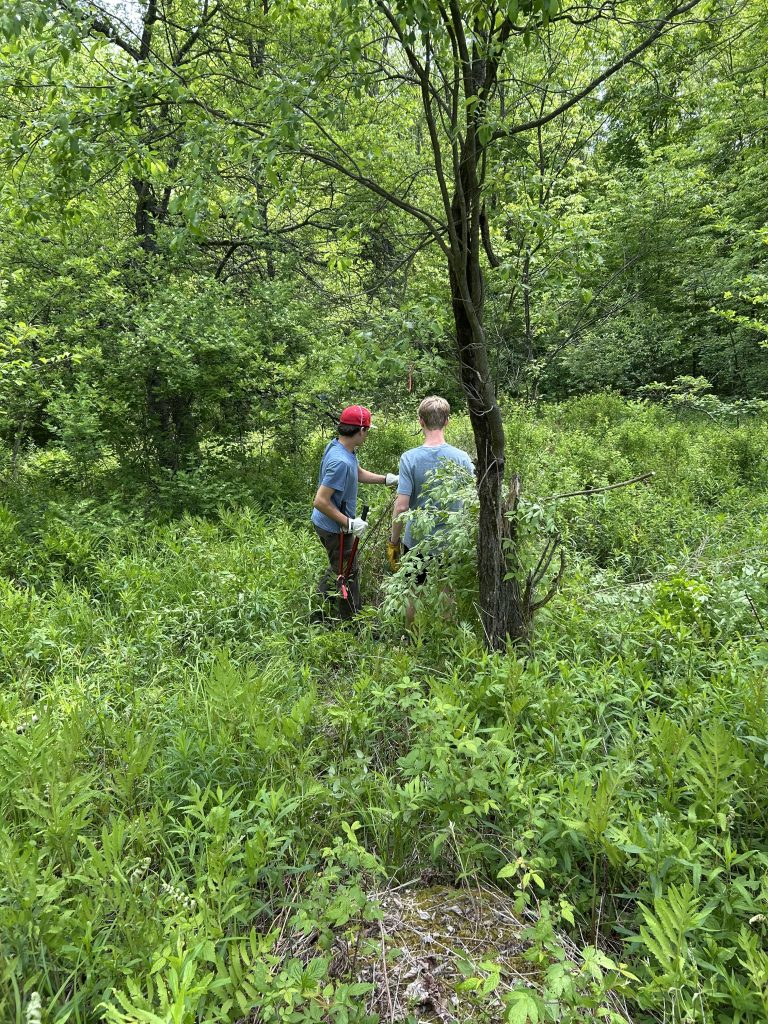
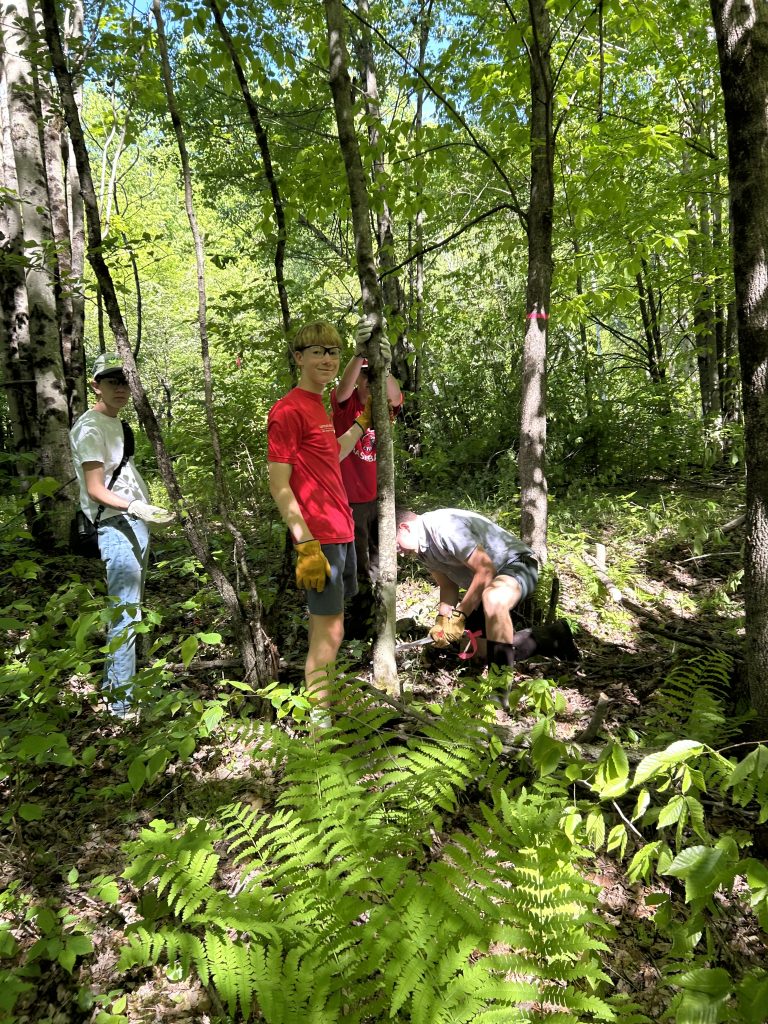
“It was a pretty fun event,” said Ron LaFreniere, Lake Champlain Longbeards Chapter treasurer. “In the three days we had, we released close to 200 trees. We took care of a lot of invasive honeysuckle.”
LaFreniere and his chapter have been working with the RISE Program for the last few years to host a wild turkey seminar that educates participating students on wild turkey biology and the mission of the NWTF. During the most recent seminar, LaFreniere talked about the habitat projects his chapter has been doing on public lands.
After the success of the seminars, one of the RISE advisors asked LaFreniere if there was a way to get students involved with some of the NWTF projects.
They worked with agency partners to choose the Lewis Creek WMA, only 20 minutes from the high school, as a good site for the students to roll up their sleeves and contribute to conservation.
For LaFreniere, getting teenagers involved with habitat work is important, as it allows them to see conservation work firsthand and understand its importance. With this event, not only are the students learning about healthy wildlife habitats, but they are now part of the conservation story through their own efforts.
"Our local chapter has been working towards getting information out and sharing the work we do and then trying to get more youth involved with the work that we’re doing,” LaFreniere said. “The partnerships that we have on state lands open those opportunities up. Working with young students is satisfying for me because, to get those kids to see exactly what we do and what can be done to improve things for wildlife, is really inspiring. A lot of them didn’t understand what can actually be done and that this is their land, and they’re allowed to spend time in these spaces. This was just our first event, and I believe our chapter will be able to partner with more schools to get more students involved.”