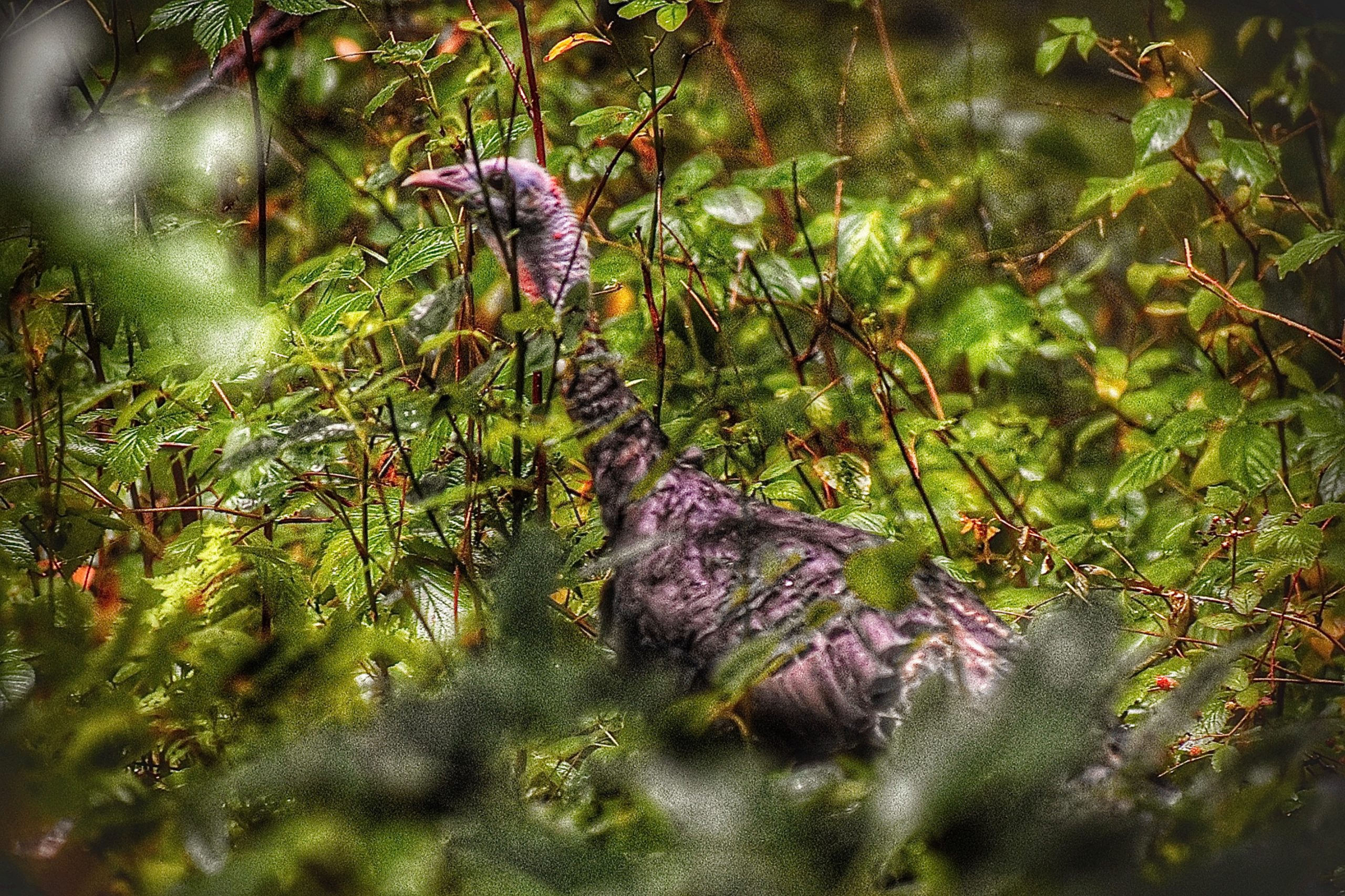
Making Room for Poults in a Deer-Centric World
Most land managers understand the importance of nesting and brooding cover for wild turkeys, but one crucial factor often gets overlooked: thermal cover for poults. While much attention is given to creating ideal nesting sites and quality bugging areas, young turkeys also need places to escape the heat.
As a wildlife biologist and habitat consultant, I spend my days helping landowners improve their properties for game species. Many clients are passionate deer managers who also enjoy turkey hunting. When they see a closed-canopy woodlot with little understory, their first instinct is to grab a chainsaw, thinking it’s wasted space. But in reality, these shaded areas play a critical role in poult survival. With a bit of strategic thinking, they can serve a dual purpose.
Why Poults Need Shade
Unlike adult turkeys, which can regulate their body temperature more efficiently, poults are highly susceptible to heat stress. Poults struggle with thermoregulation because they lack insulating feathers, relying only on soft down for warmth. Their small body size causes them to gain and lose heat rapidly, making them highly vulnerable to extreme temperatures. Additionally, since poults cannot roost in trees for the first few weeks of life, they are confined to ground-level environments, where they are exposed to the full brunt of summer heat.
Research has shown that brooding hens actively seek out cooler, shaded environments for their poults. A 2022 study (Nelson et al.) on Eastern wild turkey broods, conducted across multiple states in the Southeast, found that brooding females consistently selected sites with lower temperatures and greater ground cover compared to non-brooding females. The study, led by researchers from Tennessee Tech, the University of Georgia and Louisiana State University, determined that brood-rearing hens were 1.25 times as likely to choose sites based on the ambient temperature.
These findings confirm what many seasoned land managers have observed; namely, poults seek out naturally cooler areas to survive the hottest parts of summer. Shaded woodlots with a closed canopy, especially on northfacing slopes, act as natural air-conditioning units, keeping temperatures lower than open fields or cut-over timber stands. This cooling effect is important, particularly in the first few weeks of a poult’s life, when its ability to thermoregulate is weakest.
Rethinking Closed-Canopy Woodlots
Through my work with Whetstone Habitat, I’ve noticed that many landowners view mature timber stands with minimal understory as unproductive. To a whitetail manager, these areas lack thick cover that holds deer. These stands seem like prime candidates for cutting or thinning.
While open fields and weedy clearings provide insects, they also expose poults to heat and avian predators. Shaded woodlots, though, are ideal loafing and foraging locations for young birds, thanks to the cooling shade, the ability to spot predators across the open understory, and abundant insects to eat in the leaf litter. The leaf litter teems with small invertebrates that are essential to a poult’s diet. Springtails, grasshoppers, crickets, beetles, worms, ants and spiders thrive in the dark, damp environment, providing the high-protein food poults need to fuel their rapid growth. Unlike sun-exposed areas where the ground dries out quickly, these shaded environments retain moisture, keeping insect activity high and ensuring poults always have access to a reliable food source.
Buffer Zones Help Both Deer and Turkeys
This is where buffer zones come into play. I regularly see landowners make the common mistake of unintentionally inviting deer to their access routes, the paths hunters typically use to travel to and from their stands, such as ATV trails, logging roads or field edges.
These access routes are often the easiest areas to reach with equipment, which is why many landowners unintentionally concentrate habitat improvements — hinge cuts, edge feathering and timber thinning, for example ― right along these trails. While this creates great food and cover for deer, it does so in the worst possible place from a hunting standpoint. You, essentially, invite deer to bed and feed right along your travel corridors, increasing the chances you will bump them while you walk in or out, especially during morning hunts. Deer quickly pattern human movement, undermining hunting success.
Instead, I encourage landowners to designate buffer zones, low-impact areas adjacent to heavily used hunter access trails. Habitat improvements are limited in these buffers.
Here are three reasons buffer zones are a win-win:
First, they discourage deer from loitering near your access routes. A well-managed hunting property is designed for strategic deer movement — not for deer to bed along your entry and exit paths.
Next, they provide essential thermal cover and foraging habitat for poults. The cool, shaded understory of these areas is the perfect place for young turkeys to loaf and feed.
Finally, they require little maintenance. Beyond controlling invasive species, buffer zones thrive with minimal intervention.
Managing Buffer Zones Effectively
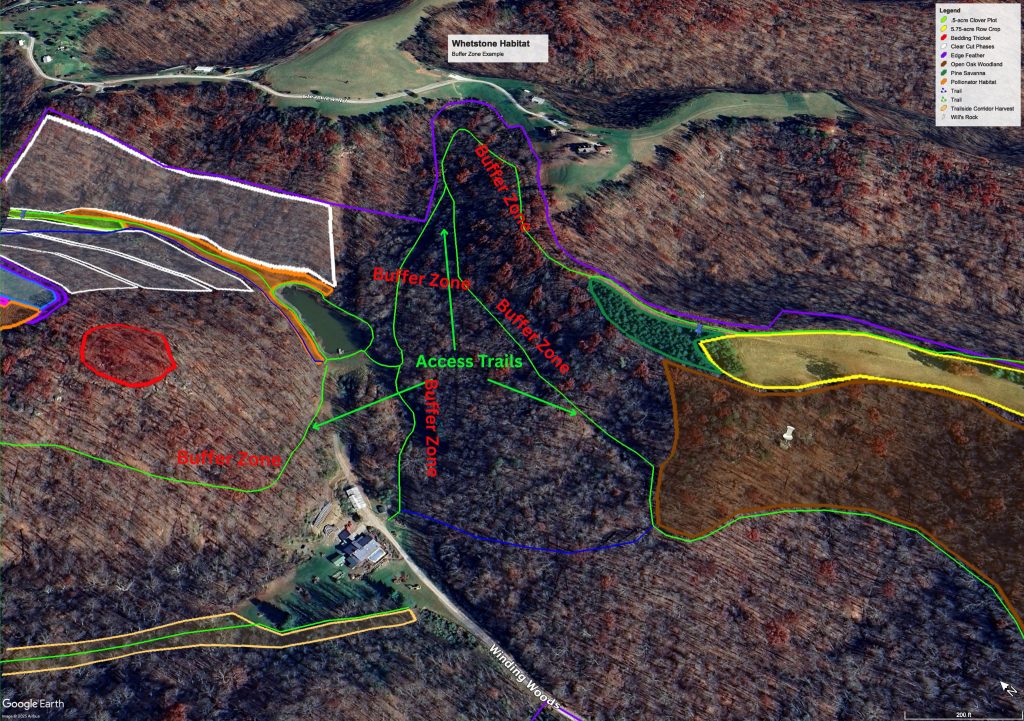
Implementing buffer zones doesn’t require drastic changes; it’s more about restraint than action. Here is how to make the most of them:
- Identify buffer zones along access routes, ridgelines, riparian zones, or areas near main hunting access trails.
- Keep the canopy closed to maintain shade and limit undergrowth.
- Manage invasive vegetation but avoid excessive clearing or thinning.
- Preserve leaf litter to sustain insect populations.
- Allow natural structure to dictate habitat rather than forcing it to conform to deerfocused improvements.
Applying these principles will benefit hunting strategies and turkey populations. The result? Better poult survival and improved access for deer hunters.
Balanced Approach to Habitat Management
The best land managers recognize that whitetails and turkeys have different needs. Managing habitat exclusively for deer can limit turkey recruitment, just as managing exclusively for turkeys can create imbalances for other wildlife.
However, sound planning allows both to thrive. Keeping select areas shaded and insect-rich benefits poults while ensuring deer movement remains predictable around hunting setups.
The next time you look at a closed-canopy woodlot and instinctively reach for the chainsaw, consider how this space might be more valuable than you think. By thinking like a poult or a hen with poults, you can improve your turkey habitat without sacrificing deer management goals.