Missouri Super Fund Projects Expand Habitat and Opportunity Across the Landscape
From the Missouri River floodplain to the Ozark hills, NWTF Super Fund projects are helping restore habitat, support landowners and improve conditions for wild turkeys across Missouri.
The NWTF’s Super Fund is a funding model through which volunteers raise money at banquets and other fundraisers and allocate a significant portion of those proceeds to impactful conservation, research and outreach projects at the state level and beyond.
These projects highlight a key truth: meaningful conservation doesn’t happen in one place — it happens across landscapes, partnerships and generations of stewards working together. Here are some Super Fund projects in action:
Equipping Landowners to Improve Habitat in Callaway County
In central Missouri, conservation starts with the people who manage the land.
Through a partnership with the Callaway Soil and Water Conservation District, NWTF support will help replace a worn-out no-till drill with a new, reliable unit that landowners can rent to establish and maintain conservation practices.
The existing drill has become unreliable, limiting the ability of landowners to plant native grasses and implement soil health practices. With a new drill in place, landowners will be better equipped to establish native vegetation, improve soil conditions and enhance wildlife habitat across the county.
While this type of project may seem indirect, its impact is far-reaching. By putting conservation tools in the hands of landowners, NWTF is helping create better nesting cover, brood habitat and forage opportunities for wild turkeys across a much broader footprint than a single project site.
This work also reflects the broader goals of the NWTF’s Roots to Roost initiative, which focuses on expanding wild turkey habitat by empowering private landowners with the tools, resources and knowledge needed to implement meaningful conservation practices. Because the majority of Missouri’s landscape — and much of the country’s — is privately owned, the future of wild turkey populations depends heavily on how these lands are managed. By investing in landowners and supporting practical, on-the-ground solutions like this equipment upgrade, NWTF is helping ensure that high-quality habitat continues to grow from the ground up, benefiting wild turkeys, other wildlife and the hunting heritage tied to them.
Fighting Invasive Species Along the Missouri River
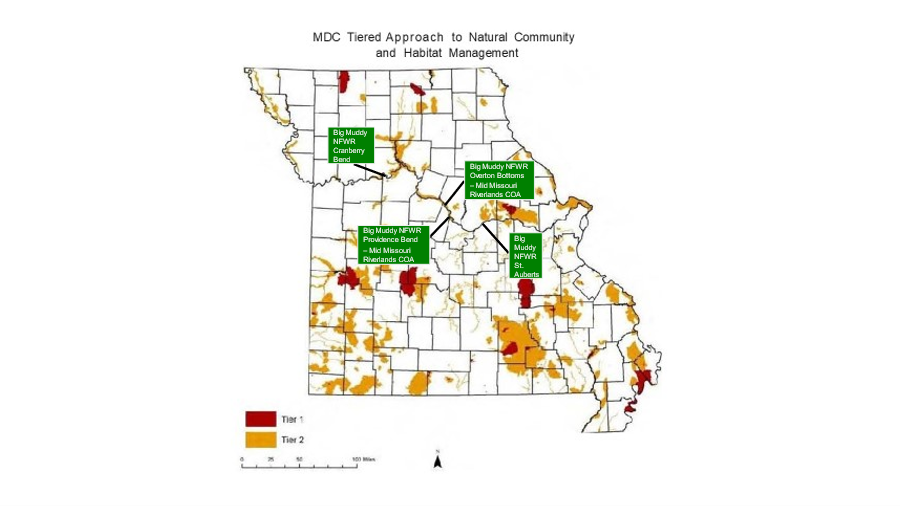
Further north and stretching across the state, the Big Muddy National Fish and Wildlife Refuge is tackling one of the biggest threats to wildlife habitat — invasive species.
With support from the NWTF, refuge staff will enhance their invasive species strike team by adding a high-capacity herbicide application unit, improving their ability to treat hundreds of acres each year.
These efforts will help restore native prairie, woodland and floodplain habitats across thousands of acres along the Missouri River; these areas are critical for wild turkeys, pollinators and other declining wildlife.
Invasive plants like sericea lespedeza, bush honeysuckle and reed canary grass can quickly dominate a landscape, reducing the diversity of plants and insects that turkeys depend on. By controlling these species, managers can restore the native plant communities that support nesting, brood rearing and year-round foraging.
Bringing Fire Back to the Landscape in Callaway County
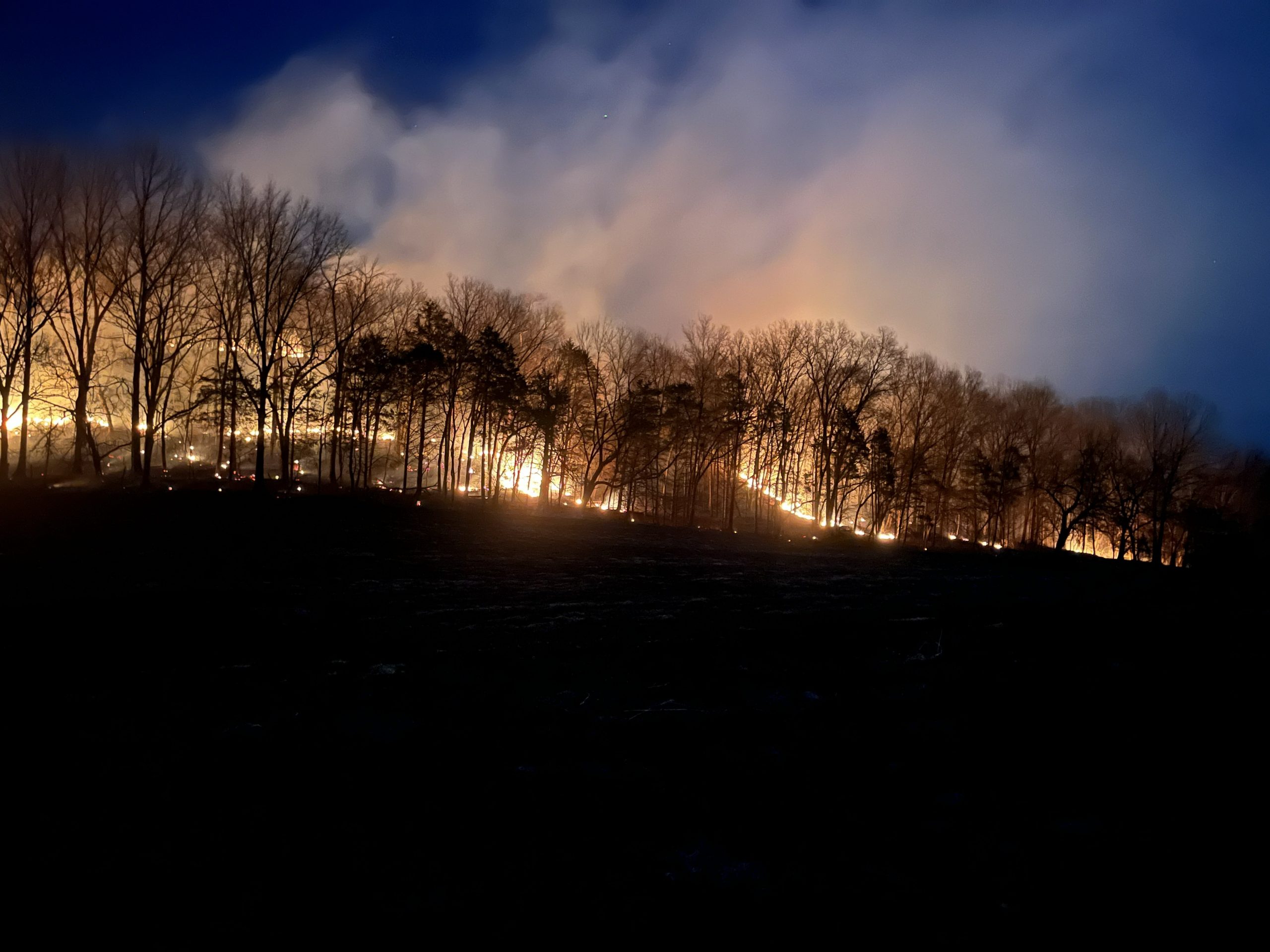
On private lands in southern Callaway County, prescribed fire is helping unlock the potential of nearly 1,000 acres of woodland and glade habitat.
Through the Auxvasse Creek Cooperative Woodland Burn project, partners are working with landowners to conduct prescribed burns across more than 300 acres, restoring early successional habitat that is critical for turkey broods.
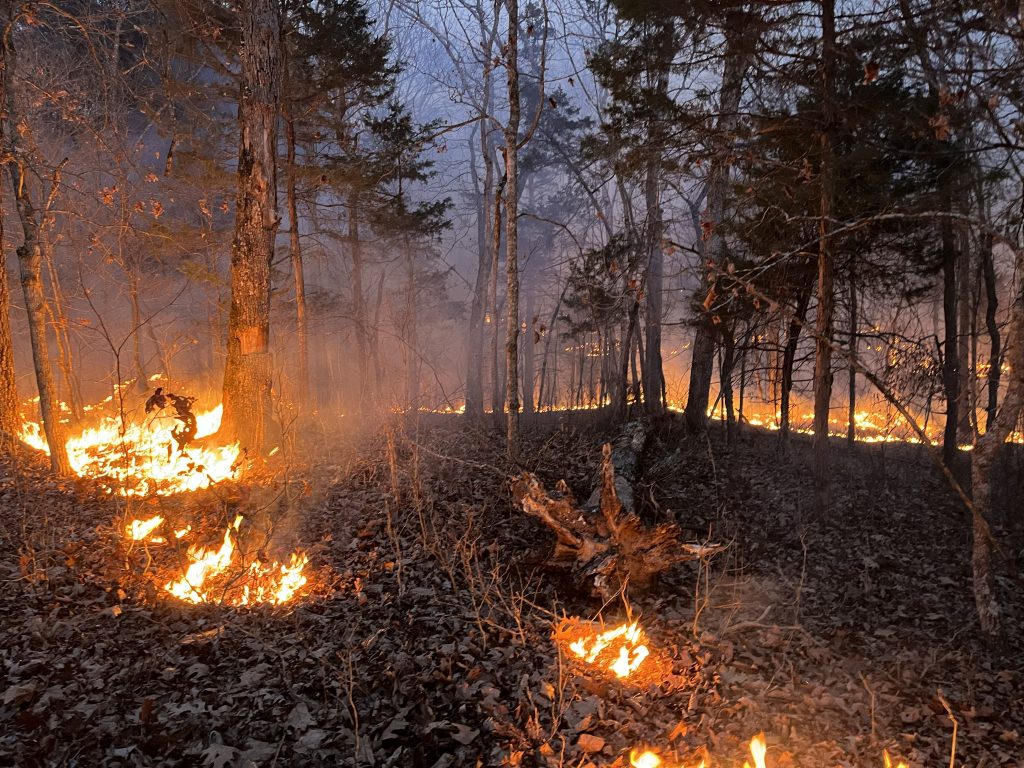
In many areas, past management efforts, including cedar removal and thinning, have already set the stage for success. But without fire, those gains can quickly be lost as woody vegetation returns.
This project brings together landowners, the Missouri Department of Conservation and Quail Forever to reintroduce fire at scale, creating the open, diverse conditions that support the insects and native plants that build the foundation of quality turkey habitat.
Continuing a Legacy of Turkey Habitat at Drury-Mincy
Few places in Missouri carry as much history for wild turkeys as Drury-Mincy Conservation Area.
Once one of the last strongholds for native wild turkeys in the state, Drury-Mincy played a critical role in restoring turkey populations across Missouri and beyond.
Today, NWTF and partners are continuing that legacy.
At the Drury unit, woodland thinning across approximately 139 acres will reduce canopy cover and allow sunlight to reach the forest floor, improving nesting and brood-rearing habitat following recent prescribed burns.
By opening the canopy and promoting native vegetation, managers are creating the structure turkeys need to successfully nest and raise poults, ensuring this historic landscape continues to support strong turkey populations.
Why This Work Matters to NWTF Members
Each of these projects represents a different approach to conservation: equipment support, invasive species control, prescribed fire and forest management — but they all serve the same purpose: sustaining wild turkeys and protecting our hunting heritage.
“I try to focus the majority of our conservation efforts in my district on projects that will restore or maintain nesting and brood-rearing habitat since that is where the bottleneck always is,” said John Burk, NWTF district biologist for Iowa, Illinois and Missouri. “All of the projects mentioned here as well as most that have occurred previously or are near completion do exactly that. Whether it is equipment needed to implement that kind of management or contracting it out and whether it has a grassland or woodland emphasis, the key is putting more early successional habitat in place. Do this and turkey reproductive success improves and improved turkey reproductive success leads to a wonderfully noisy spring woods.”
For NWTF members, this is the direct result of their support.
Funds raised at local banquets are reinvested into projects like these, where they are matched with partners and multiplied into meaningful conservation outcomes. Whether it’s helping a landowner plant native grasses, restoring thousands of acres along a river system or improving habitat on public land, every dollar works harder on the ground.
And the benefits go beyond habitat.
These projects improve access, increase hunting opportunities and ensure that future generations can experience the same spring mornings that define the outdoors for so many NWTF members.
Across Missouri, NWTF and its partners are proving that conservation works best when it’s local, collaborative and focused on the long-term health of wildlife and wild places.