Motivated by Research
The NWTF’s new director of research and science provides insight into the future of the wild turkey.
It is an honor to step into the BioSpeaking column following Dr. Bret Collier, who most recently was sharing his perspectives. Bret connected wild turkey science with NWTF members by translating research into ideas meaningful to hunters and managers alike, a commitment I intend to continue. Bret served as my master’s advisor at Louisiana State University and has remained an important mentor throughout my career. I was also shaped by my time working with Dr. Mike Chamberlain, the NWTF Distinguished Professor at the University of Georgia, first as his Ph.D. student and later as a faculty member focused on wild turkey research. Both have influenced how I approach wild turkey research and science. I am grateful for their continued support as I take on this role.
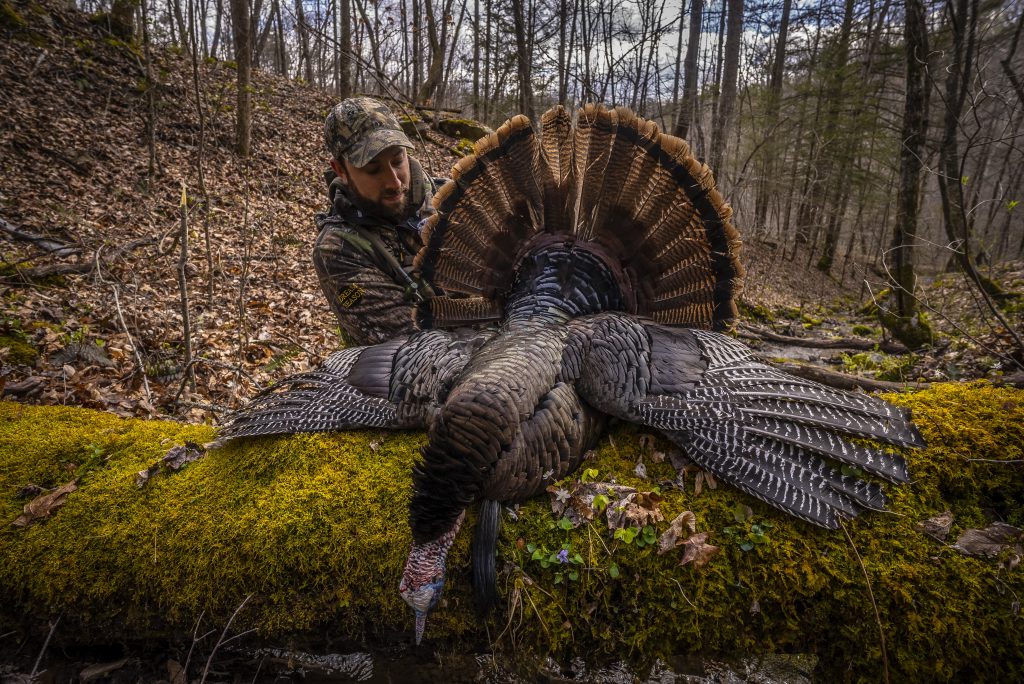
For readers who may not know me yet, I’ve spent more than a decade studying wild turkeys across the Southeast and beyond. My path into this work has always been rooted in fascination with the bird itself — its behavior, beauty and the experiences it provides outdoors. Simply put, I love wild turkeys, I love turkey hunting, and I have always been driven by a simple curiosity: Why do turkeys do what they do and how can we ensure there are always turkeys to enjoy? That curiosity ultimately led me into research and continues to motivate my work today.
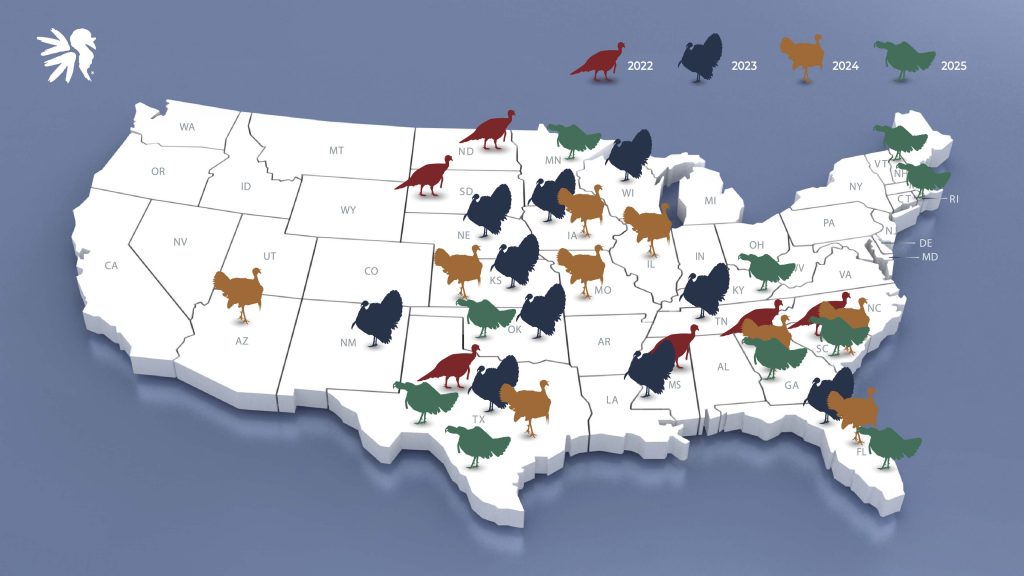
There has never been a more exciting time to be involved in wild turkey research. Over the past decade, researchers, state agencies and conservation partners have invested tremendous effort into understanding turkey populations across the country. Studies examining survival, reproduction, genetics, movement ecology, disease and gobbling behavior, just to highlight several areas, are underway at scales never seen before. Since 2022 alone, the National Wild Turkey Federation has helped fund more than 35 research projects nationwide. That investment continues to grow.
One of my goals in this role, and through this column, is to help highlight and share the results of that work. Research achieves its full value only when findings reach the people who care most about the resource: members, hunters, landowners and wildlife managers making decisions on the ground. My hope is that BioSpeaking becomes a place where we explore what we are learning about wild turkeys and what it means for conservation moving forward.
As a research community, we have learned an incredible amount about wild turkeys in recent years. Advances in GPS tracking technology, accelerometers and autonomous recording units now allow us to observe birds in ways that were unimaginable even 15 years ago. Much of this work has focused on observations helping us understand movements, habitat use, nesting ecology, survival patterns and breeding behavior. These foundational studies have been essential in helping us build the understanding needed to inform management decisions.
One important next step, in my opinion, is building on that knowledge through more coordinated and applied research. Many studies have historically occurred at individual sites, producing valuable insights but often limited in geographic scope. Recent years have seen a growing effort within the wild turkey research community to combine studies and pool data across broader spatial scales, an encouraging shift that I believe we should continue to expand.
Today, conservation challenges often exist at large regional scales, and our science must evolve accordingly. Standardizing data collection methods and developing systems where data can be shared and pooled across projects may allow us to address questions on a much broader basis. When survival data, disease monitoring, genetic information, movement datasets and acoustic recordings are combined across states, broader patterns begin to emerge that can help guide management at larger and more meaningful scales. Increasing experimental research and moving beyond simply describing what turkeys are doing is vital. Research that furthers understanding of how actions influence populations will likely be an important component of effective wild turkey management in the years ahead.