Now Trending: Turned Trumpets
Turned trumpet calls are extremely popular and highly sought after by call collectors and die-hard turkey hunters. And it’s easy to see why.
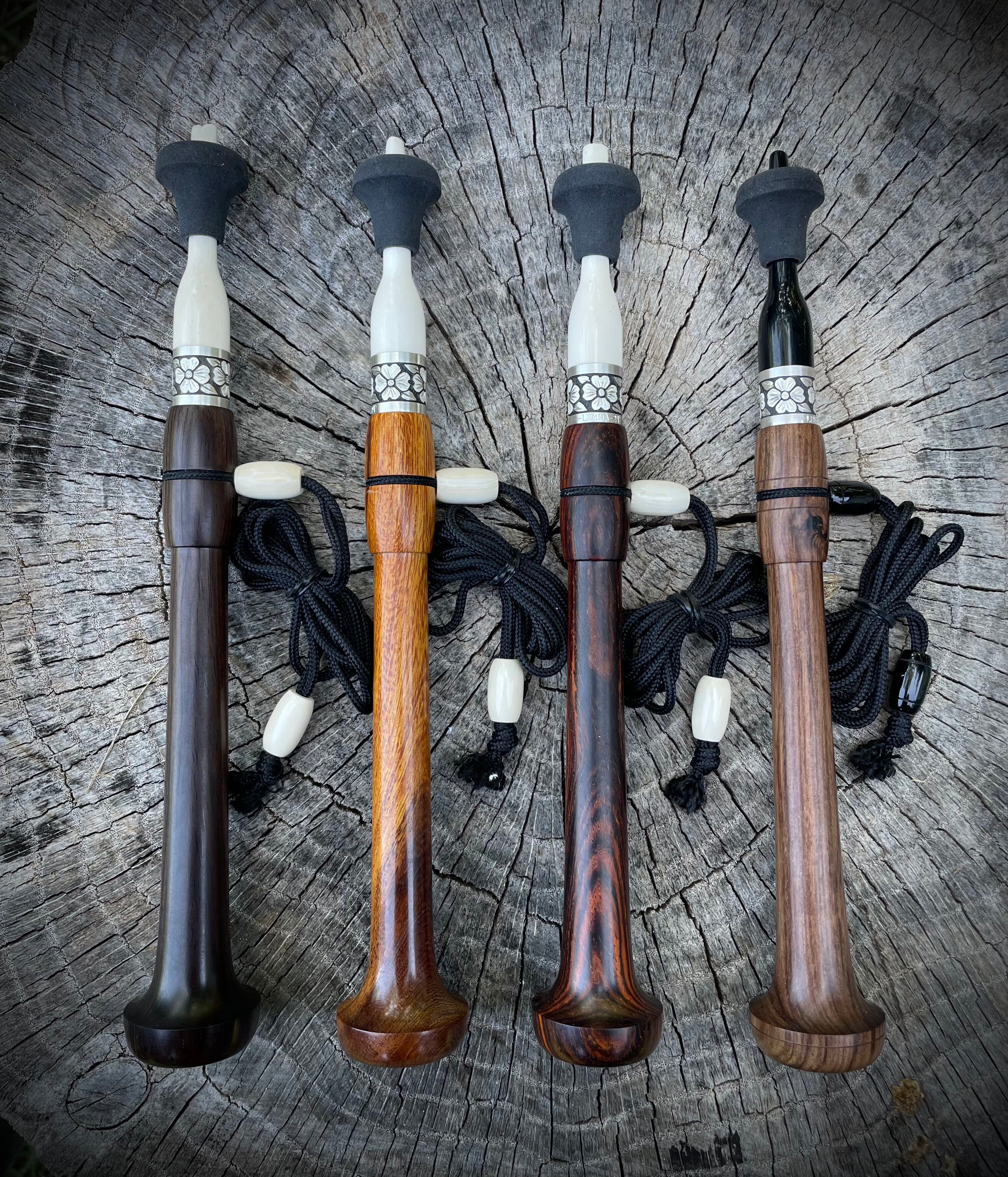
Turned trumpet calls are extremely popular and highly sought after by call collectors and die-hard turkey hunters. And it’s easy to see why.
I have always had a soft spot in my heart for turned trumpet calls. The Hunting Turkey and Decorative Turkey divisions at the NWTF Grand National Callmaking Competition are always highly competitive, and the winning calls are genuinely stunning.
This type of call, along with Charles Jordan-style yelpers and wingbone calls, falls under the umbrella of air-operated or suction calls. However, because these calls must feature a turned or machined barrel with a mouthpiece, they fall into a group of their own: Category 12.
To write on this topic, I contacted Steve Lumma, Charlie Trotter and Mark Prudhomme, all of whom are outstanding craftsmen with long histories of crafting magnificent trumpet alls. I asked them what makes the calls so distinctive, popular and effective on hunts.
“Turned trumpets are unique compared to other suction-type calls because the call make has complete control over the callmaking process and materials,” Trotter said. “This eliminates the variables inherent in materials such as turkey wing bones or river cane used in Jordan yelpers.”
“Bones and canes naturally vary in density, size and shape, and a call maker needs to affix them together somehow and make them sound good,” Lumma said. “But wood, on the other hand, can be machined to consistent, exact internal and external specifications. This control enables the production of sound and playability in a predictable and repeatable manner, which is what I love about them. Additionally, their clean lines provide an excellent space for decorating.”
Lumma said trumpets carry higher value and collectability than other calls for several reasons. “First, it often takes a call maker hundreds of hours of experimentation with costly materials to master their overall design,” he said. “After that, it takes more time from start to finish to produce an excellent-sounding trumpet call. Finally, the best woods for making trumpet calls are heavy and dense exotic hardwoods. So that, combined with other expensive materials typically used to make trumpet calls, means they hold greater value for Collectors.”
Prudhomme said a trumpet can be the most realistic-sounding call in the woods, if it’s run correctly.
“It is always my primary call and oftentimes the only call I use on any given hunt,” he said.
Becoming proficient on a trumpet requires more time and effort than learning to run a box call or pot call.
“That reason, I believe, is why most hunters tend to graduate to trumpets later in their hunting careers,” Lumma said. “However, I believe a value for collectors.” trumpet call can be beneficial for any beginner who is dedicated to learning how to play it.”
It’s said that turned trumpet calls take a few it’s run correctly. minutes to learn but a lifetime to master, and that’s why they intrigue us so much. You can find these call makers and many others through Facebook or Instagram.