NWTF Co-CEO Joins Outdoor Leaders at White House as President Signs Executive Orders Supporting Hunting and Fishing
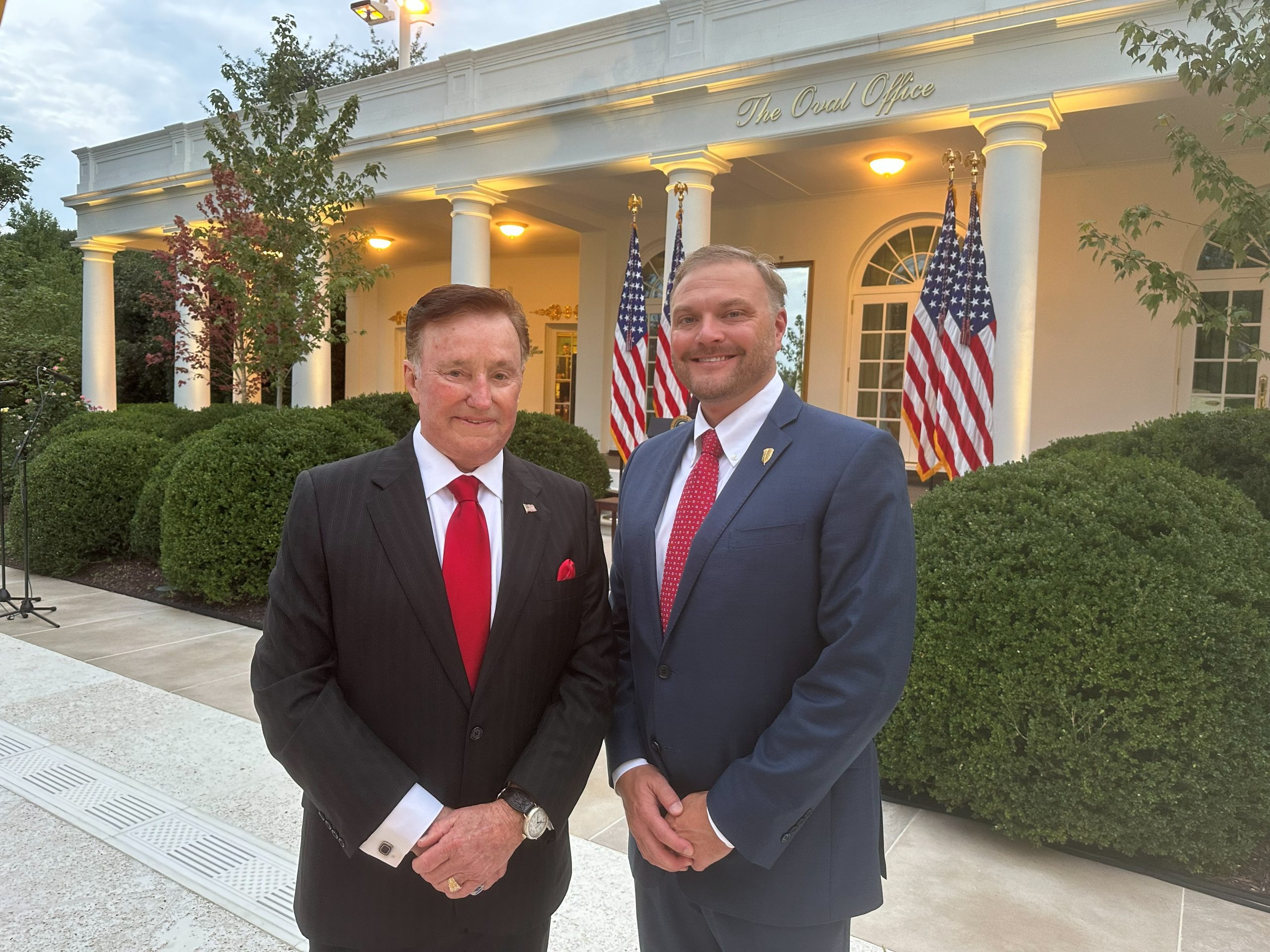
EDGEFIELD, S.C. — National Wild Turkey Federation co-CEO Jason Burckhalter joined approximately 100 leaders from across the nation’s hunting, fishing and shooting sports community Sept. 17 at the White House, where President Donald J. Trump hosted a Great American Outdoorsmen dinner in the Rose Garden celebrating America’s outdoor heritage and the contributions of sportsmen and women to conservation.
“Hunters and anglers are among America’s most committed conservationists, and the future of our wildlife and wild places depends on maintaining that connection to the outdoors,” Burckhalter said. “The NWTF appreciates the opportunity to be part of this conversation and will continue working with policymakers, agencies and conservation partners to advance science-based wildlife management, healthy habitats and access to quality outdoor experiences.”
The event marked the first time a celebration of America’s sportsmen and women has been held in the White House Rose Garden. During the dinner, President Trump signed two executive orders focused on hunting and recreational fishing: “Reinvigorating America’s Hunting Heritage” and “Restoring American Saltwater Angling and Recreation.”
For the NWTF, Burckhalter’s participation provided an opportunity to represent the organization’s members at an event centered on the connection between outdoor recreation, healthy wildlife populations, habitat conservation and access to the outdoors. Also among those in attendance was Richard Childress, longtime conservation advocate and member of the NWTF National Board of Directors.
The NWTF supports efforts that advance science-based wildlife management, healthy habitat and responsible access to public lands and waters. Those priorities are central to the organization’s work with federal and state agencies, private landowners and other conservation partners across the country.
The executive order on hunting directs federal agencies to take a number of steps intended to expand opportunities for hunters and improve access to public lands and waters.
Among other provisions, the order directs the Department of the Interior to expand hunting opportunities on select federal lands where doing so would not put historic or scientific resources at risk. It also directs federal agencies to identify policies that unnecessarily prevent access to public lands for recreation, infrastructure repair and wildlife management.
The order also calls for agencies to pursue voluntary access easements, land exchanges and cooperative agreements that can help open checkerboarded and landlocked parcels while respecting private property rights. It directs the USDA Forest Service to review certain high-demand river access lotteries and calls for streamlining regulations associated with seasonal migratory game bird hunting.
For hunters with disabilities, the order directs agencies to consider the use of assistive technology on access trails and hunting locations. It also calls for federal agencies to work with states to align management practices and conservation plans in ways that promote healthy populations of game species.
The order further directs federal agencies to identify opportunities to encourage the next generation of hunters, including young Americans and veterans, and encourages states to increase wild game donations for schools, food banks and federal food assistance programs.
These priorities align with the NWTF’s longstanding work to conserve wildlife habitat and populations while preserving hunting as an important component of North American conservation.
The second executive order, “Restoring American Saltwater Angling and Recreation,” focuses on recreational fishing, boating and the businesses and communities that depend on them.
The order directs federal agencies to review regulations that place unnecessary burdens on anglers, boaters and outdoor businesses. It also calls for agencies to evaluate multi-year permits with a presumption of renewal for qualifying operators, where permitted by law.
The order also directs the Department of Commerce to modernize recreational fisheries data collection, including transitioning from traditional mail-based surveys toward mobile electronic catch-reporting applications. It calls for a five-year strategic plan that incorporates recreational economic data into seasonal quota decisions and establishes a framework for real-time reporting of wildlife depredation.
While the order is focused on saltwater recreation, its broader emphasis on access, effective resource management and improved data collection reflects issues shared throughout the outdoor community.
These actions come just days before National Hunting and Fishing Day on Sept. 26, an annual celebration of the contributions hunters and anglers have made to the nation’s conservation legacy.
As federal agencies begin implementing the new executive orders, the NWTF will continue engaging with policymakers and conservation partners to support healthy wildlife populations, resilient landscapes and opportunities for Americans to experience the outdoors.
About the National Wild Turkey Federation
Since 1973, the National Wild Turkey Federation has invested over half a billion dollars into wildlife conservation and has positively impacted over 25 million acres of critical wildlife habitat. Since 2022, the NWTF has also invested over $2.3 million in critical wild turkey research that, when leveraged with partner contributions, has resulted in more than $22 million to guide the management of the wild turkey and to ensure sustainable populations. The organization continues to deliver its mission by working across boundaries on a landscape scale to create healthy forests and wildlife habitats, clean and abundant water, resilient communities and robust recreational opportunities. With the help of its dedicated members, partners and staff, the NWTF is committed to creating a nation united by the life-changing power of the outdoors.