NWTF Collegiate Chapters Continue Growth
Faced with aging committees and a need for diverse thinking mixed with current plans, NWTF decided to go back to school to solve the problem – literally.
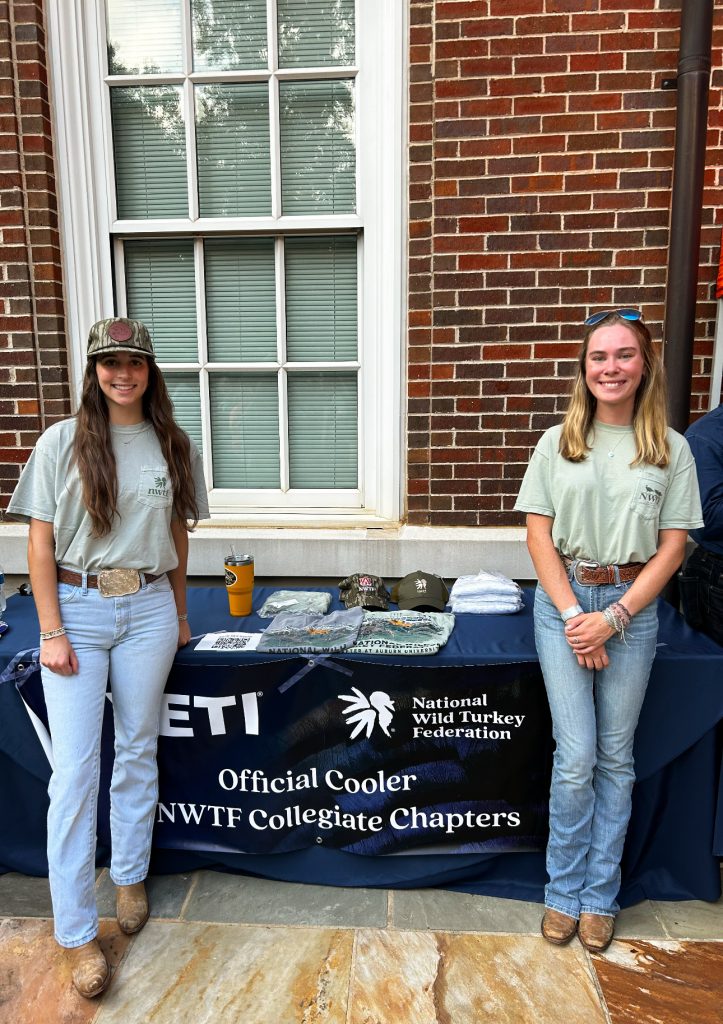
The collegiate program is seeing NWTF chapters established on university and college campuses across the eastern U.S. The program isn’t new, but it has taken off in the last two years, with 17 chapters now established – doubling in number since the pandemic in 2020.
“Our main purpose is to recruit the next generation of volunteers,” said Tyler Briggs, NWTF’s Southeast director of field operations, explaining that although the chapters raise money, this isn’t the main thrust.
He compared the collegiate program to the minor leagues in sports, except instead of players being trained to move up to the pro leagues, they’re being prepped for lifetime involvement in the NWTF. And it’s paying off, as many past collegiate members have already joined existing chapters.
“We’re raising our next generation of leaders,” Briggs said. “If not, where are your next generation of volunteers going to come from?”
Briggs and others noticed a trend with many chapters having the same smiling committee members at banquets year after year. That loyalty and dedication is a massive boon to the NWTF’s grassroots base, but it also sometimes meant that there weren’t enough younger volunteers coming on board.
He knew the solution to the problem as he was a member of a Ducks Unlimited collegiate chapter at Abraham Baldwin Agricultural College in Georgia. It was one of the top DU collegiate chapters in the nation at the time.
Briggs, who was part of one of the top Ducks Unlimited collegiate chapters in the nation at Abraham Baldwin Agricultural College in Georgia, started the first NWTF chapter at the University of Alabama in Tuscaloosa more than a decade ago. Shortly after, he started as an NWTF regional director in 2014.
“I knew that was one of those things that was near and dear to my heart, and we (NWTF) were missing out,” Briggs said of the first chapter.
Collegiate chapters are different, but the same, as traditional chapters.
“It is centered around fundraising like traditional chapters, they just do different types of events,” he said.
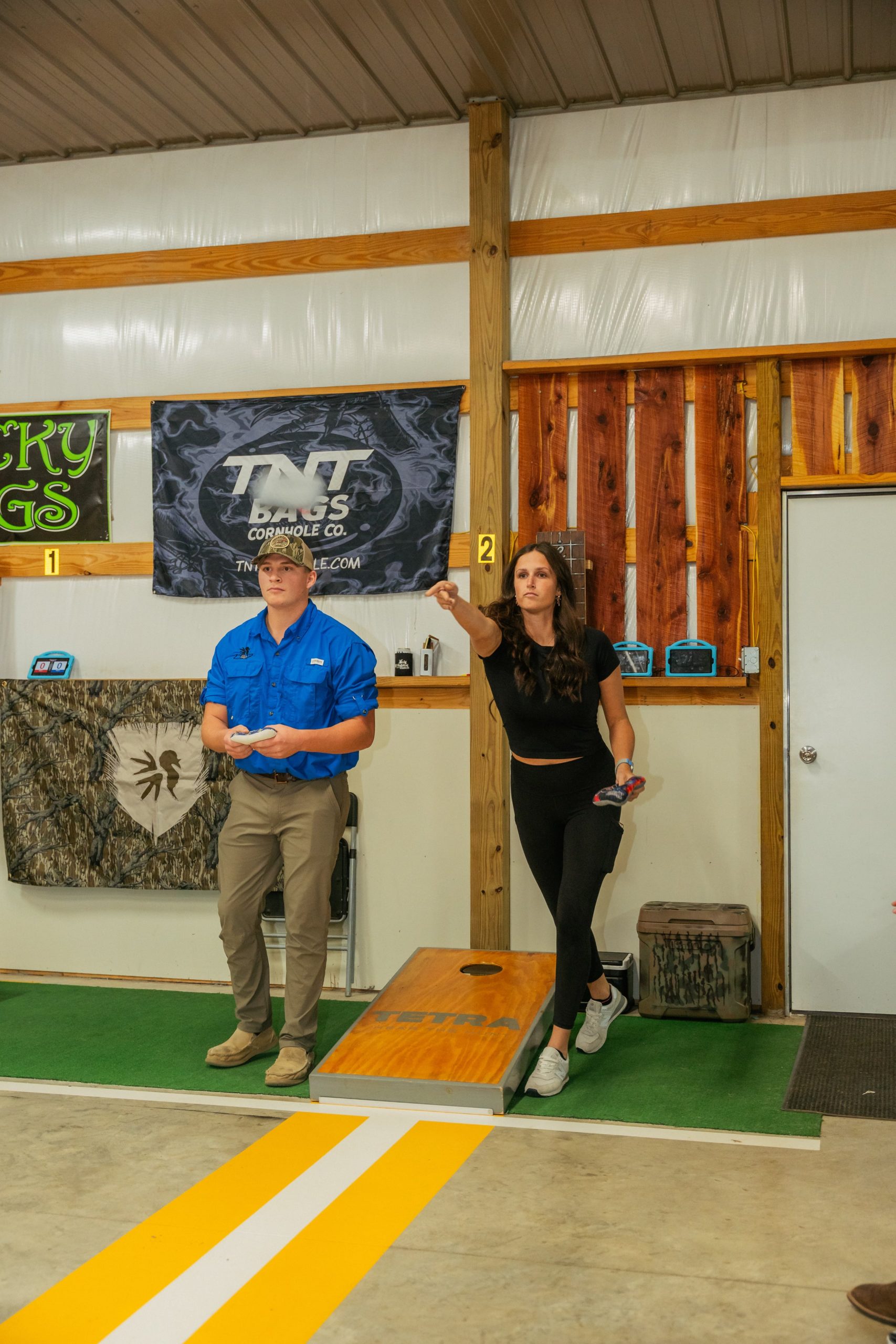
Briggs likened collegiate NWTF chapters to a college fraternity. A typical chapter may include meetings, cornhole tournaments, tailgates at football games, speakers on conservation and shooting clay targets, plus a banquet.
The collegiate chapters serve another purpose – allowing NWTF to spread the message to a younger generation and educating nonhunters about the North American Conservation Model, the conservation work the NWTF does, and the role hunting plays in conservation. While, as expected, students with a background in turkey hunting join the committees, non-hunters and those without a hunting background do as well. Some even want to learn about hunting.
Beyond collegiate members joining existing committees after returning to their hometowns after graduating, in at least one case, a former collegiate member started a new traditional chapter.
Buoyed by the success, a decision was made to expand the collegiate program two years ago.
“We’ve taken the program to the next level in the last year-and-a-half,” Briggs said.
The first step in that process was to hire Chance Wiggins, who is also a graduate of Abraham Baldwin Agricultural College, as Habitat for the Hatch Initiative collegiate coordinator for the Southeast in December 2024. Briggs explained that this part of the country has a strong turkey-hunting tradition, that learning institutions are fairly close together, and that NWTF already had a good base of collegiate chapters.
Then, Jackson Mabon was hired as the Forests and Flocks Initiative collegiate ambassador for the Northeast in June 2025. He brought a background in working with university students and fundraising to the job.
Their task is to recruit members to get new chapters off the ground. This can occur in many different ways, from using social media to find hunters at a particular institution, to tracking down a student whose family is involved in NWTF, to recruiting business students who want to be involved in a 501(c)(3) charity.
“We’re interested in working with all of them,” Mabon said.
“I had two girls who wanted to start a chapter because they went to convention as volunteers and came back and wanted to start a chapter,” Wiggins said of one of his more unique stories, one that resulted in the start of the University of South Carolina Chapter.
In the last year, 10 chapters have been added in the Southeast, with another 10 to 15 on the way. Wiggins estimates collegiate chapter members are a 60/40 split between hunters and non-hunters, with the majority being hunters.
These two NWTF employees also travel to the schools and assist in running the chapters.
As expected, chapter members are wildlife majors and forestry students, but they come from a diverse range of courses. The key is not only to find interested students, but also those who have time to give.
One activity for many chapters is setting up Zoom meetings with NWTF biologists.
“The conservation aspect does bring a lot of students to it for sure,” Wiggins said.
For some, the collegiate chapters open the door to becoming hunters.
“A lot of them want to do it and didn’t have the opportunity – their family didn’t hunt, or they didn’t have access to land,” Wiggins said.
Mabon provided more details of the collegiate fundraising banquets, explaining they typically task committee members with recruiting local business owners, connected community members, and traditional chapter members to attend the collegiate banquets.
“We’re not asking these college students to give their own money, we’re just asking them to give their time and consideration,” he explained. “The community respects that and rallies behind it.”
Delving more into the latter point, Mabon said most college towns support activities at the schools, and this is an extension of that.
In the Northeast, where the turkey hunting tradition isn’t as strong in some areas, Mabon has a tougher proverbial nut to crack in starting new chapters. He has seen some pushback, but finds it helps to connect hunting to conservation, explaining the North American Model of Conservation and how fees from ammunition, firearms, and license sales pay 75% or more of the costs of conservation work.
Mabon considers chapters at Penn State University and the Tink Smith Collegiate Chapter in West Virginia as successes. Still, one of his big wins was when he received a call from University of Virginia environmental science and ecology professors and was allowed to come and speak to the students about NWTF research, conservation work in the area, wildlife management and hunting.
“The students found it to be engaging in a way I didn’t predict,” he said. “They came up to me after and wanted to work with me.”
A chapter hasn’t been established at the University of Virginia yet, but it’s being planned. Briggs found it typically takes six months to a year to get approval to start a collegiate chapter from the school, and it’s often on a probationary basis.
The Southeast and Northeast were selected as the starting points for the collegiate program expansion, but Briggs sees it eventually spreading west.
“It’s spreading the turkey gospel, I like to say,” Wiggins said.
And while there is an adage about preaching to the choir, in this case, the ‘turkey gospel’ is being spread to the non-converted as well, and with success.