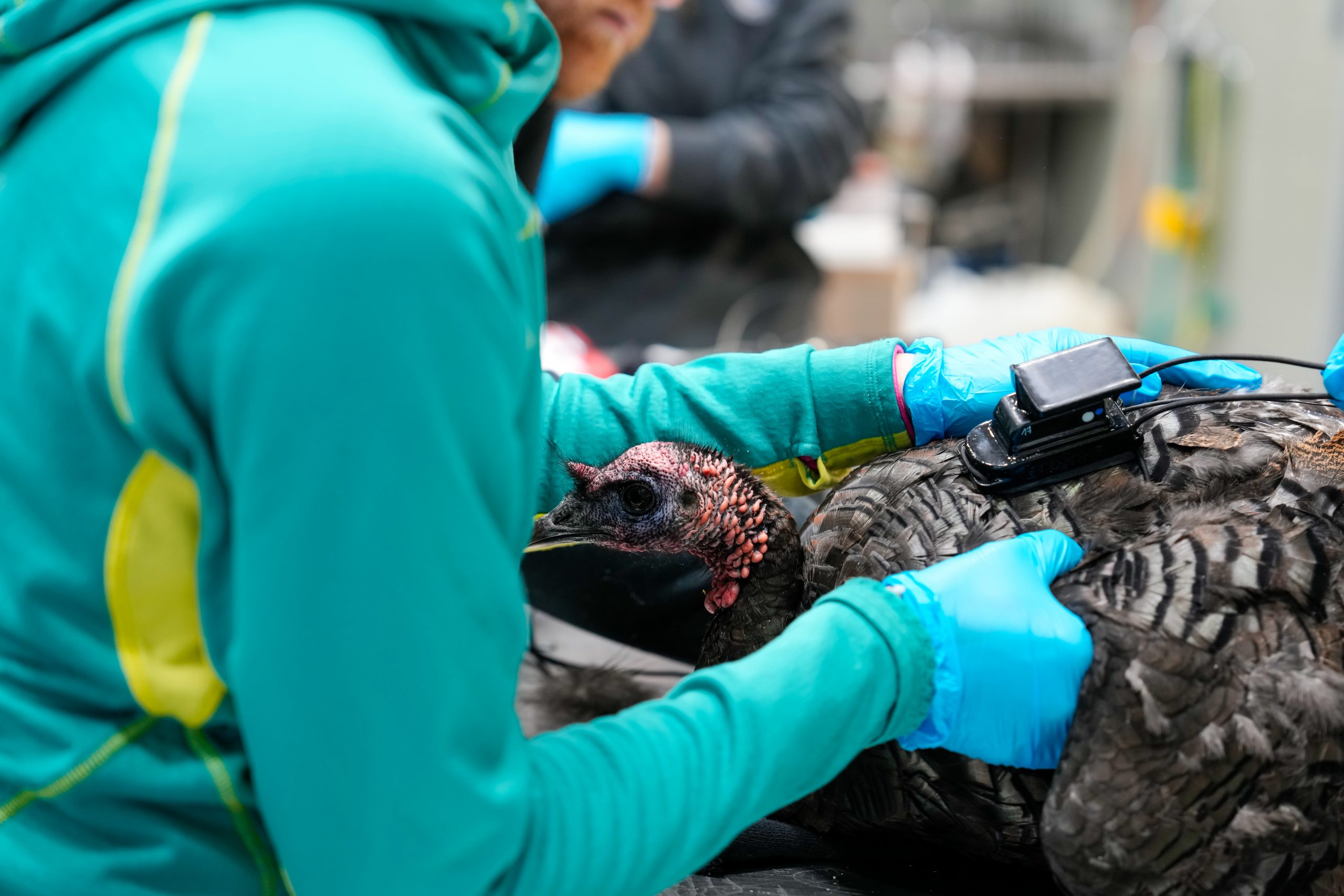
NWTF Infuses Funding in Wild Turkey Research for Fifth Consecutive Year
EDGEFIELD, S.C. — Wild turkey research provides the science needed to inform management decisions to changing populations, landscapes and emerging challenges. For 2026, the National Wild Turkey Federation continues to direct significant funding to wild turkey research projects through the organization’s Research Grants Program with six new projects. This year’s funding has brought the NWTF’s investment in wild turkey research to $2.7 million, since 2022. Combined with this year’s $480,207 investment and previous partner engagement, the NWTF and its partners have provided more than $25 million to wild turkey research projects in less than five years.
“Research is the blueprint that wild turkey managers use to guide land management efforts, season-setting structures and the overall conservation of the iconic gamebird that we all revere,” NWTF co-CEO Kurt Dyroff said. “We prioritize research that equips state agencies and wild turkey managers with the most up-to-date data and science. This year’s investment is a reflection of our continued effort to grow our data set, collaborate across state lines and guide the conservation of the wild turkey. We are grateful to our partners who share this vision and have contributed to this year’s effort.”
Funding for this year’s investment was made possible through financial contributions from the Bass Pro Shops and Cabela’s Outdoor Fund, Mossy Oak, Nomad Outdoors, NWTF state chapters and a private family foundation in Virginia.
“We are committed to advancing wild turkey research that guides the management of this treasured bird,” NWTF co-CEO Jason Burckhalter said. “We must continue to invest in research that fills knowledge and data gaps and ensures the conservation of the wild turkey in an ever-changing landscape. Through our Research Grants Program and our broader wild turkey research strategy, we are doing just that.”
For 2026 projects, Patrick Wightman, Ph.D., NWTF national director of wild turkey research and science, worked in conjunction with NWTF conservation staff and the NWTF National Wild Turkey Technical Committee to fine-tune priorities, which included the study and refinement of abundance estimation methods at local and regional scales, spring harvest season timing structure, habitat and predator management strategies and harvest frameworks, and baiting and supplemental feeding and predator interaction, among others.
“To determine which projects to fund this year, proposals were evaluated on their scientific rigor, management relevance, secured funding and alignment with the NWTF’s key research priorities for 2026,” Wightman said. “We are excited to work with the universities and principal investigators for these new projects to move the needle forward for conservation of the wild turkey.”
This year’s six projects include:
Florida: Effects of habitat management on wild turkey populations, predators and gobbling, Marcus Lashley, Ph.D., University of Florida.
Kansas: Use of large-scale metrics to assess habitat quality for wild turkeys, David Haukos, Ph.D., Kansas State University, Kansas Cooperative Fish and Wildlife Research Unit, KSU.
Michigan: Wild turkey population dynamics in Michigan, Ben Luukonen, Ph.D., Michigan Department of Natural Resources, U.S. Geological Survey Michigan Cooperative Fish and Wildlife Research Unit.
National: Population genetics and reconnection of wild turkey populations, as part of the wildturkeyDNA project, Philip Lavretsky, Ph.D., University of Texas at El Paso.
Nebraska: Gobbling chronology and its response to spring harvest season regulation changes, Andrew Little, Ph.D., University of Nebraska-Lincoln.
Oregon and Washington: Gobbling activity and habitat use of wild turkeys in Oregon and Washington, Ivana Mali, Ph.D., North Carolina State University.
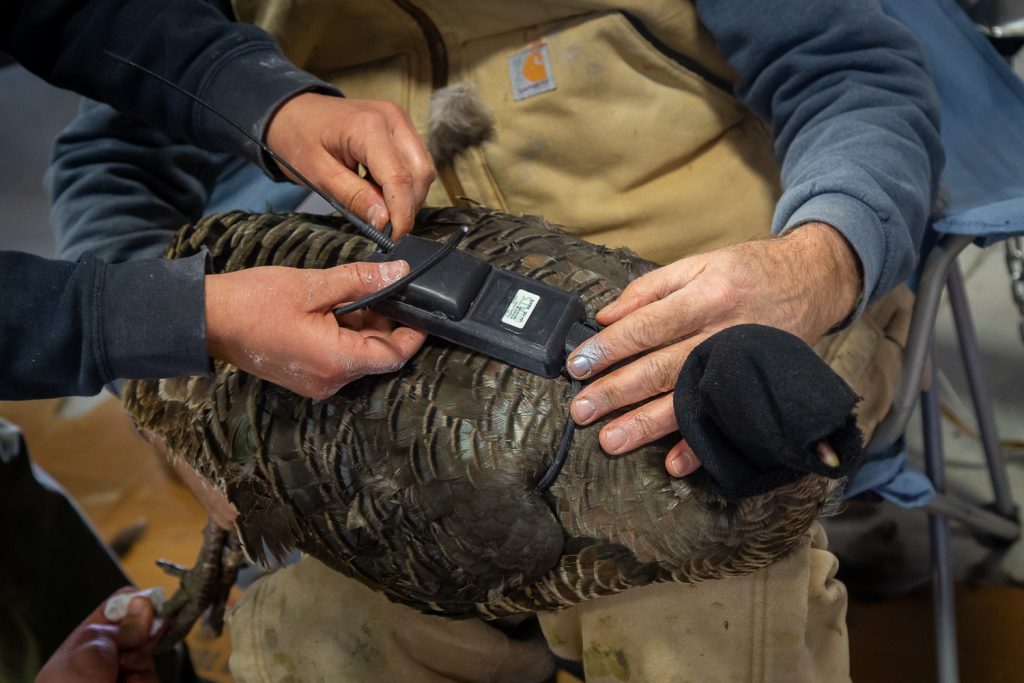
Wild turkeys depend on quality habitat and science-based management. Today, through NWTF’s dual approach of conservation delivery and research, the organization leads the way in ensuring the resource is available for future generations.
As part of its heightened research strategy starting in 2022, the NWTF has helped fund 41 wild turkey research efforts. Additionally, as a part of that strategy, the NWTF continues to create regionally based wild turkey endowed professorships at key universities. In 2024, the NWTF announced the NWTF Endowed Chair at the University of Georgia, which recently surpassed $1 million, and at its Convention and Sport Show earlier this year, the NWTF announced the new NWTF Distinguished Chair at Mississippi State University.
About the National Wild Turkey Federation
Since 1973, the National Wild Turkey Federation has invested over half a billion dollars into wildlife conservation and has positively impacted over 25 million acres of critical wildlife habitat. Since 2022, the NWTF has also invested over $2.7 million in critical wild turkey research that, when leveraged with partner contributions, has resulted in more than $25 million to guide the management of the wild turkey and to ensure sustainable populations. The organization continues to deliver its mission by working across boundaries on a landscape scale to create healthy forests and wildlife habitats, clean and abundant water, resilient communities and robust recreational opportunities. With the help of its dedicated members, partners and staff, the NWTF is committed to creating a nation united by the life-changing power of the outdoors.