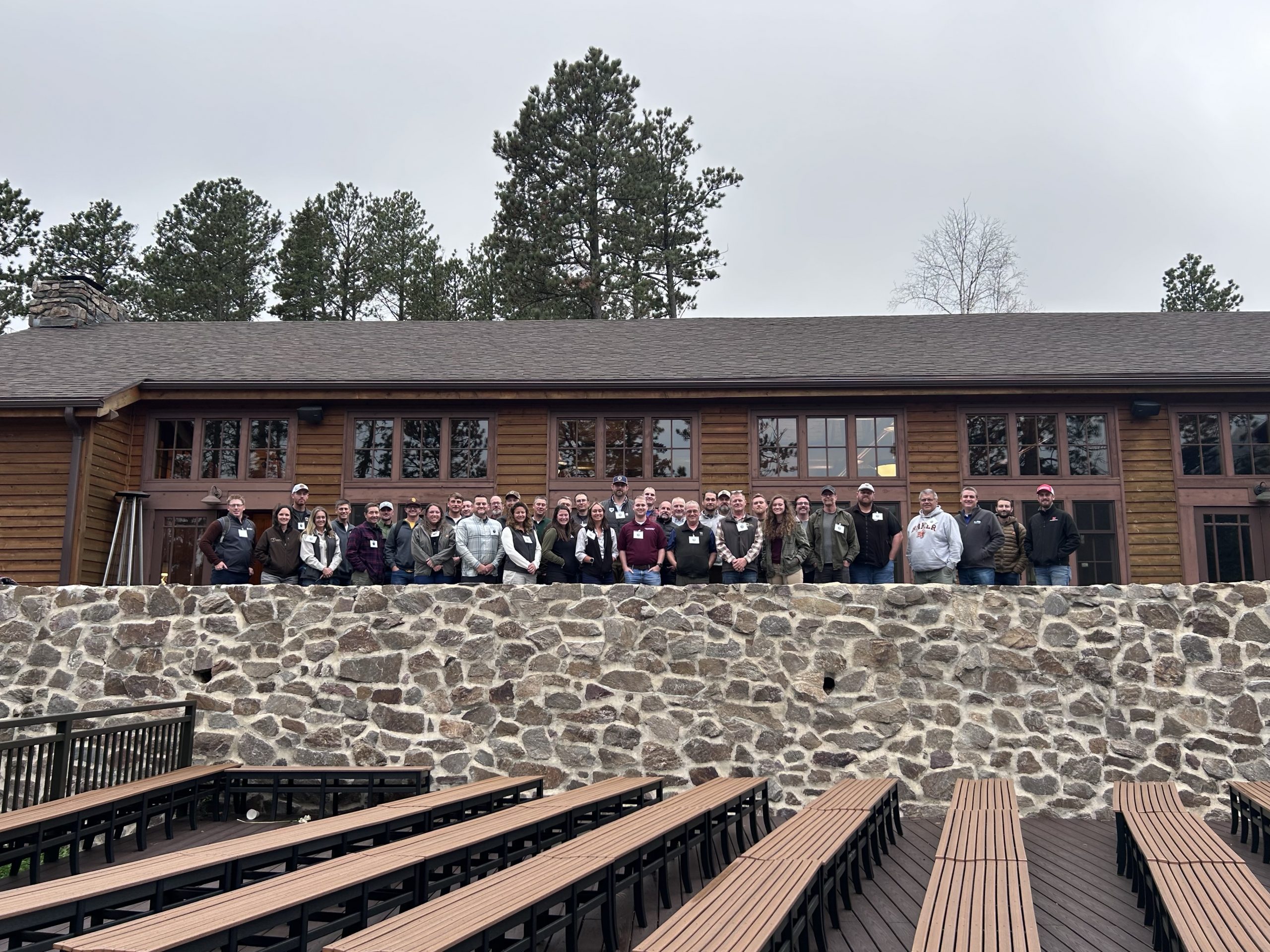
NWTF Joins Agency Leaders to Propel Conservation Across the Midwest
From deer populations and turkey numbers to hunting seasons and habitat management, there's never a shortage of conversation about wildlife in the Midwest. But each year, the professionals tasked with researching, managing and conserving these species come together to take those conversations a step further.
The 2026 Midwest Deer and Wild Turkey Study Group, a component of Midwest Association of Fish and Wildlife Agencies, brought wildlife biologists, researchers and conservation professionals to South Dakota Oct.13-17 for several days of presentations, discussions and collaboration focused on the future of deer and wild turkey management.
“We appreciate the opportunity to engage with our state agency partners and discuss the status of wild turkeys in the Midwest,” said Ryan Boyer, NWTF director of conservation operations. “Our agency partners graciously allow us a seat at the table to work collaboratively with them to help identify solutions to the most significant wild turkey management needs and help identify areas we can continue to support wild turkey research efforts. Recommendations from these work groups informs on-the-ground conservation delivery for the NWTF and allows us better insight in to where we can support research efforts that will have the greatest impacts.”
For decades, the annual gathering has rotated among host states, bringing together representatives from state agencies, universities and organizations such as the National Wild Turkey Federation.
While each state faces its own challenges, many of the questions are shared. The meeting gives some of the region's leading wildlife minds an opportunity to compare findings, discuss management strategies and learn from work happening beyond their own state boundaries.
For the NWTF, an organization that works collaboratively with all agencies represented, the gathering has also served as an opportunity to strengthen partnerships and work with partners not just on a state level but at a landscape scale.
This year, the NWTF highlighted new research efforts and a look at where wild turkey science is headed.
Patrick Wightman, Ph.D., NWTF national director of wild turkey research and science, presented an overview of the organization's growing research portfolio, highlighting what scientists are learning, where questions remain and how research can better inform wildlife management.
“It’s always good to join the biologists who are responsible for managing wild turkeys at these regional meetings,” said Wightman. “We get to discuss ongoing research, findings, population status and future research directions and priorities. We also talk about future collaboration, advancing wild turkey management in the region and how the NWTF can help support that work.”
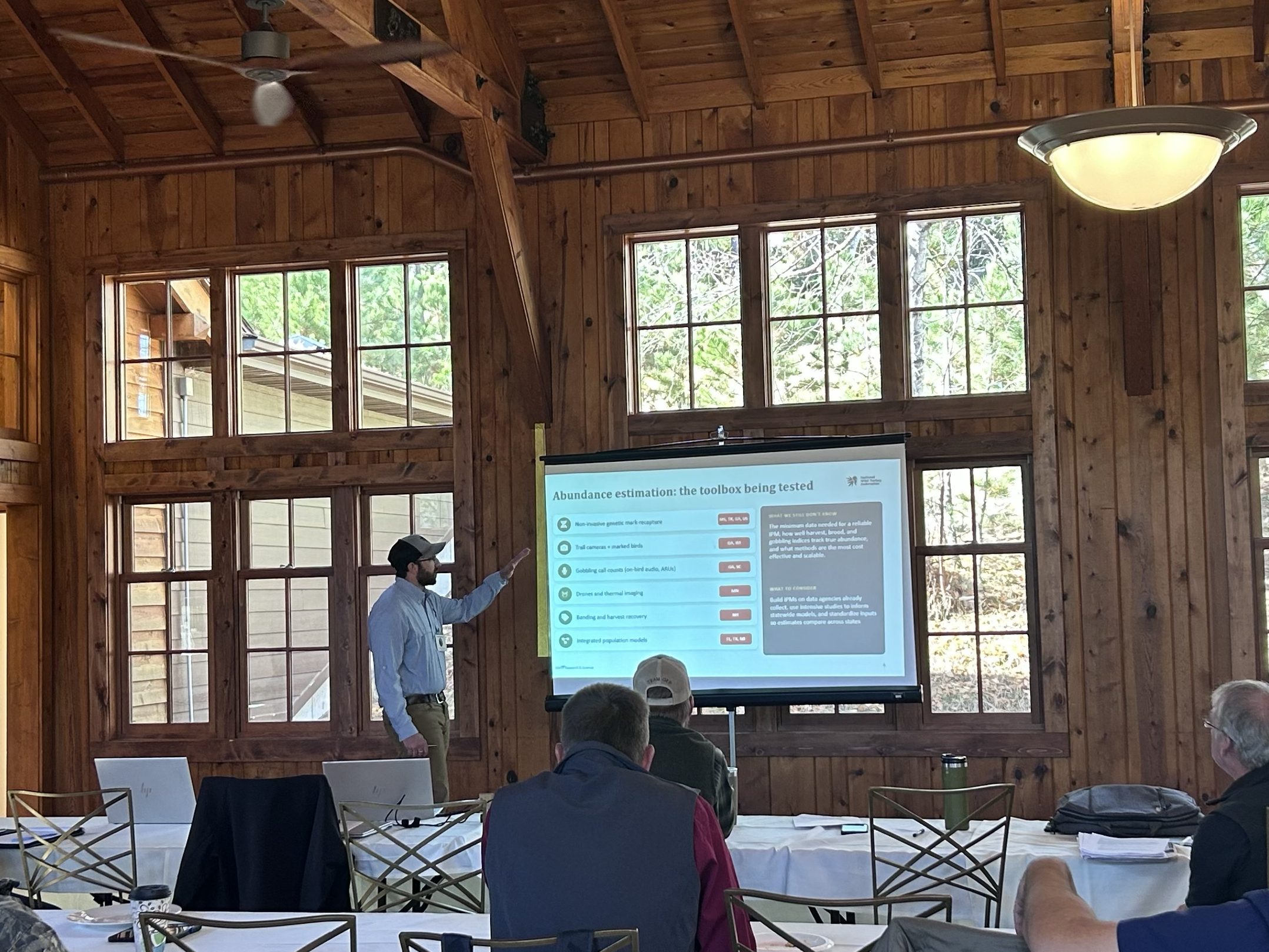
Wightman highlighted how, since 2022, the NWTF has helped fund 41 research projects across more than 25 states, committing over $2.7 million in direct funding. Combined with contributions from universities, wildlife agencies and conservation partners, those projects represent more than $25 million in research value.
One of the biggest questions facing researchers is why wild turkey populations are changing and what can be done to improve them. While habitat loss, predators, weather, disease and hunting pressure are often part of the discussion, the factors influencing populations can vary significantly by region.
Wightman highlighted how various projects can help answer some of the often nuanced questions. And while he presented various NWTF-funded projects, from nesting ecology to disease and population health, Wightman emphasized the importance of collecting more data, developing standardized research methods and sharing information among states. This will allow researchers and wild turkey managers to better compare findings across larger landscapes rather than relying solely on individual study areas.
That collaboration is particularly important as wildlife agencies work to determine whether habitat improvements, predator management and hunting regulations are producing measurable changes in wild turkey populations.
While the research spans different landscapes and challenges, it shares a common goal: turning scientific findings into practical conservation strategies that benefit wildlife and the people who manage it.
Perhaps some of the most valuable exchanges at the meeting happen outside the formal presentations when wildlife professionals have an opportunity to compare experiences, ask questions and discuss what is working in their respective states.
As another Midwest Deer and Wild Turkey Study Group meeting wraps up, the exchange of ideas reinforces a simple truth: Wildlife doesn't recognize state lines and neither should conservation efforts.