NWTF New York Strengthens Healthy Wild Turkey Habitat
EDGEFIELD, S.C. — The New York State Chapter of the National Wild Turkey Federation is collaborating with the New York Department of Environmental Conservation to complete a three-year habitat enhancement project within the Carlton Hill Multiple Use Area, a 2,500-acre area that is strategically managed for habitat, hunting, fishing and other wildlife-dependent activities.
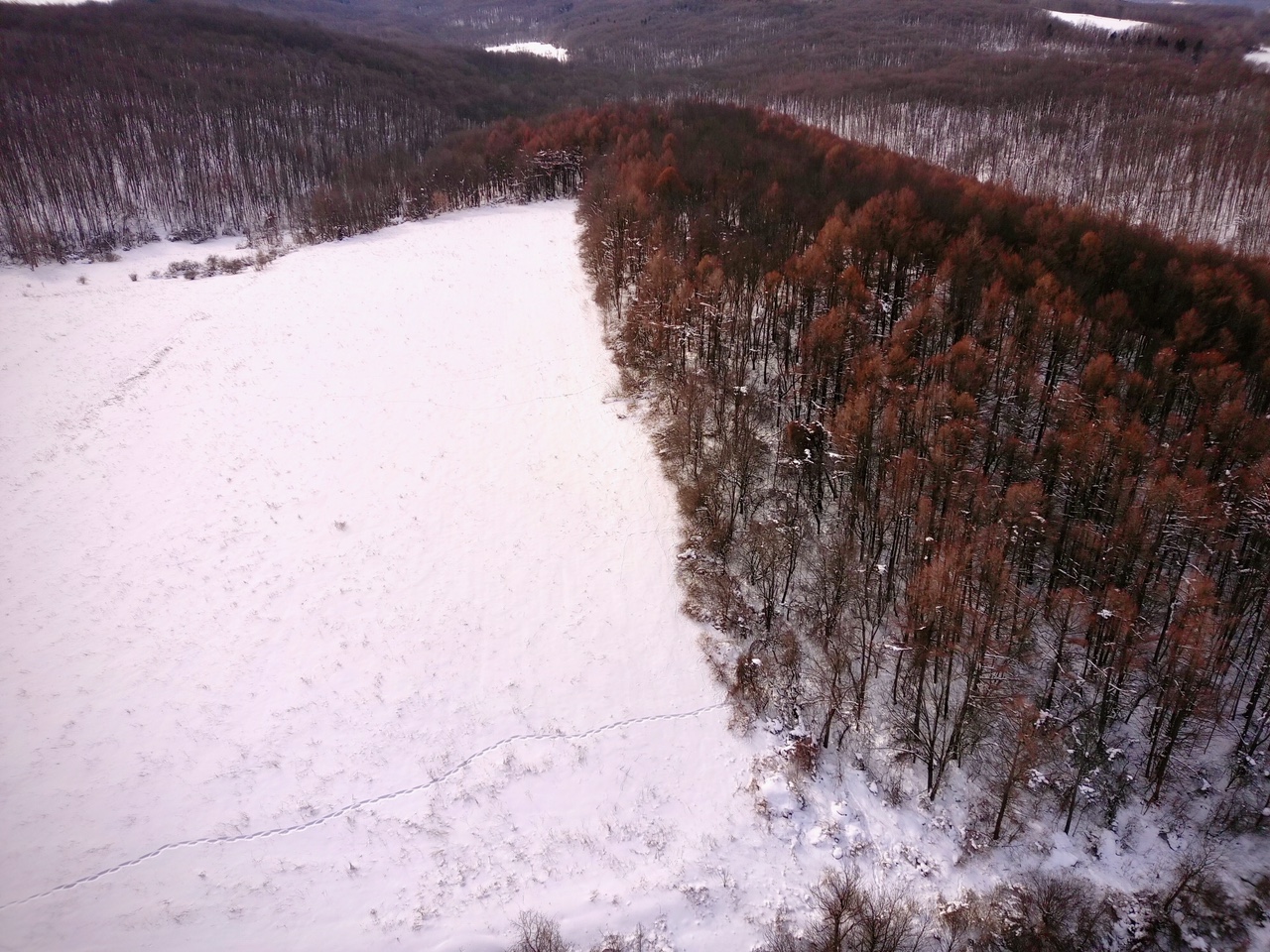
With funding assistance from the New York NWTF State Chapter’s Super Fund, the NYDEC has already completed a 5-acre patch-cut adjacent to a grassland field and European larch plantation. The work is allowing the young forest of aspen, black cherry and apple trees to regenerate, creating and maintaining a mosaic of early successional vegetation that benefits a variety of wildlife species.
Hand-felling techniques were used to minimize site disturbance and support healthy regrowth. Felled trees were left on the forest floor, providing valuable cover for wildlife.
“The 5-acre patch cut and apple tree release on Carlton Hill provides great nesting and brood-rearing habitat,” said Mitch Blake, NWTF district biologist. “It creates a softer transition between the field edge and the stand of hardwood timber, which provides the safety wild turkeys are looking for, as well as structural and vegetative diversity that allows for easy movement of poults and plentiful insect production. The project does a great job addressing wild turkey habitat deficiencies on the landscape.”
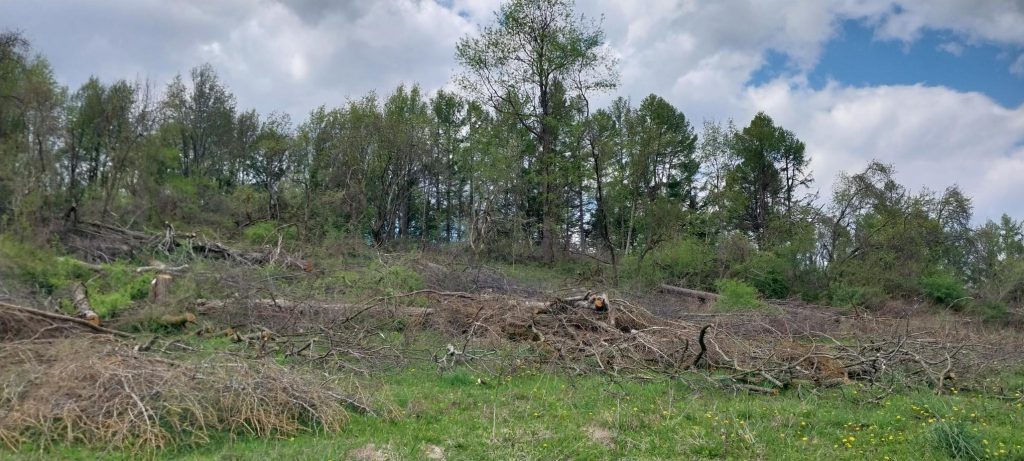
By removing European larch, foresters aim to create a productive ecosystem that will enhance nesting and brood-rearing habitat for wild turkeys.
Vegetation monitoring will continue beyond the three-year agreement to determine future management needs. In addition, any undesirable or invasive species found growing within the treatment area will be addressed through mechanical and herbicide treatments. The end goal of the project is to maintain the 5-acre treatment area while selecting for desirable species such as apple, aspen, black cherry, red oak and dogwood.
“The DEC’s partnership with NWTF has provided resources that will help us reach our goal of 10% early successional habitat across Carlton Hill,” said Eric Maringer, NYDEC wildlife biologist. “The work that was accomplished within this 5-acre treatment area will help to improve the nesting and brood-rearing habitat for turkeys. This project will also provide important habitat for other game and non-game species such as ruffed grouse, American woodcock, and young-forest-dependent songbirds. Partnering with NWTF is putting another tool in the toolbox for those improving habitat on both private and public lands across the state.”
By improving wild turkey habitat on public land like Carlton Hill, more opportunities are being created for hunting and recreation. This aligns with the Forests and Flocks Initiative’s goals to prioritize forest health through work favoring mast-producing tree species and enhancing public land access and acquisition efforts.
About the National Wild Turkey Federation
Since 1973, the National Wild Turkey Federation has invested over half a billion dollars into wildlife conservation and has positively impacted over 25 million acres of critical wildlife habitat. Since 2022, the NWTF has also invested over $2.3 million in critical wild turkey research that, when leveraged with partner contributions, has resulted in more than $22 million to guide the management of the wild turkey and to ensure sustainable populations. The organization continues to deliver its mission by working across boundaries on a landscape scale to deliver healthy forests and wildlife habitats, clean and abundant water, resilient communities and robust recreational opportunities. With the help of its dedicated members, partners and staff, the NWTF continues to unite a nation through the life-changing power of the outdoors.