Creating Young Forest Habitat at the Honeoye Creek WMA
EDGEFIELD, S.C. — The New York State Chater of the National Wild Turkey Federation is collaborating with the New York Department of Environmental Conservation to establish a vibrant young forest that will provide quality wildlife habitat on the Honeoye Creek Wildlife Management Area in Richmond, New York.
New York NWTF State Chapter volunteers allocated $18,700 through the chapter’s Super Fund to providing funding to mulch 9.5 acres and apply a follow-up herbicide treatment on a previously managed 13.5-acre site. NWTF’s Super Fund Program was established in 1985 to fund wild turkey restoration, management, and other conservation projects by pooling money generated by NWTF chapters to benefit wild turkey.
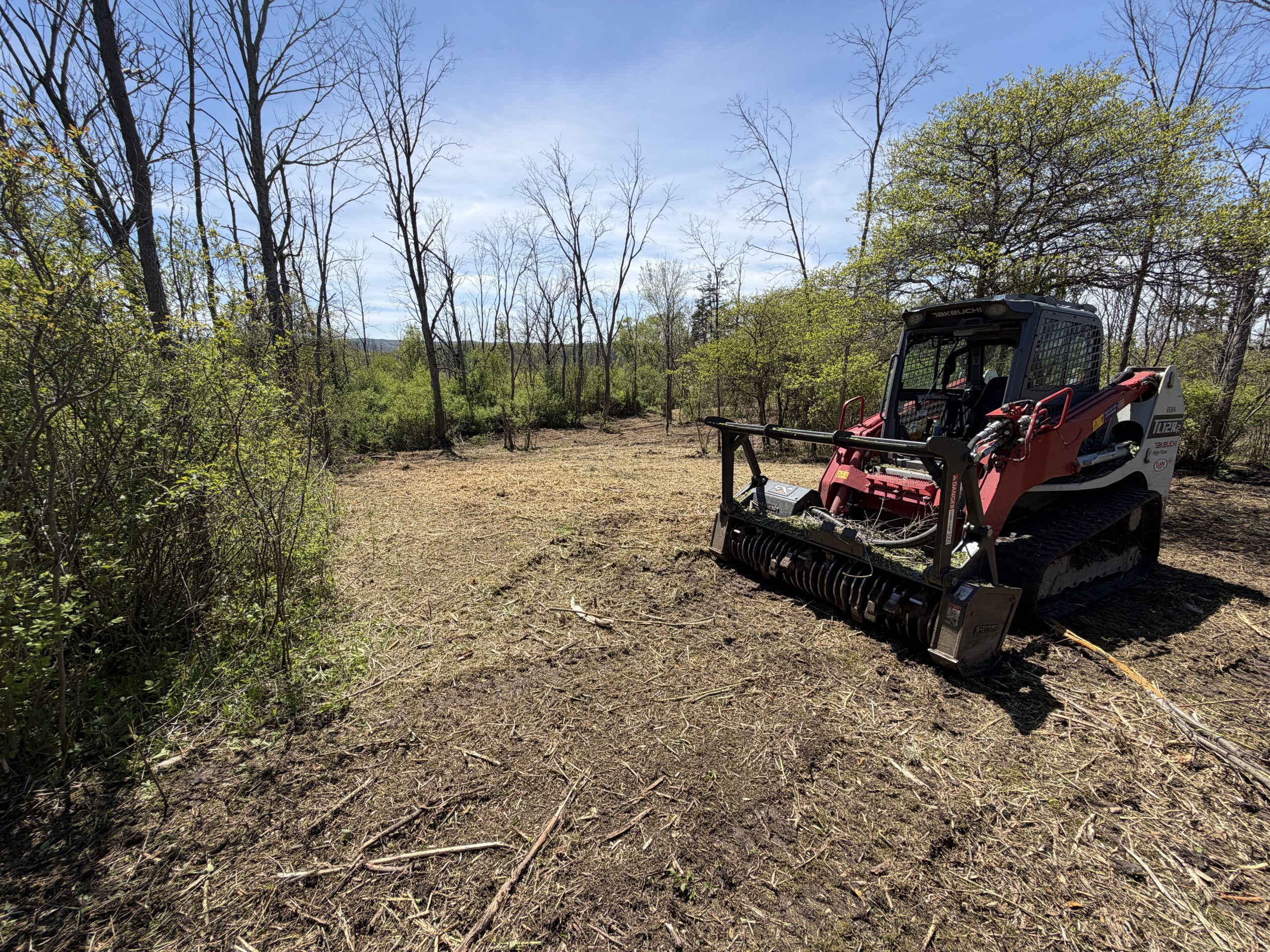
The 9.5-acre site is currently composed of a mix of invasive shrubs that outcompete desirable native shrubs and young trees. Before the mulching, NYSDEC biologists marked the site boundary and flagged desirable young trees that were to be left standing. Without mulching treatment, this stand would continue to become an invasive shrubland with marginal wildlife habitat value.
Post mulching, the area will be on track to becoming a long-term healthy forest, and the NYSDEC plans to provide additional invasive control follow-up as needed.
The additional 13.5-acre site was previously composed of invasive shrubs and dead ash trees. After mulching and herbicide applications, the area’s understory is now composed of native shrubs and young trees, a promising sign of what’s to come on the 9.5-acre site. A follow up herbicide treatment is currently being conducted to remove the few remaining invasives.
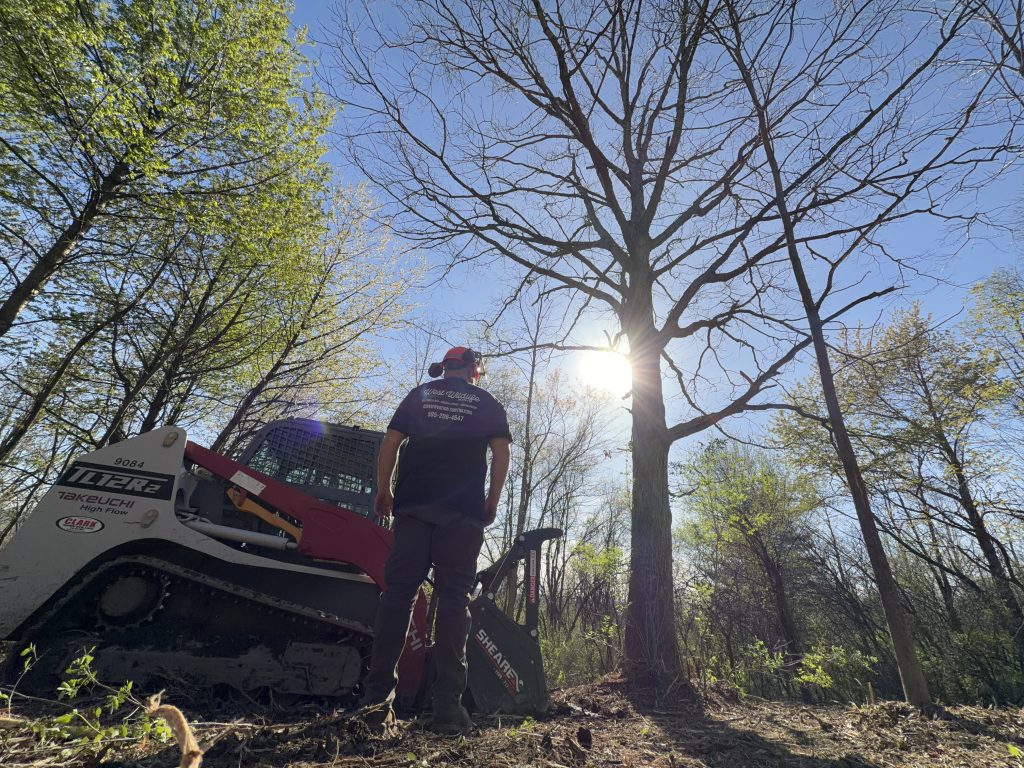
“The Honeoye Creek project is a great example of how improving forest health improves wild turkey habitat,” said Mitch Blake, NWTF district biologist. “By forestry mowing the understory in these units, we are creating great brood-rearing habitat for wild turkeys that is critical for ensuring recruitment into the population. Treating the invasive species not only improves forest health, but allows a diversity of native vegetation to flourish, which will attract a host of insects that will most definitely help grow wild turkey poults.”
This project will be particularly valuable to wild turkeys since the desired young forest will be located adjacent to previously treated areas that biologists have seen hens using. In addition to wild turkeys, many wildlife species will benefit from the young forest and increase in native vegetation and insects.
“NWTF partnerships are a pivotal source of funding that allows the New York State Department of Environmental Conservation to focus on habitat improvement planning and work,” said Jessica Haggerty, NYSDEC wildlife biologist. “The funding allows the agency to make a much greater impact on habitat quality on DEC properties and significantly decreases planning and project completion time. The habitat improvement efforts on Honeoye Creek WMA will transform a dense wooded area choked by aggressive invasive species into productive wildlife habitat that will improve the quality of life for turkeys and the variety of game and non-game species on site. This partnership with NWTF provides an increased amount of food and shelter for the WMA wildlife and will help DEC with removing invasive species and promote beneficial native plants for years to come. As a popular site for hunters and bird watchers, DEC anticipates all users will appreciate the habitat restoration and increased hunting and wildlife viewing opportunities it provides.”