NWTF Supports Milk River Habitat Restoration in Montana Through Waterways for Wildlife Initiative
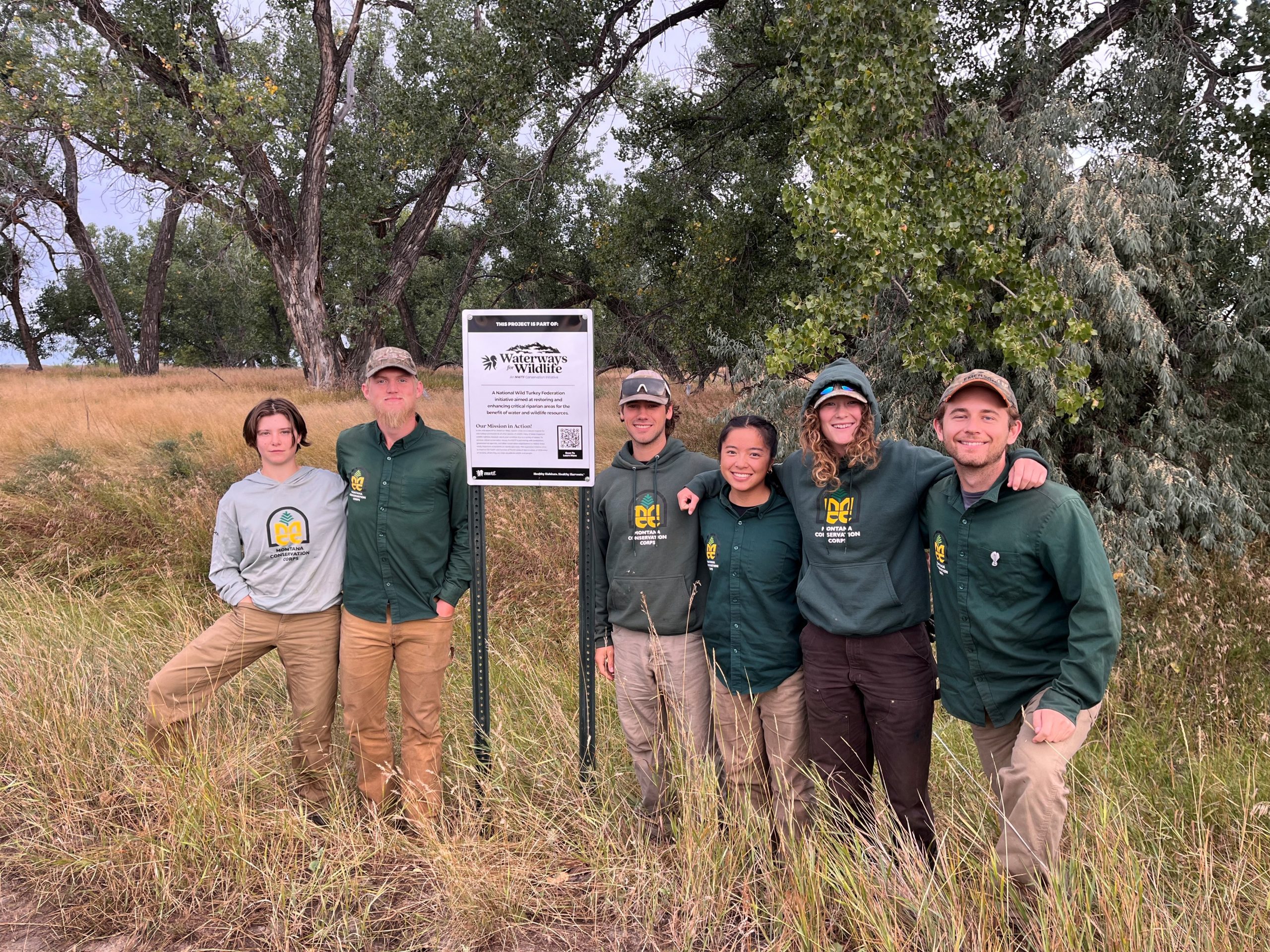
To help restore these habitats, the National Wild Turkey Federation partnered with the U.S. Fish and Wildlife Service and Montana Conservation Corps to complete the first phase of a multiyear conservation project at the McNeil Slough Waterfowl Production Area in Phillips County, Montana.
Funded in part through the NWTF's Waterways for Wildlife Initiative, the 2026 restoration work included planting 216 native trees and shrubs and removing invasive Russian olive trees, improving habitat conditions across 68 acres of prairie and riparian habitat. The project supports the initiative's broader goals of restoring healthy waterways, improving wildlife habitat and strengthening watershed resilience across the Great Plains.
Riparian habitats, the areas where waterways meet surrounding uplands, are among the most ecologically valuable landscapes in the Great Plains. They provide wildlife with food, cover, travel corridors and access to water.
Along the Milk River, however, invasive Russian olive trees have spread into native cottonwood forests and adjacent grasslands, competing with native vegetation and altering the structure of these habitats.
Compounding the challenge, changing water levels have made it increasingly difficult for native cottonwoods to regenerate naturally. Many mature trees are aging, while young trees and shrubs struggle to establish beneath them. To address these conditions, a six-person Montana Conservation Corps crew spent nine days in September removing invasive Russian olive trees from portions of McNeil Slough.
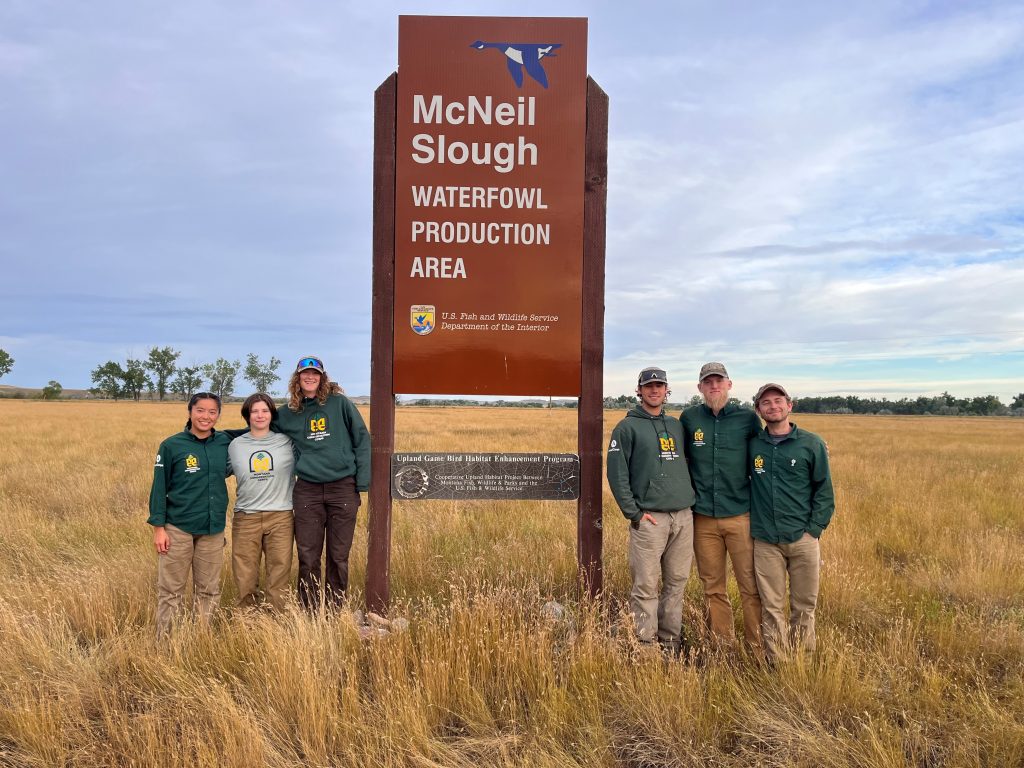
Crews targeted scattered trees along the Horseshoe Pond peninsula and an existing access route. While the trees removed occupied approximately three acres, their removal improved habitat conditions across 68 acres by reducing woody encroachment and helping maintain open prairie habitat.
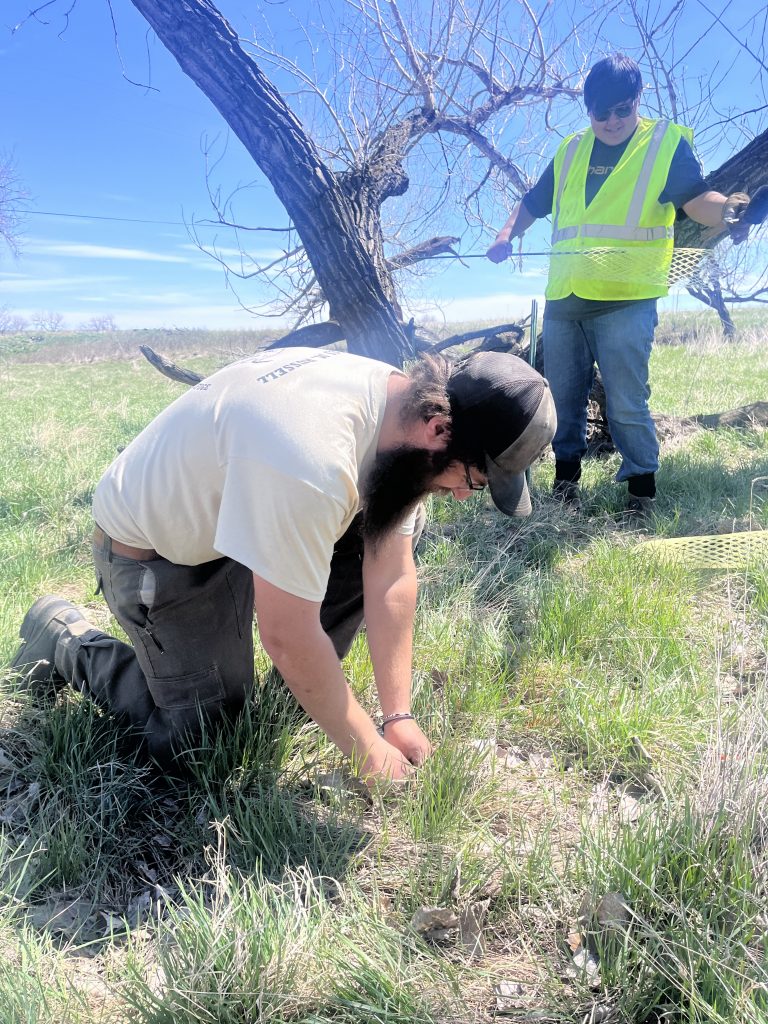
In addition to invasive species removal, U.S. Fish and Wildlife Service staff planted 216 native trees and shrubs near Horseshoe Pond in May 2026. The plantings included 96 chokecherries, 72 green ash and 48 red osier dogwoods, selected to increase native vegetation diversity and provide food, shelter and nesting habitat for wildlife.
Rather than planting in uniform rows, crews arranged shrubs in natural groupings to mimic vegetation patterns observed in nearby habitat. Protective sleeves were also installed around young trees to reduce browsing pressure from deer and moose as they establish.
These native plantings are particularly important as mature cottonwoods along the Milk River continue to age. Establishing a more diverse mix of trees and shrubs can help sustain the river corridor's ecological functions while providing habitat for future generations of wildlife.
The Milk River restoration project reflects the NWTF's landscape-scale approach to conservation through its Waterways for Wildlife Initiative, which supports projects that improve aquatic and riparian habitats, restore watershed function and benefit wildlife across the Great Plains. By addressing invasive vegetation and restoring native plant communities, the project connects habitat improvements on land with the long-term health of the river itself.
As newly planted vegetation becomes established, root systems can help stabilize riverbanks, reduce erosion and limit sediment entering the Milk River. Restoring adjacent prairie habitat can also improve water infiltration and support the ecological health of the surrounding watershed.
For wild turkeys, healthy riparian corridors provide important roosting, nesting, brood-rearing and foraging habitat, particularly across prairie landscapes where tree cover can be limited. The benefits extend to sharp-tailed grouse, waterfowl, songbirds, raptors, white-tailed deer and other wildlife that rely on the Milk River's interconnected habitats.
"Healthy waterways are about more than the water itself,” said David Nikonow, NWTF district biologist for Montana, Wyoming, North Dakota and South Dakota. “They're about the entire landscape surrounding it and the wildlife that depends on those connected habitats. Through Waterways for Wildlife, we're investing in projects like this one that address the challenges facing our river corridors, from invasive species to declining native vegetation. By working with partners to restore these areas, we're creating lasting benefits for wild turkeys, other wildlife and the people who enjoy these landscapes."
Although the first phase of restoration is complete, improving wildlife habitat along the Milk River remains a long-term effort. Future work will focus on additional Russian olive removal, continued establishment of native trees and shrubs and adjustments to grazing management to encourage natural vegetation recovery.
The broader restoration plan includes both McNeil Slough and Hammond Waterfowl Production Areas, with opportunities to coordinate habitat improvements with Montana Fish, Wildlife and Parks along the same river corridor.
Beyond improving wildlife habitat and watershed health, the restoration supports the continued stewardship of public lands. Both McNeil Slough and Hammond Waterfowl Production Areas provide walk-in public access for hunting, fishing, birdwatching and other outdoor recreation.
For the NWTF, the work demonstrates how targeted habitat restoration can contribute to broader conservation goals. From removing invasive trees to reestablishing native vegetation, each improvement helps build a healthier, more resilient Milk River landscape for wildlife and the people who depend on it.