NWTF Volunteers Unite Across State Lines to Restore Public Lands
On one of the hottest days of the year so far in Northern California, a small group of volunteers proved that conservation isn’t defined by state borders; it’s defined by commitment.
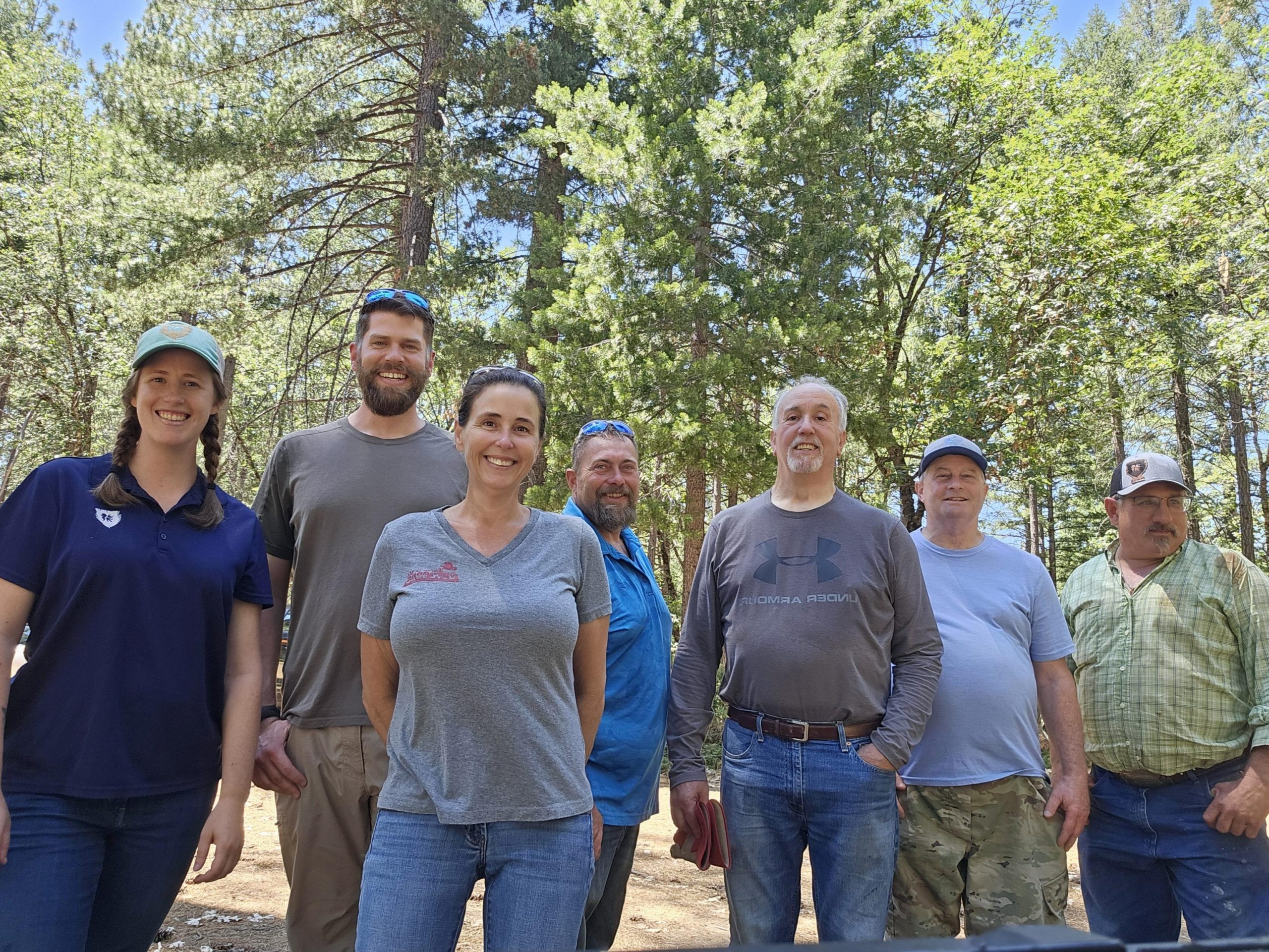
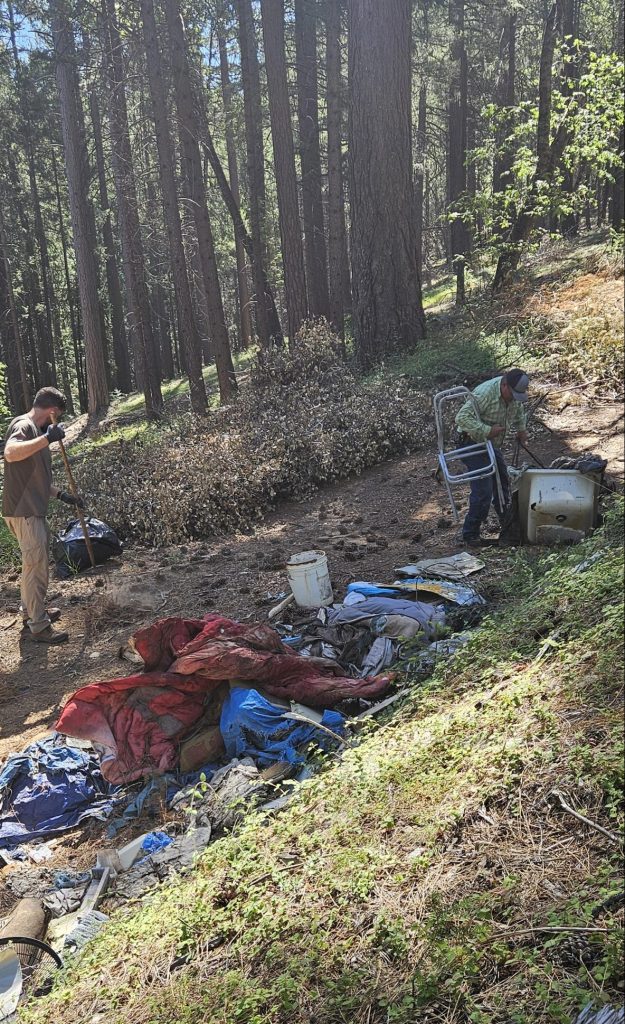
Near the Placerville Ranger District on the Eldorado National Forest, on a heavily used forest road, where illegal dumping has become an ongoing challenge, five volunteers representing three NWTF chapters, along with NWTF and USDA Forest Service staff, came together with a shared purpose: to restore a piece of public land that had been neglected and treated as a disposal site.
This volunteer cleanup effort brought together NWTF representatives from California and Nevada, including members of the Cottonwood Freedom Bash Chapter and River City Roost Chapter in California, as well as the Reno Grande Gobblers Chapter from Nevada. NWTF District Biologist Krista Modlin led the effort and was joined by NWTF Regional Director Jolene Begley and her husband. The group worked in partnership with the Forest Service, including a Forest Service representative and two interns.
What stood out wasn’t just the work accomplished; it was how far people were willing to travel to do it. Reno Chapter volunteers drove more than an hour to participate, while one Cottonwood volunteer traveled over two hours. In total, five volunteers from three chapters showed up ready to work in difficult conditions for a place that wasn’t in their backyard but was still part of their shared public lands heritage.
The site itself, located along a heavily used forest road, has long been a recurring illegal dumping area where household trash has built up over time. Volunteers returned this year to the same location where a successful cleanup was held last year, building on that progress rather than treating it as a one-time fix. Instead of accepting it as an ongoing issue, NWTF volunteers and Forest Service partners focused on what could realistically be accomplished in a single day’s effort.
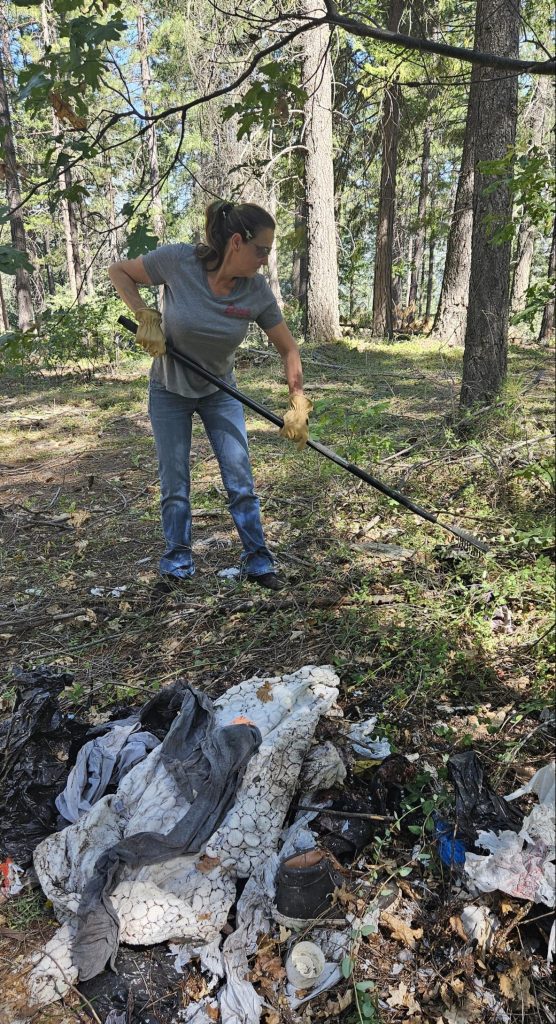
“This project really shows the dedication our volunteers have out here in the West, and that kind of effort reflects true unity — our mission doesn’t stop at state borders,” said Modlin. “There’s a genuine willingness to step in and support another chapter, get out on the ground, and that’s incredibly heartwarming. It speaks volumes about the value of our volunteers. At its core, this work is about taking ownership and pride in our national forests and public lands. We took something negative — an illegal dump site — and turned it into a positive outcome, embodying the simple but powerful idea of leaving things better than we found them.”
It was a meaningful transformation: a place treated as a dumping ground became, once again, part of a healthy public landscape. At the heart of this effort is a principle that resonates far beyond this one cleanup event — it’s to leave it better than we found it.
That idea is central to the NWTF values, especially in the West, where vast public lands require shared responsibility between agencies, local communities and volunteers. Wild turkeys depend on healthy, functional habitat, but so do hunters, hikers, anglers and every member of the public who uses these landscapes.
On-the-ground projects like this demonstrate that conservation is not abstract. It is hands-on, often unglamorous work — picking up trash along remote roads, improving habitat conditions and taking ownership of places that belong to everyone and no one at the same time.
This effort reinforced something important about the NWTF volunteer network: when chapters collaborate, conservation impact scales quickly. More importantly, it builds relationships between people who may live in different states but share the same commitment to wildlife and wild places. These volunteers didn’t just clean up a site. They modeled what it looks like when stewardship becomes a shared identity rather than a scheduled event.
And in doing so, they helped ensure that the forests they care about are a little cleaner, a little healthier and a little more respected for wildlife and for the next generation of people who will walk, hunt and explore them.