NWTF Launches Forest Restoration Work in Northern California
In northern California, the National Wild Turkey Federation is working with partners to help keep forests healthy and resilient. At the beginning of October, implementation began on the Knopki Stewardship Project in the Smith River National Recreation Area on the Six Rivers National Forest near Gasquet, California.
Funded in part by an $835,600 grant from California’s Wildlife Conservation Board to the NWTF, the project is designed to reduce hazardous fuels, improve forest health and wildlife habitat, and restore ecological conditions across the landscape.
For the NWTF, this work represents an important part of its conservation mission in the West: improving landscapes at a scale that benefits wild turkeys and a wide range of other species while helping communities and people who rely on public lands.
“When we talk about conserving wild turkeys in the West, we're really talking about conserving entire landscapes,” said Krista Modlin, NWTF district biologist for California, Oregon, Washington and Nevada. “Projects like Knopki allow us to address some of the challenges facing our forests while creating healthier, more diverse habitat for wildlife. What makes this work especially meaningful is that the benefits extend beyond wildlife to the watersheds, communities and outdoor recreation opportunities that make these public lands so valuable.”
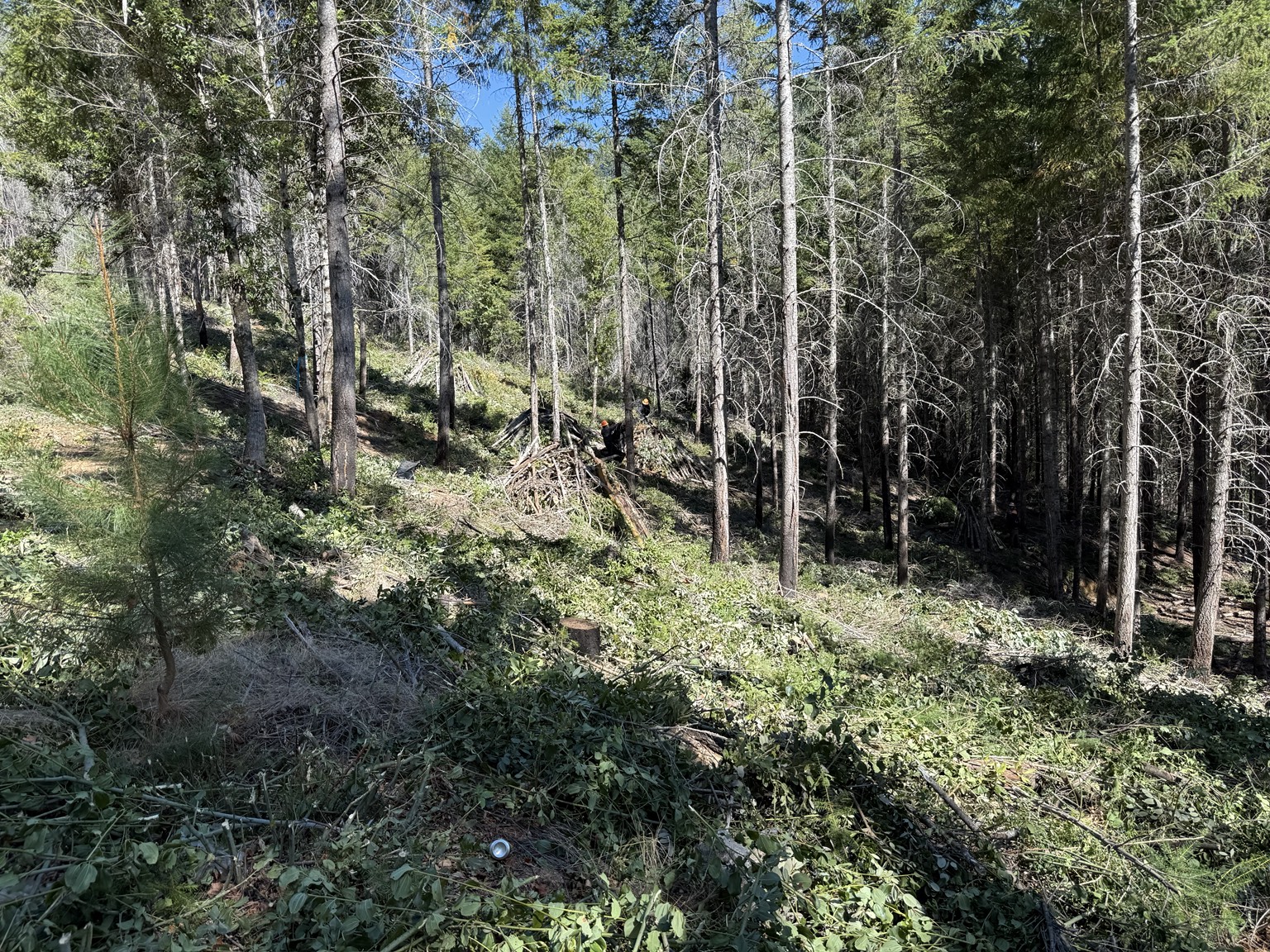
The Knopki project encompasses approximately 1,510 acres across two sites, North Knopki and Knopki South. NWTF is currently implementing work within the North Knopki project area, including 92 acres of hazard tree mitigation from the 2020 Slater Fire, 268 acres of fuelbreak construction, 14 acres of timber stand improvement and 14 acres of beargrass restoration.
Together, these treatments are intended to create healthier and more resilient forest conditions while reducing the potential for severe wildfire impacts.
Much of the project area consists of conifer plantations that were heavily logged during the 1950s and 1960s. Those forests require restoration to improve stand structure and health and to accelerate the development of more diverse, complex habitat conditions.
That matters for wildlife.
The project occurs within habitat used by wild turkeys, northern spotted owls, Pacific martens, elk and many other species. By improving forest structure and creating a more resilient landscape, the work can provide benefits across the wildlife community rather than focusing on a single species.
For wild turkeys, healthy forests provide the components they need throughout their lives, including food, cover, nesting areas and suitable roosting habitat. Across the West, those needs are increasingly tied to how landscapes are managed in the face of wildfire, changing forest conditions and other pressures. The benefits of the Knopki project extend beyond the forest floor, too.
The project lies within the Smith River watershed, a remarkable aquatic system supporting species including coho salmon, Chinook salmon, coastal cutthroat trout and resident rainbow trout. Reducing the severity and impacts of wildfire can help protect these waters by reducing threats such as increased water temperatures and sedimentation.
That connection, from forest health to water quality to wildlife habitat, is central to landscape-scale conservation.
When a forest is healthier and more resilient, the benefits can reach well beyond the acres receiving treatment. Wildlife gain habitat. Watersheds are better protected. Communities have greater resilience to wildfire. And people can continue to enjoy the public lands that make the West unique.
The location of the Knopki project makes that connection particularly visible. The work is taking place within the Smith River National Recreation Area, where the landscape provides opportunities for camping, hiking, fishing, hunting and other outdoor recreation. These opportunities are part of a heritage that depends on healthy wildlife populations, functioning ecosystems and access to quality habitat.
Conservation work helps ensure that future generations have the opportunity to experience those same landscapes — whether they call in a gobbler wild turkey on a warm spring morning, cast a fly into a cold mountain stream or simply spend a morning exploring public lands with family.
That principle is reflected in the partnerships behind Knopki. The project demonstrates what can happen when federal agencies, state partners and conservation organizations work together toward shared goals for the landscape.
The NWTF's role in projects like Knopki is part of a broader commitment to conservation across the West. The organization works alongside land managers, agencies, landowners, communities and other conservation partners to improve habitat and build landscapes capable of supporting wildlife and people for generations to come.
The first phase of NWTF implementation is expected to conclude by the end of 2027.
For NWTF, conserving wild turkeys has always meant conserving the places wild turkeys call home. In the West, that increasingly means looking at the entire landscape — and recognizing that when we invest in healthy ecosystems, wildlife, communities and the outdoor traditions that connect us to the land all benefit.