Oaks for Oakley
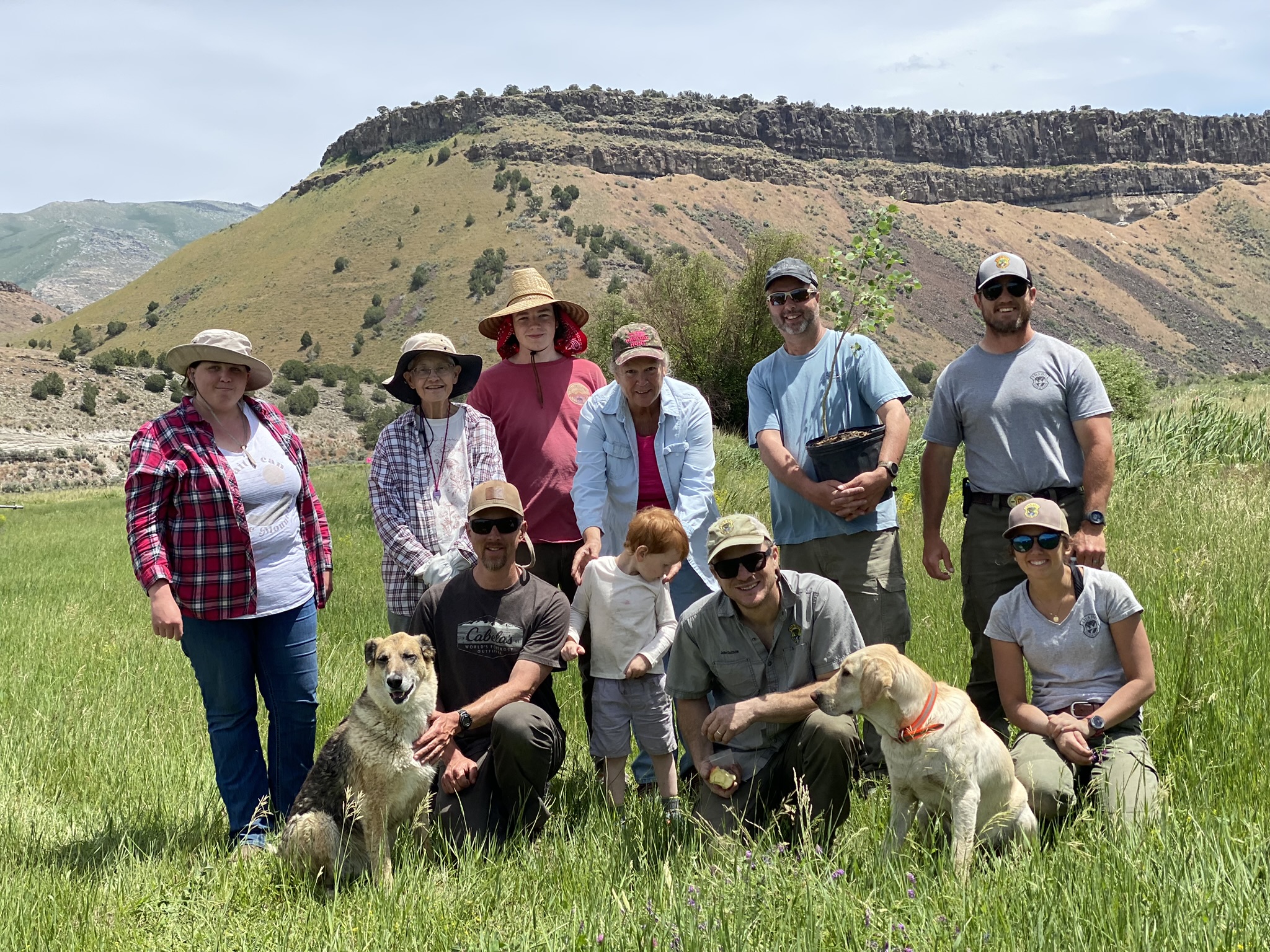
Last Saturday, the South Hills Strutters from Magic Valley and Twin Falls, Idaho, completed a significant tree planting project that volunteers have been preparing for since early spring. This initiative is part of ongoing efforts to enhance wildlife habitat in southeastern Idaho.
In March, volunteers from the National Wild Turkey Federation, Idaho Fish and Game and the High Desert Chapter of Master Naturalists began propagating oak and cottonwood trees in preparation for planting projects across southeastern Idaho. The goal is to improve wildlife habitats while supporting recreational activities like fishing and big game hunting.
Volunteers oversee the operation of a greenhouse and tree yard located on property owned by Joe Foster, the president of the Idaho NWTF State Chapter. This tree yard supplies trees for Idaho Fish and Game projects throughout the state.
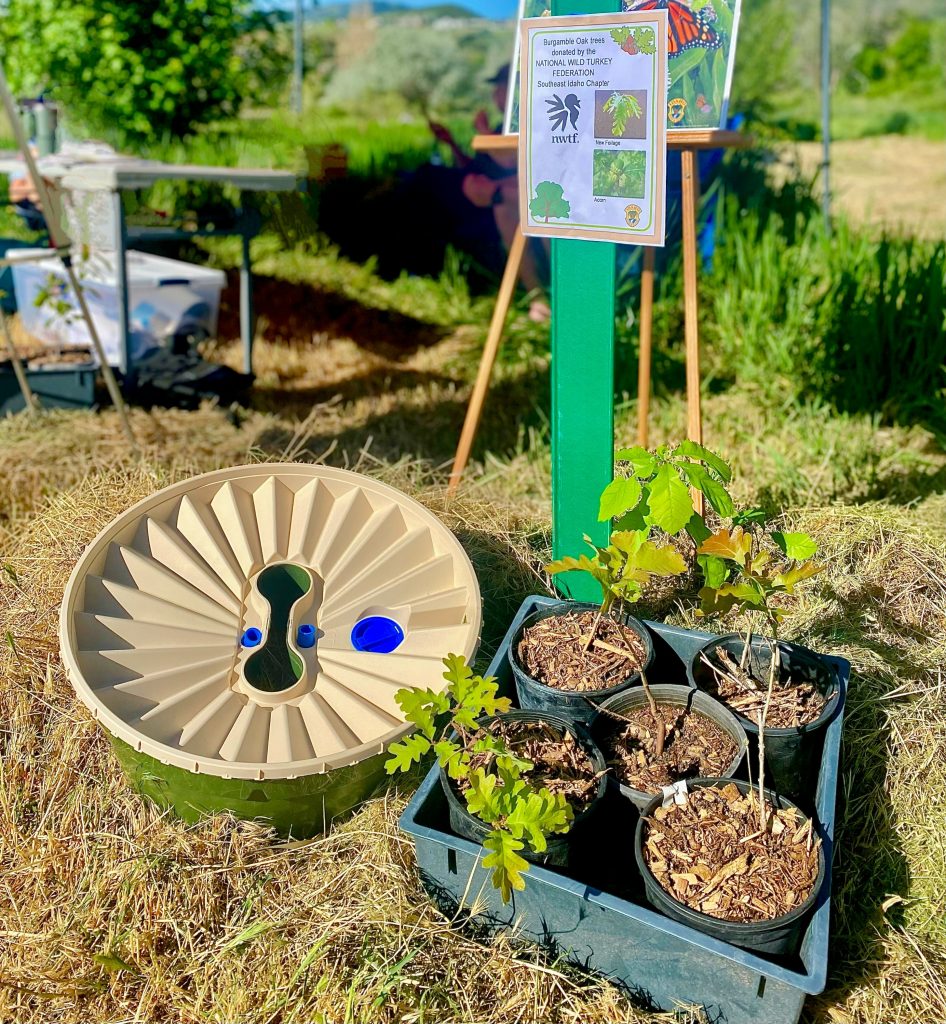
On June 15, volunteers traveled to Oakley, Idaho, to plant 31 Burgambel Oaks and a few additional experimental trees (Cottonwood, Quakie and Black Walnut). These trees were equipped with Groasis Water Boxes, designed to retain water for extended periods, helping them survive the dry conditions typical of the area.
Volunteers planted trees within an oxbow of Goose Creek, the main tributary to Oakley Reservoir. This location was chosen because the water table is close to the surface, providing natural hydration for the trees. After planting and watering the trees, volunteers applied fertilizer and used "tree juice" (a blend of Superthrive and Save-A-Tree) to help reduce transplant shock. A layer of mulch was added around each tree to promote healthy fungal growth, and water boxes were placed over the trees to ensure consistent watering.
“If all goes well we may see a second growth spurt this summer,” Foster said. “In the fall, water boxes will be removed to prevent winter cold/wildlife damage. Wire cylinders will be placed over the trees with rebar to secure and protect them. We may add more trees this fall and assess for water boxes next spring as needed.”
The project area is located in an isolated, high-elevation desert that receives less than 10 inches of rainfall annually. The hope is that by planting trees that are acclimated to the climate and using water boxes for reliable watering, the new vegetation will establish itself, providing habitat for a variety of wildlife species. This project will enhance wildlife habitat for wild turkey, mule deer, elk, moose, pronghorn and sage grouse.
Turkeys, primarily the Rio Grande subspecies, were transplanted to this area over 30 years ago. However, populations have declined due to habitat loss and fires. This project aims to restore and improve the habitat for these and other species, contributing to the overall health of the local ecosystem.
About the National Wild Turkey Federation
Since 1973, the National Wild Turkey Federation has invested over half a billion dollars into wildlife conservation and has positively impacted over 23 million acres of critical wildlife habitat. The NWTF has also invested over $9 million into wild turkey research to guide the management of the wild turkey population and to ensure sustainable populations into perpetuity. The organization continues to deliver its mission by working across boundaries on a landscape scale through its Four Shared Values: clean and abundant water, healthy forests and wildlife habitat, resilient communities, and robust recreational opportunities. With the help of its dedicated members, partners and staff, the NWTF continues its work to provide Healthy Habitats. and Healthy Harvests. for future generations.