Partnership Dividends
NWTF, USDA Forest Service improve turkey futures on national forests and beyond in the NWTF’s Mid-South Rebirth region.
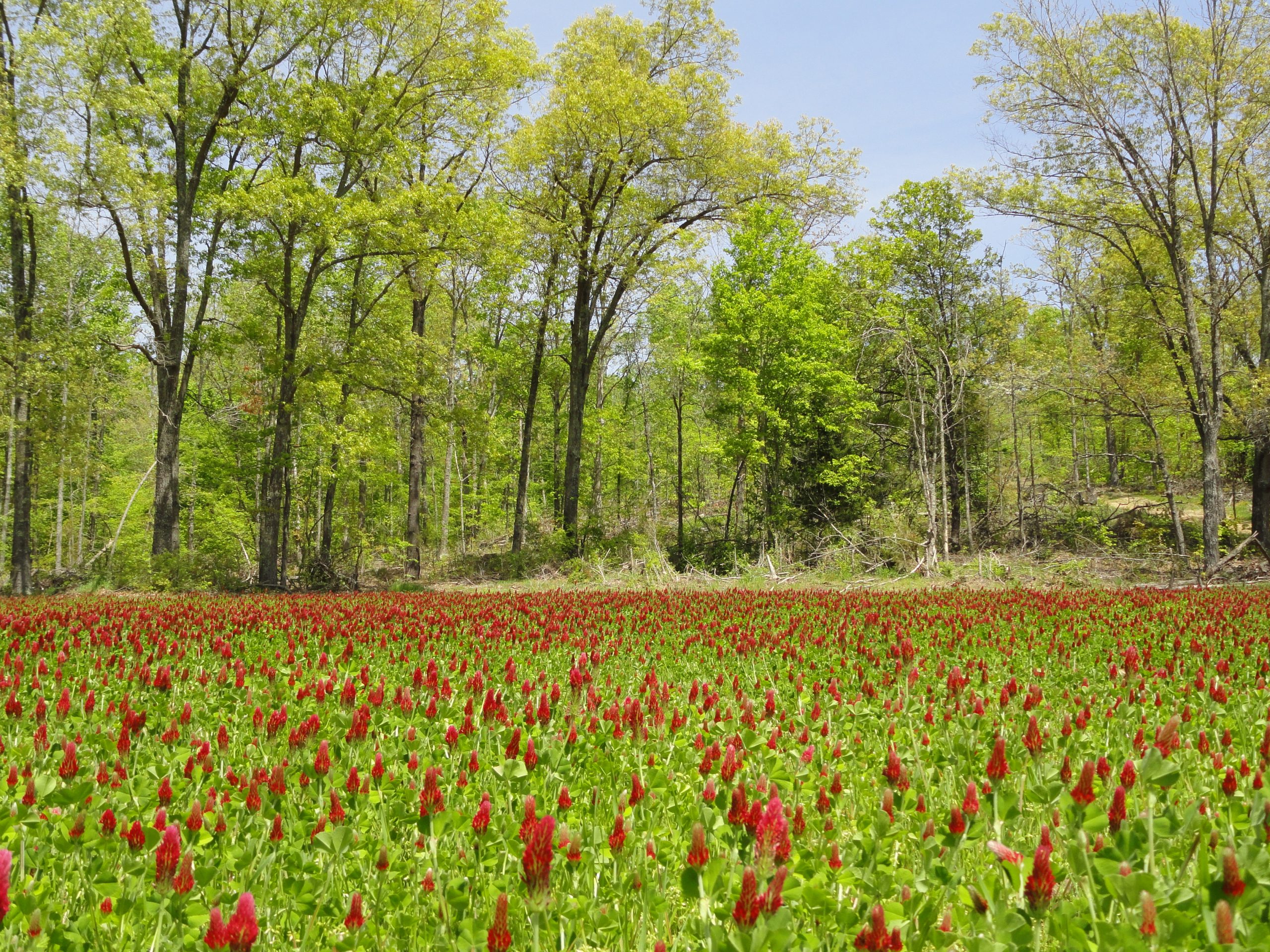
Wild turkeys, turkey hunters and other sporting enthusiasts are enjoying the rewards of a remarkable partnership between the NWTF and the USDA Forest Service. Included are major efforts to restore oak forests and bottomland hardwood within the Mid-South Rebirth region of the NWTF’s America’s Big Six of Wildlife Conservation.
This region contains significant portions of 11 states: Alabama, Tennessee, Mississippi, Georgia, Louisiana, Arkansas, North Carolina, South Carolina, Kentucky, Missouri and Oklahoma. Small portions of Kansas, Illinois, Indiana, Ohio, Virginia and West Virginia are also included.
The NWTF has historically recognized that partnerships are essential for the sustained viability of impactful, mission-related work in the Mid-South Rebirth region. Focal ecosystems there are primarily upland hardwood forests dominated by oaks and bottomland hardwood systems, both of which provide critical food and habitat for wildlife.
Promoting healthy, sustainable forests is the NWTF goal. Millions of acres of this habitat are within national forests’ boundaries, and the Forest Service shares the same ethic, making the agency a vital partner (for over 40 years) in conserving sustainable turkey habitat.
Across the region, the NWTF helps to address differing resource concerns on national forests. Doug Little, the NWTF’s director of conservation operations (East), said that each partnership effort requires extensive planning, with communication between NWTF staff and the Forest Service staff central to coordinating efforts and resources.
Key for the NWTF is ensuring that partnership projects address the critical elements identified within the recently formulated Habitat for the Hatch initiative (see bleow).
“These agreements take months and sometimes a year or more to discuss, not just with the Forest Service and us, but with other potential partners to gauge interest as well,” Little said. “We assess internally to ensure we have the capacity and means to administer the project, what is needed if we do not, and to make sure the work is in line with what wild turkeys need in the region to ensure the work is indeed a priority for us. Our Habitat for the Hatch initiative priorities serve as the filter when looking at opportunities.”
Derek Alkire, the NWTF’s district biologist for the states of Alabama, Kentucky and Tennessee, said the NWTF must be nimble to adapt to accessibility to project areas and other circumstances throughout the project.
“This communication continues throughout the span of the stewardship as well, since sometimes project area needs change throughout the course of the stewardship agreement,” Alkire said.
Enduring Partnership
Elizabeth Raikes is the Forest Service’s project manager in Kentucky’s Land Between the Lakes National Recreation Area. She called the collaborative work with the NWTF “integral to helping us manage for early successional habitat in forest and permanent open lands habitat. Our agreement is diverse to allow us to capitalize on opportunities as they arise, and funding is available.”
Examples of past work include ice storm cleanups, forest stand management to enhance canebrake restoration, open lands reclamation, native forb and grass establishment, and food plot establishment and maintenance.
“In 2024,” Raikes said, “we are planning to reclaim open lands that we are losing to young forest as a top priority. One such location for open lands reclamation is in the upper northeastern portion of the Recreation Area, an area with more than 100 acres of permanent open lands in various grass species and succession stages. The Forest Service plans to prescribe burn landscape units within this area, and we’ll work with the NWTF on follow-up activities for the burned areas as well as non-burned areas needing renovation.”
Effective communication is the basis of productive relationships. The NWTF’s relationships with major landowners and other partners help ensure that the efforts remain centered on the mission of improving wildlife habitat.
“Relationships are critical to make our work possible,” Little said. “There needs to be an elevated level of trust among those working together on any partnership project. We put a premium on making sure to build those relationships. Without that key aspect, we may not be involved in such mission-related and critical work. We will need to continue these efforts to ensure we are successful in meeting our goals for the Habitat for the Hatch initiative.”
Executing these types of efforts requires money. The NWTF has multiple stewardship and challenge cost-share agreements with the Forest Service, with nine open stewardship agreements in Arkansas alone, for example.
“Suffice it to say our stewardship work with the Forest Service is a critical component for us,” Little said.
Following the Science
Wildlife biology is an evolving science. The methodology of enhancing physical habitat evolves as we learn more about wild turkeys and their lifecycles.
“We follow the research to ensure we are up to speed on what the science is telling us that will move the needle to improve conditions for nesting, brood rearing and the fall and winter life cycle needs of wild turkeys throughout their range,” Little said.
Even in the South, one size doesn’t fit all in terms of turkey habitat, even for restoring oak savannas. The NWTF has proven remarkably agile in adapting Best Practices models from state to state and between various eco-regions.
“The NWTF relies heavily on science to manage habitats for wild turkeys,” Alkire said. “When developing projects in partnership with the Forest Service, we’re looking at activities that will benefit wild turkey populations and other wildlife in the area.
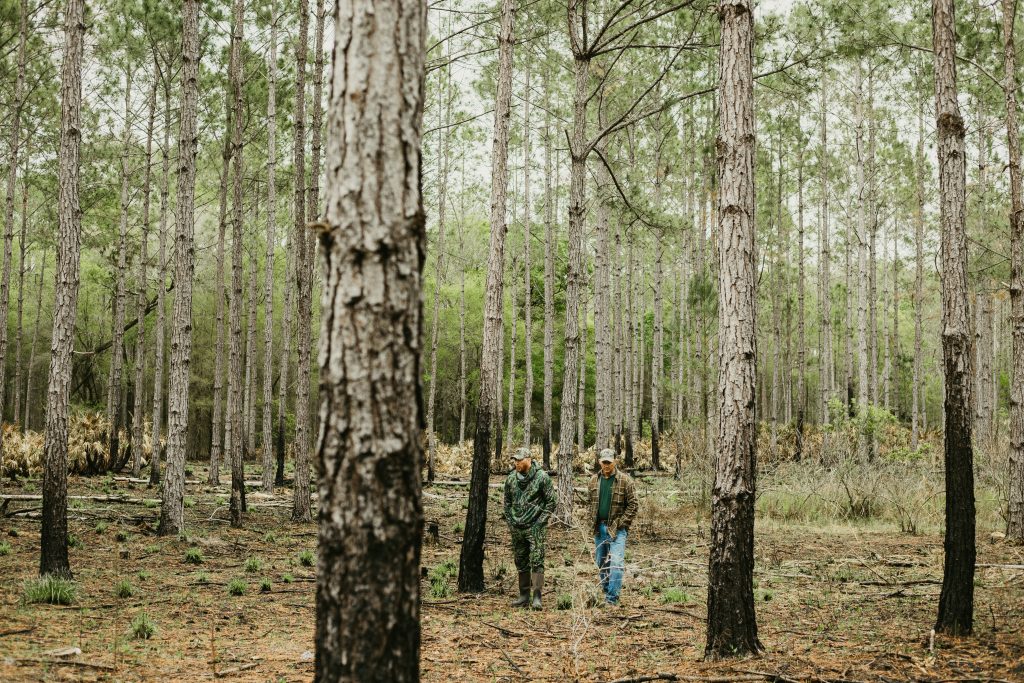
“These management strategies hinge more on what wild turkeys need in the particular area given habitat characteristics versus the state in which the project is occurring,” Alkire added. “For example, burning may not be feasible given an area’s conditions, so timber stand improvement practices may be implemented instead, whereas in another area of the state prescribed burning practices are more beneficial.”
The public is an equally important partner for Mid-South Rebirth region projects. It’s not enough to gain public acceptance, which can be ephemeral. The NWTF and the Forest Service’s educational efforts must institutionalize management practices in the public consciousness. Terms like “prescribed burning” must become part of the common language among the conservation community, especially among turkey hunters.
Messaging must be tailored for various audiences within regions.
“Institutional awareness among the public may vary widely depending on geography,” Alkire said. “For example, prescribed fire is an accepted practice in many parts of the Southeast while social acceptance may not be as high in other areas of the country. It is important for the NWTF and the Forest Service to highlight why certain activities are being done and how the projects can benefit not only wildlife but communities as well. Public awareness is a large part of all conservation and why we use many communication outlets to highlight ongoing efforts.”
Communications related to wild turkey conservation involve many elements that target diverse demographics. Some age groups, for example, are more attuned to social media while others are more receptive to printed sources.
“I think this (the type of communication tools employed) depends on the region,” Alkire said. “However, in the Mid-South Rebirth, we’ve been successful in engaging with the public through various partnership opportunities via outreach events, workdays and social media platforms.”
Habitat for the Hatch in the Mid-South Rebirth Region
In 2023, the NWTF launched its newest initiative, “Habitat for the Hatch,” a 10-year plan to improve nesting and brood-rearing conditions on more than 1 million public and private acres.
The initiative encompasses two Big Six Conservation regions: America’s Mid-South Rebirth and America’s Southern Piney Woods. With partner collaboration, the NWTF estimates the effort will cost $40 million, or about $4 million per year, to ensure wild turkeys have good nesting and broodrearing habitat near each other across an 18-state region each year. A fundraising goal of $8 million over the next 10 years, with a 5:1 leveraging margin, is set.
“We encourage landowners to reach out for technical assistance,” Little said. “We may or may not have a private lands biologist in the area, but we can point them in the right direction for assistance from others to help them get the right advice based on their property goals.”