Photographing Rios
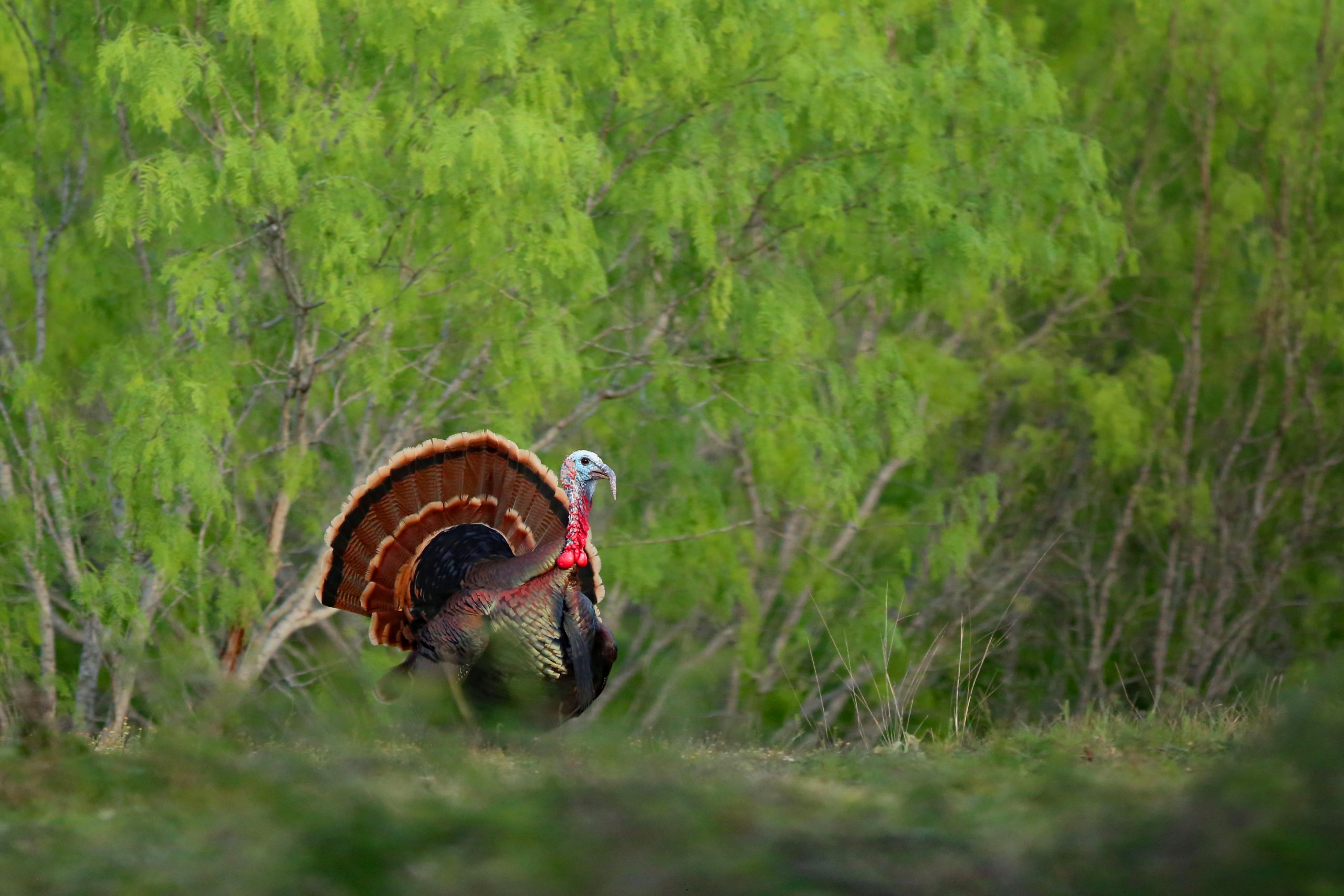
Undoubtedly, one of the most challenging yet exciting birds to photograph is the Rio Grande wild turkey (Meleagris gallopavo intermedia).
Wild turkeys are among the most vividly colored and ornate birds with an equally rich assemblage of unique and uncanny behaviors. There is no experience like hearing the thundering chorus of a mature gobbler, feeling his drumming rhythm with your own heartbeat, or seeing the full spectrum of colorful feathers revealed at first light. Wild turkeys like Rios are one of my favorite photography subjects to call in during the spring because of the challenge and their beauty.
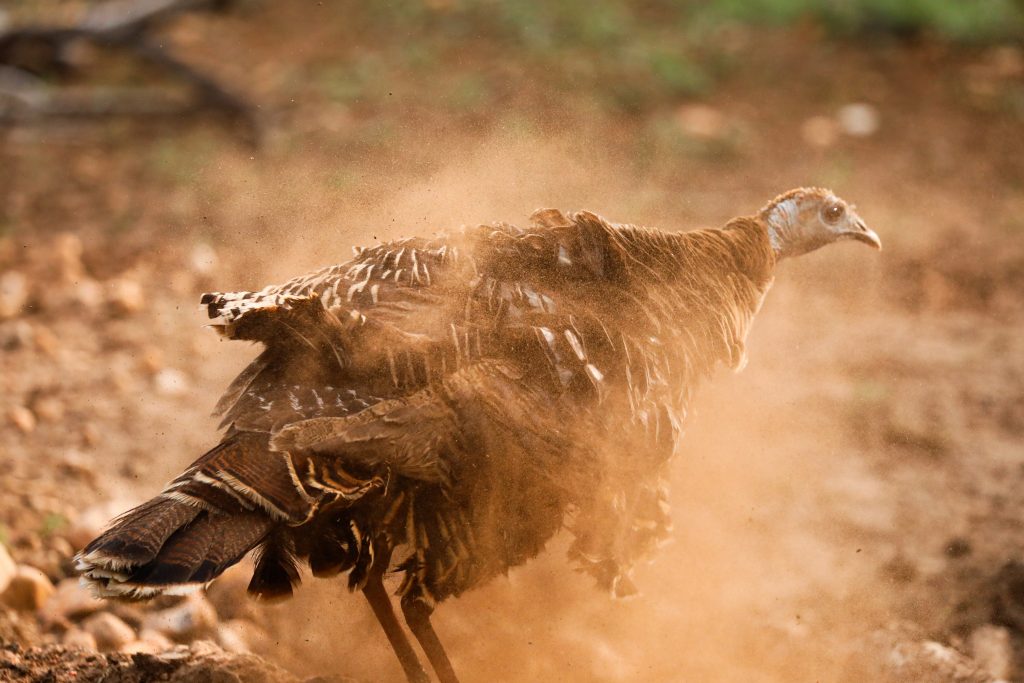
With every wild turkey encounter, I learn or observe something unique. I love capturing fast action such as a turkey flapping its wings or a cloud of dirt suspended in the air during a dust bath. When I have adequate light, I always shift my camera’s setting either on manual or shutter-priority mode to freeze the fast action. When the light is low, a tripod or monopod is a necessary component that makes the difference between sharp and grainy images.
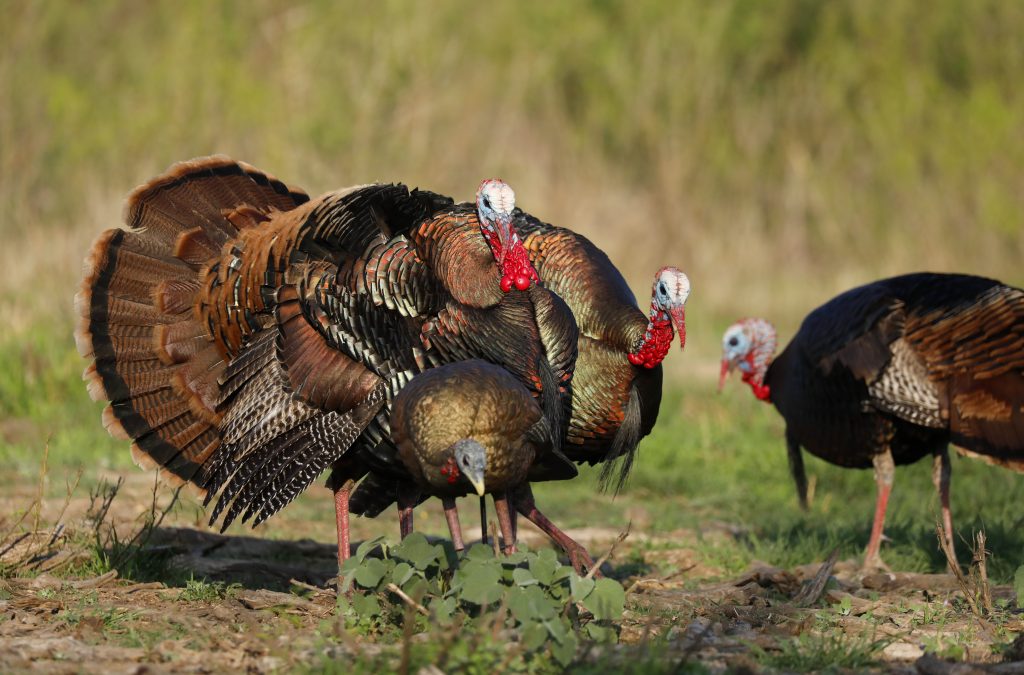
It is not always easy to fool a wild turkey, especially for the long periods of time needed to capture a collection of images. Their keen sense of vision is unrivaled, leaving the photographer restricted to making only the slowest and most calculated of movements. This translates into wearing full camo clothing including a face mask, long sleeves and gloves (which can get hot in south Texas). The use of turkey decoys can be advantageous for distracting gobblers and jakes for long periods of time. Decoys can invoke unique fighting and courtship behaviors in wild turkeys. Most of the time, the Rios will not even look up for the sound of a camera shutter; however, my dad and I have found that using decoys can shy away gobblers when used later in the season after other hunters have been using them.
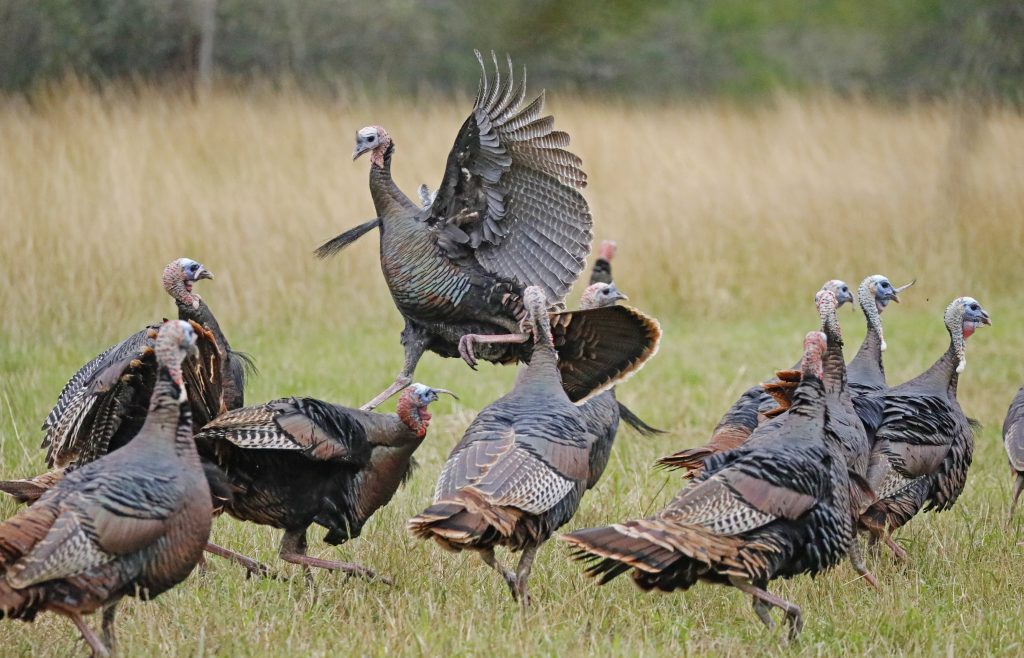
I often get interesting images in the fall or winter when birds are in flocks and establishing their social hierarchy in preparation for spring. This image (right) was taken in November in south Texas – several gobblers leaping at one another and frolicking in a field while on their normal route. I often use a camouflaged pop-up ground blind and strategically position it on the turkey’s path. This requires planned scouting to learn where the birds go from their roost and what resources are nearby that they usually key in on.
Knowing your own equipment and camera’s settings are fundamental for success. The best light for photographing wild turkeys is in the early morning and evening. Rios are praised for their vibrant plumage with hues of copper, bronze, purple and green. The word “iridescent” has its root in the Latin irido, meaning rainbow, an accurate description of a wild turkey’s feathers that are set ablaze when exposed to light. With iridescence, the coloration shifts depending on the viewer’s angle and the intensity of light. The difficulty involves capturing the revealing color in the light while avoiding overexposure. There are multiple available online resources with information addressing settings for the specific model of camera you use. As a wildlife photographer, I am constantly learning and researching the best settings for my equipment. I practice with those settings before my sits in the blind, which reduces frustration and missing shots.
Wild turkeys are by no means easy to photograph. Even with ideal conditions, their wary nature can make them challenging even for experienced professionals; however, in terms of fun and fulfillment, there have been a multitude of times carrying my camera afield resulted in a collection of timeless memories. With photography, I can pursue wild turkeys year-round and share the experience with my family, friends and anyone interested in the outdoors. My biggest advice is always carry a camera when afield because you never know what you might encounter!