Preparing Smarter for Spring Turkey Season with E-Scouting
When it comes to preparing for spring turkey season, nothing replaces time spent in the woods. Boots-on-the-ground scouting builds confidence and familiarity that no digital tool can fully replicate. But in today’s world, e-scouting has become an invaluable way for hunters to maximize limited time, especially before opening day or when traveling to unfamiliar ground.
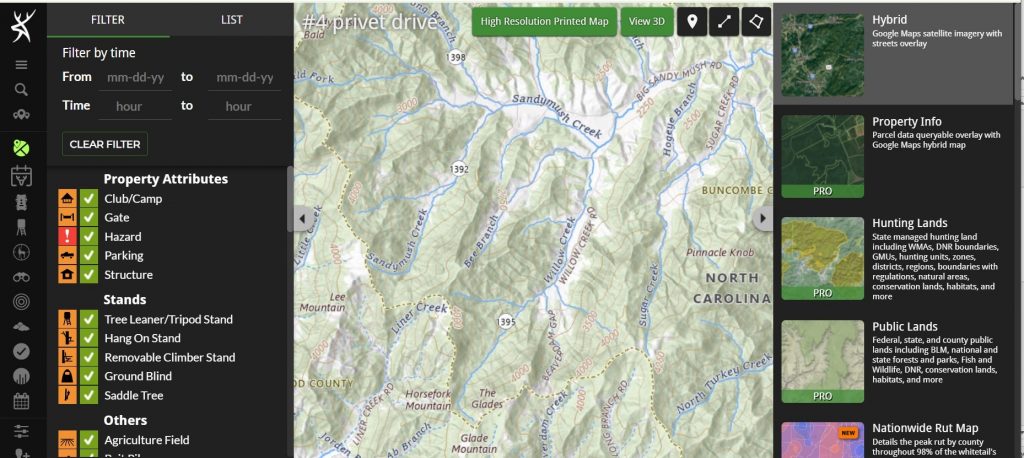
Using mapping tools like HuntStand, or even traditional paper maps paired with aerial imagery, allows hunters to begin preparing for the hunt before ever stepping into the field.
“The number one reason for doing all this e-scouting is just getting a head start,” said Josh Dahlke, content director at HuntStand and a lifelong turkey hunter. “You’re able to start your hunt before you ever put boots on the ground. The whole point is to set yourself up so you’re not going in blind, and you can roll in with confidence and hunt more efficiently right when you get there.”
Dahlke emphasizes that e-scouting isn’t simply about staring at a screen; it’s about time efficiency, access planning and understanding how turkeys use the landscape. Tools like HuntStand offer hunters the ability to view satellite imagery, topographic layers, property boundaries, access points and other critical information that helps narrow down where to spend valuable time once the season opens.
“By the time you get to a location to hunt, you should already feel somewhat familiar with it just from studying the aerial imagery,” Dahlke said.
For traveling turkey hunters or those hunting new public ground, that familiarity can be the difference between wandering aimlessly and starting the morning with a plan.
One of the biggest takeaways from Dahlke’s approach is starting e-scouting at a macro level before dialing in the details. That means identifying large tracts of huntable land, understanding public access, locating parking areas and evaluating travel logistics well ahead of the season.
From there, hunters can begin narrowing their focus to the habitat features that matter most to wild turkeys, such as roost trees, water, food sources, edge cover and openings.
“Try to find as many other desirable factors around that roost area as you possibly can,” Dahlke said. “The bigger the combination of factors, the more likely you are to encounter turkeys.”
Across all regions, water consistently plays a key role in turkey distribution. While birds can meet some of their hydration needs through food, reliable water sources often anchor daily movement patterns, especially in arid regions or areas experiencing drought.
Identifying creeks, rivers, stock tanks, ponds and drainages on topo maps can quickly narrow down high-probability areas. Low points in the terrain, visible through contour lines, frequently indicate drainages that may hold water even when surface flow isn’t obvious on aerial imagery.
Dahlke notes that water is the first feature he looks for when e-scouting, using it as a foundation to build the rest of his hunt plan.
Topographic maps add another layer of understanding by showing elevation changes, slopes and terrain features that influence how turkeys move through an area. Subtle benches, ridgelines and drainages often serve as travel corridors between roosting and feeding areas.
Using 3-D mapping tools or traditional topo maps, hunters can visualize how turkeys might approach openings, skirt steep terrain or use natural funnels, helping anticipate where birds are likely to be at different times of day.
Another major advantage of e-scouting is identifying the best access points before opening morning. Knowing how to enter and exit an area safely and efficiently reduces pressure on birds and saves time when it matters most.
Once in the field, digital maps become a living resource. Marking roost trees, gobbling locations, tracks, droppings and strut zones helps hunters build a deeper understanding of how turkeys are using the property. These observations, notes and encounters create a long-term resource hunters can rely on year after year. And e-scouting doesn’t end once the season begins. Dahlke encourages hunters to continually update their maps, adding notes and observations after every hunt.
“Pulling the trigger is a very minor part of the story,” Dahlke said. “Going out there with the goal of just being around the birds is a pretty good baseline measurement of success.”
Ultimately, e-scouting becomes part of the hunt itself — a way to stay connected to turkey season when you can’t be in the woods and a tool that helps hunters consistently get closer to birds across regions and subspecies.
“I can’t help you with the final stages of the hunt,” Dahlke added, “but I can promise you that if you use these tips, you will be on birds more often.”