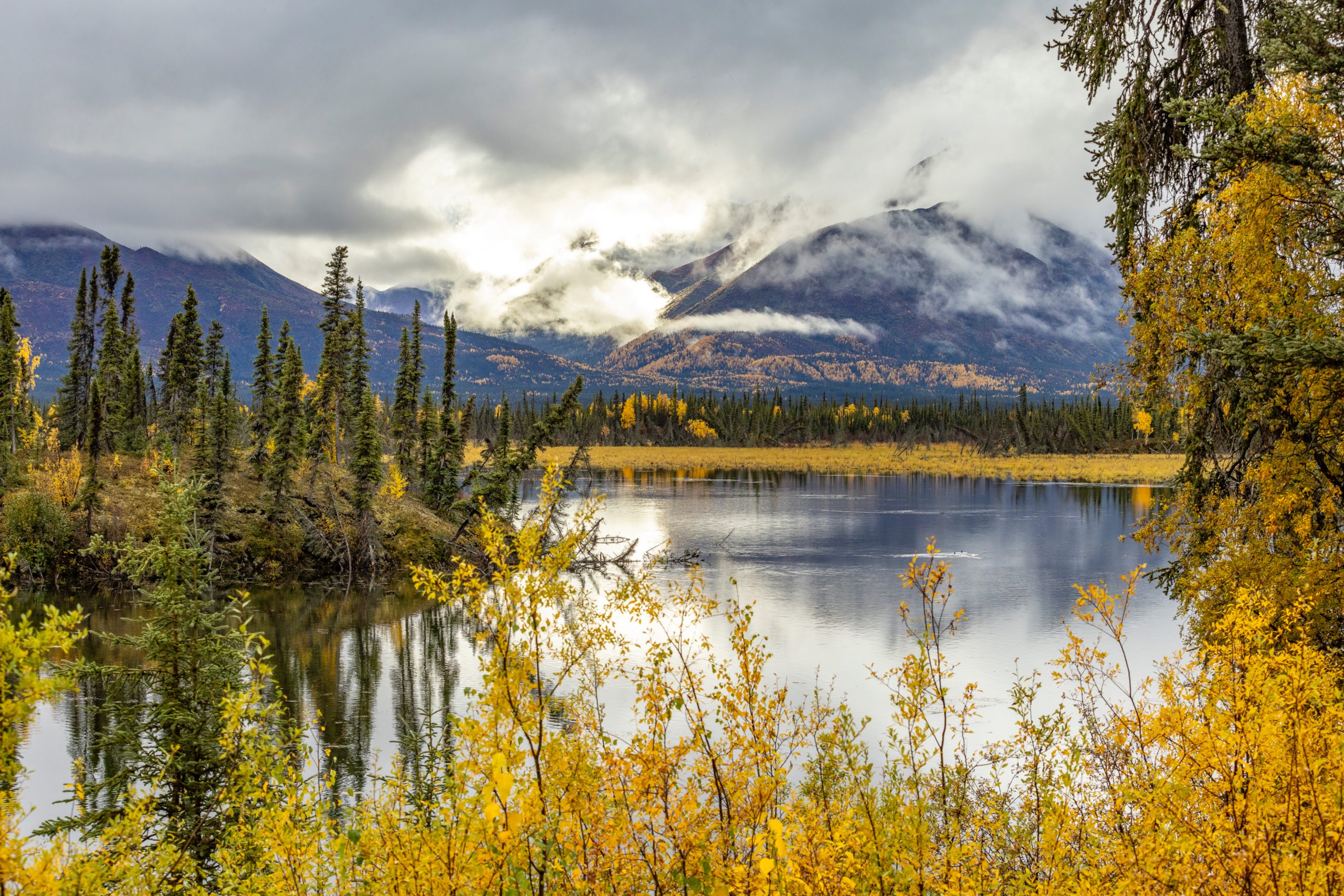
Reading the Seasons
There is a date for the beginning of autumn. The calendar tells us when it arrives, and every year we mark the autumnal equinox as though the season itself has been waiting for us to give it a name. Somewhere in the middle of our busy lives, we notice the first hints of fall in the forecast and perhaps begin looking for color in the trees.
But the land has never needed a calendar. By the time the equinox arrives, the signs of autumn have usually been gathering for weeks. The sun rises a little later, disappearing a little sooner. A few leaves begin to blush at the tops of trees, almost imperceptibly at first. Birds gather before migration, acorns begin to fall and grasses lose the vivid green of summer. The woods sound different, too. There is a little less insect noise, a little more wind moving through drying leaves, and a growing sense that something is changing.
While the autumn equinox marks the change of seasons on a calendar, the arrival of fall rarely happens all at once. Instead, it comes as a collection of small observations that accumulate until we realize the landscape is no longer quite the one we knew in July. If you pay close attention, you can see the transition and read the land, letting it tell you the seasons, rather than a calendar.
Aldo Leopold understood this kind of attention. A Sand County Almanac is, in part, an exercise in learning to recognize a particular place so well that its changes become legible. His calendar is filled not simply with months and dates, but with skunk tracks, migrating geese, flowering plants, birds, weather and the many small occurrences that mark the passage of time on the landscape.
Writing about the return of geese in March, Leopold observed, “One swallow does not make a summer, but one skein of geese, cleaving the murk of a March thaw, is the spring.” It is a beautiful idea, realizing the goose is not simply a sign that spring has arrived, but rather a part of the process by which we learn to recognize spring at all. The more time we spend outside, the more we begin to understand that the seasons have their own language.
Spring rarely begins with the date printed on the calendar. It begins with muddy trails and swollen buds, with the first wildflowers appearing in last year's leaves, and birds returning to places they left months before. It arrives in the lengthening evenings, in snow retreating from south-facing slopes and in the subtle change in the smell of the ground. Long before we call it spring, the landscape has already begun the work of becoming itself again.
Summer is much the same. By the time the solstice arrives, trees have already leafed out, grasses have grown tall, and birds have nested and begun raising young. Flowers are blooming, insects fill the air, and young animals are moving through habitats that only months before seemed quiet and empty. The longest day of the year marks an astronomical transition, but it does not create summer. The land has been preparing for it all along.
In fact, by the time we reach the summer solstice, the days have already begun their gradual retreat toward winter. We rarely notice at first. There is still plenty of sunlight, and the hottest days of summer may still be ahead. But the earth has already turned toward what comes next.
By autumn, those small changes become harder to ignore. The first yellow leaf is easy to overlook. So is the cool morning that arrives after a string of warm ones. We might notice a flock of birds overhead without thinking much of it, or hear the familiar woods grow quieter as insects disappear and vegetation begins to dry. Then one morning we step outside and realize the landscape has changed.
Leopold wrote that “No man can heed all of these anniversaries; no man can ignore all of them.” That idea feels particularly relevant now. We cannot possibly notice everything happening around us. There are too many flowers blooming, birds migrating, insects emerging and disappearing and animals changing their behavior. But once we begin paying attention, it becomes difficult to believe that any of those changes are insignificant.
For those of us who spend time hunting, fishing, hiking, birding, gardening or simply walking the same trails year after year, this becomes a kind of education. A hunter learns when the woods begin to feel different. A birder recognizes the first movement of migration. An angler notices when water levels and flows have changed. A gardener knows the signs of an approaching frost. This is more than knowing facts; it is knowing a place through repetition and attention.
And that kind of knowledge matters to conservation. It is difficult to care deeply about a landscape we have never learned to see. The more familiar we become with a place, with its wildlife, water, plants, seasons and patterns, the more we understand that it is not simply scenery surrounding us. It is a living system, changing constantly and carrying on processes that began long before we arrived.
The older I get, the more I understand that change rarely announces itself. There is rarely a morning when we wake up and suddenly become someone new. More often, change happens gradually enough that we do not recognize it while it is happening. Friendships develop, a place becomes home, a career takes a different shape and our priorities shift. We become a little different from the person we were a year before, often without realizing exactly when the change occurred.
Perhaps that is one reason spending time outside can be so grounding. The natural world gives us a way to see something that is much harder to recognize in ourselves. Change does not have to be dramatic to be real.
A forest does not become autumn in a day. A meadow does not become spring because a date arrives. A migration does not begin with a single bird. Seasons are made up of countless small changes, most of which we would miss if we were not paying attention.
The calendar will continue to tell us when autumn begins, when winter arrives and when spring and summer return, and those dates are useful. They help us measure the passage of time and understand the astronomical cycles that shape life on Earth, but the earth will always be a little ahead of us.
It will announce each season in its own language; in birdsong and frost, in flowers and falling leaves, in the length of a shadow and the warmth of the morning sun. The more time we spend outside, the more fluent we become in that language.
Maybe that is one of the gifts of knowing a landscape well. We learn to notice change before we are told to notice it. And perhaps, in learning to read the seasons of the land, we become a little better at recognizing our own.