Reclaiming 299 Acres of Wisconsin Savanna: The Driftless and Central Sand Hills Oak Savanna Restoration Project
In the world of conservation, thinking big across the entire habitat is key. Wildlife does not recognize property lines, and habitat fragmentation is one of the greatest threats to the long-term health of our native species. To truly support the wild turkey, restoration must happen at a landscape scale, bridging the gap between the public and private lands that comprise them. This philosophy was the driving force behind the Driftless and Central Sand Hills Oak Savanna Restoration, a massive effort that spans 299 acres across some of Wisconsin's most iconic landscapes in Vernon, Grant and Columbia counties.
By looking at the landscape as a whole, the NWTF and several partners focused on creating a connected corridor of high-quality habitat. The project targets five distinct sites — ranging from state natural areas to heritage trail grounds and private farms — all of which were suffering from a common ailment: the loss of the historic oak savanna.
The Problem
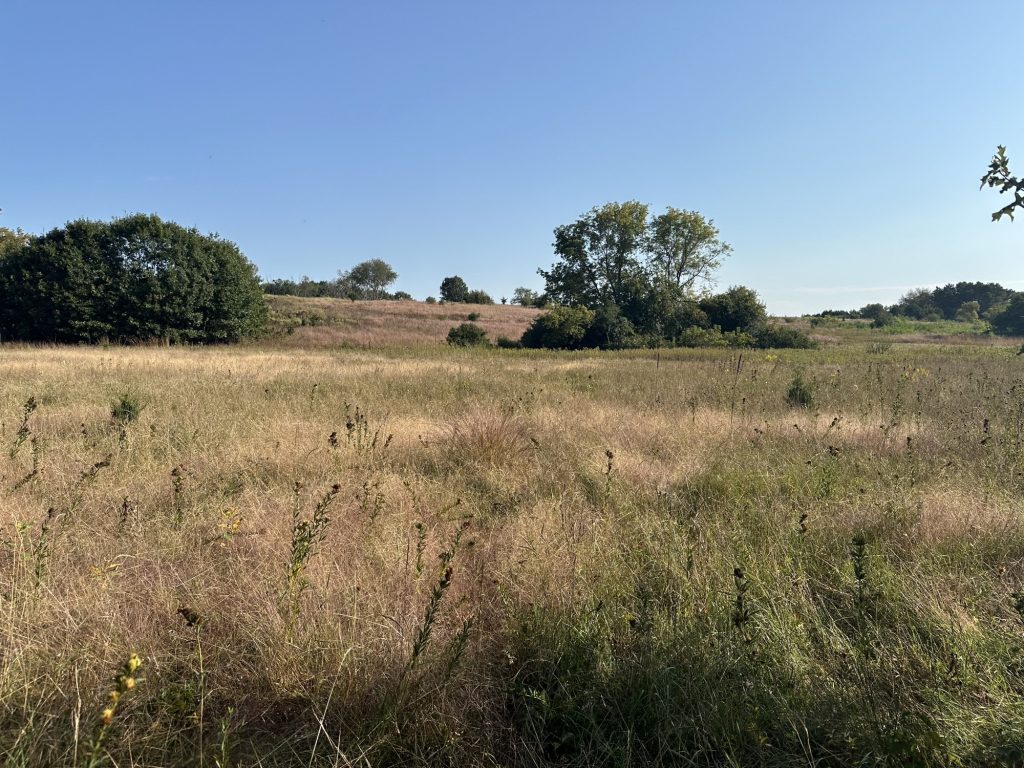
Historically, southern Wisconsin was defined by its oak savannas and open prairies. These were fire-adapted systems where massive, open-grown oaks and hickories provided acorns and hickory nuts as a food source for many species.The wide spacing between trees allowed sunlight to hit the forest floor, fueling a layer of native grasses and forbs. For a wild turkey, this is the gold standard of habitat. The canopy provides roosting and winter mast, while the ground cover supports the insects that are essential for turkey poults during the brood-rearing season.
However, over the last century, these systems have been in decline. Decades of fire suppression and the introduction of aggressive invasive species turned these open savannas into dense "green walls.” Invasive species like buckthorn, honeysuckle and black locust began to take over, joined by trees like maples and eastern red cedars that were never meant to be so abundant in a savanna system. As the canopy closed, the sunlight disappeared, and diverse ground cover was minimal. The result was a landscape that was difficult for turkeys to navigate and nearly devoid of the food and cover they need to thrive.
This degradation didn't just affect game birds. These habitats are now among the rarest plant communities in the world. The decline of the savanna has threatened a diverse group of flora and fauna, including 15 species of greatest conservation need, as identified by the USFWS. The Karner blue butterfly, the rusty patched bumble bee, the red-headed woodpeckerand several species of bats all rely on the open structure of a healthy oak woodland or prairie to survive. The restoration activities are aimed at benefiting all native wildlife species.
The Strategy: A Collaborative Financial Model
Success on this scale requires more than just labor; it requires a strategic financial partnership. The project carried a total cost of $205,530, a figure that reflects the intensive nature of restoration work. To meet this need, the project utilized a collaborative match requirement. While the Wisconsin NWTF State Chapter provided $15,000 through its Super Fund, that investment acted as the catalyst to unlock over $190,000 in matching funds and in-kind services.
The partner list for this effort is a testament to the broad support for Wisconsin's hunting heritage. Contributors include the U.S. Fish and Wildlife Service Partners for Fish and Wildlife Program, the Mississippi Valley Conservancy, the Golden Sands Resource Conservation and Development Council, the Ice Age Trail Alliance, and several private landowners. By pooling resources, these organizations were able to achieve a level of restoration that none could have accomplished alone.
“The NWTF is grateful to have such a diverse array of partners in Wisconsin who not only manage public lands, but who areable to achieve a lot of great habitat work on private lands,” said Clayton Lenk, NWTF district biologist. “These projects and partnerships not only benefit the resource but the entire landscape and communities where these projects occur.”
A general timeline of project activities is as follows:
Phase One: Invasive Woody Brush and Tree Removal
The restoration began in the fall and winter of 2025. This phase was focused on "the heavy lifting,” the mechanical removal of the invasive green wall of woody brush and trees. Work was split across 242 public acres and 57 private acres. The public efforts were focused on two high-profile locations: the Tunnelville Cliffs State Natural Area along the Kickapoo River and the Historic Indian Agency House at Fort Winnebago.
Crews utilized forestry mowers and hand-cutting teams to target woody invasive species. By identifying the most productive oaks and hickories and removing the competing maples, hackberries and cedars around them, the heritage trees can expand their crowns. This directly increases the amount of sunlight hitting the forest floor and ensures the long-term survival of the mast-producing trees that turkeys rely on during the harsh Wisconsin winters.
Phase Two: Native Oak Savanna and Prairie Seed Planting
With the invasive brush cleared and the canopy opened, the second phase focused on the ground layer. In Columbia County, 57 acres of the project were targeted for complete prairie and savanna restoration. This required thorough herbicide treatments to eliminate weeds and expose bare soil.
Following site preparation, the sites that required a full reseeding were seeded with diverse native seed mixes to fully restore prairie and oak savanna habitat, providing ample brooding areas for wild turkeys and other wildlife. The sites were planted via winter broadcast seeding, which allows seed to naturally experience a season of cold stratification, a required component for many native species to germinate.
Phase Three: Prescribed Burning
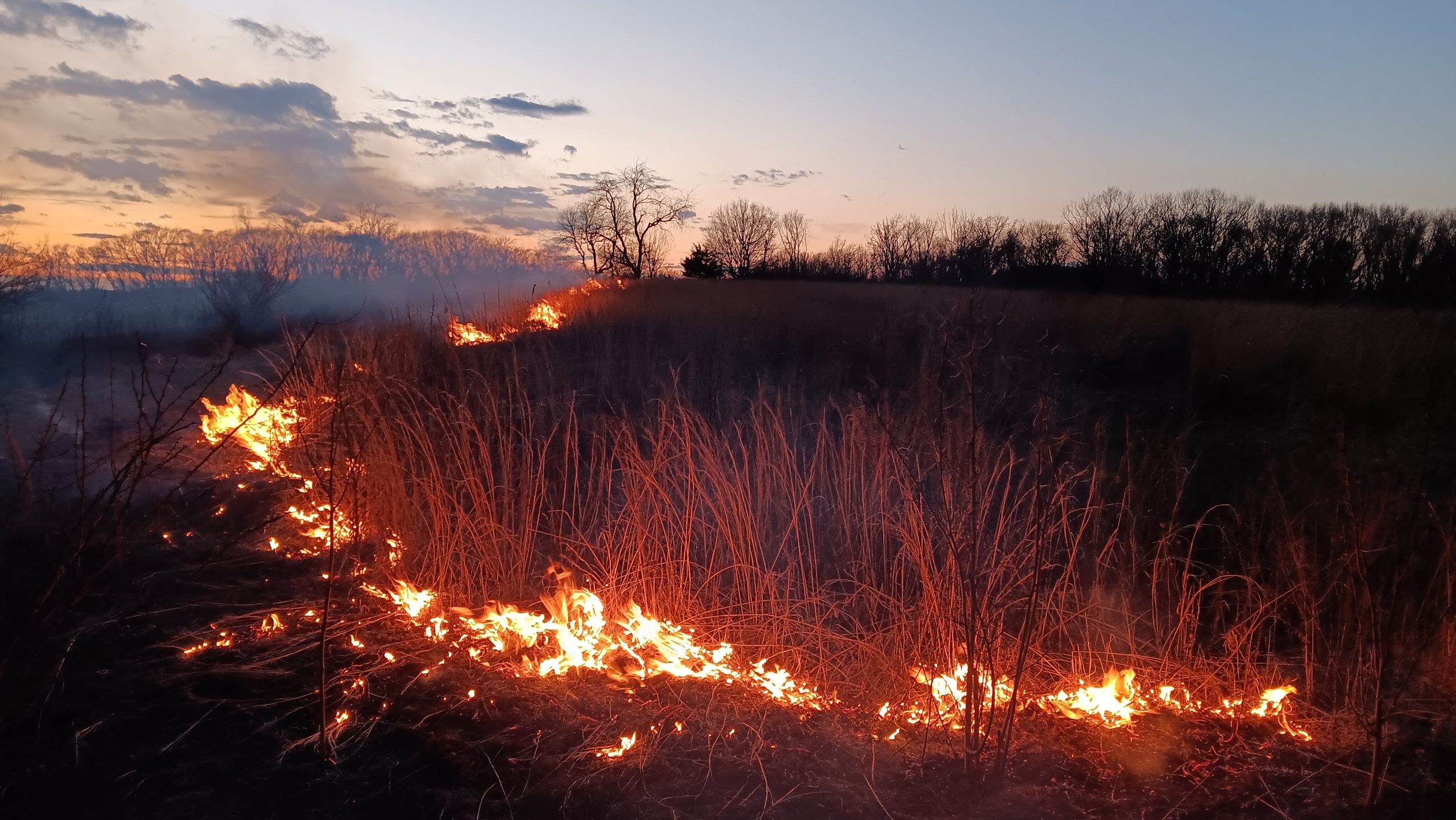
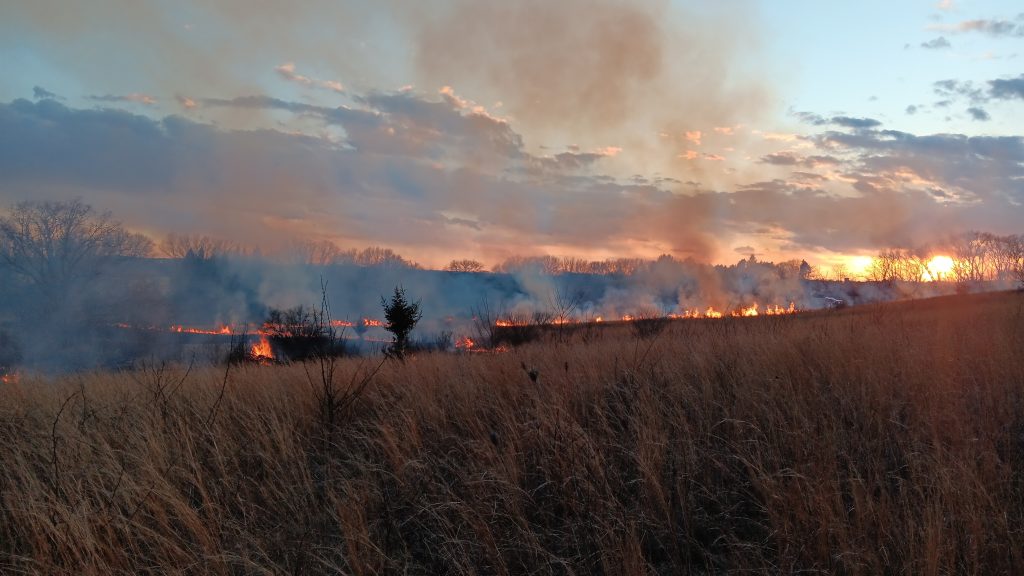
Fire is the most efficient tool for maintaining an open understory. It kills woody resprouts, clears dead leaves and recycles nutrients back into the soil to fuel the next generation of native growth. By clearing the initial brush, the NWTF and its partners are making it possible for fire to be reintroduced safely and effectively.
Prescribed burning will be conducted in the fall of 2026 and the spring of 2027 in accordance with written burn plans emphasizing safety, while also maximizing the desired burn objectives written in the plan. Burns will be conducted by trained volunteers, local municipal firefighters or trained and insured contractors.
Phase Four: Follow-Up Invasive Species Control
Invasive species control focuses on protecting the restored habitat through strategic management of invasive and undesirable vegetation. By reducing competition from herbaceous weeds, these efforts allow native plant communities to thrive, providing critical brood cover, insect-rich foraging areas and improved travel corridors for wild turkeys. A targeted mix of mechanical and herbicidetreatments will be implemented as needed to address varying site conditions. This phase, scheduled for spring and fall 2026,ensures the project delivers lasting wildlife benefits.
Long-Term Commitment
Restoration is never a "one and done" process. In a fire-adapted system like an oak savanna, the work has just begun once the brush is cut. To ensure these 299 acres do not revert to a tangled thicket of invasives, a long-term management plan was established for every site.
Any project through the USFWS PFW program enters into a 10-year agreement, where landowners must commit to maintaining the project to the best of their ability. These actions will include maintenance mowing, prescribed burning, follow-up spot herbicide treatment and continued monitoring and will be conducted by each property's respective landowner with guidance from USFWS staff.
A recent study conducted by the USFWS Partners for Fish and Wildlife Program showed that 95% of surveyed landowners kept their conservation project in place after their initialagreement expired, continuing to maintain their restored and enhanced projects.
Additionally, the two properties open for public access as part of the Driftless and Central Sand Hills Oak Savanna Restoration project have additional protections and management plans in place. Tunnelville Cliffs SNA is protected by a permanent conservation easement and benefits from a robust team of staff, volunteers and partners with the Mississippi Valley Conservancy who regularly conduct management activities on their lands. Historic Indian Agency House is protected by a 100-year conservation easement with Groundswell Conservancy, which also has a dedicated team of volunteers who help support land management efforts.
The Final Result: A Stronger Hunting Heritage
All five proposed projects were designed to restore and enhance habitat for wild turkeys, as well as support Wisconsin's strong outdoor recreation and hunting legacy by providing habitat resources for other game and non-game wildlife that rely on imperiled oak-savanna and prairie ecosystems. The completion of these projects in February 2026 marks a major milestone for Wisconsin’s Driftless Area. Today, sites like the Tunnelville Cliffs SNA remain open to the public for hunting, fishing and hiking, now with higher-quality habitat than they have seen in decades. The Historic Indian Agency House continues to provide miles of trails for the public to connect with nature, bolstered by the 1,200-mile Ice Age National Scenic Trail.
By working across both public and private lands, the NWTF and its partners have ensured that the landscape is more resilient. The 299 acres of improved habitat now serve as a blueprint for how diverse organizations can come together to save an imperiled ecosystem.
"When restoring or actively managing native habitat, not limited to oak savannas, patience and persistence are critical,” said Jacob Hernandez, USFWS private lands biologist. “The outcomes of intensive labor and often substantial financial investment rarely occur overnight. Ecological responses to management actions frequentlyrequire years before measurable or desired conditions are observed. It is important to remember that even though it takes time, the results are worth it when you see native wildlife thrive in high quality native habitat."
As the native grasses begin to take root and the oaks are finally able to spread their branches, the legacy of this project will be felt for generations. It is a testament to what is possible when conservationists think big, act locally and work together.