Reclaiming 49 Acres at Minden City State Game Area
The difference is already visible across 49 acres at Michigan’s Minden City State Game Area.
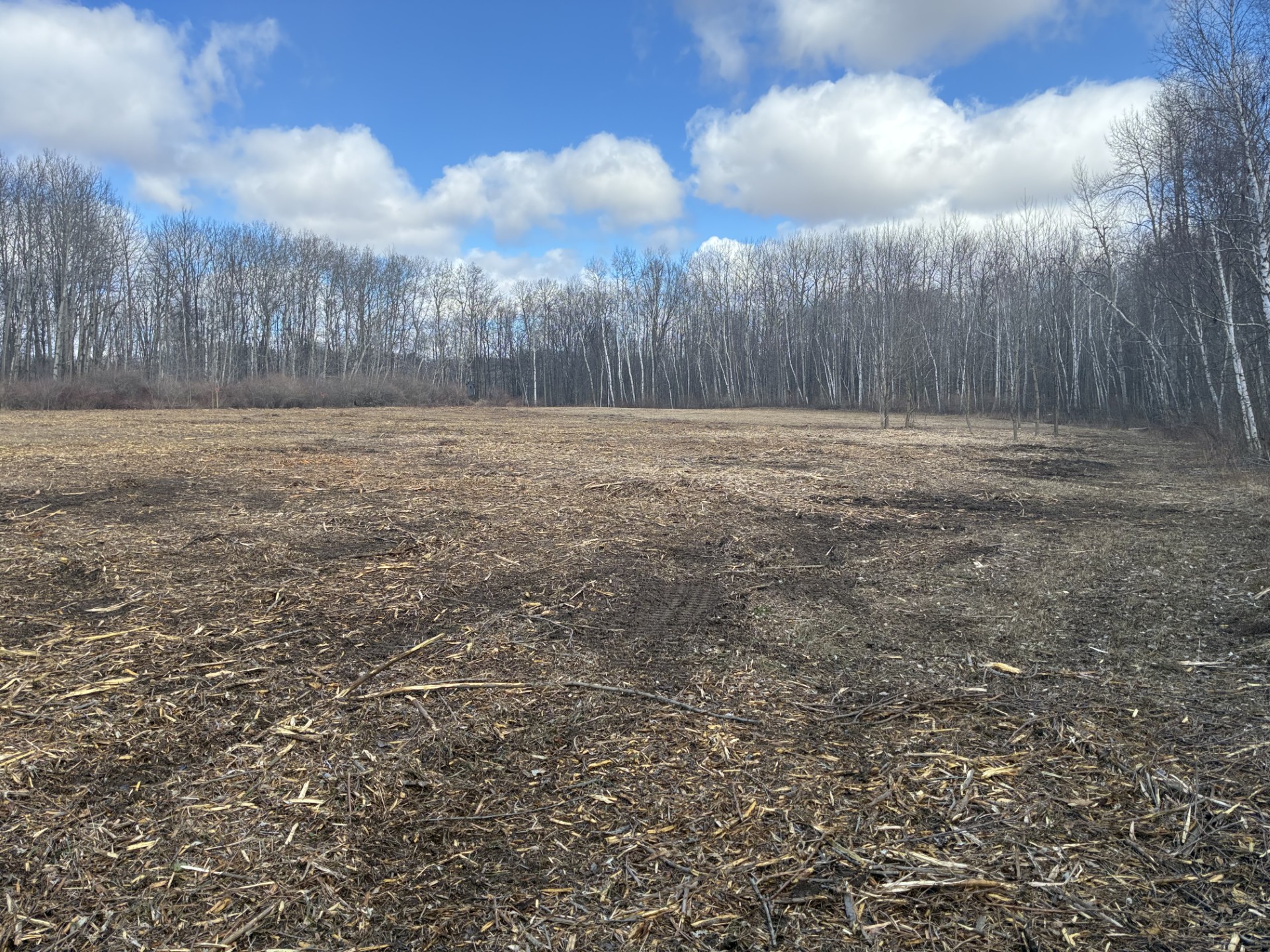
Where dense autumn olive had begun closing in on 10 separate wildlife openings, heavy equipment has mowed the invasive shrubs to the ground. Sunlight can now reach the soil again, allowing native plants more room to grow, and areas that had become tangled with brush look like openings once more.
But the freshly cleared ground is not the end of the project. It is the first step in a five-year restoration process.
Oak seedlings were planted along the edge of the openings in spring 2021. As autumn olive spread, it began crowding the young trees and reducing the grasses, broadleaf plants and low-growing cover that make the openings valuable to wild turkeys and other wildlife.
A contractor used a mulching attachment, also known as a masticator, mounted on heavy equipment to cut through woody growth.
“The contractors initiated the first phase of the project by mechanically treating the autumn olive,” said Ryan Boyer, NWTF director of conservation operations. “They’ll do follow-up herbicide application treatments on any non-native and invasive species regeneration on those units, and then they’re going to plant the openings to a cover crop mixture to help set back the non-natives and then restore it to eventually native prairie.”
The Michigan NWTF Super Fund contributed $9,000 toward the $22,300 project, including $7,500 for contracted work and $1,500 for supplies. Another $13,300 was provided through matching funds.
“The Michigan State Chapter is grateful for the dedication of our volunteers and local chapters, whose banquets and fundraising efforts generate the Super Fund dollars that make these valuable habitat projects possible,” said Jon Gray, president of the Michigan NWTF State Chapter. “This is yet another example of how NWTF members are making a lasting difference for wild turkeys and their habitat across Michigan.”
Mowing created the project’s most dramatic before-and-after moment, but autumn olive is persistent. Without follow-up treatment, it will resprout and begin reclaiming the same ground.
The interspersion of wildlife openings is part of a larger landscape managed to provide healthy habitats for wild turkeys that support varying stages of growth and plant succession. Mature oak and hickory trees provide mast, cover and roosting areas, while adjacent open and early successional habitat offers grasses, insects and concealment closer to the ground.
“This project is focused on meeting wild turkey habitat requirements throughout the entire annual cycle — healthier forests, increased mast production from our oak and hickory species that are going to benefit our turkeys and other wildlife,” Boyer said. “And then, in addition to that, we’re doing the follow-up treatment that’s needed to enhance the brood habitat on the landscape in those forested systems.”
That combination is especially valuable during the breeding and brood-rearing seasons. Hens can use the low vegetation for cover, while hens with poults can feed on insects without moving far from concealment. White-tailed deer, rabbits, songbirds and other wildlife will also benefit from the restored openings.
Because the work is taking place on public land, hunters will be able to see the results as the habitat develops.
The mower uncovered the openings in a matter of days. What grows there next will determine the project’s lasting success, and as the 49 acres move toward native prairie, the newly opened ground can once again become a productive part of the Minden City State Game Area.