Restoring Sounds of History
M.L. Lynch Since 1940 brings iconic calls back to life.
Hurricane Helene caused immense destruction across the Southeast, including downed powerlines, flooding, blocked travel routes and overall unprecedented damage to towns and communities. Many within the surrounding area of the NWTF’s headquarters in Edgefield, South Carolina, were seriously impacted, being without power, supplies and communication for an extended period of time. In fact, the NWTF partnered with a local food bank and used its headquarters as a distribution center to hand out food, water and supplies to those reeling from the devastating effects of Helene.
The storm even caused a pipe to burst within the NWTF’s museum. While the damage overall was minimal in the museum, some of the pieces affected were pieces of turkey hunting’s most irreplaceable artifacts: a collection of Lynch turkey calls tracing back to the earliest prototypes of legendary call maker Michael Leroy (M.L.) Lynch, donated to the NWTF by his nephew Leo M. Lynch in 1996.
“After the storm cleared, I drove over to headquarters to assess the damage,” Harling said. “I’ll never forget the sound of rushing water as I opened the museum doors. My heart sank when I saw that a pipe had burst directly above the Lynch call case. I immediately called for help, and we carefully removed the calls from the display. From that moment on, I began searching for someone with the expertise to help restore these irreplaceable pieces of history.”
Harling searched for a wood conservator capable of restoring the calls without altering them. She found few willing; one even quoted thousands of dollars just to examine the damage. A lead took Harling to the Lynch company itself, now operating in the small town of Boston, Georgia.
When Harling reached out, she received an encouraging response. The Lynch company offered to restore all of the calls at no cost to NWTF.
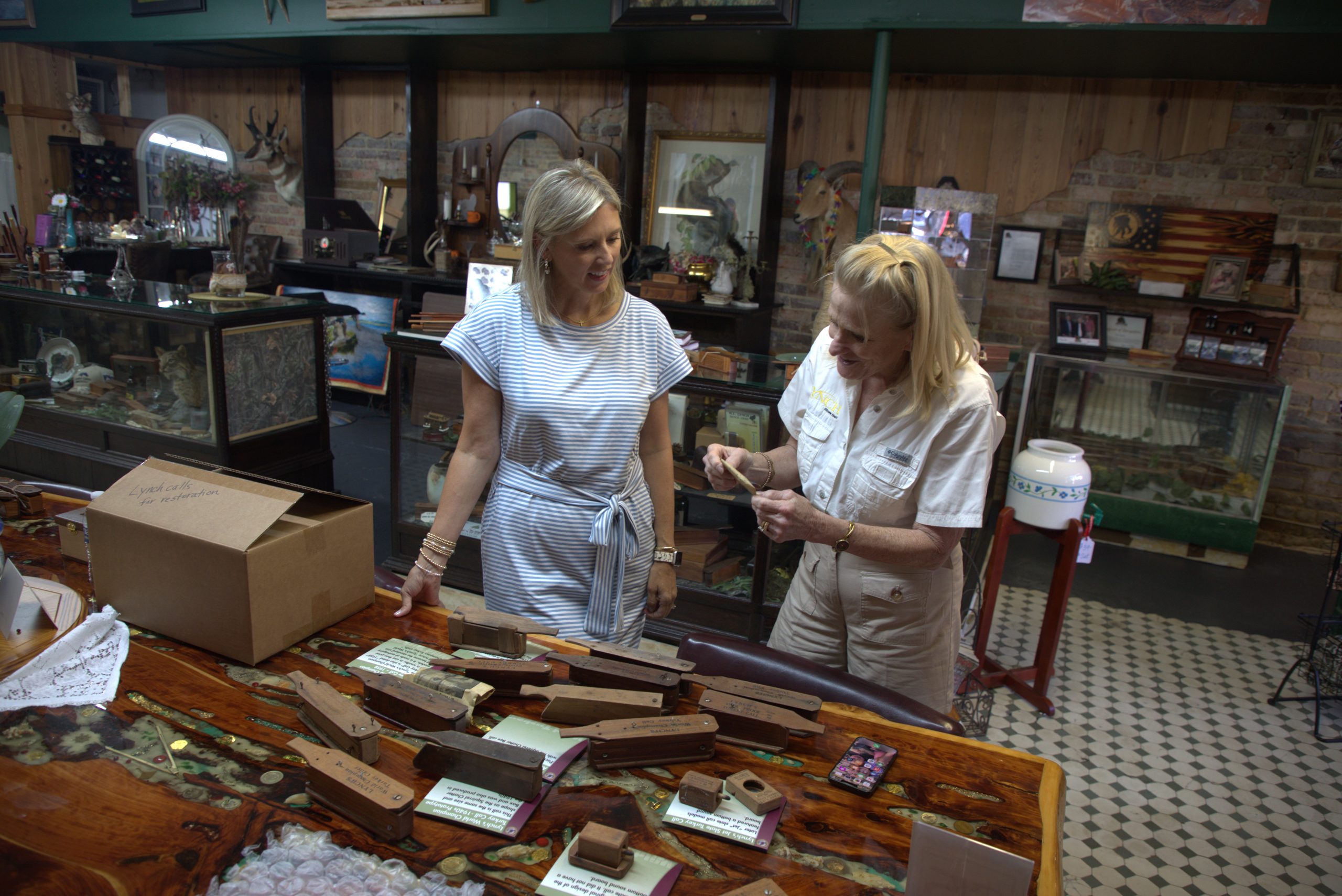
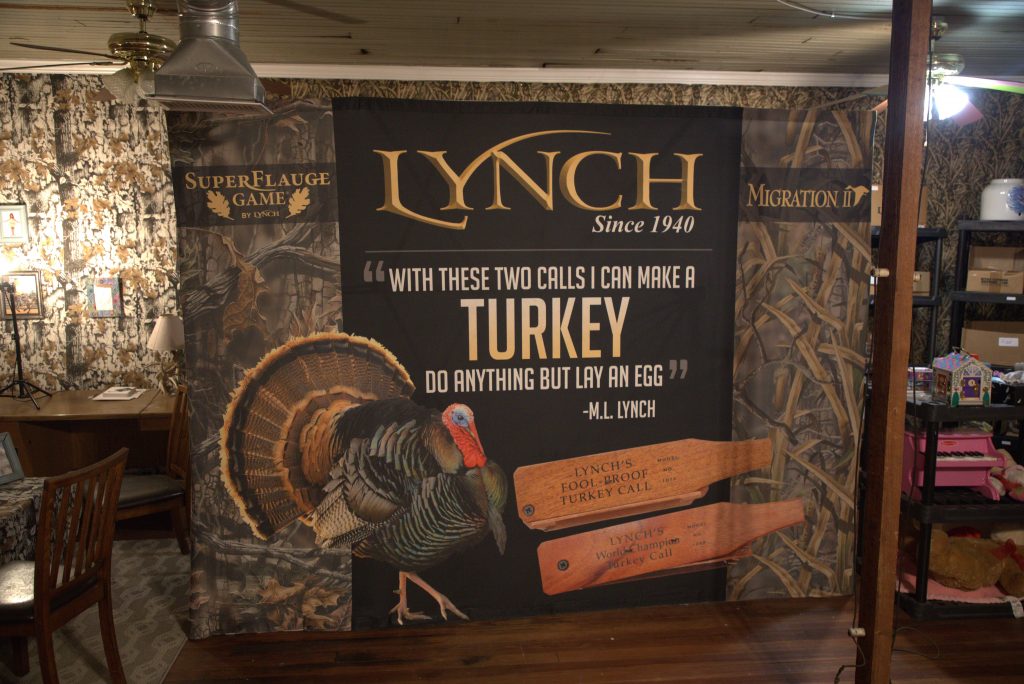
Bringing the pieces of history to the Lynch Since 1940 headquarters in Boston, Georgia, Harling met Johanna Gaines, the company’s general manager, who welcomed her into the company’s unique brick-and-mortar shop. Housed in a building constructed in the late 1800s that previously served as a drug store and post office in the early 1900s, the building’s walls are now lined with turkey calls, photographs, taxidermy, NWTF memorabilia and decades of turkey-hunting lore.
“As soon as we arrived at the Lynch Since 1940 storefront, I felt an immediate sense of home,” Harling said. “Johanna was outside waving, and she greeted us with a warm hug the moment we met. She took her time guiding us through the historic building, rich with charm and stories. We even ventured up to the attic to see some of the treasures she’s discovered over the years. I highly recommend a visit to Boston (Georgia) to visit Johanna at the Lynch storefront!”
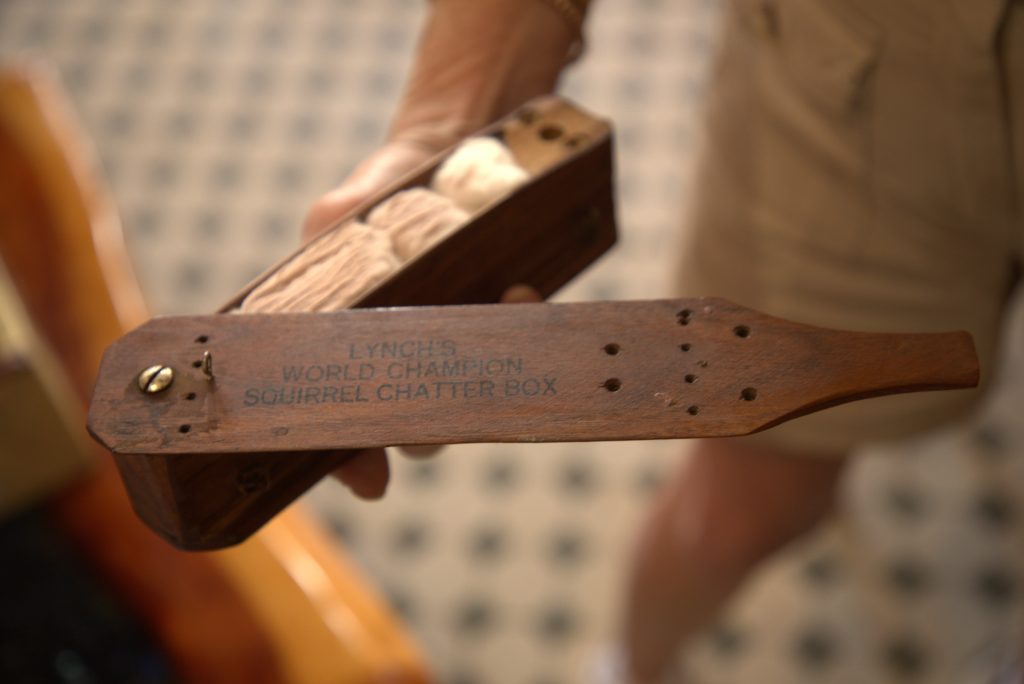
As Gaines examined the calls Harling brought, she was enthralled by the history held in those pieces of wood, and rightfully so, as the story of M.L. Lynch’s calls is entwined in callmaking history.
Accompanying the calls that Leo Lynch sent to the NWTF in 1996 was a letter that told the history of M.L. Lynch through the eyes of his nephew. In that letter, Leo mentioned how, in a 1980s hunting publication, it was stated, “If you own a box call, it is a Lynch, either by brand or by design.”
In essence, if you have ever yelped on a box call, you are a part of the Lynch story.
M.L. Lynch was born in Weir, Mississippi, in 1896. He studied pharmacy at the University of Mississippi and spent years running a family drugstore before his curiosity in turkey call making began.
In his 1996 letter to the NWTF, Leo said that he believed M.L.’s desire to make calls started with an Alabama turkey hunt in Shelby County in the late 1930s. Shortly after, M.L., his nephew Leo and Leo’s dad went on a family turkey hunt, where Leo’s dad was using a cedar call that further inspired M.L. to take up call making.
“Uncle Mike saw this caller and was inspired to try his hand at making a turkey call,” Leo stated in his 1996 letter to the NWTF. “He made one, and even though the result was not what he wanted, he continued to experiment until he achieved the result that he wanted and that we as turkey hunters have enjoyed ever since.”
Over the years, M.L. worked passionately in a small upstairs room above his garage, mixing precision, curiosity and love for the outdoors. Some calls were experimental and did not achieve what M.L. hoped, while others became iconic, such as the Lynch’s World Champion Turkey Call. In his later years, M.L. sold his company to Allen Jenkins around 1970. Lynch passed away in 1974.
The Lynch family’s donation of the original collection to the NWTF museum was meant to preserve our hunting heritage. Now, following the aftermath of Hurricane Helene, the same business under the Lynch name continues its spot in history by bringing those historic calls back to life.
For Harling, this has been a full-circle moment that highlights the passion within the turkey hunting community.
“When I first spoke to Johanna and heard her eagerness to work on the calls, I was reminded of how truly special the turkey hunting family is,” she said. “The generosity shown by the Lynch family reflects their important role in the history of turkey calling and hunting; they’ve been a vital part of NWTF’s success over the years. Together, we’ve worked to preserve our hunting heritage. Bringing the calls home to be restored, so they can be admired, and M.L. Lynch’s story can be shared for generations to come, was a momentous occasion. We cannot thank them enough for their willingness to restore these historic calls.”