Small State, Big Role in Wild Turkey Conservation
Through a collaborative research effort, the National Wild Turkey Federation, the Rhode Island Department of Environmental Management (RIDEM) and the University of Rhode Island are working to better understand wild turkey health and habitat use across Rhode Island’s diverse landscapes.
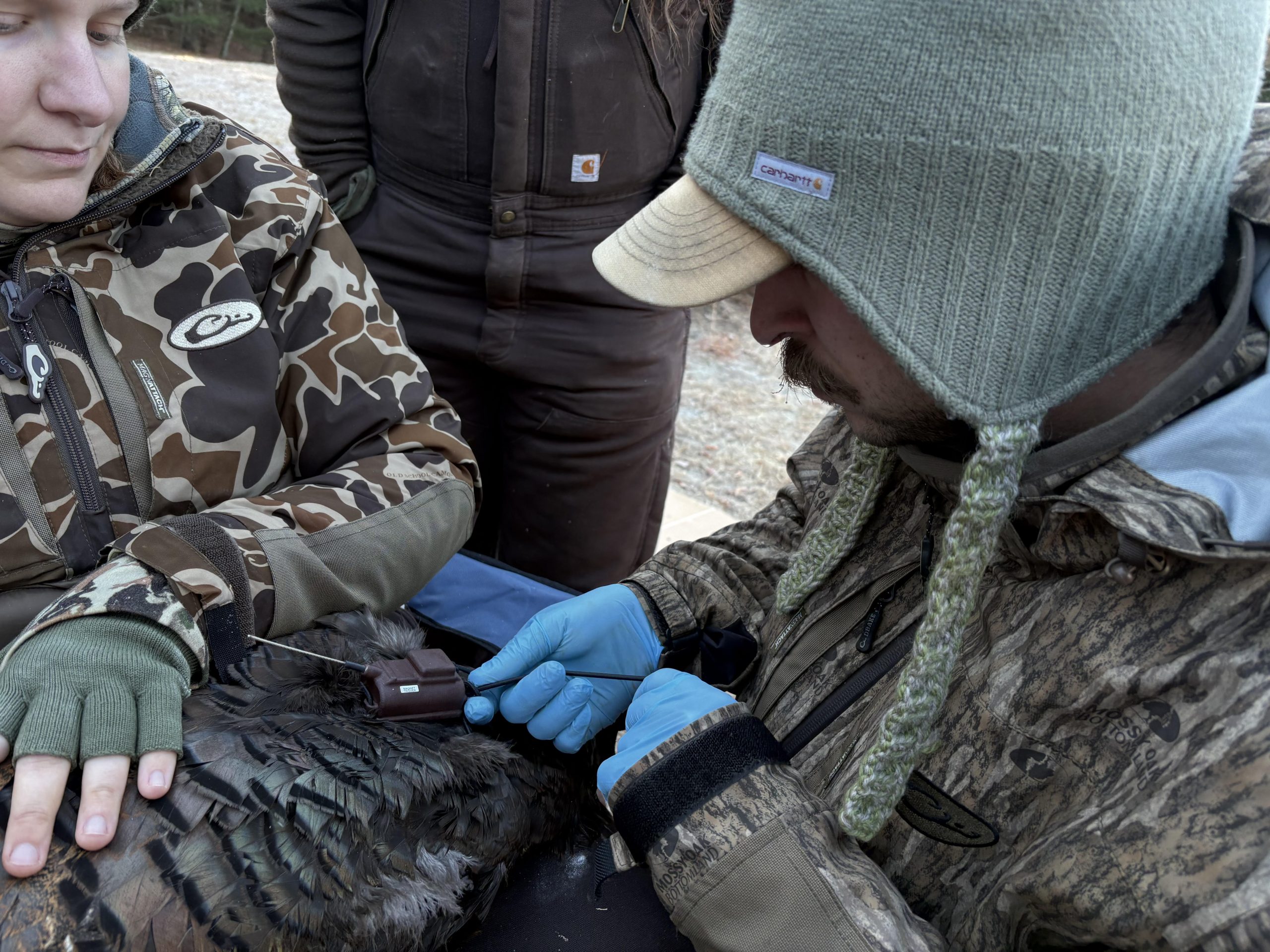
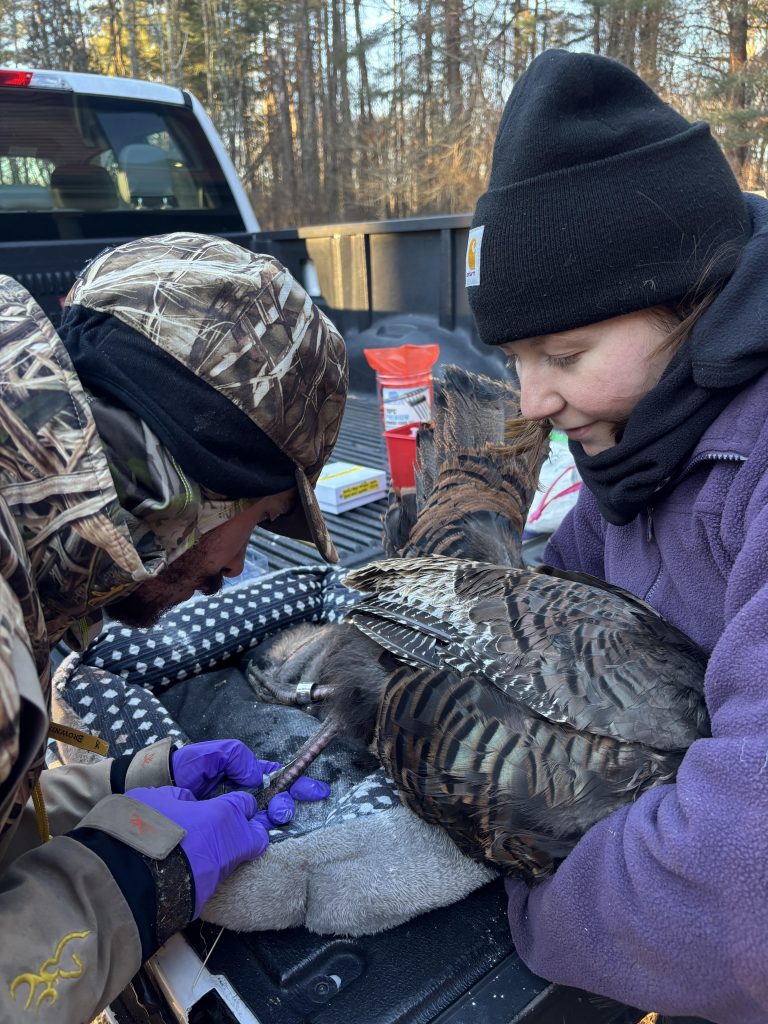
With funding provided by the NWTF’s national Research Grant Program, RIDEM, and grassroots support from the Rhode Island NWTF State Chapter, RIDEM and the University of Rhode Island began their first field season of trapping for a collaborative research project in January and were able to hit their seasonal goal of marking 40 hens and 20 gobblers with transmitters. Researchers collected swabs and blood samples from an additional 98 individuals, surpassing their disease sampling goal of 150 individuals. The research team is aiming to better understand if and how diseases impact wild turkey reproduction and habitat use. Data gathered through this work will help guide management strategies that sustain healthy flocks for the future.
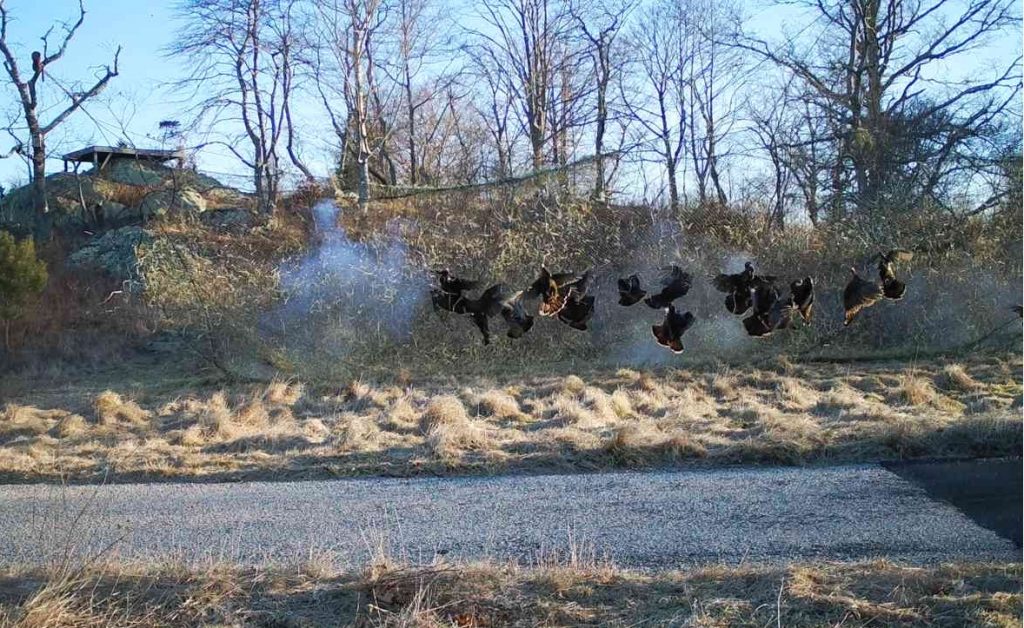
“The trapping season went really well,” said Dylan Bakner, Ph.D., postdoctoral fellow at the University of Rhode Island. “We obtained our capture goals for both transmitter deployment and disease sampling. The disease component is so important because biologists are interested in understanding how common and widespread these diseases are in wild turkeys, and how to better manage potential disease risks or outbreaks across this species’ range. Within Rhode Island, we have such an interesting landscape where we're studying birds across this urban-to-rural gradient. There are concerns about what the turkey densities are in these urban areas versus rural, and how those densities may relate to disease prevalence. There could be all kinds of outcomes.”
While conducting their first collaborative trapping season, the research team noticed that the age ratio of captured individuals was skewed toward juveniles, suggesting positive recruitment from the previous breeding season. Right now, nests are just starting to hatch, and researchers are gearing up to monitor poults during the brooding season.
Graduate students are currently analyzing and testing samples for disease. Beyond that, they will continue collecting and organizing GPS data from transmitters.
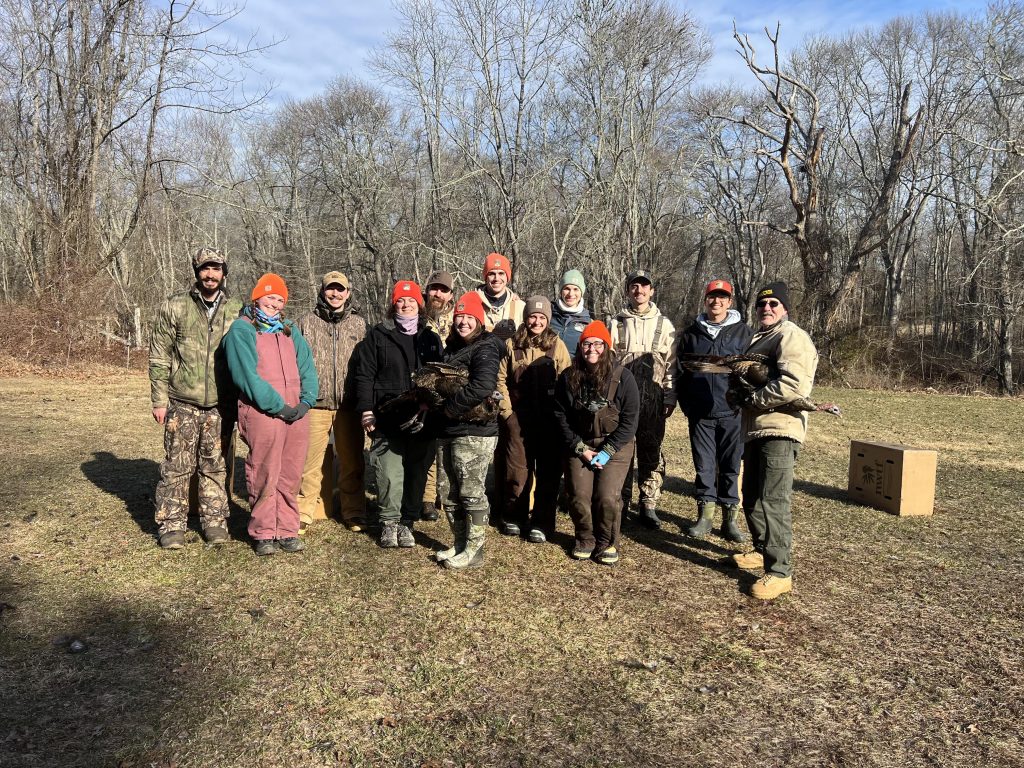
“Supporting collaborative research via the NWTF Research Grants Program with state agencies and universities is crucial for achieving NWTF's conservation mission,” said Patrick Wightman, NWTF national director of wild turkey research. “By investing in science-driven partnerships like this one, the NWTF helps ensure that wild turkey management decisions are grounded in the best available data.”
In addition to trapping birds for research that has management implications within Rhode Island and beyond, RIDEM also trapped birds to assist with on-the-ground restoration work. At the start of 2026, 28 Eastern wild turkeys were safely relocated to support restoration work in East Texas through the Texas Parks and Wildlife Department’s East Texas Super Stocking Program, an effort the NWTF has supported for over a decade. This collaboration highlights how strong wild turkey populations in the Northeast can play a meaningful role in restoring flocks in regions where additional conservation support is needed.
“Wild turkeys completely disappeared from Rhode Island by the 1800s,” said Lizzi Bonczek, RIDEM upland gamebird biologist. “Today, they have returned thanks to careful “trap-and-transfer” programs like this one, and the willingness of other states to share their wildlife resources. Now Rhode Island is returning the favor. The turkeys being relocated came from areas where their numbers have grown beyond what local communities could comfortably support, sometimes causing property damage. Moving them helps reduce those issues for landowners here, while strengthening turkey populations in places like Texas. It’s a practical solution that benefits both people and wildlife — a true win-win.”
Across the country, NWTF, state wildlife agencies and universities continue working together to strengthen wild turkey populations through habitat management, research and strategic restoration efforts. By sharing resources, knowledge and conservation successes across state lines, partners are helping ensure the long-term sustainability of wild turkeys nationwide.