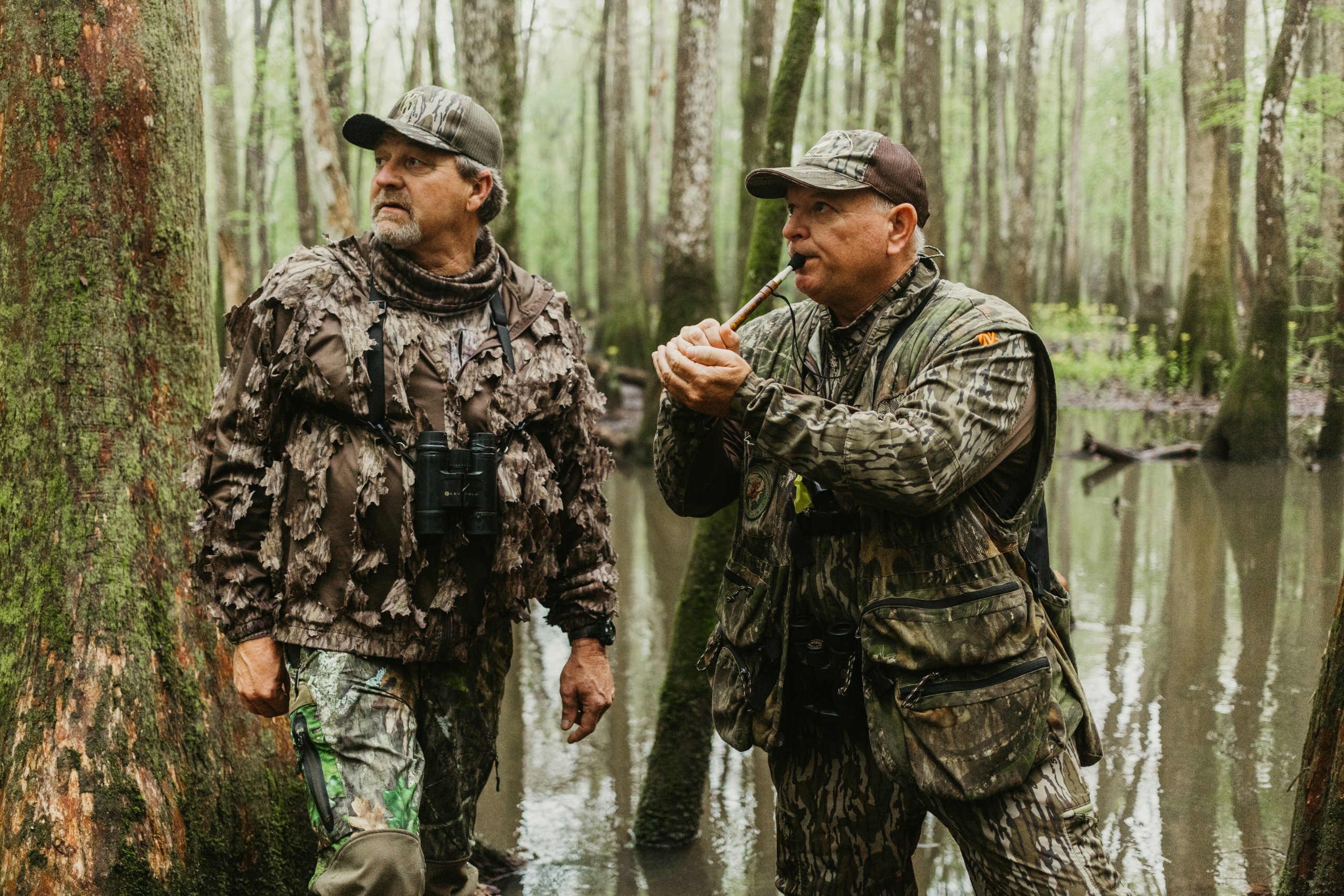
Running Trumpets: An Expert’s Tutorial
Practice and proper technique can help you get the most out of these versatile calls.
Trumpets might be the hottest turkey calls around nowadays, and the reason is no secret: When operated correctly, they sound like a turkey.
That doesn’t mean you can just place one to your lips and sound great. As many new trumpet devotees learn, the learning curve can be tricky. But if you ask veteran trumpet callers like Mark Prudhomme, the process is well worth it.
“I think that a trumpet run correctly is as realistic of a call as there can be,” said Prudhomme, a 17-time Grand National Calling Championships winner, who hand-crafts exceptional trumpets. “Since I started running a trumpet exclusively, I’ve had so many more turkeys come to me that were 100 percent convinced that there was a hen there, and I’ve had way fewer turkeys hang up.”
Trumpets can produce almost any turkey vocalization, but Prudhomme said they’re best for clucking, cutting and yelping — especially soft, subtle sounds.
“A turkey sounds like a turkey at 3 feet, and a trumpet is capable of sounding like a turkey at 3 feet,” he said. “But even though you can call softly with it, I think the sound carries a long way, and the main reason is the sound is directional. If you wanted to get somebody’s attention far away, you’d cup your hands over both sides of your mouth and yell out to them, and you’re directing the sound straight to where you want it to go. That’s what a trumpet does. The majority of the sound goes the direction that you point it.”
Prudhomme said every caller runs a trumpet somewhat differently. Likewise, individual trumpets might require different technique, depending on how they were constructed. The process begins with hand placement on the front end of the trumpet.
“The amount of back pressure with your hands or fingers is determined by how the call is built to run,” he said. “Some calls need more back pressure, some need less. With my call, I put half of my finger over the hole and use my other hand to bounce the sound off of like a sound chamber, making a hollow for the sound to bounce off of.”
Then, there’s the actual operation of the call. Some calls and callers favor the traditional Turpin-style operation, in which the caller “kisses” the call to draw in air. Others, such as Prudhomme, go with the method favored by famed trumpet builder Rev. Zach Farmer, who drew in air using his throat.
“There’s two distinct styles, but I would say there’s really only one true style, and that’s turkey,” Prudhomme said. “It’s kind of like a diaphragm call in that it’s hard to tell people how to do it. You’ve got to play with it, make sounds and refine those sounds until you get what you want.”
Then there’s the matter of air control, which is critical with any air-operated call. Callers use longer pulls of air for yelping and kee-keeing but shorter bursts for clucks and cutting.
“When I cluck, I pull the air abruptly,” Prudhomme said. “It’s more of a popping of the air, not my lips. With soft stuff, I’m pulling air softer, and with loud stuff, I’m increasing the air flow. I’m not smacking harder — just increasing the air flow that I’m pulling or drawing.”
As mentioned, achieving full, polished sound with the trumpet can require lots of experimentation and practice. In fact, Prudhomme said that’s where many aspiring trumpet callers fall a bit short.
“It’s a difficult instrument to master, and I think that people give up on it,” he said. “A trumpet is no different than mouth call, but it’s just as hard or harder. But spend time on it, and you’ll learn it.”