Soft Talk Kills: Why Subtle Calling Consistently Outperforms Loud Yelp Sequences
Every spring, many hunters fall into the same trap: they believe louder calling equals better calling. If the woods get quiet, they crank up the volume. If a gobbler hangs up, they pour on aggressive yelps. If another hunter strikes a bird across the ridge, they try to out-call him. It feels proactive. It feels like pressure. But more often than not, it pushes mature gobblers the other direction.

Soft Talk Kills
During peak breeding phases, subtle calling consistently outperforms loud, high-energy yelp sequences, because it sounds natural, believable and rare. When hens are actively flocked with gobblers, those toms are already hearing excited cutting, assembly yelps and constant chatter from real birds. Loud calling becomes background noise. Worse, it can sound like a hunter trying too hard. What often separates successful hunters from frustrated ones this time of year is understanding that realism beats volume.
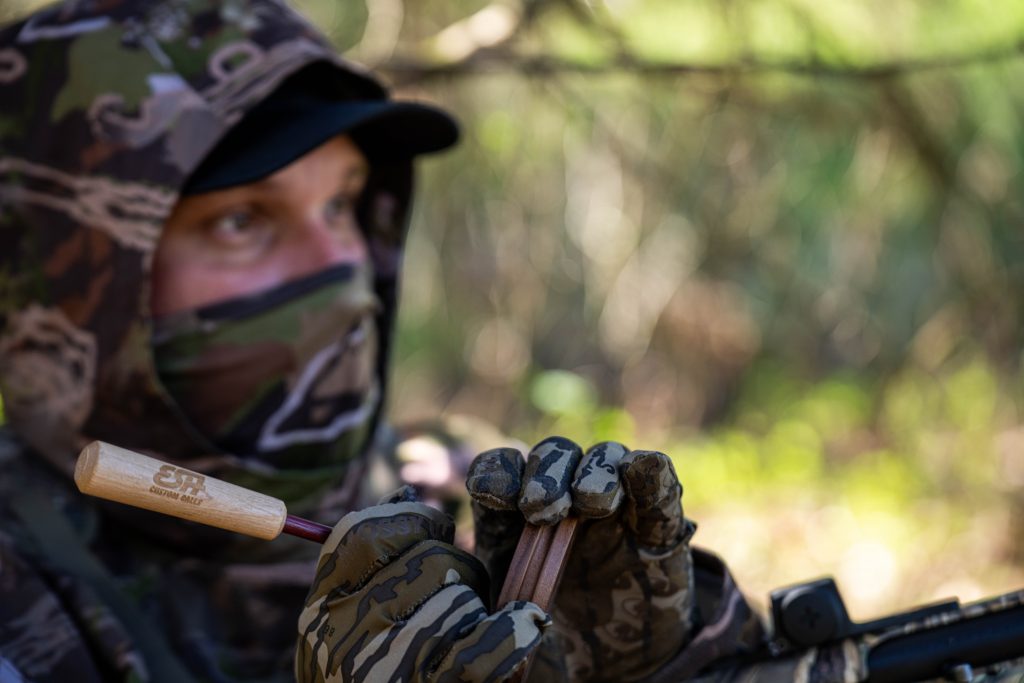
A henned-up gobbler does not need another loud hen screaming from 150 yards away. He already has live hens in front of him. What he notices instead is the quiet, content hen that sounds alone, relaxed and easy to approach. Soft tree yelps, light clucks, subtle purrs and occasional leaf scratching create curiosity in a way aggressive calling rarely can. This is because soft calling changes the emotional tone of the encounter.
Loud yelping can communicate urgency, excitement or dominance. There is a time for that, especially when locating birds, dealing with windy conditions or striking a responsive tom at distance. But once a gobbler knows where you are, continuing to hammer him with volume often gives him no reason to move. He can stand there and gobble all morning. He expects the hen to come to him.
Soft Calling Flips the Script
A few barely audible yelps followed by silence can make a gobbler think the hen is drifting away or losing interest. Gentle clucks and purrs suggest a calm bird feeding nearby. Sparse calling forces him to hunt for confirmation. That uncertainty creates movement.

Many veteran hunters have watched it happen: A bird that ignored twenty minutes of hard yelping suddenly appears silent after two soft clucks and three minutes of nothing. Why? Because subtlety triggered his instincts while volume only fed his ego.
This becomes even more important during peak breeding when gobblers have options. If hens are available, a tom does not need to investigate a loud, demanding caller. But he may slip in quietly to check on a soft, receptive hen. Volume control also matters because conditions in the woods can amplify mistakes. On calm mornings, sound carries farther than most hunters realize. What feels like moderate calling at the tree can blast through a hollow and educate every bird within several hundred yards. Sharp, repetitive yelps from the same location can quickly sound unnatural. Soft calling reduces that risk and keeps your setup believable. Think of calling like decoy placement: less can be more.
The best soft callers are intentional. They do not call constantly. They use cadence, pauses and emotional realism. A light three-note yelp. Silence. A cluck ten minutes later. Leaves scratched by hand. Maybe a content purr when the bird stalls. Every sound has purpose. This kind of discipline is difficult because hunters want feedback. Loud calling often produces gobbles, and gobbles feel like success. But gobbling is not the goal. Closing distance is the goal.
Some of the deadliest spring hunts are nearly silent. If you want to apply this tactic immediately, start every workable encounter one notch quieter than feels necessary. If the bird answers, cut your volume again. Make him strain to hear you. If terrain allows, let silence work longer than feels comfortable. When he gobbles in place, do less, not more.
There will always be mornings when aggressive calling fires up a bird and brings him running. But during peak breeding phases, when toms are surrounded by hens and have heard every loud sequence in the county, subtle realism often becomes the difference-maker. Soft talk kills because it sounds like the kind of hen a gobbler believes he can lose. And no turkey wants to lose that chance.