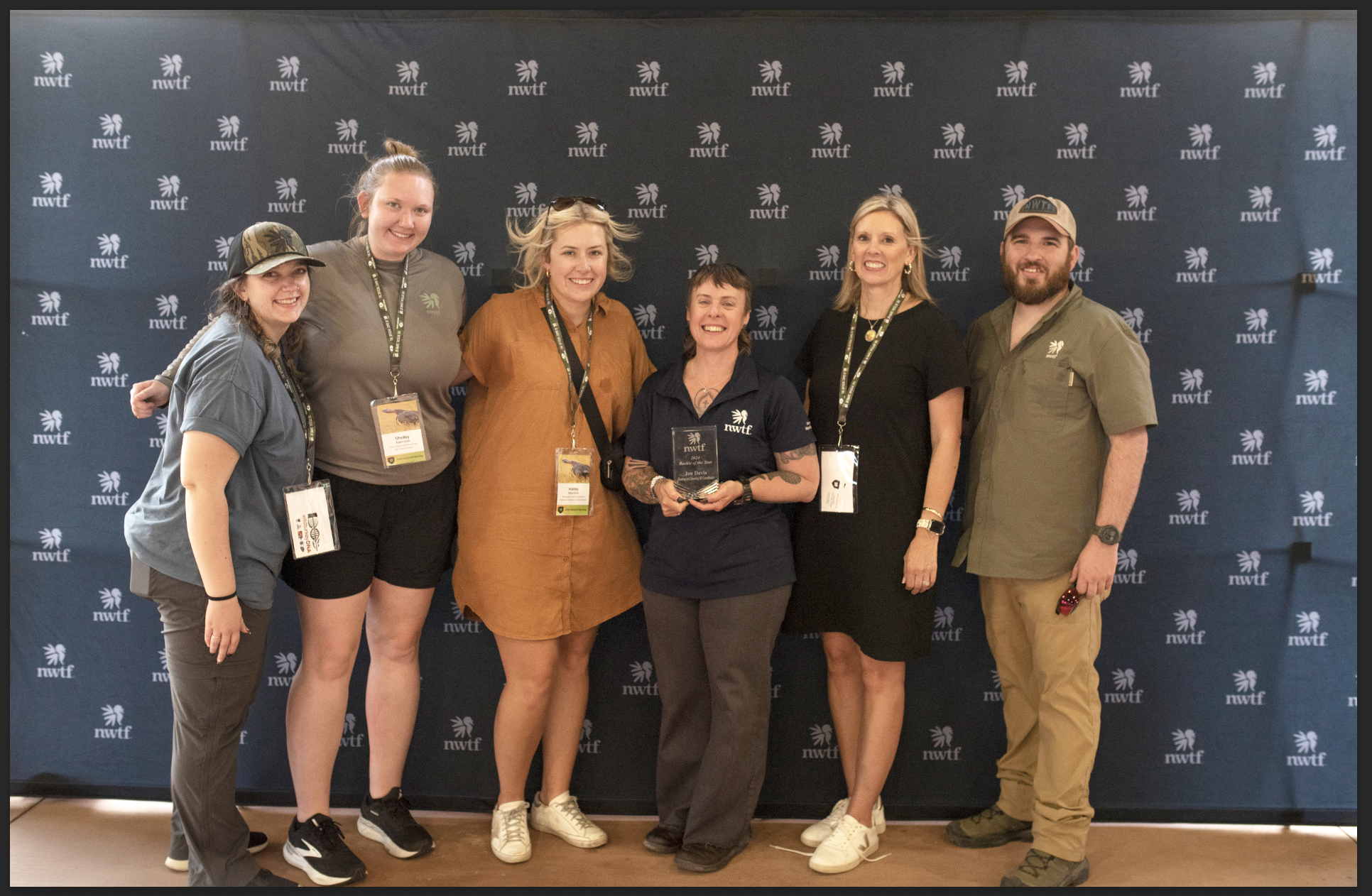
Staff Spotlight: National Shooting Sports Month 2025
Celebrated throughout the month of August, National Shooting Sports Month is a great time to have fun and celebrate various shooting sports. From busting clay pigeons to time at the rifle range, shooting sports are an excellent way to get outdoors.
Created by the National Shooting Sports Foundation (NSSF), National Shooting Sports Month promotes participation, safety and the overall enjoyment of shooting sports. It's also a time to recognize the undeniable impact shooters have on conservation.
Thanks to the Pittman-Robertson Act, a landmark piece of legislation passed in 1937, an excise tax on firearms, ammunition and archery equipment funnels critical funding into state wildlife agencies for habitat restoration, hunter and shooter education and access projects. While hunters have long been celebrated for their contributions through Pittman-Robertson, the growing number of non-hunting firearm owners and target shooters are contributing significantly to these efforts too.
The NWTF continues to expand its efforts to engage folks in shooting sports, as it generates critical funding for conservation and contributes to national R3 efforts. R3 (recruit, retain and reactivate) is a nationwide initiative to boost involvement in hunting and shooting sports.
For National Shooting Sports Month, we are highlighting some of the NWTF staff who work tirelessly to engage people in our outdoor hunting and sport shooting traditions.
Kirsty Paulsen — NWTF R3 Coordinator, Arizona
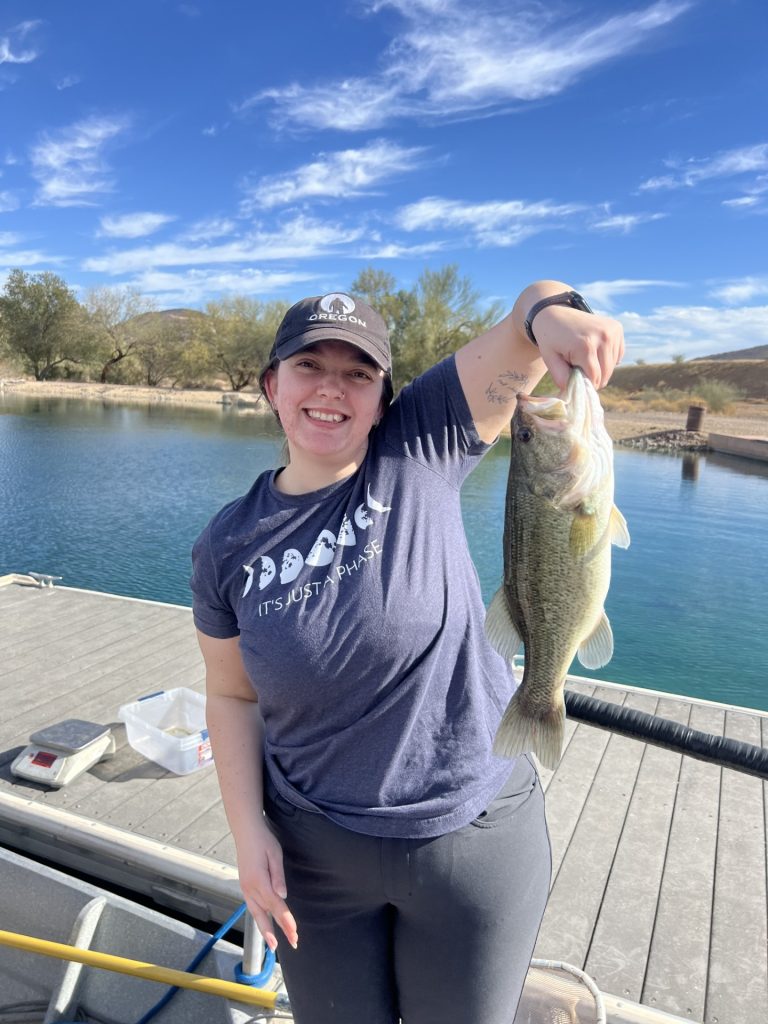
Paulsen holds a unique, cooperative R3 coordinator position between the NWTF and the Arizona Game and Fish Department, which is an innovative role that allows her to collaborate with both the NWTF and the state agency.
“We have a big partnership model in Arizona,” Paulsen said. “I facilitate the partnership of over 150 organizations in Arizona, and they are all actively putting on R3 events. We interconnect our partners so much that a good chunk of our events are not just exclusively NWTF events or Arizona Elk Society events. They are usually collaborative events with multiple partners at any one given event, which helps prevent burnout and continues the legacy of hunting heritage. A big chunk of my job is to build up the next generation to step up and carry on this legacy.”
Preserving our nation’s hunting heritage is a vital piece of the R3 mission, especially since less than 10% of the nation hunts. To accomplish this, Paulsen leans heavily on her personal journey into the world of hunting.
Paulsen didn’t grow up in a hunting family, and she never thought about it. She grew up in southern California and didn’t know anyone who hunted or fished.
“I didn't know a thing about hunting,” Paulsen said. “My teenage perception was like, ‘Who wants to camp in the middle of nowhere for days and kill an animal? That doesn't sound like fun, and that doesn't sound like you're helping the environment.’”
She did maintain a connection to the outdoors by going camping in Yosemite every year, allowing her to fall in love with the outdoors and with biology. She knew in high school she wanted to do environmental education and outreach, but she originally planned to work with outdoor education camps and even thought about working for a zoo or an aquarium.
That led her to study biology at Grand Canyon University, where she took an ecology class that went on a camping trip to a nature preserve owned by AZGFD in northeastern Arizona. That weekend, AZGFD hosted an elk workshop where they talked about elk research with New Mexico State University.
“They talked to us about things like the collars they used to track their [elk] health and their location,” Paulsen said. “They took us out into the field at dusk, and they gave us binoculars, and we got to see the elk, which were massive. We got to hear them bugle, and I got to sit in on a workshop about elk bugling and see these hunters use different tools to create those sounds. I was hooked. It was the coolest thing I'd ever seen in my entire life. But I still didn't feel strongly about hunting.”
Paulsen emphasizes how in the R3 world today, we need those baby steps.
“I learned why conservation matters, how hunting impacts conservation, and I'm just now getting into hunting,” Paulsen said. “I'm going dove hunting in September, and I got my first deer tag this year.”
After she finished her degree, she started a customer service representative position at AZGFD. Wanting to continue working with the state agency, but in an outreach and education role, she switched into the collaborative R3 coordinator position with the NWTF just under a year ago.
“I've had a lot of different jobs over the years, but this is absolutely the highlight of my entire career,” Paulsen said. “I'm really blessed and fortunate to do exactly what I wanted to do.”
Excited to be a part of the NWTF’s growth, she already has big plans for the future of R3. She is hoping to continue reaching out to college coordinators that work with the AZGFD to create programs that will reach the next generation of wildlife conservationists.
“So many partners ask me what are we doing about 18 to 30 [aged people],” Paulsen said. “It’s the most demanded thing. If I could get college kids and post-college adults in that 18-to-30 range to care and participate in wildlife conservation, that's the dream. Once you show people that they have a stake in this, they care so much more. There's something tangible in their hands. If I can help be a part of giving that to them, that's all I want.”
Haley Morton — NWTF Management Assistant
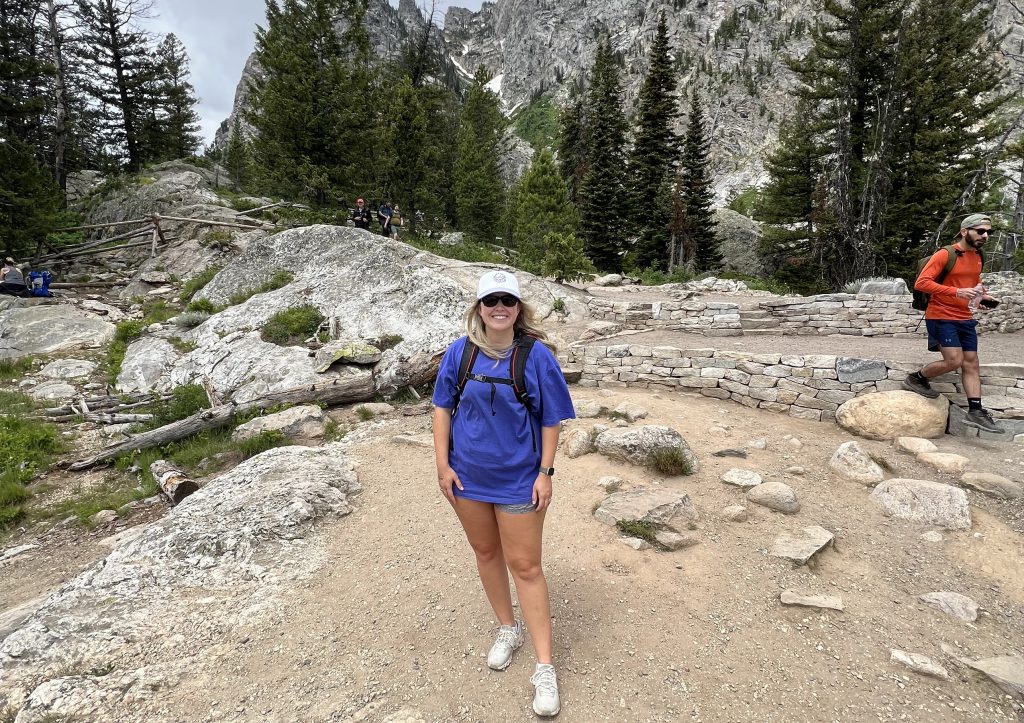
Morton has worked for the NWTF for about a year and says that finding a career in conservation found her first. She went hunting with her dad when she was just three years old. She continued hunting with him, and helping on the family farm taught her about wildlife conservation.
“Seeing my values align with this organization’s values gives a whole new meaning to the work that I do,” Morton said.
Morton assists various departments within the NWTF, including education and outreach, government affairs, conservation and legal services. She has the unique opportunity to work intimately with multiple aspects of the NWTF.
Being a part of the NWTF’s education and outreach team has allowed her to see the direct impact on volunteers.
“R3 is important for giving people access when they didn't know how to get involved in hunting or shooting sports or conservation,” Morton said. “Some just don't know how they could get into the hunting world, and I think it’s so important seeing that R3 brings the knowledge to people that want to get involved.”
Another important aspect of R3 is preserving hunting heritage, which is something Morton holds close to her heart.
“I can't wait to be able to take my little boy out — he's about to be two and a half — and have that full circle moment,” Morton said. “I think about him a lot, in the work that we do, to make sure that the land is still here for him to enjoy and for anyone to enjoy in the future. We need to keep passing it [our heritage] down to the next generation.”
For anyone interested in pursuing a career in the conservation world, Morton’s advice is to get involved as a volunteer and explore what organizations are available to be a part of. Just getting involved with organizations will help you build connections.
Shelby Isensee — R3 Hunting and Shooting R3 Coordinator, Nebraska
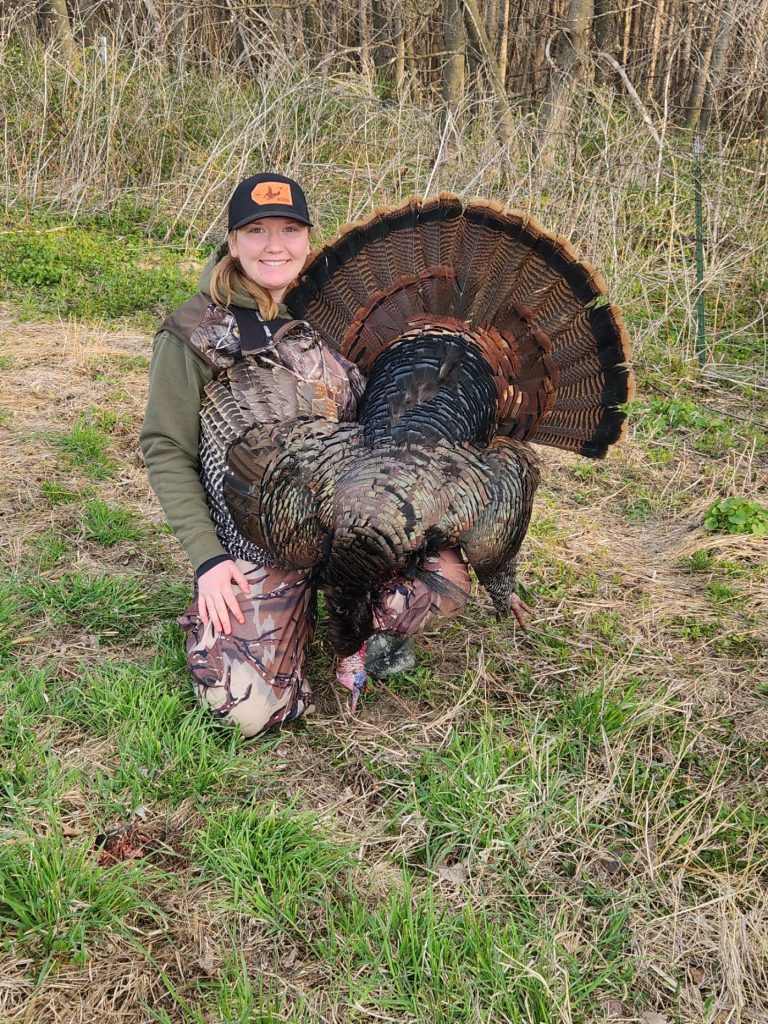
Similar to Arizona, Nebraska Game and Parks Commission has a collaborative R3 coordinator position with the NWTF that Shelby Isensee holds. She helps with planning R3 programs for both the state of Nebraska and nationally for the NWTF.
Before joining the NWTF Flock, Isensee spent two years completing her master’s project which looked at increasing women's hunting and fishing retention. She originally planned to become a game warden with the state, but in her final semester of her natural resource law enforcement undergraduate program at South Dakota State University, she was asked by an advisor to work on a project on women in hunting.
Focusing on how to increase women’s hunting and fishing retention by determining effective aspects of women’s programming throughout the Mountain-Prairie Region (North Dakota, South Dakota, Nebraska, Kansas, Colorado, Utah, Wyoming and Montana) was an important topic to her and who she was growing up. The only other female she ever knew in the outdoor space was her sister.
“I honestly never saw another female in the outdoors doing things like hunting or fishing until I started college,” Isensee said. “When I started this project, I knew that it was something I wanted to change. I wanted to see more representation in the outdoors, instead of having everyone looking at women and telling them they can't do this. I grew up hunting and shooting, and it's still been a fight to get some people to realize that women can do it too.”
Growing up, Isensee was always outside. She remembers a picture of her and her sister in a duck boat when they were three and five, looking up at their dad with their Scooby-Doo lunch boxes. She’s very grateful that he got them in that environment early on.
While she was working on her master’s project, she found that there were many adult-onset hunters that didn’t have a parent or guardian to offer that support. She realized building strong, self-sustaining programs was highly important for adults as well as youth.
Another important part of her project was attending R3 events in each state to learn about different aspects of programming that were working well or needed to be adjusted for future events. She worked to understand what the programming was and would host focus groups to gauge what women liked or didn’t like and what they needed to make the jump into continuing the activity without relying on programs.
“The problem that we found was all these women keep coming to these programs, but they're not going out and doing it on their own,” Isensee said. “They just rely on these programs year after year.”
In response, she made an accessible and interactive map of all the women’s programming in the region to take that barrier away, allowing women to connect with other groups to gain further skill development and confidence.
Her research also found that women want to learn from other women. Isensee began to mentor at outreach events and found that she loved teaching and helping people. She started to realize this was what she wanted to do for the rest of her career.
For those interested in getting involved in hunting and shooting, Isensee recommends finding an organization and going to their programs and events to find a supportive community.
“If you can't find the resources, contact anyone on our R3 team,” Isensee said. “We all have the resources and help each other. With the partnership positions, we can also tap into the state agency side for help.”
As she celebrates six months with the NWTF, Isensee is determined to continue to make her mark. She aspires to build out more retention events to decrease the hunting turnover rate. She also hopes to continue building confidence in younger volunteers and instructors to take over as older volunteers retire.