Standardizing Summer Brood Surveys
What summer brood survey results mean for biologists who use the data and why the NWTF Technical Committee invested in standardized analysis.
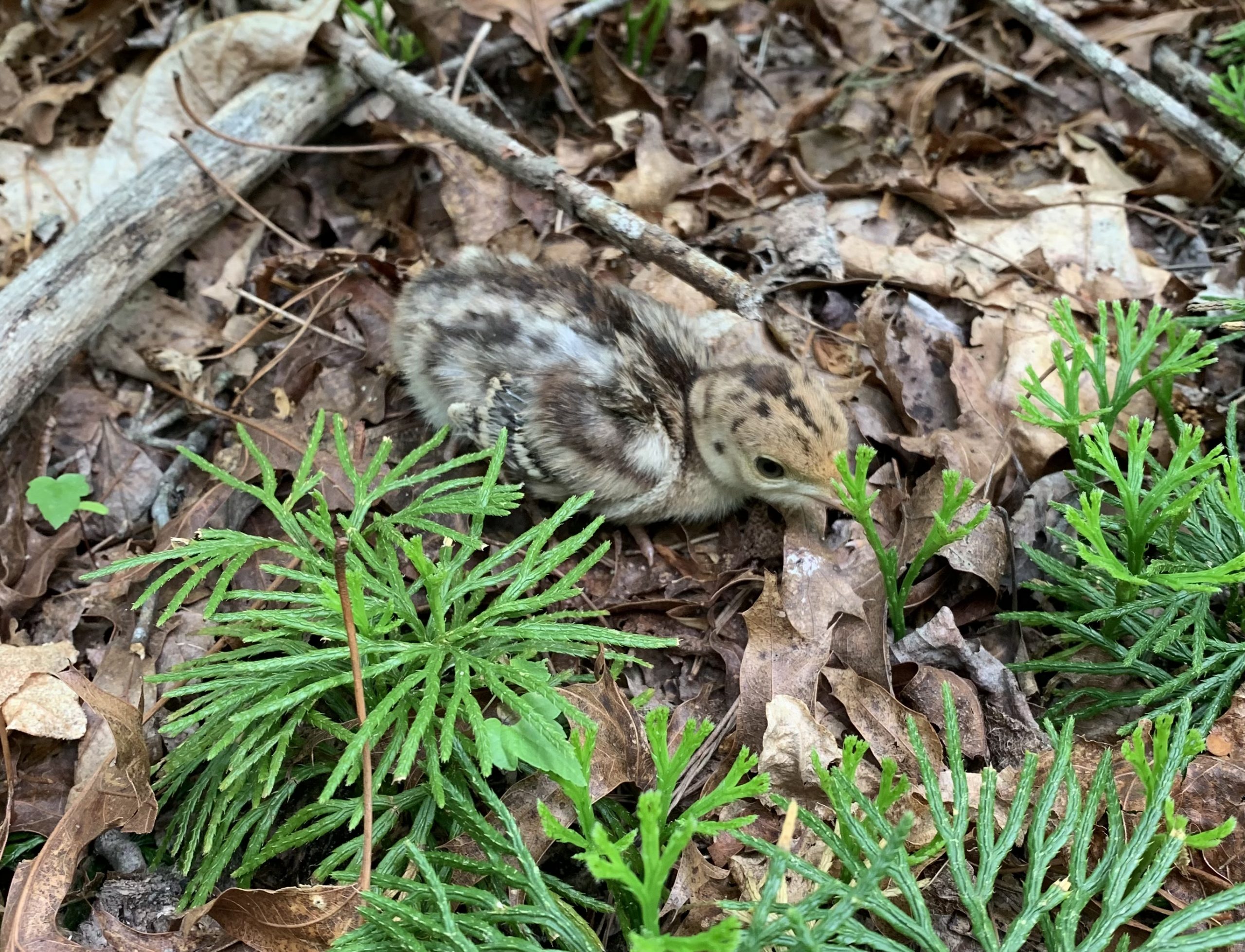
Brood surveys conducted during the summer are how most state wildlife agencies index turkey productivity. These surveys provide important glimpses into a critical part of turkey population dynamics – annual productivity and recruitment of offspring.
Maybe you’ve heard about them or even taken part in them. But what exactly are these surveys and how and why was a standardized analysis process developed?
Annual brood surveys involve participants recording sightings of any wild turkeys (not just hens with poults as the name suggests). Although they can be conducted using established survey routes, most brood surveys by state agencies are designed such that participants record turkey sightings during normal daily activities. Some state agencies just use their own personnel to conduct brood surveys. Others include members of additional state and federal agencies, non-governmental organization personnel and the public. These observations then allow biologists to generate an index of reproduction.
Without an accurate way to assess wild turkey density across large landscapes, biologists have relied on indexes to make assumptions about how populations are faring. An index is simply a related metric believed to correlate well with the metric of interest, in this case reproductive output. The index we use here is a measure of the number of young (poults) produced per female (hen). Since we don’t know exactly what annual reproduction is due to the difficulty and manpower required to estimate it over a large area, agencies rely on this reproductive index to monitor year-to-year trends.
Ideally, we’d like to see this estimate on a statewide or regional level above two poults per hen. On average, at a population scale, this would indicate that most hens are replacing themselves and an additional turkey, making up for males harvested during the spring.
Turkey populations across much of the country, particularly in the Midwest and Southeast, have seen significant declines based on trends in harvest and reproductive indexes. With concern among state agency biologists, land managers, and hunters alike, we’re working to understand what is driving these declines within states and across regions. Though wild turkeys are non-migratory, they do not adhere to state jurisdictional boundaries. Local populations may move freely between states. As such, better understanding of what may be going on across broader regions is important when addressing turkey declines.
About 10 years ago, the Southeastern Association of Fish and Wildlife Agencies’ Wild Turkey Working Group (SEWTWG), composed of turkey biologists across 15 southeastern states, tried to determine what may be influencing declines at a regional level. This led to an effort by Dr. Michael Byrne and Dr. Michael Chamberlain that investigated possible density dependence in wild turkey productivity. When overall population density is low, more hens can access high quality habitat and the average “per capita recruitment” of new birds is high. At high population densities, though, a significant number of hens won’t access quality nesting habitat and may not successfully hatch or raise a brood. Per capita recruitment drops.
During their investigation, it became apparent that, while many states tracked turkey reproduction, survey methods, data filtering and analysis, and the metrics reported differed considerably. This made comparisons and conclusions about regional productivity difficult. Realizing this, the SEWTWG worked to develop a standardized protocol to estimate turkey reproduction, something designed to preserve the robustness of data sets of states with long histories of surveys, while providing an opportunity to compare like datasets between states.
The NWTF Technical Committee ultimately adopted this protocol nationally so that any participating member state could compare turkey productivity across the country. With the amount of data being collected, the technical committee began exploring opportunities to improve data storage, access and analysis products its members could use.. This process is nearing completion and will provide biologists new opportunities to work together across state boundaries to address population declines.
Ultimately, brood surveys provide biologists important insights into how turkey populations are trending through time that are more representative of actual trends across a statewide scale. People often worry about short-term or local level declines based on personal observations, but it is important to understand that these experiences do not always indicate what is going on regionally or nationally.
It’s also important to remember that regulations rarely impact issues at smaller scales. Sportsmen/ women need to inform managers what may be going on in their area so the managers can investigate, but they should implement practical management decisions on their own to address local area concerns. One of the best ways individuals can help managers, if their state permits, is to participate in these types of surveys. While state agency and natural resource personnel often record observations from larger areas of public land (or en route to and from), members of the public often can help fill in gaps across private lands that are seldom observed due to limited access.
Roger Shields, Wild Turkey Program manager with the Tennessee Wildlife Resources Agency, contributed to this report.