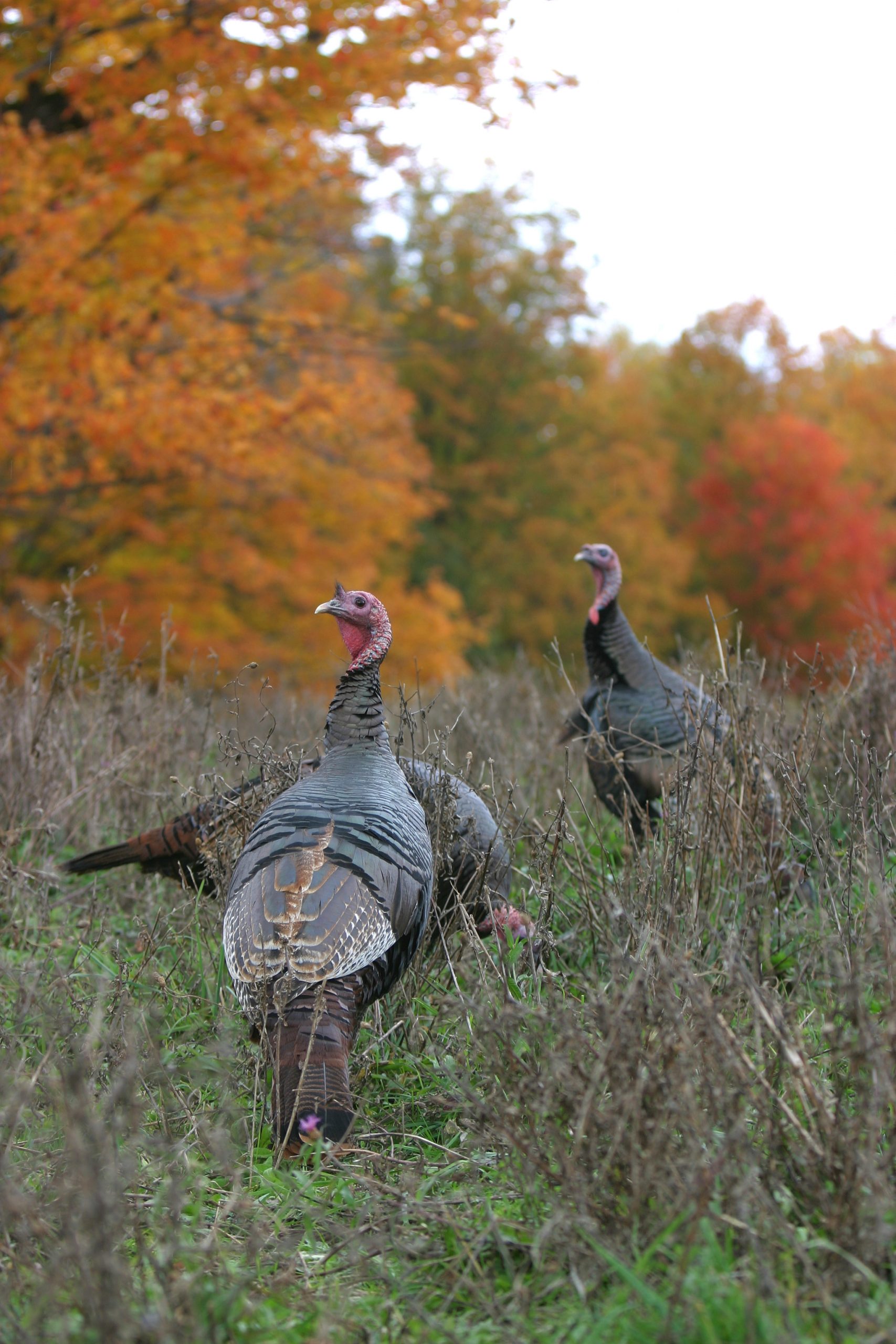
State by State: America’s Wild Turkey Comeback
While July may be over, we are celebrating America’s 250th anniversary all year long, and few stories better reflect the nation's conservation legacy than the restoration of the wild turkey. Once extirpated from much of its historic range because of unregulated hunting and habitat loss, the wild turkey has become one of North America's greatest wildlife restoration success stories through decades of science-based management, dedicated volunteers and strong conservation partnerships. Since its founding in 1973, the National Wild Turkey Federation has helped lead that effort, working alongside state and federal agencies, private landowners and conservation partners to restore habitat, conserve wild turkeys and preserve our hunting heritage for future generations.
Today, the NWTF has a presence in all 50 states. While wild turkeys thrive in 49 of them, the federation's mission extends far beyond a single species, supporting conservation, education and the preservation of our nation's hunting heritage. From landmark restoration efforts and unique subspecies to record populations and decades of dedicated conservation, each state has played a role in one of America's greatest wildlife success stories. As our nation marks 250 years, here's a look at the wild turkey history and NWTF legacy that helped shape conservation across the country.
Listed in order of statehood, these stories trace the wild turkey’s restoration across 49 states, and the NWTF’s conservation and hunting heritage mission continues in all 50.
Delaware (1787)
Wild turkeys were wiped out from Delaware in the late 1800s, but reintroduction began in 1984 with 34 wild-trapped birds from Pennsylvania, New Jersey and Vermont, helping rebuild the state’s population to about 6,000 birds today. A unique part of Delaware’s story is that its first modern turkey hunting season opened in 1991.
Pennsylvania (1787)
Pennsylvania's wild turkey population fell to an estimated 30,000 birds by the 1930s, and a full-scale restoration program by the Pennsylvania Game Commission started in 1956, helped restore turkeys throughout the state and became the model for restoration efforts nationwide. Pennsylvania remains one of the nation’s top turkey hunting states, with hunters harvesting more than 42,000 birds in 2025.
New Jersey (1787)
Wild turkeys disappeared from New Jersey by the mid-1800s, but in 1977 the state's Division of Fish and Wildlife, working with the New Jersey NWTF State Chapter, released 22 wild-trapped birds from New York and Vermont near the Delaware Water Gap. By the fall of 1999, more than 20,000 wild turkeys were thriving in most of the state. Today, New Jersey supports an estimated 20,000 to 25,000 wild turkeys, and the species is found throughout the state.
Georgia (1788)
Georgia was one of the first states to establish an NWTF state chapter following the organization's founding in 1973 and remains a national leader in wild turkey conservation. Records show a strong turkey population across Georgia before European settlement, but due to exploitation and habitat loss, turkeys were nearly wiped out by the 1920s. After years of unsuccessfully releasing pen-raised turkeys in an attempt to reestablish turkey populations, a major trap-and-transfer restoration effort to relocate wild turkeys began in 1973 when populations were estimated at 17,000. Today, Georgia supports an estimated 250,000 to 300,000 wild turkeys.
Connecticut (1788)
Wild turkeys no longer inhabited Connecticut by the early 1800s, but the state’s restoration program began in 1975 with 22 wild-trapped birds from New York and grew into a population of about 35,000 birds today. An in-state trap-and-transfer program began in 1978 and was completed in 1992 after the release of 356 turkeys. One unique fact is that wild turkeys are now found in all 8 Connecticut counties.
Massachusetts (1788)
Wild turkeys disappeared from Massachusetts in 1851, but MassWildlife restored the species in 1972 and 1973 by releasing 37 wild-trapped birds from New York. Between 1979-1996, 561 turkeys from Berkshire County were transplanted to 26 sites in 10 other counties. Today, the commonwealth supports an estimated 30,000 to 35,000 wild turkeys, and they can be found everywhere except Nantucket.
Maryland (1788)
In the 1940s, Maryland's wild turkey population had dwindled to fewer than 2,000 birds, but trap-and-transfer efforts beginning in the 1950s restored the species statewide. Today, Maryland supports an estimated 45,000 wild turkeys, with huntable populations established in every county except Baltimore City.
South Carolina (1788)
In the 1970s, South Carolina’s wild turkey population was estimated at fewer than 10,000 birds, but decades of conservation have helped it rebound to approximately 100,000 birds today. The initial wild turkey restoration effort began in 1951. From 1951 through 1958, a total of 328 wild turkeys were trapped off the Francis Marion National Forest, during which rocket nets were used on wild turkeys for the first time, and restocked in the Piedmont and Mountain regions of South Carolina. In 1976, restoration activities were initiated to restock wild turkeys on private lands in the coastal plains area of the state. A priority list of sites was prepared annually based on habitat characteristics and locations of each site. All participating landowners were required to sign a 10-year cooperative agreement with the SCDNR prior to any turkeys being released. Since 1976, 200 restoration sites have been stocked with 3,451 wild turkeys. All South Carolina counties were opened for spring hunting in 1993. As the longtime home of the NWTF, South Carolina holds a special place in the history of wild turkey conservation.
New Hampshire (1788)
Wild turkeys were removed entirely from New Hampshire for more than a century before restoration began in 1969-75 with 26 turkeys from West Virginia and 25 turkeys from New York. The state now supports an estimated 45,000 to 50,000 turkeys. Hunting began in 1980 with 31 turkeys taken.
Virginia (1788)
Wild turkey restoration began in Virginia in 1929 using birds that were raised at game farms. This technique was largely unsuccessful at growing populations. Trap-and-transfer efforts began in Virginia in 1955, which resulted in the successful restoration of turkeys to southwest and eastern Virginia. Restoration was completed in Virginia in 1993. By 1975, Virginia's wild turkey population had rebounded to approximately 25,000 birds, allowing the state to begin trapping and relocating birds to restore populations across the commonwealth and neighboring states. Today, Virginia supports an estimated 180,000 wild turkeys and has contributed thousands of birds to restoration efforts throughout the eastern United States.
New York (1788)
In the late 1940s, after an absence of between 50 and 100 years, wild turkeys from Pennsylvania began to spread into western New York. In 1959, after reestablishment using game farmstock proved unsuccessful, trap and transfer of wild birds began. Between 1959 and 1993, 1,377 turkeys were moved within New York. Today, New York supports an estimated 180,00-200,000 wild turkeys. Birds from New York helped restore populations in nearby states, including Vermont, New Hampshire, Connecticut and New Jersey.
North Carolina (1789)
Before accelerated restoration took place in 1970, North Carolina's wild turkey population had dwindled to about 2,000 birds, but an aggressive trap-and-transfer program helped restore the population to an estimated 270,000 wild turkeys today.
Rhode Island (1790)
Wild turkeys disappeared from Rhode Island during the 1800s but returned in 1980, when the Rhode Island Department of Environmental Management released 29 Eastern wild-trapped birds from Vermont. Today, Rhode Island supports an estimated 3,000 to 3,500 wild turkeys, proving even the nation's smallest state can sustain a thriving wild turkey population.
Vermont (1791)
Wild turkeys disappeared from Vermont by the mid-1800s before restoration efforts began in 1969 with 31 wild-trapped birds from New York. Subsequent in-state trap-and-transfer efforts hastened the natural expansion of birds. Today, Vermont supports an estimated 45,000 wild turkeys.
Kentucky (1792)
Turkey restoration was started in Kentucky in 1978 and completed in 1997. A total of 6,760 birds were released on 430 sites. Kentucky's restoration program is considered one of the nation's greatest success stories, with wild turkeys now found in every county across the commonwealth.
Tennessee (1796)
By the early 1900s, Tennessee's wild turkey population had declined to fewer than 5,000 birds, but an extensive trap-and-transfer program helped restore the population. Initial attempts at turkey restoration in Tennessee involved the establishment of two game farms for the raising and release of pen reared turkeys in 1935. From 1940 to 1951, the wild turkey season was completely closed, and 3,719 pen-reared turkeys were released on to several different tracts of unoccupied habitat. Not a single self-sustaining wild flock was established using these pen-reared birds. In 1949, the Tennessee Game and Fish Commission (renamed Tennessee Wildlife Resources Agency in 1974) was created and given responsibility for the wildlife of the state. The new wildlife agency started using live-trapped native wild turkeys in 1951. An intensive survey of landowners in 1951-52 reported only 35 sightings of wild turkeys in 18 of the 95 counties. Trapping success in these low populations was very poor. From 1951 to 1970, only 390 turkeys were trapped and moved. With the introduction of the rocket net in 1971 and the refinement of the rocket net box technique in the late ’ 70s, trapping success increased dramatically. Now, Tennessee supports a strong statewide turkey hunting tradition, with about 63,000 turkeys harvested during the 2024 spring season. Tennessee's restoration program was so successful that the state supplied wild turkeys for restoration efforts in several neighboring states.
Ohio (1803)
The wild turkey was wiped out in Ohio in 1904, but restoration efforts began in 1956 with 10 Eastern wild turkeys (six from West Virginia and four from Kentucky), which grew into an estimated 180,000 wild turkeys today. NWTF chapters in the state were created in the 1980s. Since restoration began, Ohio has successfully relocated more than 1,400 wild turkeys to establish populations across all 88 counties.
Louisiana (1812)
After World War II, Louisiana’s wild turkey population was at its lowest point, only 14 isolated flocks totaling less than 1,500 wild turkeys remained throughout the state, but decades of restoration and habitat management have helped the population rebound. In 1962, the Louisiana Department of Wildlife and Fisheries, with support from the NWTF and private landowners, began trapping and releasing wild turkeys into suitable habitat to restore the population. Population numbers today are an estimated 50,000 to 60,000.
Indiana (1816)
Indiana's wild turkey population declined quickly the early 1900s before restoration efforts began in 1956. From 1956 to 1999) more than 2,600 wild turkeys were released at 175 sites with birds relocated from other states. Today, wild turkeys are found in all 92 Indiana counties, and the state continues to monitor population trends.
Mississippi (1817)
Historical reports indicate the wild turkey was abundant throughout Mississippi around 1900. During the 1930’s, restoration efforts by the Mississippi Game and Fish Commission consisted of unsuccessful releases of pen-raised birds. Trapping and releasing native wild turkeys into suitable habitat became a commission priority in 1954. By the 1960s, Mississippi's wild turkey population had fallen to an estimated 2,000 birds, but restoration efforts and intensive habitat management have helped the population rebound to approximately 311,000 wild turkeys today.
Illinois (1818)
By the early 1900s, wild turkeys had disappeared from Illinois. Restoration efforts began in 1959 when wild-trapped turkeys from Arkansas, Mississippi and West Virginia were released in the Shawnee National Forest, which helped rebuild the population. Illinois has become a Midwestern conservation success story, with wild turkeys now occupying all 102 counties.
Alabama (1819)
By the early 1900s, Alabama’s wild turkey population had declined to an estimated 10,000 birds because of unregulated hunting and habitat loss, but restoration efforts have helped it rebound to more than 300,000 birds today. Wild turkey restoration began in 1943, with the release of eight wild turkeys captured from the Salt Springs (now the Fred Stimpson) Wildlife Sanctuary in Clarke County. Stocking within the state continued into the mid-1980s. One of Alabama’s greatest conservation successes is that wild turkeys now occupy all 67 counties, making the state one of the Southeast’s premier turkey hunting destinations.
Maine (1820)
Wild turkeys had been wiped out of Maine by the late 1800s, and attempts to reintroduce turkeys to Maine began in 1942, with the release of 24 birds on Swan Island in Sagadahoc County. In 1977 and 1978, 41 wild turkeys were live trapped from Vermont and released in the towns of York and Elliot. Today, Maine supports an estimated 70,000 wild turkeys, and the species has expanded far beyond its original release sites into nearly every region of the state, including crossing the border into New Brunswick.
Missouri (1821)
Wild turkey numbers exceeded 250,000 in Missouri in the mid-1800s. However, by 1950, less than 2,500 remained in the state. Restoration efforts began in 1954 and were considered complete by 1979. Missouri played one of the most important roles in restoring wild turkeys across North America, supplying more than 5,400 wild-trapped birds to 17 states and Ontario between 1959 and 1987. Today, the state supports an estimated 300,000-plus wild turkeys and continues to be a leader in wild turkey research, habitat management and conservation partnerships.
Arkansas (1836)
The Quapaw Native American tribe in Arkansas, raised and hunted the bird long before the European settlers arrived, but by the mid-1940s, Arkansas' wild turkey population had fallen to an estimated 7,000 birds. Restoration efforts and conservation have resulted in the return of wild turkeys to almost all suitable habitats in all 75 counties. Currently the estimated population of Eastern turkeys in the state is 92,960-113,320.
Michigan (1837)
Wild turkeys were common in Michigan prior to the arrival of European settlers. The birds remained abundant in Michigan south of Saginaw to Muskegon until 1875. Settlers cleared the land for farms and homes, diminishing habitat and heavily exploiting the wild turkey. Michigan's wild turkey population was nearly eliminated by 1900, but birds relocated from Pennsylvania in the 1950s sparked one of the Midwest's greatest restoration success stories. By 1983, Michigan wild turkeys ranged over portions of 8,000 square miles and numbered nearly 15,000 birds. Today, Michigan supports an estimated 200,000 wild turkeys.
Florida (1845)
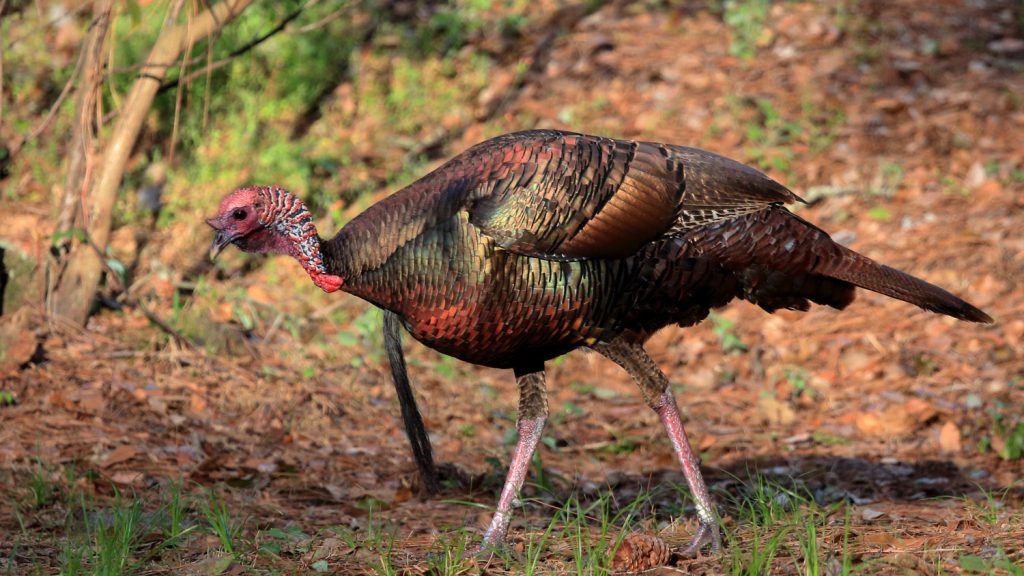
Florida is home to Eastern wild turkeys and the Osceola wild turkey, one of only five wild turkey subspecies in North America and the only subspecies found exclusively within a single state. From 1949 through 1970 (completion date for the statewide wild turkey restoration project), more than 6,000 wild turkeys from remaining populations in Florida were captured, banded and released into suitable habitats throughout Florida.
Texas (1845)
Rio Grande turkey restoration began in 1924, and Eastern turkey restoration began in 1979. Texas is the stronghold of the Rio Grande wild turkey, supporting an estimated 500,000-plus birds today — the largest population of Rio Grandes in North America, but active Eastern turkey restoration is still ongoing with birds being transferred from other states to Texas since 2014. The state is also unique because it is home to three wild turkey subspecies: Rio Grande, Eastern and Merriam's, though Rio Grandes account for the vast majority of the population.
Iowa (1846)
An aggressive restoration effort between 1965 (starting with a release of Eastern’s in Lee County) and 2001 relocated 3,415 Eastern wild turkeys to 245 sites, with many of the original birds coming from Missouri. Today, Iowa supports an estimated 120,000-140,000 wild turkeys.
Wisconsin (1848)
Wild turkeys returned to Wisconsin in 1976 after nearly a century of absence, and today the birds are found in all 72 Wisconsin counties. Restoration of Wisconsin’s wild turkey population began with the initial translocations of 334 wild turkeys from Missouri into the southwestern part of the state. Once their numbers expanded, turkeys were trapped in areas of higher densities and relocated to other areas around the state that had suitable habitat. Hunters registered 47,725 birds during the 2026 spring season.
California (1850)
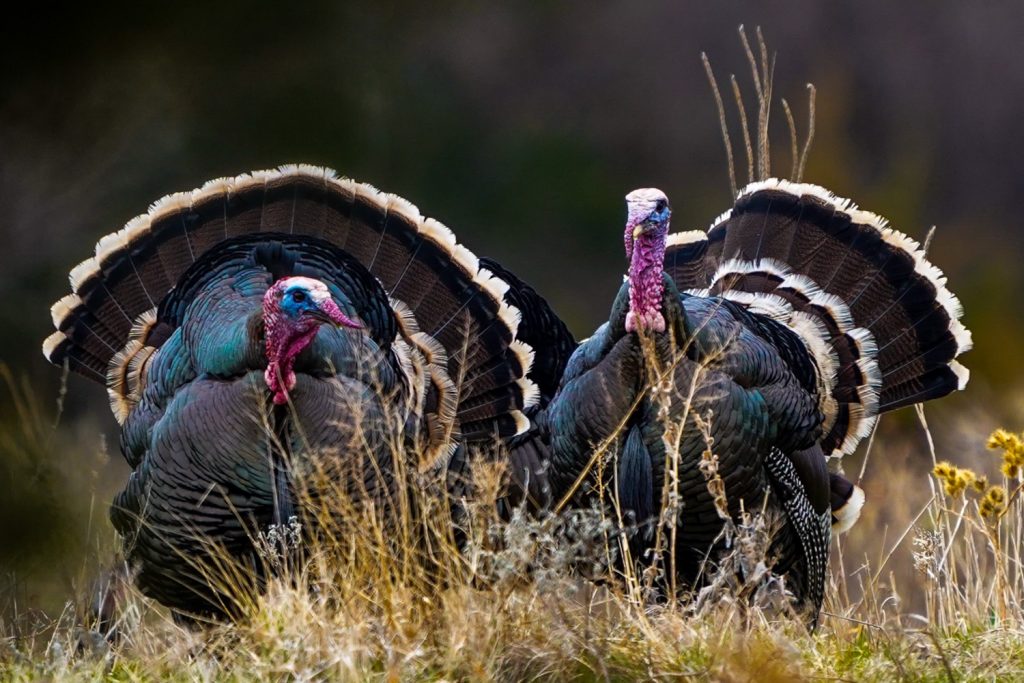
Wild turkeys are not native to California; they were first introduced from Mexico in 1877. From then until 1918, about 1,200 turkeys were released predominately in southern California. In 1928, the California Department of Fish and Game began breeding and releasing game farm turkeys. About 3,350 turkeys were released in 23 counties under this program through 1951. After several unsuccessful stocking attempts, the California Department of Fish and Game successfully established wild populations beginning in 1959 using wild Rio Grande turkeys from Texas. Today, California supports an estimated 250,000 wild turkeys, including Rio Grande and Merriam's subspecies, making it one of the largest turkey populations in the West.
Minnesota (1858)
Historically, Minnesota was the northern edge of the wild turkey range. Birds occurred in limited numbers in southern Minnesota. First attempts to reestablish wild turkey populations began in 1926 using game farm birds. These releases failed as did later attempts involving pen-raised birds. In 1971, the Minnesota Department of Natural Resources traded native ruffed grouse for 29 wild turkeys from Missouri, sparking a population now exceeding 70,000. Today, the turkey population is thought to be stable or increasing across the state with a potential slight decline in the Southeast.
Oregon (1859)
Wild turkeys are not native to Oregon, but the first successful introductions began in 1961 with Merriam’s wild turkeys being released at several sites. While initial results were encouraging, the only population to become established was in Wasco and Hood counties along the Columbia River. In 1975, Rio Grande wild turkeys were obtained from California and released in southwest Oregon. This subspecies was so successful that additional birds were obtained from other states and released in other southwest Oregon counties. Today, Oregon supports an estimated 45,000 wild turkeys, and three North American subspecies — Rio Grande, Merriam's, Eastern — have been introduced, though Rio Grande wild turkeys are by far the most widespread.
Kansas (1861)
Although Rio Grande wild turkeys are native to south-central Kansas, Eastern wild turkeys were reintroduced to the eastern portion of the state beginning in the 1960s. In 1966, Kansas obtained 125 Rio Grande turkeys from Texas in return for 250 lesser prairie chickens. The next year Kansas traded channel catfish to Oklahoma for 85 turkeys. The transplanted birds prospered, and by the 1970’s Kansas began moving birds from flocks in state. In 1974, however, state wildlife biologists decided that Eastern wild turkeys might do well in parts of Kansas and traded greater prairie chickens to Missouri for 30 Eastern wild turkeys. During the 1970s and into the 1980s, state biologists continued extensive trap and transplant activities in the state. They also mixed releases of Rio Grande and Eastern birds throughout the state, which has resulted in a viable population of “hybrid” wild turkeys.
West Virginia (1863)
West Virginia's wild turkey population declined to fewer than 6,000 birds by the early 1900s, with birds occurring primarily in the remote eastern mountains. In 1950, restoration efforts under R. Wayne Bailey began using wild birds. This effort was eventually responsible for re-establishing wild turkeys in 39 counties, which helped rebuild the state’s population.
Nevada (1864)
While wild turkeys are not native to the state, Nevada began introducing wild turkeys in 1962 and 1963. Nevada obtained Merriam’s wild turkeys from both South Dakota and Arizona. Both releases persisted for several years, but eventually numbers declined, and the birds disappeared. In 1986, Nevada obtained 16 Rio Grande wild turkeys from California and released them on agricultural land in western Nevada. In 2025, NWTF helped support the transfer of 90 wild turkeys from Utah to eastern Nevada to supplement struggling populations.
Nebraska (1867)
Nebraska’s wild turkeys were nearly gone by the early 1900s, but restoration efforts beginning in the 1950s helped rebuild the state’s population. Wild turkey restoration began in Nebraska with the release of Merriam’s turkeys from Wyoming and South Dakota in 1959. The population has since grown through additional transplants, and the birds now inhabit most forested regions of the state. Nebraska’s wild turkey population has declined from its peak, but birds remain established across much of the state. Nebraska is unique because it supports three subspecies: Merriam’s, Eastern and Rio Grande wild turkeys, as well as hybrid versions of all three.
Colorado (1876)
After wild turkey populations dropped to dangerously low levels – estimated under 1,000 – in the early 1900s, Colorado Parks and Wildlife began an aggressive wild turkey reintroduction program in the 1980s, helping the state’s population grow to more than 35,000 birds. Colorado is unique because it has both native Merriam’s wild turkeys in the mountains and introduced Rio Grande wild turkeys on the eastern plains. The Merriam’s wild turkeys are native to Colorado and are found primarily in the Gambel’s oak, ponderosa pine, and pinyon-juniper vegetation zones in the southeast and southwest portions of the state. Rio Grandes were introduced starting in 1980 and currently inhabit most of the cotton wood riparian areas in eastern Colorado. Hunting for Rio Grandes is by permit only. The most public land, and therefore the best access for hunting Merriam’s, is in southwest Colorado.
North Dakota (1889)
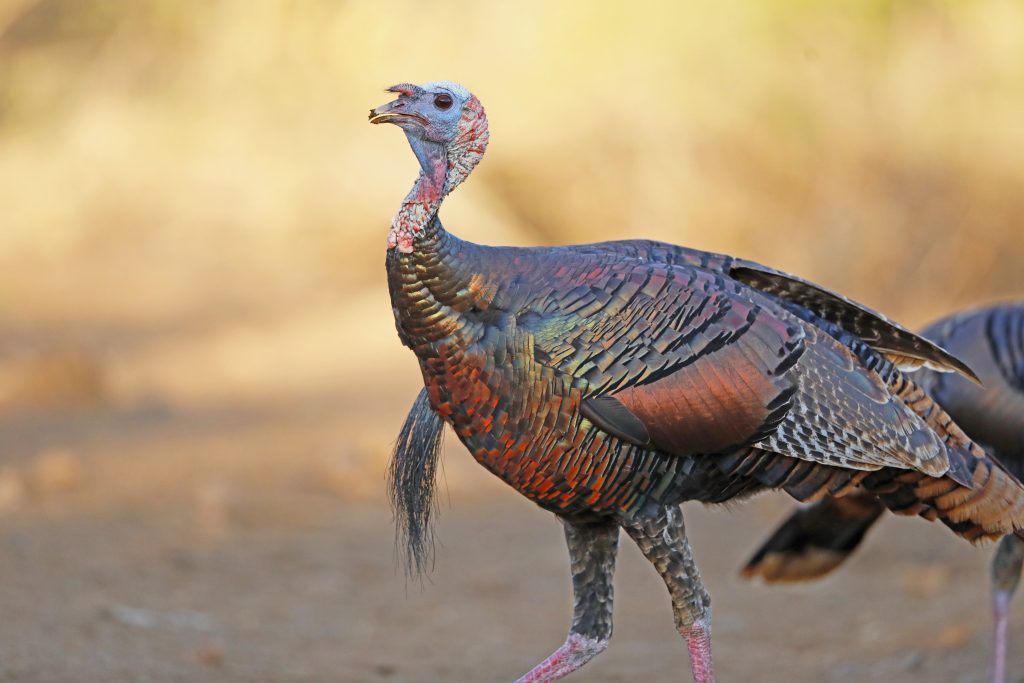
Eastern wild turkeys were first successfully introduced through transfers to North Dakota in the 1950s, though not native to the state. Merriam’s wild turkeys were released in southwestern North Dakota in 1953. North Dakota represents one of the northern-most established wild turkey populations in the United States.
South Dakota (1889)
South Dakota's first successful wild turkey restoration began in1948 with the release of eight Merriam’s obtained from New Mexico. Rio Grande wild turkeys were successfully introduced into northeastern South Dakota in 1972 to 1973 and reached peak populations in the middle 1980s. However, wild turkey populations have declined in northeastern South Dakota since the middle 1980s, and research comparing Rio Grande with transferred eastern wild turkeys was conducted in 1996. Today the state supports a robust population of two subspecies, including thriving Merriam's populations in the Black Hills and Eastern wild turkeys along the Missouri River.
Montana (1889)
Historical records indicate wild turkeys were probably not native to Montana. Successful transplants of wild-trapped Merriam’s turkeys in Wyoming and South Dakota encouraged Montana to undertake a similar project in 1954. Birds were subsequently released near Lewistown in central Montana and in the Custer National Forest near Ekalaka in southeastern Montana. All introductions by Montana Fish, Wildlife and Parks in the state were limited to wild-trapped Merriam’s; however, unapproved releases of Eastern turkeys have taken place in western portions of the state.
Washington (1889)
Wild turkeys are not native to Washington, but the first successful introductions began in the 1960s with Merriam's and Rio Grande wild turkeys relocated from other western states, and, in 1983, the then Department of Wildlife began an aggressive release program. Diversity of habitat in the state allowed for the successful introduction of Rio Grandes and Easterns as well as the re-introduction of Merriam’s. Eastern turkeys are the only subspecies present in western Washington, and you can occasionally find them in Lewis, Pierce, and Thurston counties. Today, turkeys continue to do well in Washington, especially in the eastern part of the state.
Idaho (1890)
Wild turkeys were not native to Idaho but were transplanted during the 1960s, when the Idaho Department of Fish and Game began releasing Merriam's and Rio Grande wild turkeys from neighboring states. Three turkey subspecies have been introduced to Idaho. Today, Idaho supports an estimated 50,000 wild turkeys, with populations established across much of the state's forested and agricultural landscapes.
Wyoming (1890)
Though wild turkeys are not native to Wyoming, stocking began in the 1930s with Merriam's wild turkeys traded from New Mexico for sage grouse. In 1951, turkeys were traded with New Mexico for elk, since the first transplant of birds was successful. The first turkey hunting season was in 1955 for a fall season and 1969 for a spring season. In the 1990’s, Rio Grande turkeys were moved from Oklahoma to Wyoming to establish flocks in breaks and river bottom habitats where the Merriam's subspecies did not fare well. Hunting seasons for Rio Grandes were held for the first time in the spring of 1999. Today, Merriam’s dominate, Rio Grande wild turkeys are in lower numbers, and hybrid subspecies are location dependent.
Utah (1896)
Wild turkeys were absent from Utah until 1952, when the Utah Division of Wildlife Resources began transplanting Merriam's wild turkeys from Colorado. However, historical and archeological evidence suggests that wild turkeys co-existed with Native Americans in Utah. Today, Utah supports an estimated 33,000 to 38,000 wild turkeys, and in 2025 the state partnered with the NWTF to relocate 90 birds to Nevada, helping strengthen turkey populations across the West.
Oklahoma (1907)
Oklahoma is one of the few states where Rio Grande wild turkeys are native, and today the state supports an estimated 94,000 wild turkeys across its prairies, and river bottoms. Oklahoma historically had a large turkey population. As with many states, turkeys in Oklahoma were nearly eliminated by the end of the Dust Bowl era. Rio Grande restoration began in the late1940s in northwestern Oklahoma. Eastern turkey restoration began in the early 1970s in southeastern Oklahoma.
New Mexico (1912)
Early settlement activities in New Mexico caused many of the state's mountain ranges to lose turkeys. Thanks to the efforts of J. Stokely Ligon, and his developments in live-trapping techniques between 1928 and1932, all of the suitable mountain ranges were reoccupied. Ligon estimated the state’s low point in wild turkey population was 21,000. Through restoration efforts and continued conservation, New Mexico now supports three wild turkey subspecies — Gould's, Merriam's and Rio Grande — making it one of the nation's most diverse turkey hunting destinations. New Mexico is one of only two states the Gould's wild turkey inhabits.
Arizona (1912)
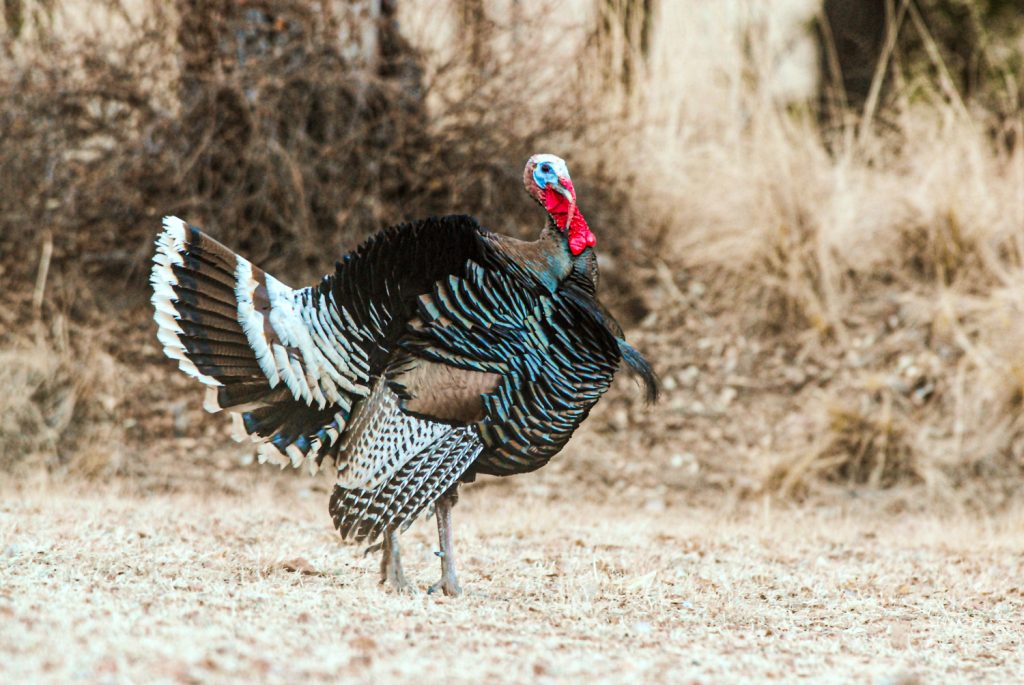
Arizona has two subspecies of wild turkey — Merriam’s and Gould’s. Merriam’s wild turkeys are found throughout the ponderosa pine forest in Arizona. Arizona is one of only two states that is home to the rare Gould's wild turkey, which disappeared from the state by the 1920s because of overhunting. Through a decades-long partnership among the Arizona Game and Fish Department, NWTF and conservation partners, Gould's turkeys were reintroduced from Mexico beginning in 1983 and have since expanded enough to help restore populations in neighboring New Mexico.
Hawaii (1959)
In the 1960s, Hawaii received approximately 400 Rio Grande wild turkeys from Texas, which were released across the state's six major islands. According to Texas Parks and Wildlife records, these translocations occurred over three years: 1961 (31 males, 91 hens; 122 total), 1962 (46 males, 178 hens; 224 total), and 1963 (25 males, 77 hens; 102 total). All birds originated from the same private ranch in south Texas. Today, huntable populations are established primarily on the Big Island, where the birds have adapted to volcanic slopes and high-elevation grasslands.