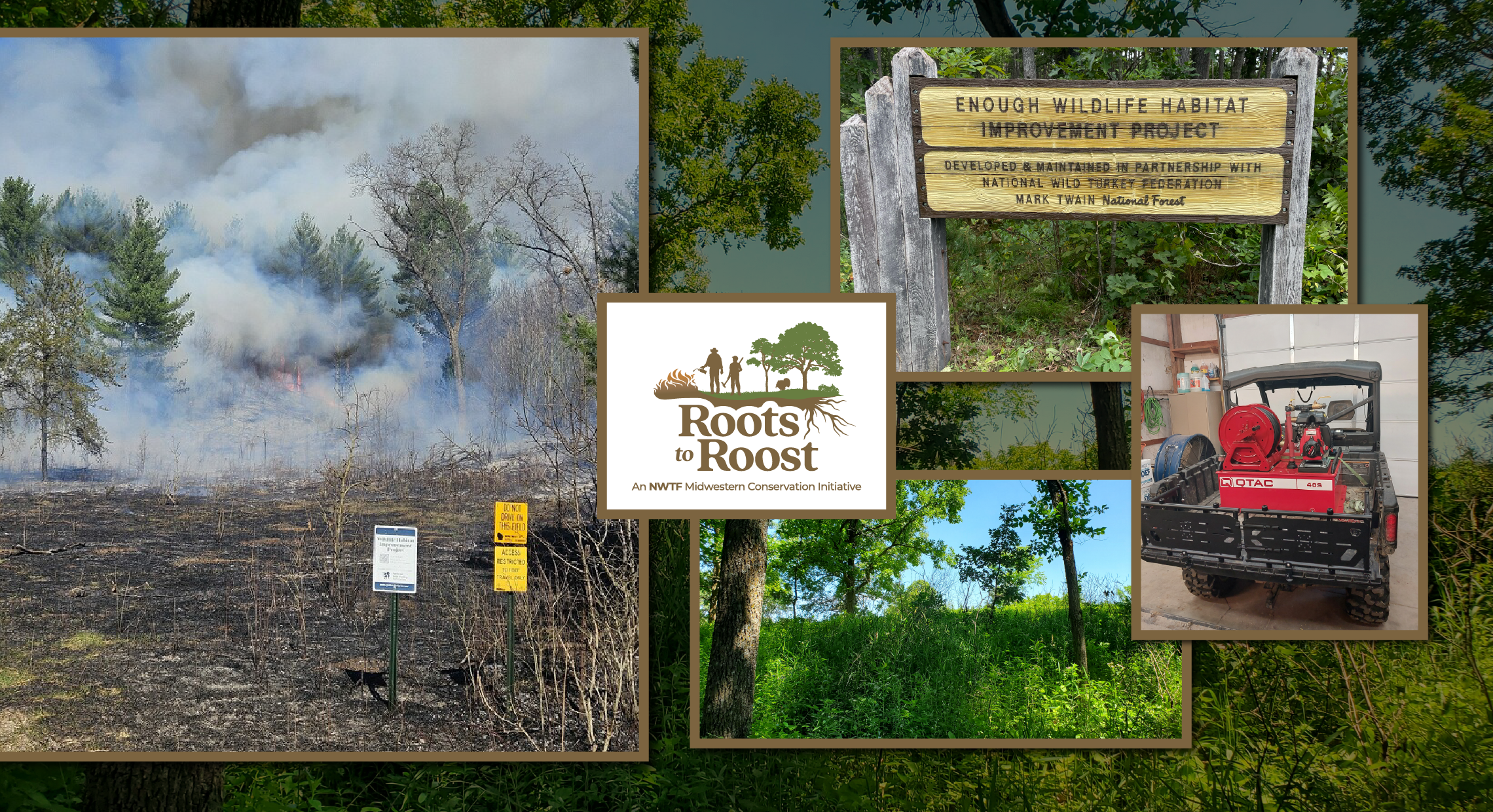
Take a Conservation Road Trip Across the Roots to Roost Region
What does conservation actually look like? Across the Midwest, it might look like sunlight reaching an Iowa forest floor after invasive honeysuckle is removed. It might be a Missouri field once crowded with brush now buzzing with insects and offering wild turkey broods room to forage. Or it might be 158 acres in Indiana transformed from private agricultural ground into habitat the public can enjoy.
Those are the kinds of changes the NWTF’s Roots to Roost Initiative aims to accelerate across Illinois, Indiana, Iowa, Kentucky, Michigan, Minnesota, Missouri, Ohio and Wisconsin. Over the next decade, the initiative is focused on restoring and enhancing grasslands, savannas, forests and other habitats through practices including prescribed fire, forest management and native plant restoration, while building greater understanding of why that work matters.
This Conservation Week, don’t just read about the work. Pick a stop, plug in the coordinates and go see it. After all, Midwesterners rarely need much of an excuse for a good road trip.
Here are eight places where conservation is already taking shape across the Roots to Roost region.
Kentucky: Taylorsville Lake Wildlife Management Area
The drive into Taylorsville Lake WMA takes visitors into wooded central Kentucky, where forest covers more than 90% of the wildlife area and rolling ridges and steeper hills meet the shoreline of Taylorsville Lake.
Here, a $5,000 NWTF investment is putting fire on the ground — in a good way.
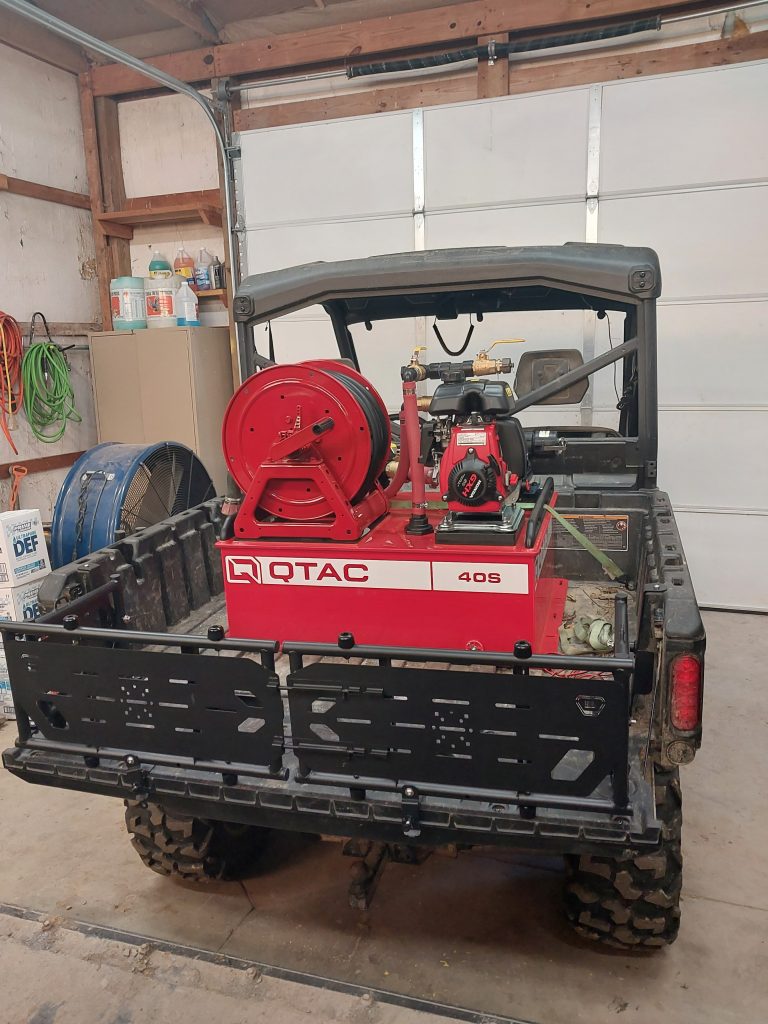
The Kentucky NWTF State Chapter helped the Kentucky Department of Fish and Wildlife Resources purchase a 45-gallon prescribed fire unit that is based at Taylorsville Lake WMA and can be used on five central Kentucky wildlife management areas and elsewhere when needed. Since its purchase, staff estimate the unit has helped support more than 1,500 acres of prescribed burning each year.
Prescribed fire encourages the early successional habitat wild turkeys use for nesting and brood rearing. At Taylorsville Lake, it has also played a major role in approximately 2,000 acres of oak savanna restoration on the Briar Ridge area, where staff have reported increases in both the number and size of turkey broods.
The equipment is doing more than burning acres. It has been taken to school events and used to teach others about prescribed fire and its role in wildlife management.
That makes Taylorsville a fitting example of Roots to Roost in action: conservation delivery paired with education about the tools used to create and maintain quality habitat.
Visit Taylorsville Lake WMA: 38.01459, -85.22883
Michigan: Turkey Tracts
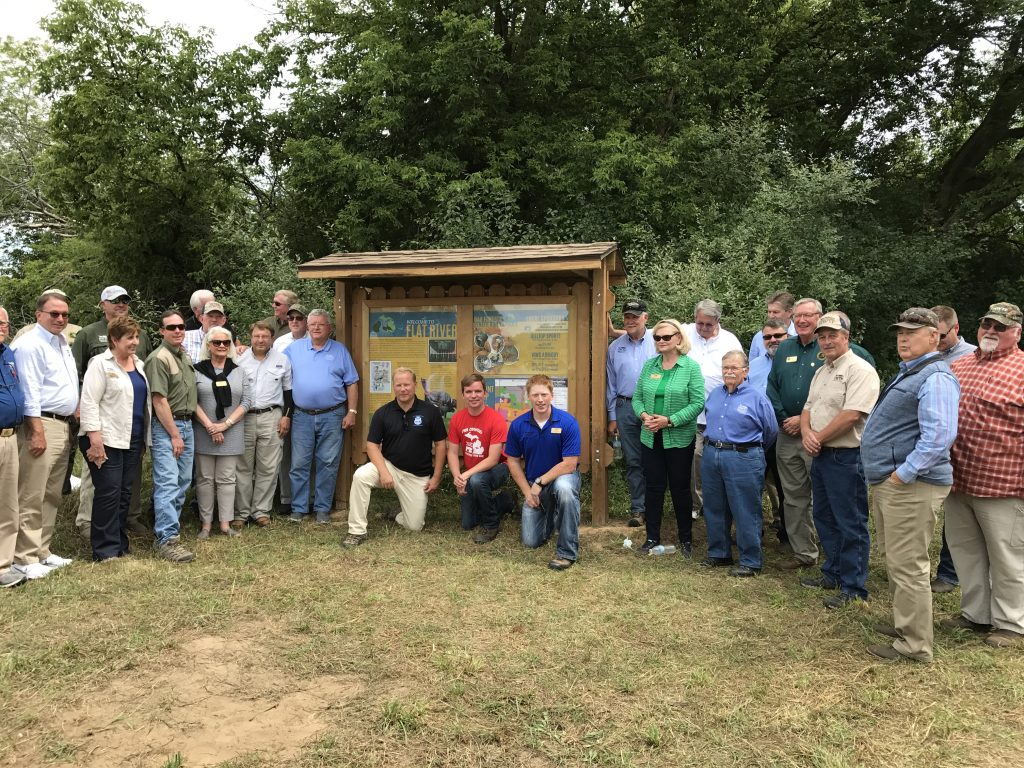
The featured stop takes visitors to the Flat River State Game Area in southern Michigan, where oak woods are broken by managed grassy openings — exactly the kind of habitat variety wild turkeys can use throughout the year.
It is also a good place to see what Michigan’s Turkey Tracts program is all about.
Developed through a partnership between the Michigan NWTF State Chapter and Michigan Department of Natural Resources, Turkey Tracts highlight public hunting access while promoting active conservation and management for wild turkeys and other wildlife.
NWTF-supported work on these lands has included improving forest stands to encourage oak regeneration, enhancing wildlife openings and restoring native prairie.
Turkey Tracts can also be found at Allegan, Barry, Tuscola and Sharonville state game areas and Holly State Recreation Area, giving visitors several opportunities to see managed turkey habitat across Michigan.
Visit the featured Turkey Tract: 43.14814, -85.17068
Find more Turkey Tracts:
Illinois: Bowman Bottoms Road
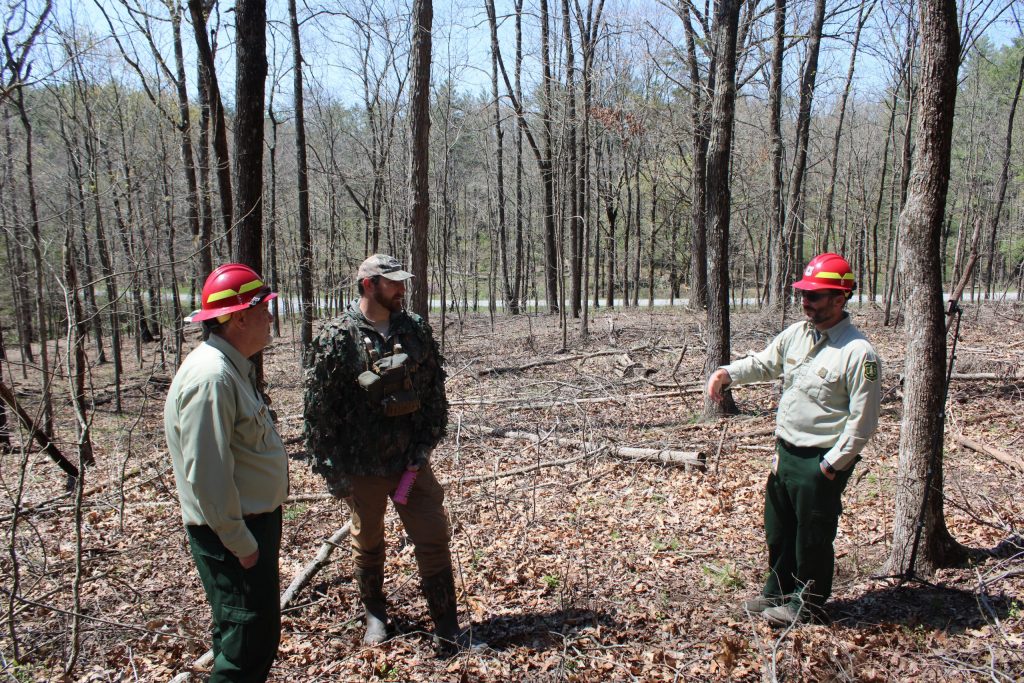
Head toward Vienna and southern Illinois begins to look a little different from the farm country many people picture when they think of the state. The surrounding Shawnee National Forest is a landscape of oak-hickory woods mixed with open lands, wetlands, canyons and bluffs.
Along Bowman Bottoms Road, visitors can see the results of nearly a decade of partnership between NWTF and the USDA Forest Service.
Through stewardship agreements, the partners have influenced or conserved more than 6,000 acres across southern Illinois. More than 700 of those acres are within the Bowman Bottoms project area. Work there has focused on forest stand improvement and controlling non-native invasive species.
The goal is to give the region’s native oak-hickory uplands room to thrive. Without active management, shade-tolerant species such as maples, elms and American beech can gradually change the character of those forests.
Forest thinning and active management are among the practices Roots to Roost is specifically designed to expand across the Midwest.
See the work along Bowman Bottoms Road:
37.49272, -88.89076
37.49596, -88.89117
37.51059, -88.88401
37.51248, -88.87401
Iowa: Red Rock Wildlife Management Area
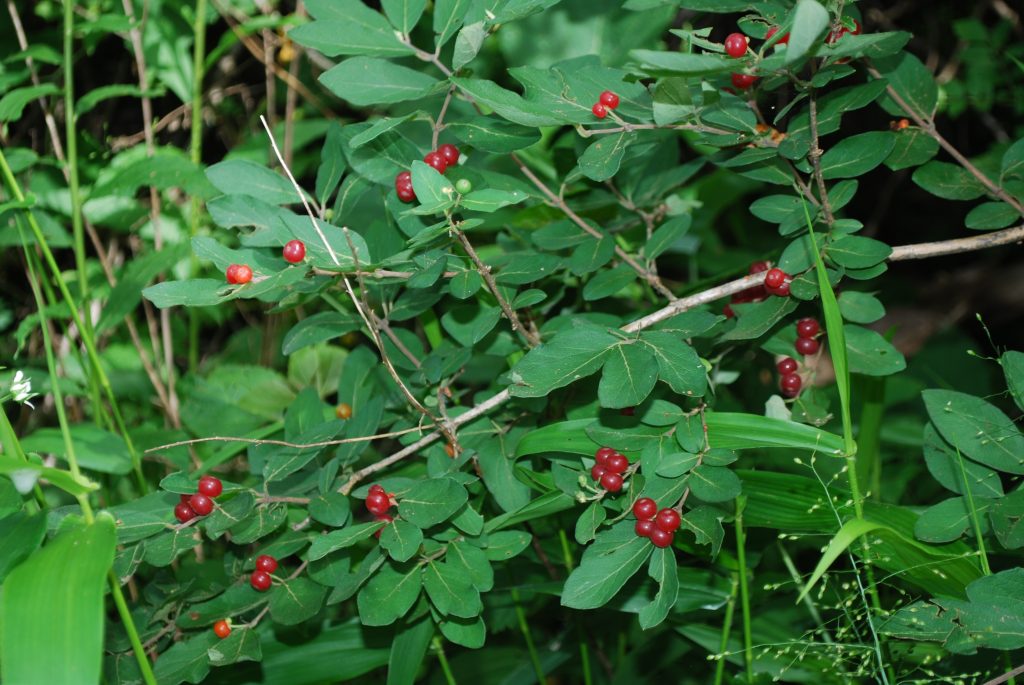
Red Rock gives road-trippers a little bit of everything. The wildlife management area surrounding the lake encompasses lake, marsh, timber, uplands and grass habitat, making the wooded project area only one piece of a much larger public landscape.
If you want to see a before-and-after story written across a forest floor, this is the stop.
Asian bush honeysuckle can form dense thickets in Iowa woodlands, reducing habitat quality and limiting the native vegetation growing underneath. At Red Rock Wildlife Management Area, managers have turned to helicopters to tackle the problem on a much larger scale.
More than 500 acres have been treated in recent years. Spraying takes place after native trees and shrubs have gone dormant but while honeysuckle still holds its green leaves, allowing managers to target the invasive plant across large areas.
Once the mature honeysuckle is knocked back, prescribed fire helps keep new growth from taking over again. With the dense canopy gone, sunlight can return to the forest floor and encourage herbaceous vegetation that provides food and cover for wildlife.
The response has been noticeable. During a spring gobbling survey, several turkeys were heard in previously treated areas, while none were detected in an adjacent untreated honeysuckle area.
Visit the Red Rock WMA project area:
Missouri: Enough Fields
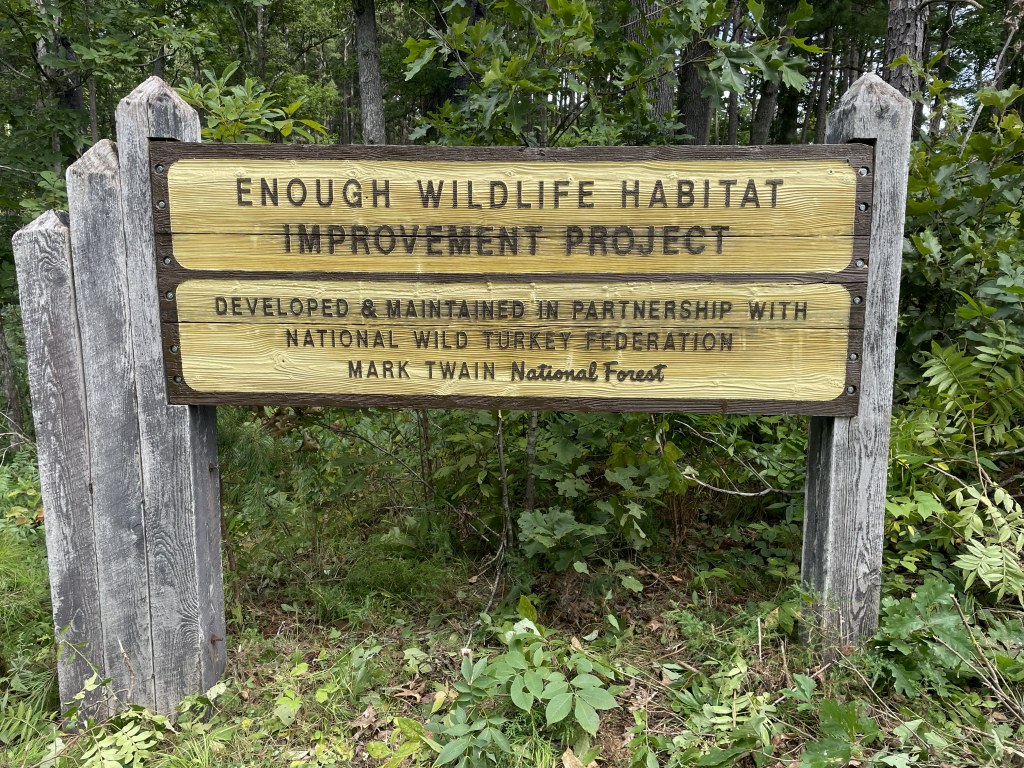
This stop feels unmistakably Missouri.
The Potosi District puts visitors in the Missouri Ozarks and Mark Twain National Forest, where miles of forest, glades and rugged Ozark terrain make the drive into the project part of the experience.
Tucked into all those trees, though, is an opening that matters.
The Enough Fields project focused on turning aging fields into better brood habitat. Part of the Old Hickory Stewardship Partnership Agreement, the project used brush mastication to knock back woody vegetation in July 2025. Several rounds of targeted herbicide treatment followed to control sericea lespedeza, a non-native invasive plant.
The result is an open field system now providing high-quality brood habitat for wild turkeys.
That may not have the visual drama of a huge prescribed burn, but brood-rearing habitat is one of the specific needs at the heart of Roots to Roost.
Visitors can park nearby and follow the trail back into the fields, where an NWTF and Forest Service project sign marks the work.
Visit Enough Fields: 37.70572, -90.91425
Wisconsin: Dunnville Wildlife Area
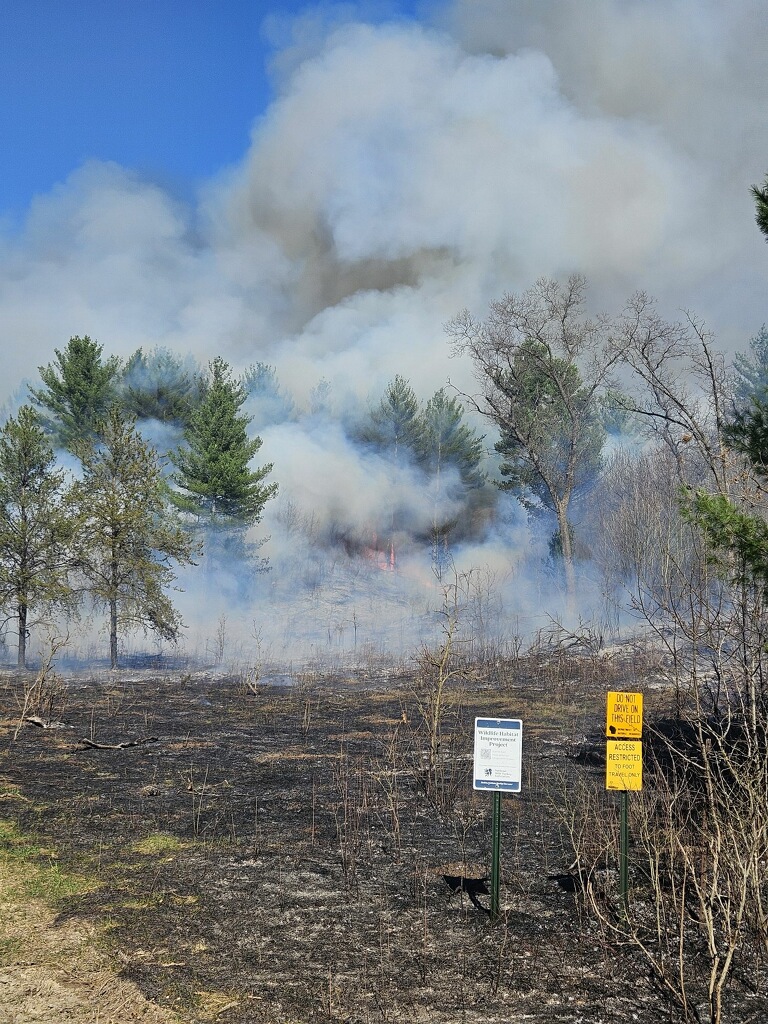
At Dunnville, the scenery changes as you move across the property.
The wildlife area sits along the Chippewa and Red Cedar rivers. Near the water are sand beaches, backwater areas and floodplain forest; farther inland, the landscape opens into prairie and oak savannas before climbing into wooded hills.
Right in that mix of habitat, visitors can see a major transformation.
What was once largely a thicket of trees and brush has been restored toward the barrens and native prairie habitat that historically occurred on the landscape.
The Wisconsin Department of Natural Resources and Wisconsin NWTF State Chapter used timber stand improvement, prescribed burning and seeding to help open the landscape and restore native habitat.
Today, the site provides exceptional turkey habitat and gives visitors a chance to see several of the management practices central to Roots to Roost working together in one place.
And if you want to make more of the stop, the larger Dunnville Wildlife Area includes the Red Cedar State Trail and overlooks across its prairie and savanna country.
Visit Dunnville Wildlife Area: 44.739699, -91.868172
Minnesota: Kramer’s Ridge Prairie Enhancement
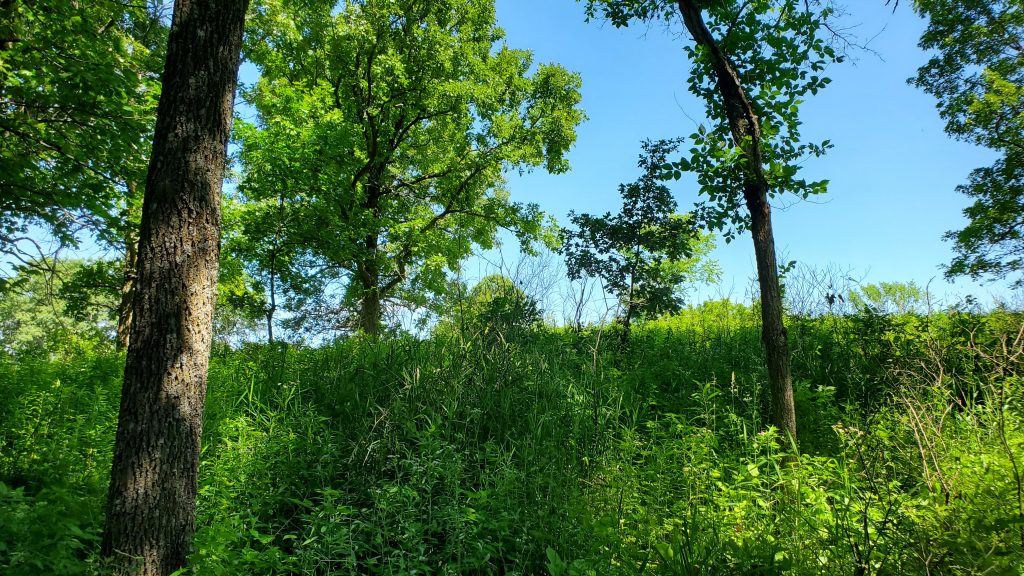
If Dunnville changes as you move inland, Whitewater changes when you look up.
Kramer’s Ridge sits in southeastern Minnesota’s Driftless Area, rugged, steep bluff country the last glaciers missed. Valleys cut through the landscape with elevation differences reaching roughly 500 feet, while hardwood-covered hillsides, bluff prairies and trout streams create scenery that looks very different from much of Minnesota.
Hidden among those bluffs is prairie that needed a little help coming back.
At Kramer’s Ridge within Whitewater Wildlife Management Area, the Minnesota Department of Natural Resources and Minnesota NWTF State Chapter have worked to restore bluff prairie by removing invasive buckthorn along woodland edges and clearing native woody vegetation that had begun creeping into the open prairie.
In only three years, the site has responded significantly, offering visitors an example of what a restored bluff prairie can look like.
The work will not stop there. Prescribed fire will help prevent woody vegetation from taking over again and maintain open conditions that can provide quality brood-rearing habitat for wild turkeys.
The project was supported through the state Super Fund and Conservation Partners Legacy Grant funding through Minnesota’s Outdoor Heritage Fund.
Visit Kramer’s Ridge at Whitewater WMA: 44.094151, -91.997444
Indiana: Buchanan Tract
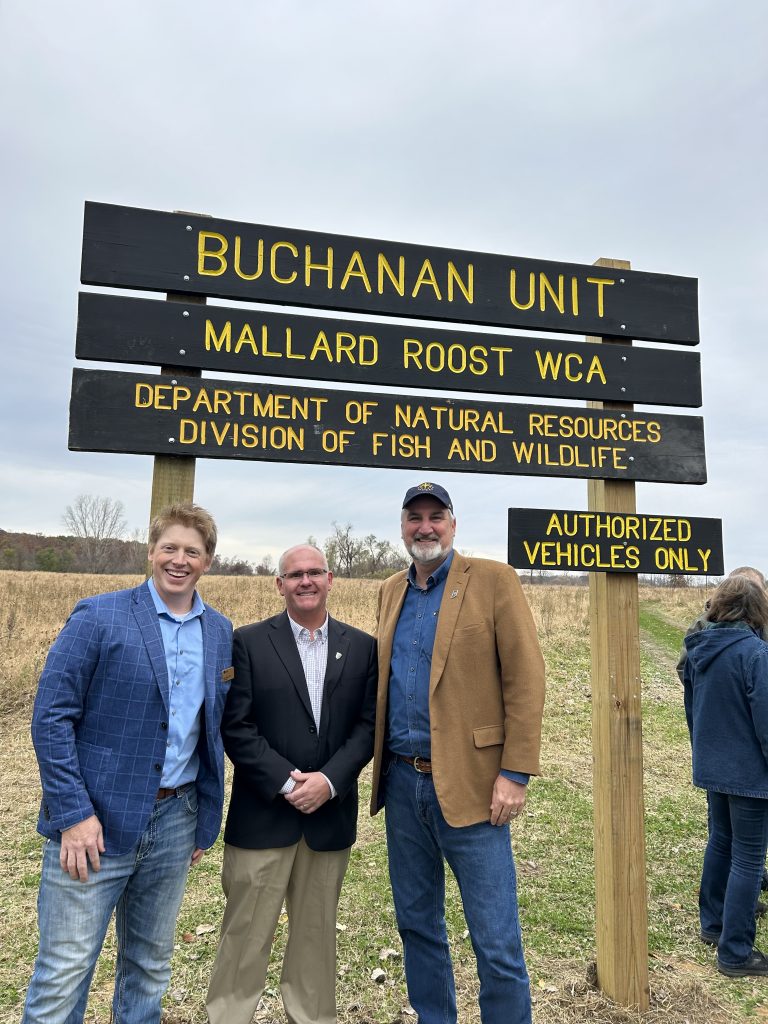
The final stop takes the road trip back into classic Midwestern farm country.
Noble County lies within northern Indiana’s Corn Belt region, a landscape shaped by agriculture with remaining forests and wetlands scattered throughout the countryside. That makes an additional piece of protected habitat — and additional public ground — especially meaningful here.
The 158-acre Buchanan Tract demonstrates how partnerships can improve both wildlife habitat and public access.
The Indiana NWTF State Chapter supported the acquisition with a letter supporting Indiana DNR Next Level Conservation Grant funding and $50,000 from the Indiana NWTF License Plate Fund. The purchase was completed in partnership with the Indiana DNR Natural Resources Foundation.
But acquiring the property was only the beginning.
Before it was transferred to the Indiana DNR, NWTF partnered with the U.S. Fish and Wildlife Service and provided more than $7,500 in Super Fund support for native seed. Openings that had previously been enrolled in agriculture were planted to create brood habitat, with local Pheasants Forever volunteers supplying tractors and people to help get the seed in the ground.
The Buchanan Tract brings several conservation benefits together in one project: partnership, native habitat restoration, brood-rearing cover and more public ground where people can experience the outdoors.
Visit the Buchanan Tract in Noble County: 41.44175, -85.51045
Your Turn to See It
Eight states, eight stops and eight very different-looking examples of conservation.
There is no single recipe for healthy turkey habitat across the Midwest. Sometimes the answer is fire. Somewhere else, it is removing invasive plants, thinning a forest, reopening a prairie, planting native grasses or securing a piece of land so everyone has a place to enjoy it.
And as this road trip shows, there is no single picture of the Midwest, either. Conservation is happening from the wooded hills of Kentucky and Missouri to Minnesota bluffs, Wisconsin river bottoms, Michigan oak country and the farm fields of Indiana.
That variety is part of the reason Roots to Roost exists. The Midwest’s grasslands, savannas, barrens, forests and open woodlands face different challenges, and restoring them at a meaningful scale takes different tools — and plenty of partners.
So, this Conservation Week, go see what all those acres, dollars and project descriptions actually look like.
Pick a pin. Take a drive. Walk the ground.
You might just find conservation looks a lot better in person.