Targeting Late Season Toms
By adjusting your late-season hunting approach to capitalize on what’s happening in the turkey woods, the odds of filling a tag, increases.
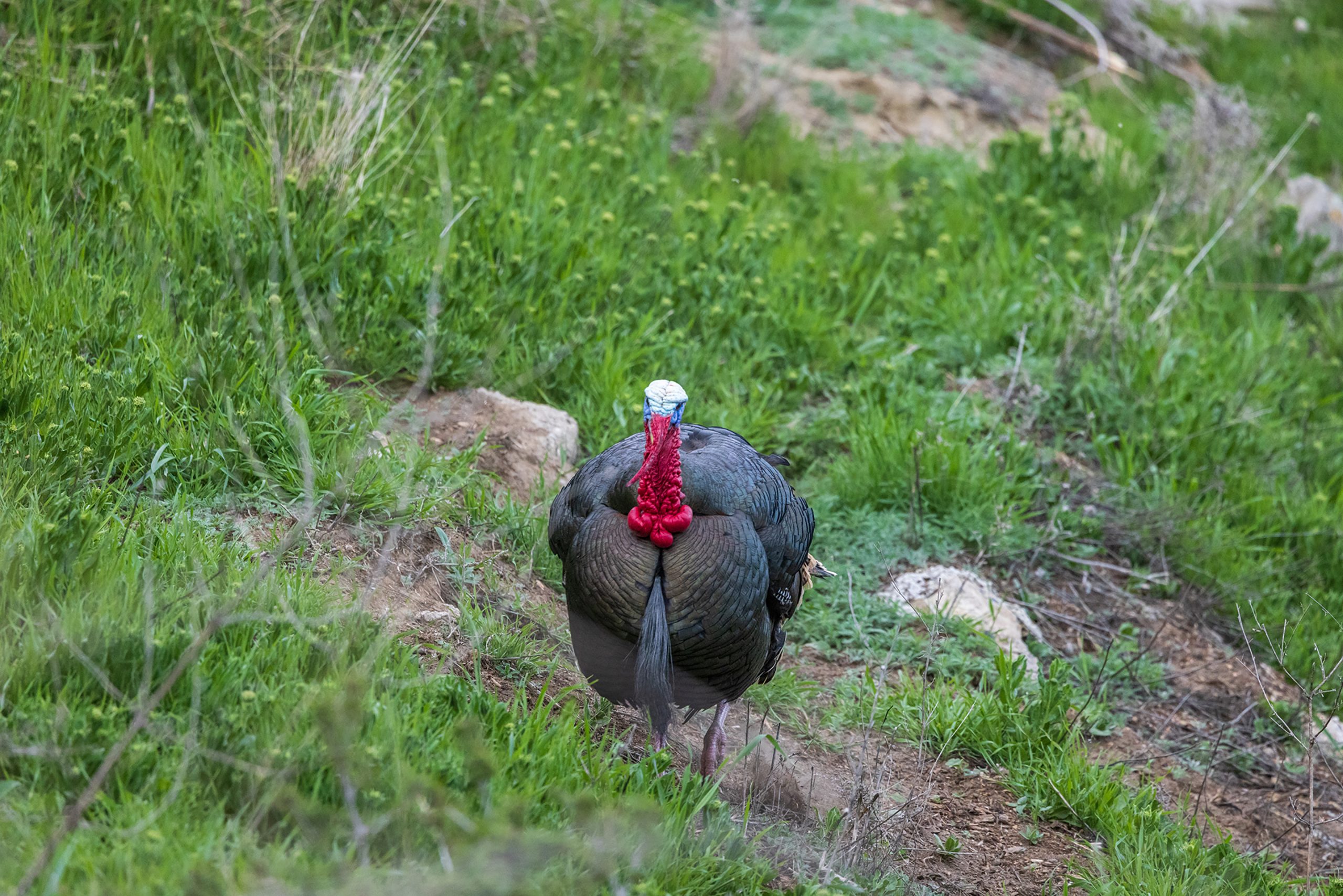
With 10 days left in the season, the timing was finally right. A few days prior, three toms began forming a bachelor flock along a timbered ridge. Based on more than 20 years of hunting the area, I figured the flock would continue to build. And an unusually early grasshopper hatch had young hens feeding in open meadows. The prior spring saw high mortality due to predation on nests and poults. As a result, re-nesting continued through September, with the latest clutch hatching on or very near October 2. The survival rate of those late hatched poults was very high, and most of the hens appeared to be too young to nest the following spring, not the norm for a Rio.
The extremely high hen-to-tom ratio made for a tough hunting season as I struggled to pull toms away. But when flock dynamics shifted, opportunities arose. Once toms began focusing on establishing fall flock dominance, and young hens were chasing hoppers all day, I slipped into the timber with a MOJO Scoot-N-Shoot decoy. I was the only one hunting the private timber land.
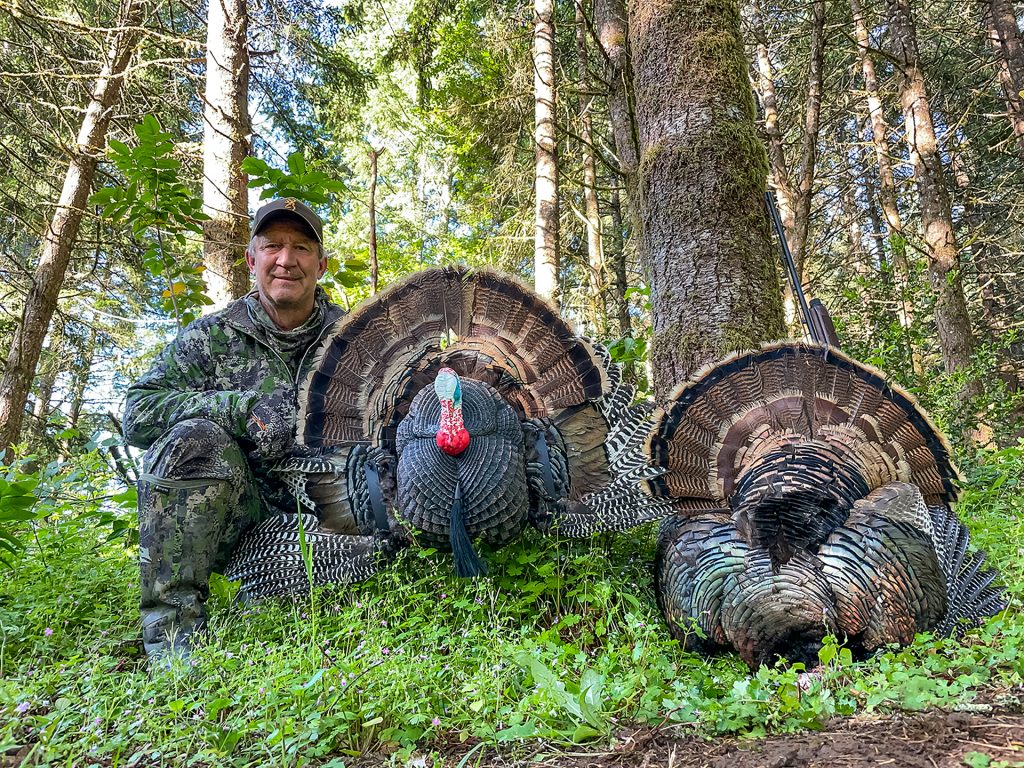
A few hen yelps followed by a raspy, deep tom yelp, brought one of the toms on the run. When the tom saw the flared wings and fanned tail of the MOJO decoy, it went to an allout sprint. Inside 15 yards, a payload of .410 TSS ended the hunt.
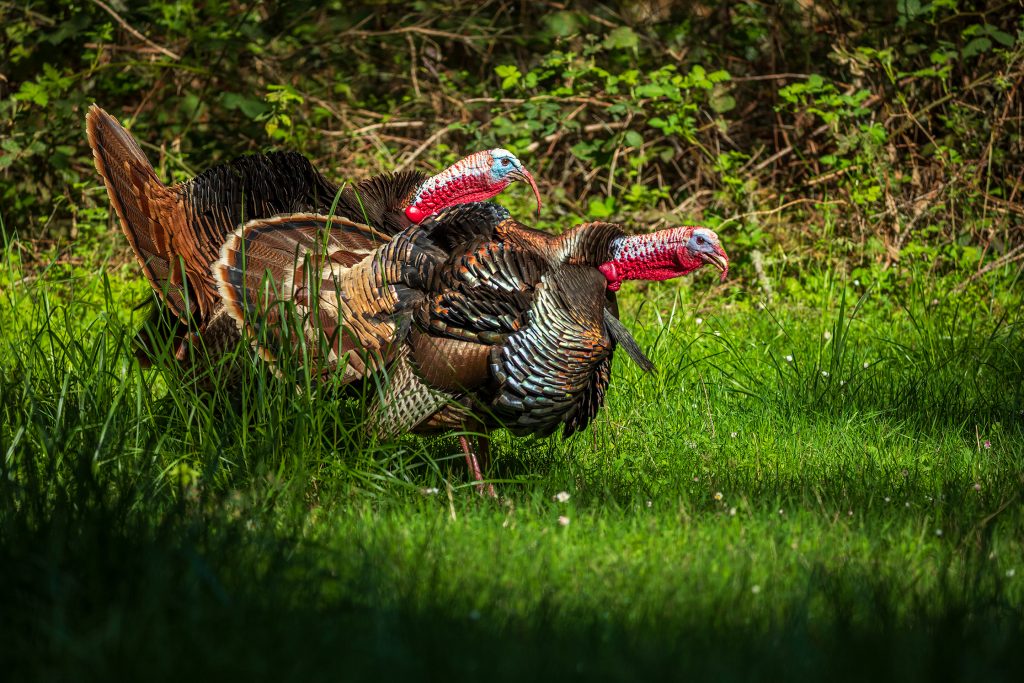
Another late season scenario I’ve seen repeated many times over my 40 years of turkey hunting is a new tom moving in once resident toms begin forming fall flocks. Often the new tom is looking for receptive hens but doesn’t want to challenge local toms. In this case, going in with a single hen decoy – either in an upright, preening or breeding position – combined with subtle yelps and purrs can pull in the wary tom. If spring foliage is flourishing, a decoy isn’t necessary when targeting cautious toms. In this case, keeping a tom coming in and on the lookout for the calling hen (you) is key to coaxing them to within shooting range.
If the new tom is aggressive, a strutting decoy can bring the challenger in on a string. This can be especially effective if jake numbers are high. Get a flock of jakes coming to a call and a new, boss tom often follows.
When toms begin to exhibit bachelor flock behaviors in mid to late May, they can be patterned. For example, once toms reach tall grass fields in the morning, they often spend all day there since it has all the food, shade and moisture they need. Intercepting toms as they enter or leave such areas can be a good move. I’ve had consistent success setting up in a ground blind near a trail with no decoy. After patterning the birds, the intent is to slip in to a convenient place for toms to approach your hen helps and purrs. The key is to keep toms moving in the direction they’re used to traveling. I’ve gone in with decoys and called too aggressively, spooking toms and never getting a shot.
With binoculars and a spotting scope, it’s worth devoting extra time to closely observing toms late in the spring. Watch for behavioral shifts within the forming bachelor flocks and see what sets them off. If it’s a new tom in the woods, or a brave flock of 2-year-old toms that have moved in, aggressive calling and decoys can be effective. These windows can be brief, so be ready.
A weather change can also boost tom activity. But late in the spring it’s about shade and cool temperatures, not a burst of sunlight and heat that fires up toms like early in the season. Early morning hunts late in the season can be good as temperatures are low and toms are on the move, usually seeking food. Evenings can also be good, as can days of heavy cloud cover where toms will frequent fields for insects and wild grass seeds, without overheating. Then again, extremely hot days can force toms to congregate in shaded spots for extended periods, and these can be good places to move in and call to.
By adjusting your late-season hunting approach to capitalize on what’s happening in the turkey woods, the odds of filling a tag, increases. Success often comes down to scouting and timely moves. Failed attempts typically outnumber victories, but that’s the joy of turkey hunting, learning as we go and being challenged, even humbled, along the way.