The Gun Dog Breakup
Echo, my pudelpointer, heeled tight. A hand signal straight off the nose sent her on the run. She knew what to do from there.
Despite the uphill sprint through timber, Echo quickly covered the 250 yards. When the turkey flock flushed into a canopy of Douglas firs, I gave two beeps on her e-collar. She returned as swiftly as she’d left.
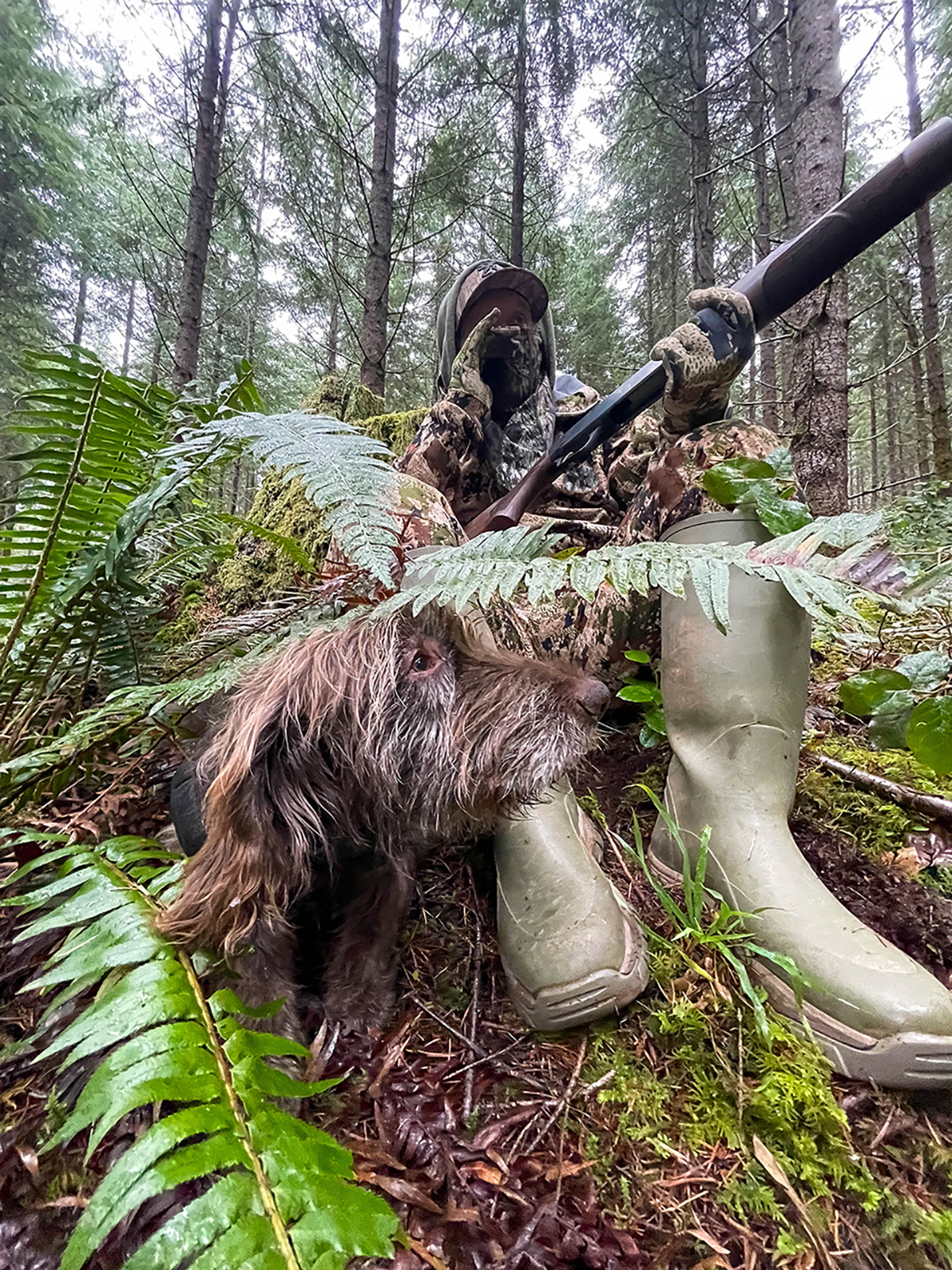
We hiked around the bottom of a timbered knoll, hidden from the birds. Before we could get set up, the flock was talking. Weaving our way through tall sword ferns and fir trees, we settled against a massive, moss-covered stump, 75 yards from the flock.
With a single-reed diaphragm, I let out a high-pitched kee-kee. Two turkeys answered. Echo, tucked beneath a tall fern, shook with anticipation. In 15 minutes, multiple birds were on the ground. Their calling was loud and frequent.
The beardless flock contained one tom. When two jakes wrapped around the knoll, headed our way, the tom couldn’t take it. It came on the run. The .410 folded it inside 15 paces.
It was November. I’d been watching that flock since it formed in August. The tom joined it, late. It was the fourth time we’d hunted that flock, the only time it was fitting to send Echo.
This marks year 10 of hunting fall turkeys with my dogs. I’ve learned a lot since the journey began. My favorite way is to send one dog to scatter a flock, then set up and call birds in with assembly sounds. Beardless flocks respond best, as the hens, jakes and jennies are eager to reunite. And they’re vocal.
Before sending a dog for the breakup, the situation must be right. A successful scenario is a turkey flock moving uphill through an opening, into a forest canopy. When the birds hit the edge, a dog is sent.
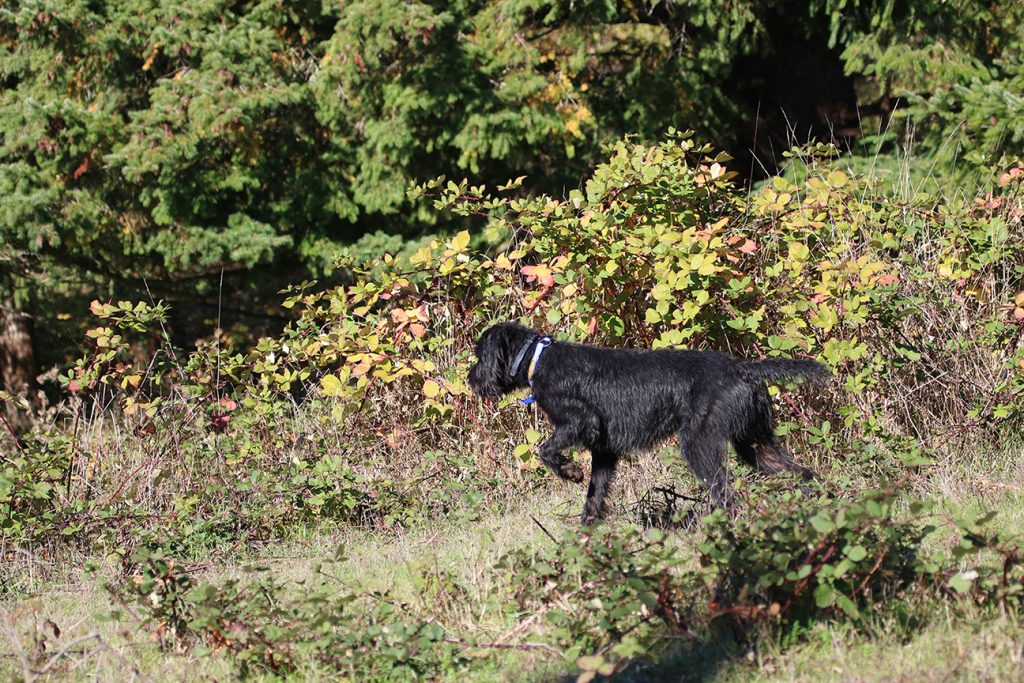
For every handful of turkey flocks we see, generally only one presents the right situation to send a dog. If it’s not, back out and return another day.
While the approach works on flat farmland and river bottoms, the uphill surprise sends birds flying into the trees the quickest and most consistently. The broken hills offer optimal cover in which to move in, set up and call.
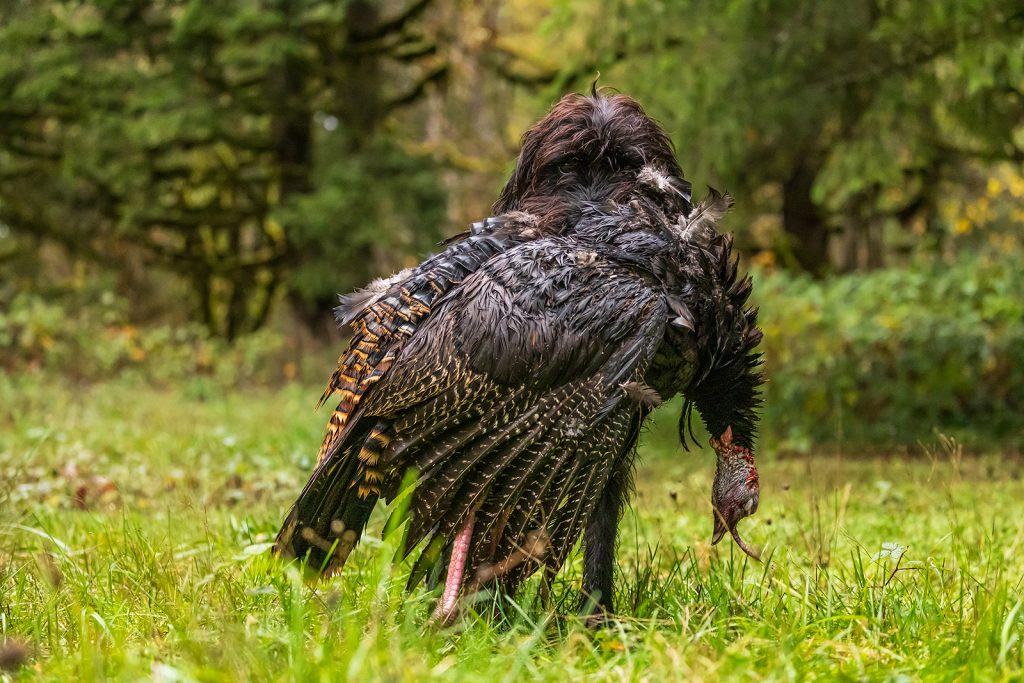
One-and-half-year-old jake flocks are the next most gullible. With mature bachelor toms, rarely do they all tree. Some will, others run into thick cover and hold like a quail. Some keep running like a clever rooster pheasant. If a tom holds, a dog will stick point. Turkeys carry a lot of scent, and a dog that knows what’s happening will be amped. Being able to see the breakup is ideal but not always possible. My dogs run in circles when all the birds tree. If I lose sight of a dog, I know it’s on point or trailing birds on the run. A tracking collar is handy.
When there’s a likelihood of finding toms, be prepared for any of the three scenarios. Wear full camo, including a face mask and gloves, if calling them back in is the goal. Make sure your dog is steady when birds are close. You also might hike a ways if your dog tracks a tom on the run. Or it could end quickly, with a point.
Last fall I hunted with Kona, my 8-year-old pudelpointer. A flock of five toms fed through a small meadow surrounded by timber. From over 300 yards, we watched. The flock lined out and headed into the timber on a wellused deer and elk trail. When they were out of sight, we closed the distance on foot.
We hit the little clearing and Kona’s big nose pumped the air. I released him. Twenty yards into the timber, the eruption happened. Two toms flushed into the trees. As I approached, I found Kona locked on point. All I could see was his head. Not until I stood over Kona could I see the tom in a briar patch. It was laying flat, neck stretched out, head on the ground. This is common, even in sparse cover. When the tom lifted its head to make a break, the .410 put a quick stop to it. Kona muscled his way out of the briars, bird in mouth, delivering it to hand.
In states that allow fall turkey hunting with a dog, the effort is worth it. You’ll grow to appreciate the uncertainty of these hunts but soon realize that’s what creates the joy of working together, just you and your dog.