The H2O Connection: Hunting Turkeys Near Water
Often considered a hindrance, water features can actually boost a hunt. Learn how to use rivers, ponds, backwaters and other features to your advantage.
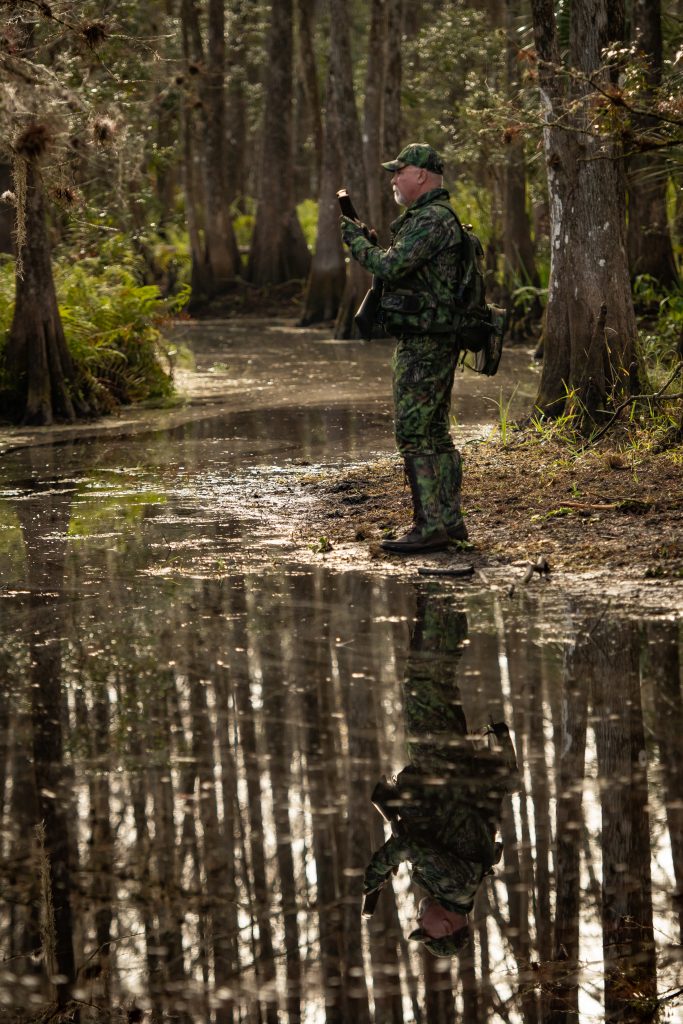
Most turkey hunters probably consider water to be an afterthought or inconvenience, and they don’t get concerned about wet stuff unless it’s raining.
But really, bodies of water — lakes, streams, rivers, ponds, marshes or even seasonal wetlands — can play a big role in turkey location and behavior, and even the outcome of a hunt. In fact, veteran hunters often use water to their advantage when chasing spring gobblers. Following their lead might help you next season.
The Relationship
Turkeys are upland birds, so we don’t often associate them with water. Throughout many regions of the country, however, good turkey habitat is dotted with — or even dominated by — water. Water actually creates and often preserves turkey habitat. That sounds counterintuitive, but think about it. In many regions, roosting trees and nesting habitat bordering water features are often all that remains after almost everything else has been plowed under to create farmland or parking lots. In many parts of the country, some of the best remaining turkey habitat is directly linked with water features. Good examples include classic Southern river bottoms or hardwood ditches in northern Missouri and southern Iowa.
Water features also dictate the way turkeys use habitat and move through it. River and stream corridors, for example, provide natural travel routes and also offer cool, shaded loafing areas during hot days. In some cases, turkeys don’t seem to mind getting their legs wet traveling through marshes or seasonally wet areas, but depending on conditions and what they’re accustomed to, they might often walk around those areas. In such cases, water features essentially act as funnels, and identifying those areas can reveal good setup spots, especially if they’re between roosting and feeding areas, or perhaps near midday loafing cover.
Hunters everywhere know that turkeys also love to roost over water, which makes sense, as doing so greatly decreases the chances of land-bound predators slipping close during the night. Most folks have likely encountered birds that spend the night in big timber bordered by streams, rivers, sloughs, bayous, ponds or lakes.
Although turkeys need to consume water, they don’t always visit water sources regularly for a drink, as they often get all the moisture they require as they ingest food. But an exception occurs in arid areas or during very dry periods. Then, turkeys might hang around water quite a bit. Stock tanks in Texas are a good example, as birds frequently congregate there to get a drink during hot, dry days.
Hunting Around Water
First, let’s dispel the myth that water sources are absolute travel barriers that turkeys won’t cross. That’s simply not true. A pepper-hot gobbler will have no qualms about flying over a stream or river to hitch up with a hen. It might walk back and forth along the stream a bit before deciding where to cross, but the water won’t be a deal-breaker if the gobbler is sufficiently fired up. I’ve seen gobblers fly across major rivers and raging flood-stage streams to find the “hen” they heard.
As mentioned, turkeys commonly roost over or near water features. Finding these areas provides an immediate advantage for fly-down hunts, as it’s pretty clear that turkeys will pitch down to terra firma instead of the wet stuff. And if the surrounding terrain is sodden or dotted with water, you can assume that birds will hit the ground at a spot that’s relatively high and dry. Using that knowledge, a careful, quiet approach in the black dark can put you in good position to catch a gobbler the instant his feet touch the ground. Identify a potential landing spot the night before you hunt, slip tight well before dawn, and wait quietly in the dark. Resist the urge to call much — or at all if the turkey is within eyesight — and be ready for flydown. Just bring a ThermaCell if you’re hunting near stagnant water, such as a slough or bayou, that will likely produce mosquitoes.
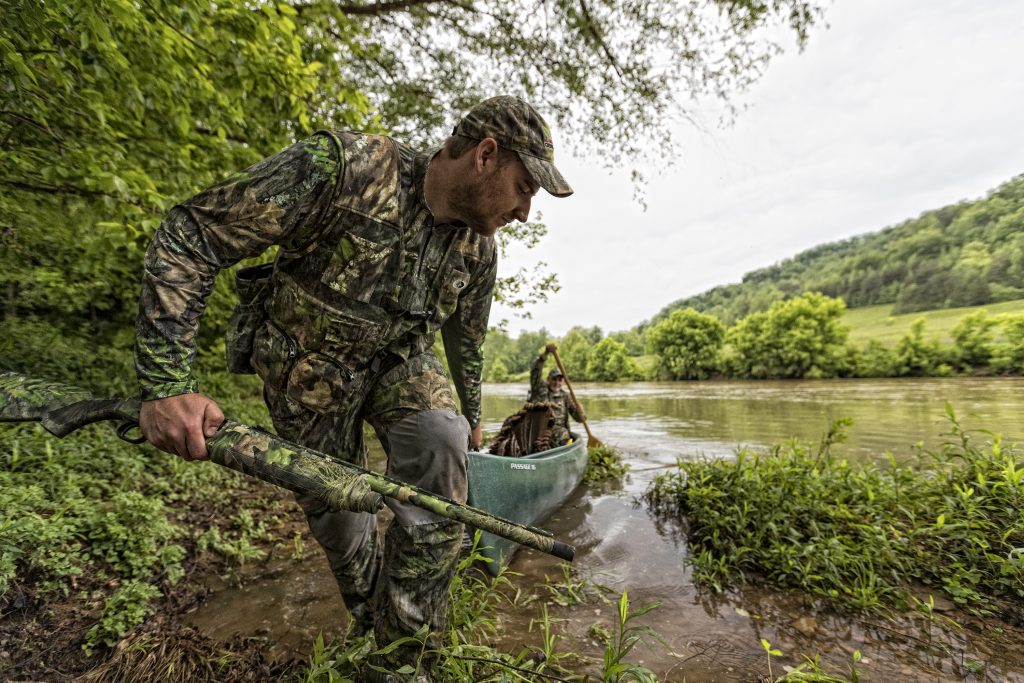
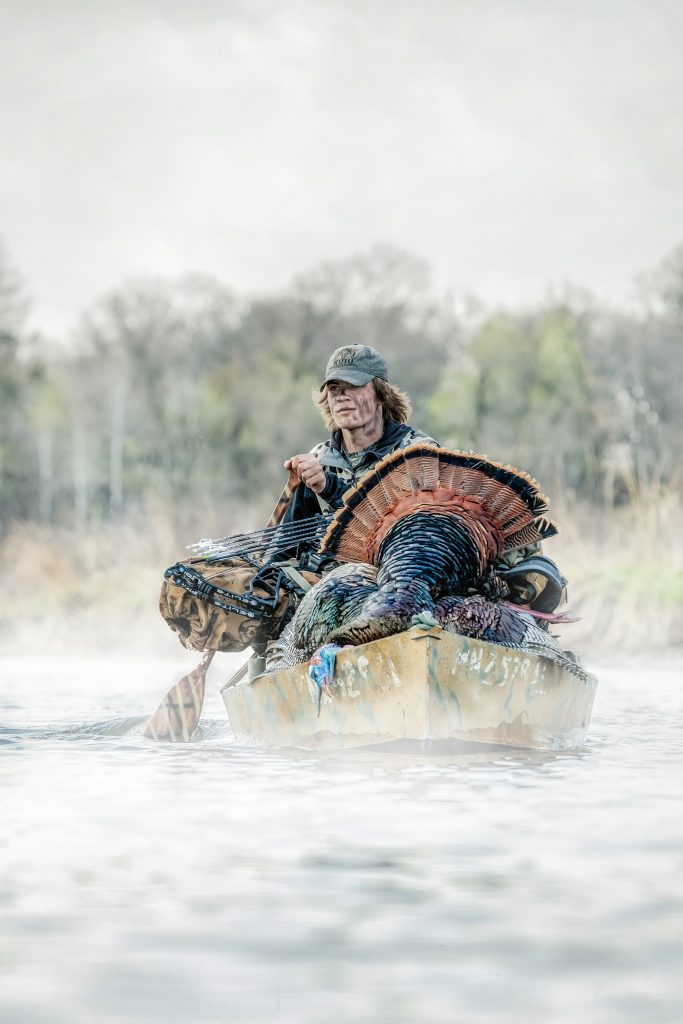
Although water is viewed as a barrier, it can actually allow tremendous access to turkeys. Using a small watercraft, such as a canoe or skiff, you can sometimes access remote areas that might be extremely difficult to reach on foot. Float quietly through large areas in the dark, listening for roosted birds, and then beach the boat when you find a bird to work (assuming you’re on public ground or have permission for private land). During midmorning or midday, paddle along a stream or river, calling now and then to locate a hot gobbler. Then quietly slip close to close the deal. In some areas, turkey hunters use motorboats to cruise near the shorelines of large public areas, trying to locate a willing bird.
Along those lines, water often creates another topographical feature that can produce excellent turkey hunting: islands. If an island has good habitat, turkeys won’t hesitate to use it. Further, the secluded nature of an island often keeps hunting pressure to a minimum, creating almost a miniature sanctuary for turkeys. (Remember, birds can easily fly over water, but hunters often have difficulty traversing rivers, channels and the like.) I’ve hunted islands from South Dakota to Wisconsin and Alabama, and each instance was almost like plying a fresh population of birds. Reaching those spots required extra work or the hassle of launching a boat, but the results were more than worth it.
Conclusion
Don’t be deterred by water next season. Embrace it as a critical terrain feature that can provide a map to turkey location and movement. And then use it while hunting when possible. Soon, you’ll find that those seemingly troublesome creeks or sloughs can be your best friends in the woods.