The Health Side of Wild Turkey Research
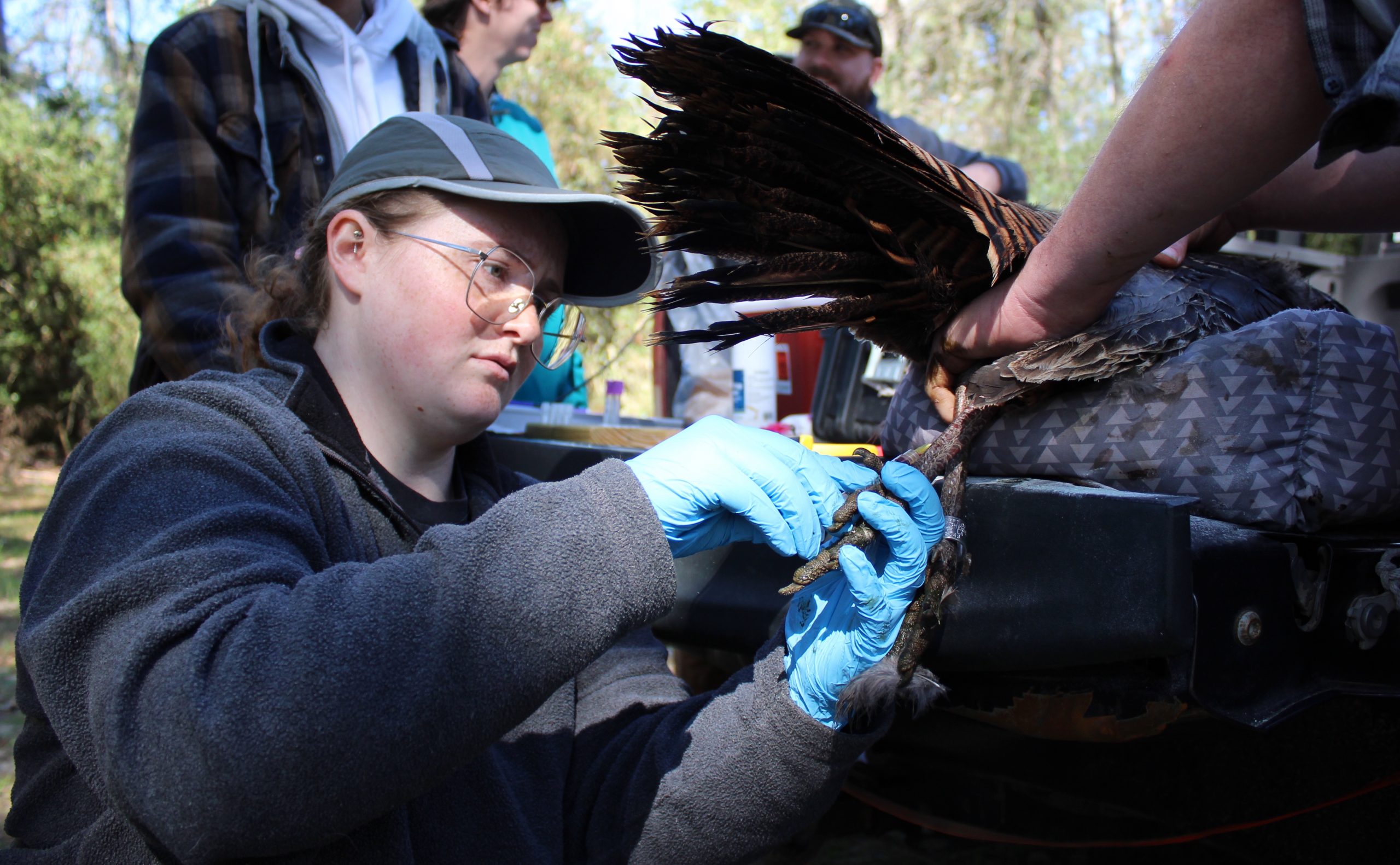
One thing that often does not cross people’s minds when thinking about wild turkeys is their health. We tend to think about habitat, predators, hunting seasons, nesting success and poult survival, all of which are important.
However, like us, turkeys are susceptible to diseases, viruses, toxins, parasites and other stressors. The key question is not simply whether a turkey tests positive for something, but whether that disease or stressor affects survival, reproduction or recruitment enough to matter at the population level.
That’s why over the last four years, the NWTF has helped fund research that aims to shed light on those unknowns. Since 2022, the NWTF Research Grants Program has supported at least eight projects focused on disease surveillance and population health.
One example is work led by Dr. Nicole Nemeth at the University of Georgia which created improved diagnostic techniques for tumor-causing viruses in wild turkeys, including lymphoproliferative disease virus, commonly called LPDV, and reticuloendotheliosis virus, or REV. Both are retroviruses that can infect wild turkeys; they can cause tumors and, in some birds, outward signs such as lesions on the head or neck, weakness or unusual behavior. Many infected birds, though, show no obvious signs, which is one reason diagnostic tools like the one developed from this work and surveillance are important.
LPDV has received a lot of attention in recent years. It was first documented in wild turkeys in North America in 2009, and research has since shown that prevalence can vary widely among populations, suggesting that exposure on the landscape is not uniform. However, prevalence alone does not tell the whole story. A population can have a high percentage of birds test positive without obvious effects on survival or reproduction. To date, much of the work on LPDV suggests just that, and population-level effects remain unclear.
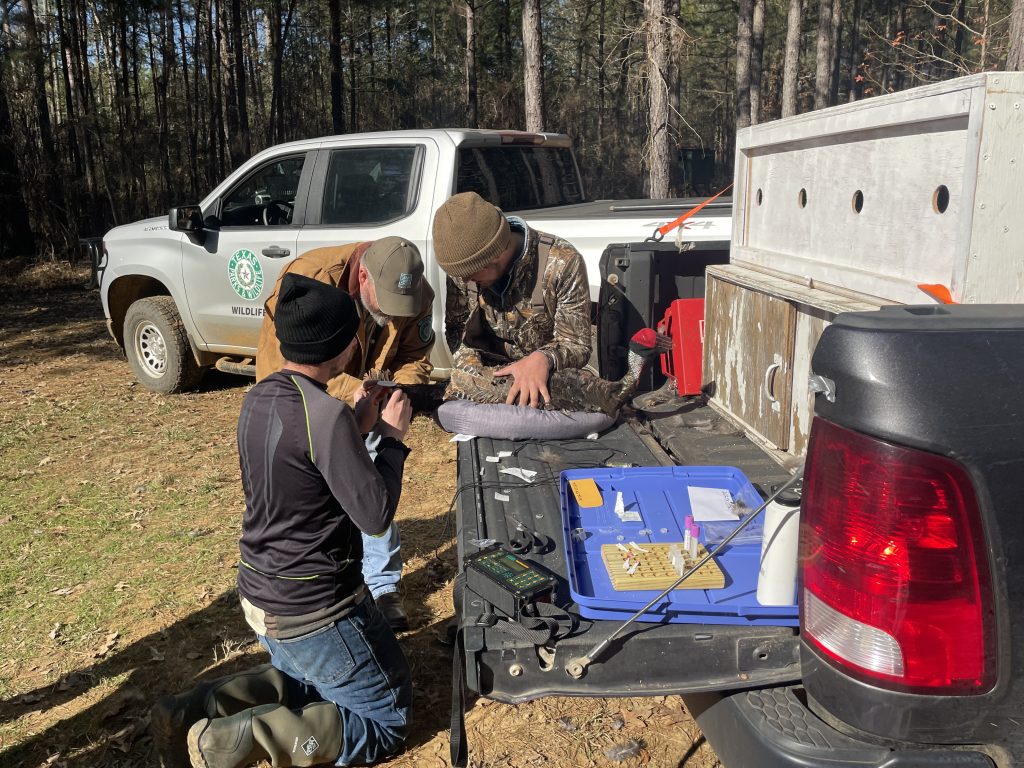
Conversely, a recent study from Maine provides a good example of why this type of research matters. Researchers captured and monitored female wild turkeys and tested them for LPDV and REV. In that study, about 72% of hens tested positive for LPDV, while about 23% tested positive for REV. LPDV was not linked to lower survival, nest initiation, nesting propensity or hatch rate. Meanwhile REV, appeared to have a strong influence on survival, as hens that tested positive for REV had an estimated annual survival probability of about 25%, compared to 43% for hens that tested negative. Those findings do not mean REV affects every turkey population the same way, but they show why disease research should be connected to survival and reproduction, and why surveillance is important for identifying areas of concern for managers and pinpointing where more research may be needed.
This is why the NWTF Research Grants Program has supported projects in places like Rhode Island, where Dylan Bakner is leading a team to investigate disease prevalence and potential impacts on reproduction. The program has also funded disease monitoring in Georgia, Kansas, Nebraska, New Hampshire, Oklahoma, South Carolina and Texas.
Wild turkey health also extends beyond viruses. Every summer, one topic that comes up is aflatoxin. Aflatoxin is a toxin produced by fungi that can grow on corn, especially when corn is piled in warm, moist conditions. Turkeys, particularly poults, can be sensitive to aflatoxin exposure when levels exceed 200 parts per billion, which research suggests can occur after about five days when moisture is present and temperatures exceed 80 degrees. Because of that, the safest approach is to avoid baiting or supplemental feeding during hot, wet summer months when corn can form aflatoxin quickly. Where feeding is legal and still occurs, feed should be clean, kept dry and off the ground, and dispensed in amounts that are eaten quickly rather than left to sit and mold.
That does not mean every corn pile is killing turkeys and the cause of turkey declines. But supplemental feeding and baiting practices deserve careful research. Corn placed on the ground during summer can create concerns such as potential toxin exposure, repeated congregation of birds and increased disease transmission risk. That is one reason baiting and supplemental feeding were included as a priority in this year’s NWTF Research Grants Program.
Similar questions exist around other environmental stressors. For example, the NWTF has helped fund a multistate project examining wild turkey exposure to neonicotinoid insecticides across agricultural landscapes to better understand where exposure occurs and whether it represents a meaningful concern.
The takeaway is that wildlife health research helps us separate concern from assumption by identifying where diseases or other stressors may be creating problems, where additional research is needed and, ultimately, where management actions may help. It is not about blaming one disease, toxin or land-use practice for turkey declines. It is about building the information needed to better understand the many factors influencing wild turkey survival, reproduction and recruitment.
By the Numbers
Based on a recent study in Maine:
- 72% Hens tested positive for LPDV
- 23% Hens tested positive for REV
- 25% Estimated survival of hens that tested positive for REV
- 43% Estimated survival of hens that tested negative for REV